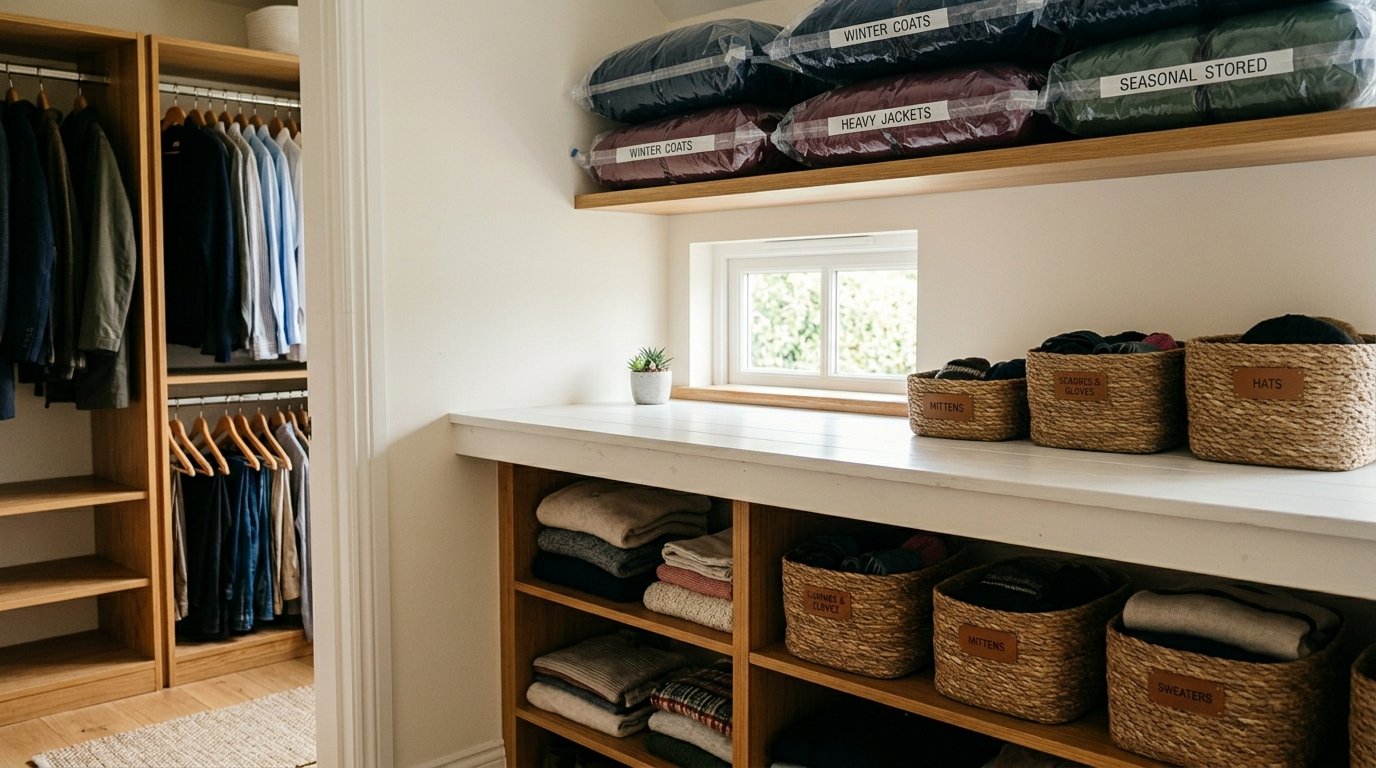
Every year, the same problem. The temperature finally climbs, you swap out your wardrobe — and suddenly your home is drowning in bulky parkas, wool peacoats, and oversized puffer jackets with absolutely nowhere to go. Sound familiar? Storing winter coats doesn’t have to mean stuffing them under the bed or hogging half your closet all summer long. With a few smart strategies, you can tuck them away neatly, protect the fabric, and actually reclaim your space.
Clean Before You Store (This Step Really Matters)
Before a single coat goes into storage, it needs to be clean. This isn’t just about freshness — it’s about protection.
- Oils, sweat, and food residue attract moths and cause fabric to break down over time.
- Dry clean wool and cashmere coats; most puffer jackets can go in the washing machine on a gentle cycle.
- Make sure every coat is completely dry before storing. Even slight dampness leads to mildew.
Think of cleaning as an investment — it’s what keeps your coats looking brand new when fall rolls back around.
Choose the Right Storage Method for Each Coat Type
Not all coats store the same way. Matching the method to the material saves space and preserves quality.
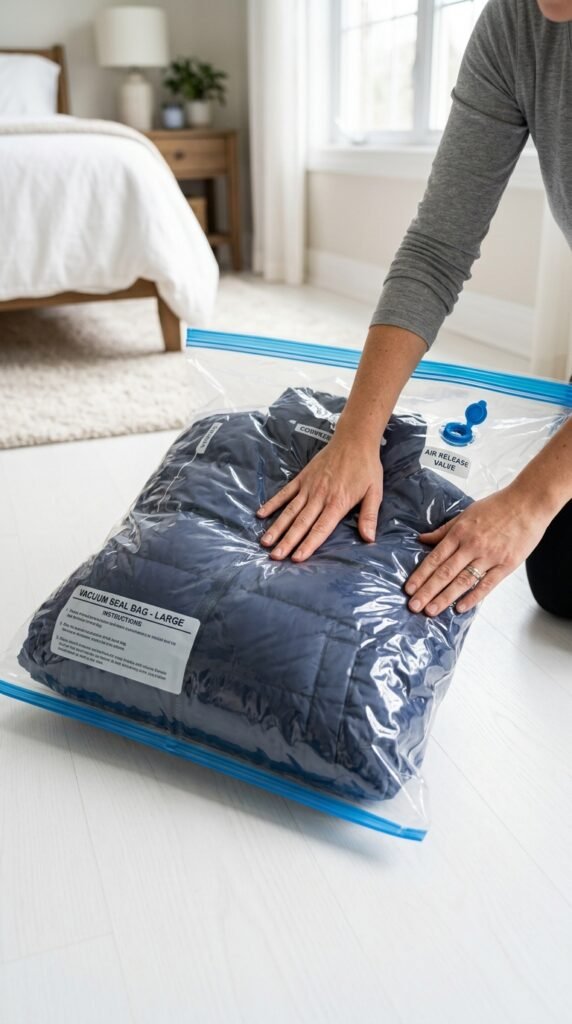
Vacuum Storage Bags — Best for Puffer Jackets
Puffer coats are the biggest space hogs, but they compress down to almost nothing in a vacuum bag. Roll out the air, seal it up, and you’ve just turned a king-sized pillow into a flat envelope.
Breathable Garment Bags — Best for Wool and Structured Coats
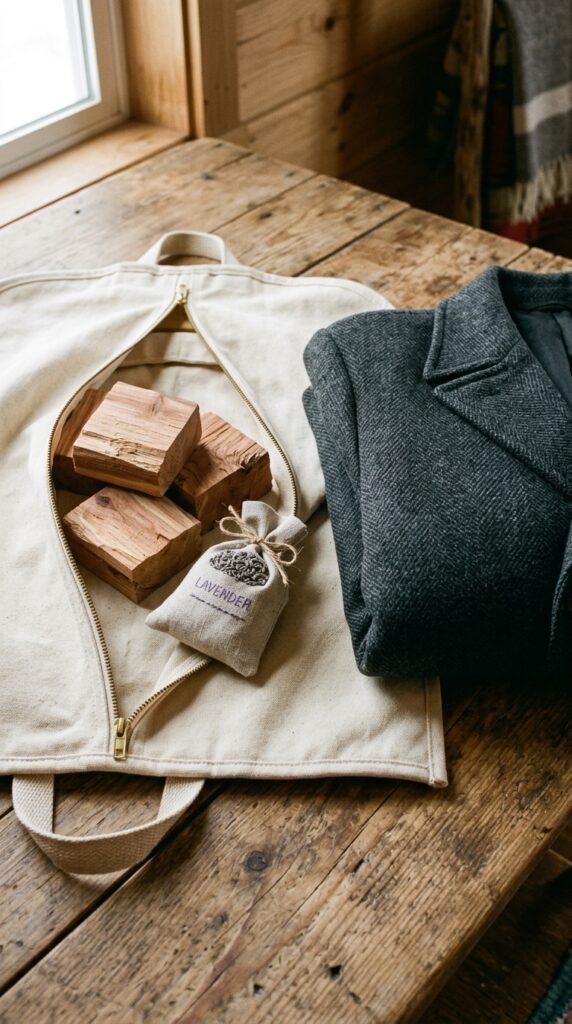
Wool peacoats and structured blazer-style coats should never go into airtight plastic. They need airflow to stay fresh and hold their shape. Use cotton or canvas garment bags instead — they protect against dust while letting the fabric breathe.
Folding vs. Hanging
- Hang structured coats if you have the vertical space (a spare closet rod works perfectly).
- Fold puffer and quilted coats — hanging them long-term can stretch the lining.
Think Vertically and Get Creative With Space
The key to storing bulky coats without losing your mind (or your floor space) is going up, not out.
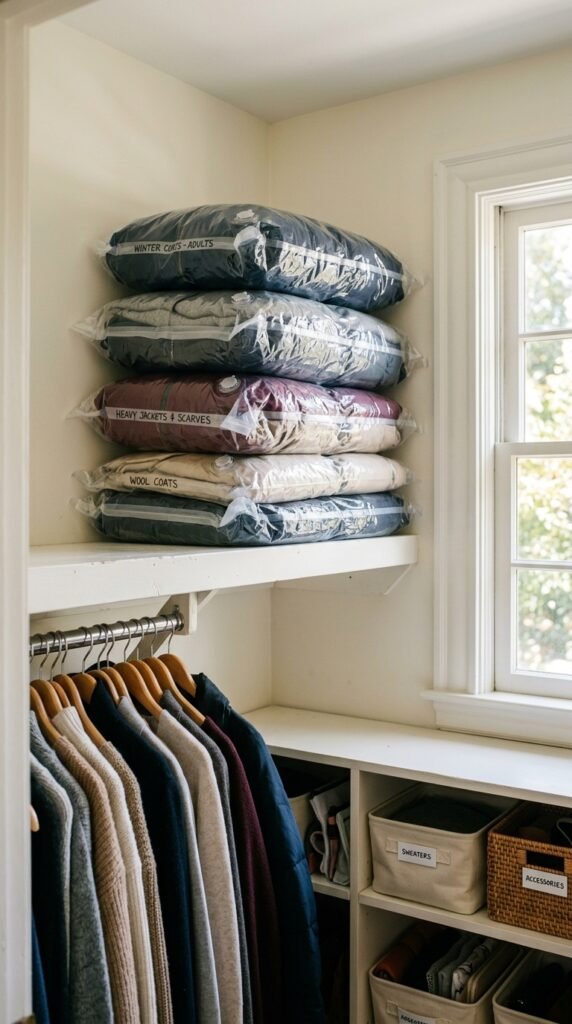
- High closet shelves are perfect for vacuum-sealed bags — they’re flat and stackable.
- Over-the-door organizers with deep pockets can hold lighter jackets or accessories.
- Under-bed storage containers with lids work well for folded coats in garment bags — choose ones with wheels for easy access.
- Ottomans with hidden storage are a stylish double-duty solution for smaller apartments.

Don’t overlook the tops of wardrobes, the backs of deep shelving units, or even a spare suitcase tucked in a corner.
Protect Against Pests, Moisture, and Odors
Storage isn’t just about space — it’s about keeping your coats in perfect condition until you need them again.
Ward off moths naturally:
- Tuck cedar blocks or cedar rings into garment bags — cedar repels moths without the harsh chemical smell of mothballs.
- Refresh cedar every season by lightly sanding the surface.
Control moisture:
- Add a silica gel packet or two inside sealed bags to absorb any residual humidity.
- Avoid storing coats in damp basements or garages where temperature swings are extreme.
Keep things smelling fresh:
- A small linen sachet with dried lavender inside garment bags works beautifully.
Label Everything So Fall Is Effortless
This sounds minor, but it’s a game changer. Label each bag or container with the contents — even a sticky note on a shelf does the trick. When October arrives and you’re in a hurry, you’ll know exactly where your favorite camel coat is without tearing everything apart.
Bring It All Together
Storing winter coats in summer doesn’t have to mean chaos, clutter, or crushed fabric. Clean them first, match the storage method to the material, go vertical wherever you can, and protect against moisture and pests. That’s really all it takes.

Your coats will come out next season looking just as good as when you put them away. Save this guide for your next seasonal wardrobe switchover — and share it with anyone who’s been using their couch as a coat rack all summer.