
If you love books, you know the struggle — shelves that overflow, spines facing every direction, and no real system holding it all together. But here’s the thing: how you organize your bookshelf says a lot about you as a collector. Whether you have 30 books or 3,000, the right organization style can turn a cluttered wall into something you’re genuinely proud of. These 22 styles are practical, affordable, and actually doable — no interior designer required.
1. Rainbow Color Blocking
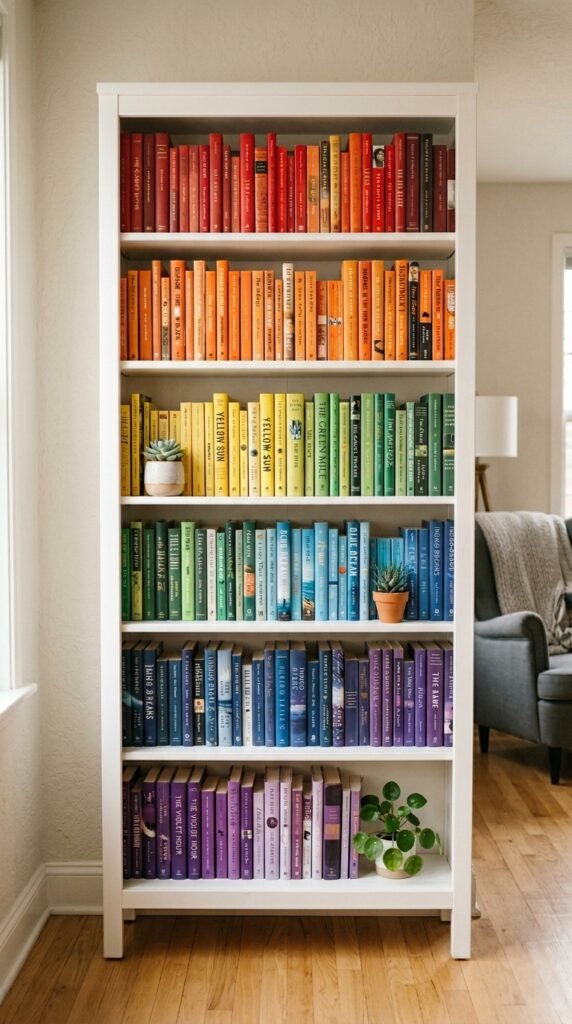
This is the most eye-catching style for a reason. You group books by the color of their spine — red together, blue together, and so on. It looks like a piece of art on your wall. The trick is not to be too rigid. Close shades can sit together without it looking off. It’s not the easiest system for finding a book quickly, but for display? Nothing beats it. Great for collectors who shelve by memory anyway.
2. Genre Zoning
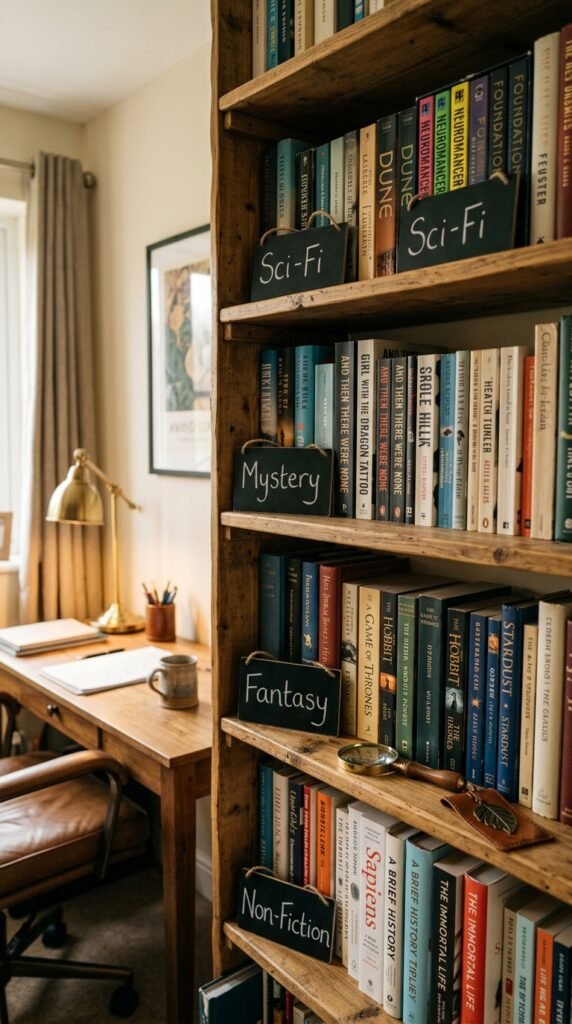
Divide your shelf into neighborhoods. Mysteries live here. Fantasy lives there. Non-fiction gets its own corner. This works especially well for collectors with large, mixed libraries. Use small labels or decorative tags to mark each zone. You don’t need fancy labels — a bit of washi tape and a marker works perfectly. Once it’s set up, finding a book takes seconds. This system grows with your collection without falling apart.
3. Author Alphabetizing

Classic for a reason. Organizing by author’s last name makes your shelf feel like a personal bookstore. It’s the system most readers already know intuitively. Use printed alphabet dividers — you can find them cheap online or print your own. Works best when you shelve fiction separately from non-fiction. Once you’ve done the initial sort, maintaining it is simple. New book arrives? You know exactly where it goes. No guessing, no shuffling everything around.
4. Read vs. Unread Piles
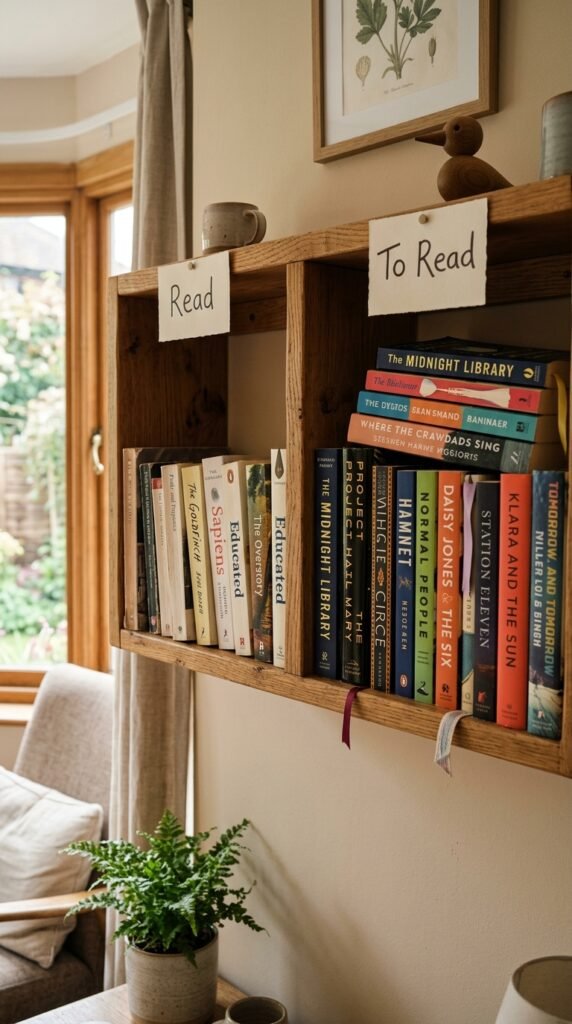
This is the most honest system for an avid collector. Your unread stack — the infamous TBR (to-be-read) pile — gets its own dedicated space. Already-read books go on the other side. It helps you see exactly how ambitious your buying habit has been. Some collectors even find it motivating. You can make this visual with color-coded bookmarks instead of physically separating them. Either way, it brings order to the chaos of impulse book buying.
5. Spine-In Facing (Decorative Back Display)
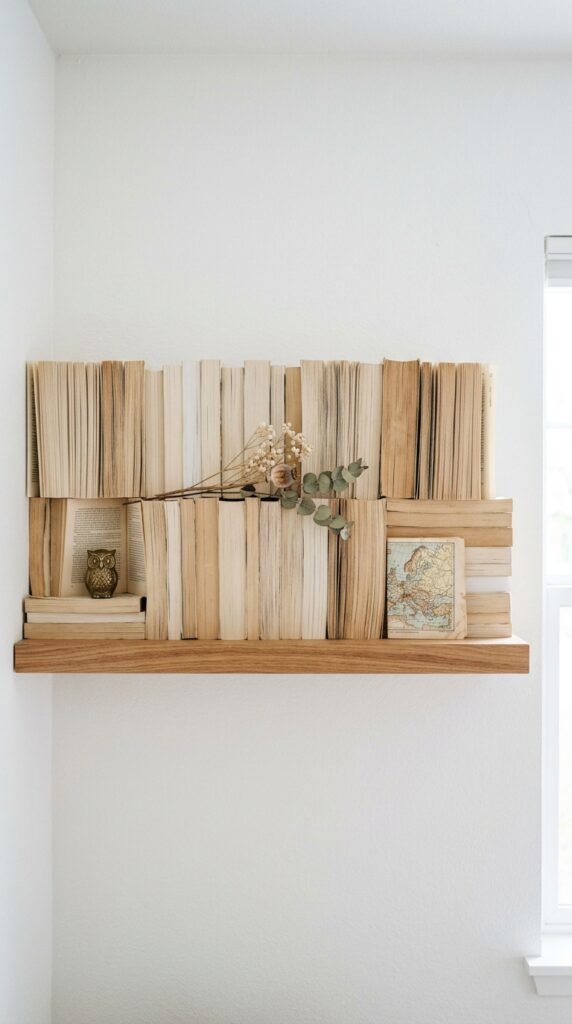
Flip your books around. Pages out, spines in. The result is a calm, neutral, gallery-style wall that looks intentional and sophisticated. It’s popular in minimalist and neutral-toned home aesthetics. The downside? You can’t easily read titles. But for collectors who know their books well, that’s a non-issue. Add a few small objects between stacks — a candle, a figurine, a plant — to break up the texture. It photographs beautifully too.
6. Stacked Horizontal Towers
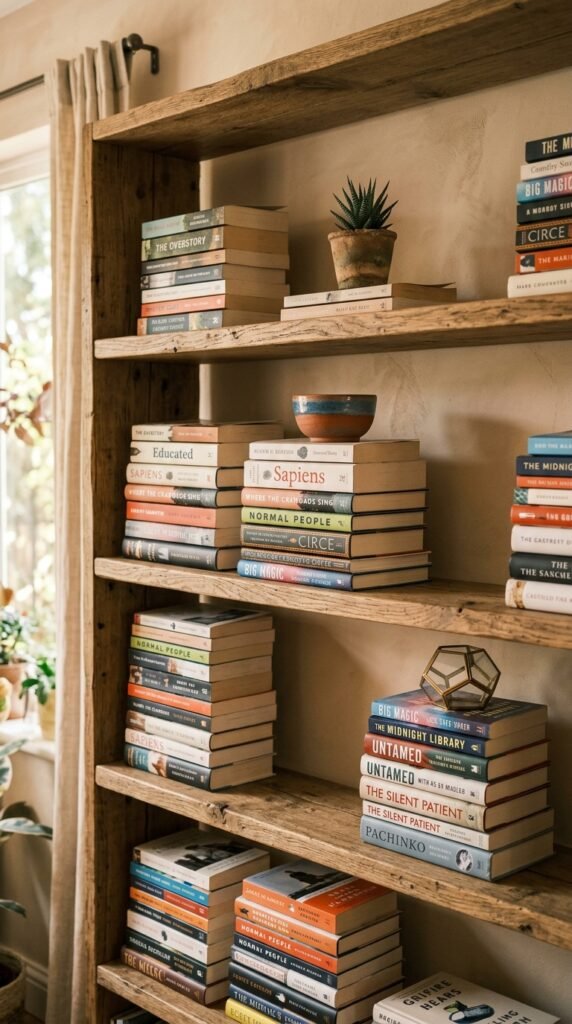
Instead of standing your books upright, stack them in flat piles like a coffee table stack — but on shelves. Each tower can be a different genre, author, or mood. It creates a relaxed, curated look that doesn’t feel too rigid. It also lets you display small objects on top of each stack. Great for shelves with awkward height spacing. Mix stacked sections with upright sections on the same shelf for a layered, collected feel.
7. Series Grouping

If you collect series, keep them together and in order. There’s something deeply satisfying about a complete set lined up perfectly — especially when the spines form a continuous image across the books. Use bookends to keep each series contained as its own unit on the shelf. Arrange series alphabetically by series name, or by the order you read and loved them. It makes gifting recommendations easy too. Just point to a shelf section.
8. Mood-Based Zones
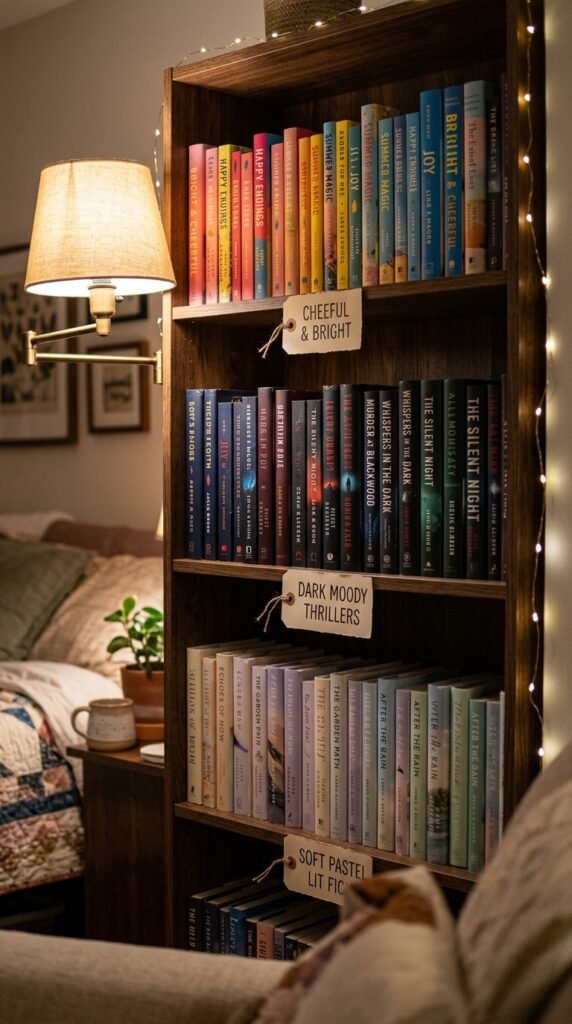
Organize by how a book feels, not what genre label it carries. “Cozy reads” get one shelf. “Dark and heavy” books get another. “Feel-good” goes here. “Mind-expanding” goes there. This system is personal and surprisingly functional. It helps you pick what to read based on your current mood without overthinking it. There’s no wrong way to define your moods — it’s your collection. Use sticky notes or decorative tags to label each zone.
9. Decade or Era Sorting
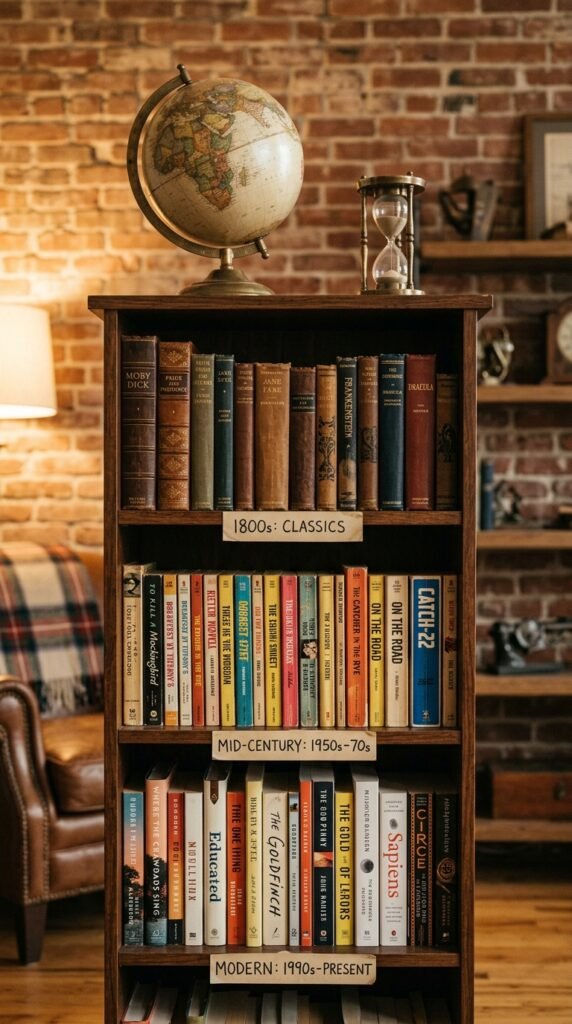
Sort your collection by when books were written or published. Classics from the 1800s in one section. Mid-century literature in another. Contemporary titles on the bottom shelf. It turns your bookcase into a visual timeline of literary history. For collectors who love the historical context of what they read, this system adds meaning to every arrangement. Bonus: it makes a great conversation starter. Guests will actually browse your shelves.
10. Country or Culture Curation
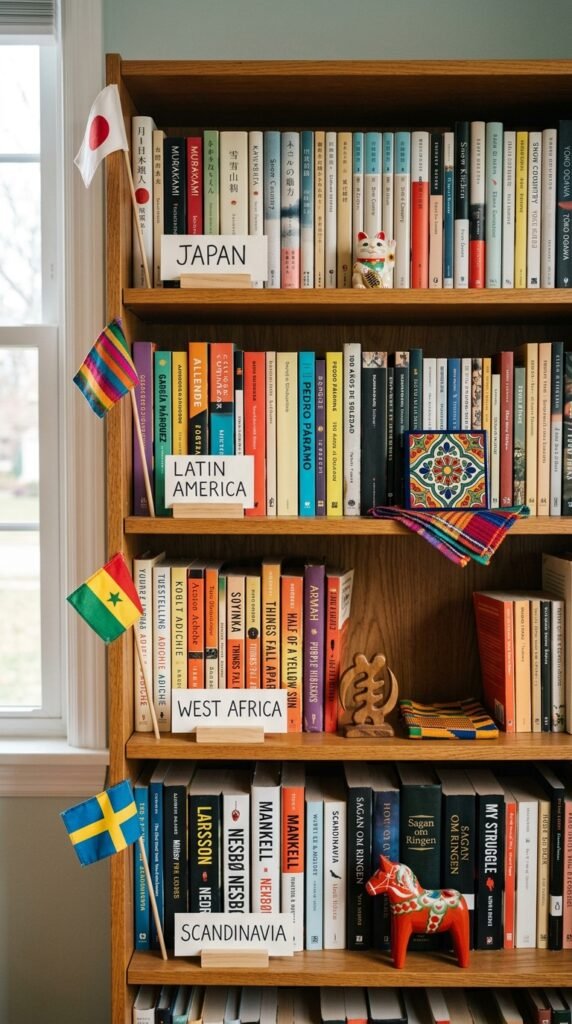
Group your books by the country or culture they come from. Japanese literature here. Latin American fiction there. African authors in their own dedicated section. It’s a great way to see where gaps in your reading exist — and fill them intentionally. Small country flags or handmade labels make the sections clear without spending money. This system works beautifully for collectors who read internationally and want their shelf to reflect that.
11. Publisher or Edition Collecting

Some collectors obsess over editions, not just titles. Penguin Classics get their own row. Everyman’s Library hardcovers sit together. First editions are displayed separately behind a glass door if you have one. Grouping by publisher or edition creates a collector’s display that shows real intentionality. It signals that you don’t just read — you curate. You don’t need expensive editions to make this work. Even matching mass-market paperbacks from the same imprint look great together.
12. Bookmarked “Currently Reading” Display
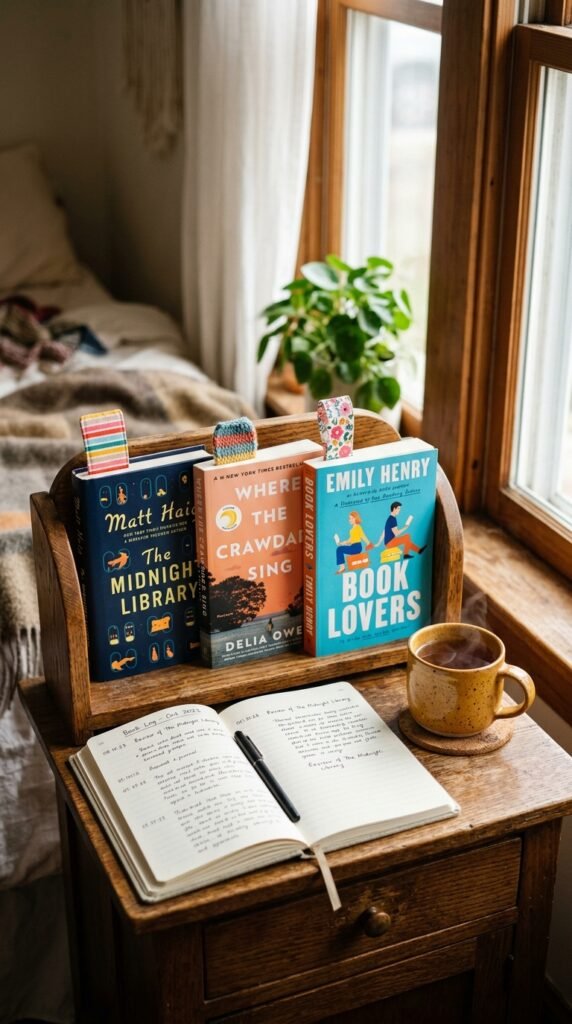
Give your active reads their own dedicated spot. A small shelf, a basket, or even a bookstand on your nightstand works perfectly. Display them face-out so the covers are visible. Add bookmarks so you always know where you left off. This keeps your “in progress” books from getting lost in the main shelf. It’s also motivating — you see them every day. Limit the display to 3–5 books max so it stays intentional, not cluttered.
13. Favorite Quotes Shelf
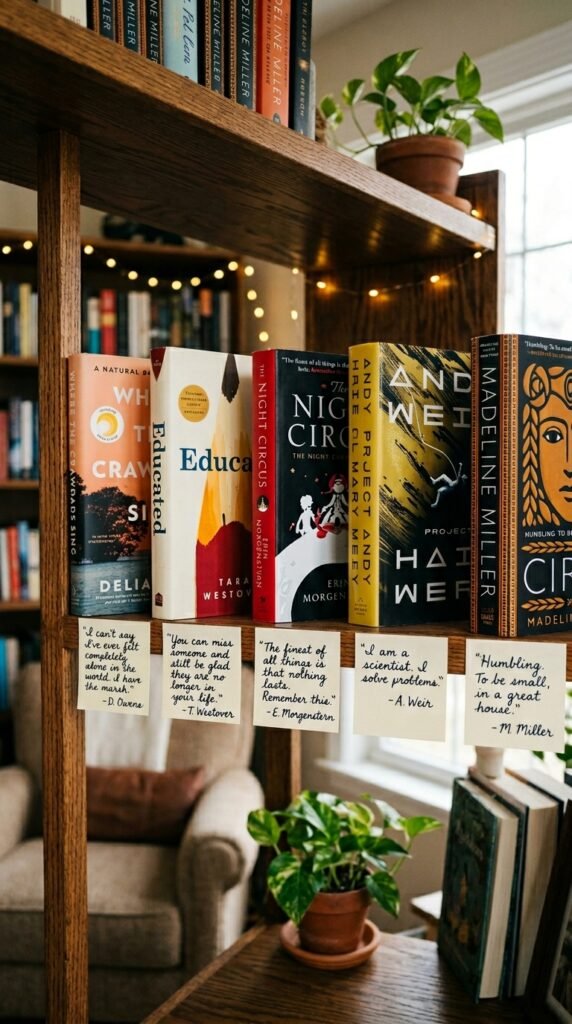
Pick your all-time favorites and display them face-out. Pair each book with a small handwritten card showing your favorite quote or the reason it mattered to you. This turns a shelf section into something deeply personal — almost like a mini gallery of books that changed you. It’s also a great way to introduce your collection to visitors. Guests can flip through your “why I love this” cards and instantly understand your taste as a reader.
14. Seasonal Rotation Shelf
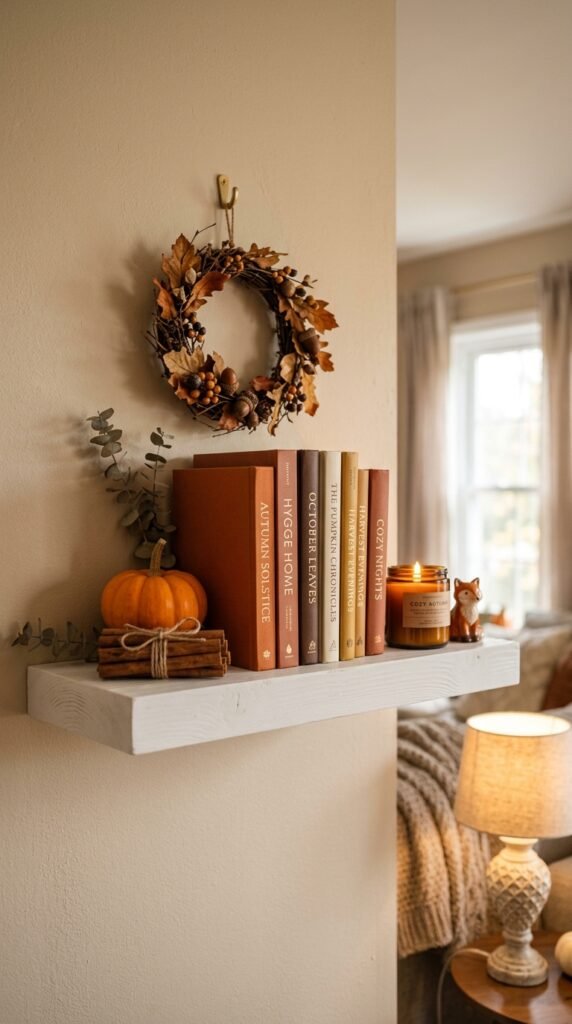
Rotate a small section of your shelf with the seasons or holidays. In autumn, pull out your cozy mysteries, gothic fiction, and dark fantasy. In spring, bring forward nature writing, travel memoirs, and light literary fiction. Add small seasonal decorations — pinecones, dried flowers, a small candle — to reinforce the theme. You don’t need to reorganize the whole shelf. Just one or two shelves updated seasonally makes the whole bookcase feel alive and current.
15. Signed Copies or Special Editions Display
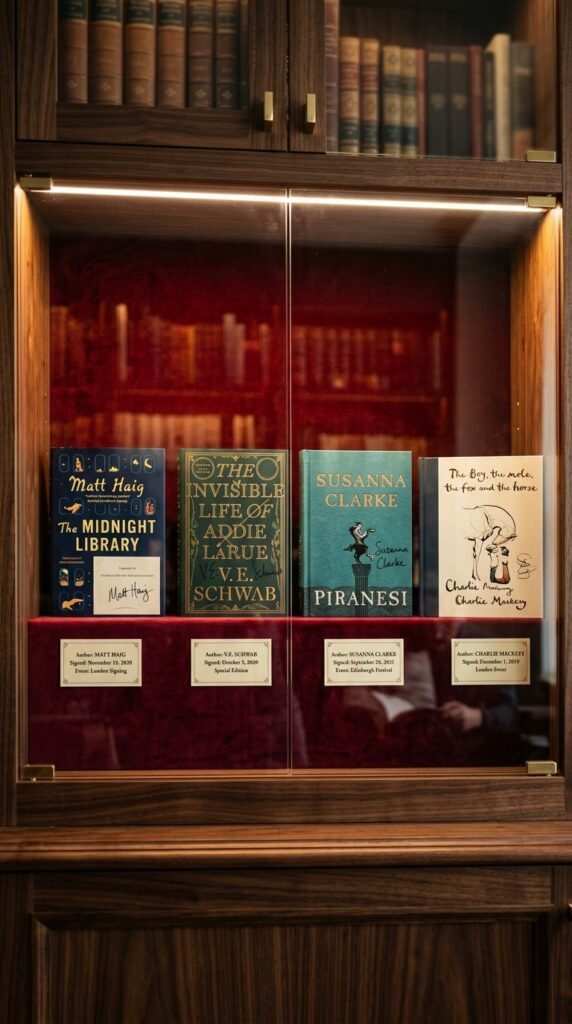
If you have signed copies or special editions, they deserve their own spotlight. A small glass-front cabinet, a floating shelf at eye level, or even a single dedicated row works well. Display them face-out when possible. Add a small card with the date signed or where you got it. This isn’t just organizing — it’s archiving. It shows the history of your collecting journey. And it protects your most valuable books from casual handling.
16. Coffee Table Book Showcase
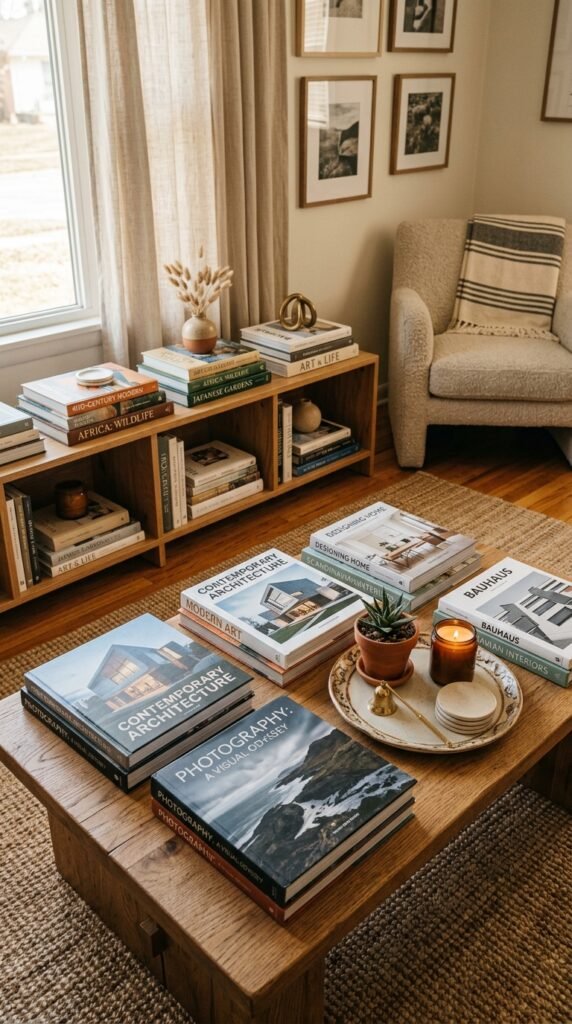
Coffee table books are meant to be seen, not hidden in a row. Stack them flat on lower shelves or your actual coffee table so the covers face up. Arrange by size — largest on the bottom, smaller on top. You can group by subject: all art books together, all travel photography together. They also double as décor. A stack of three beautiful books with a plant on top looks like something from a design magazine. And it costs nothing extra.
17. Audiobook and Ebook Companion Shelf
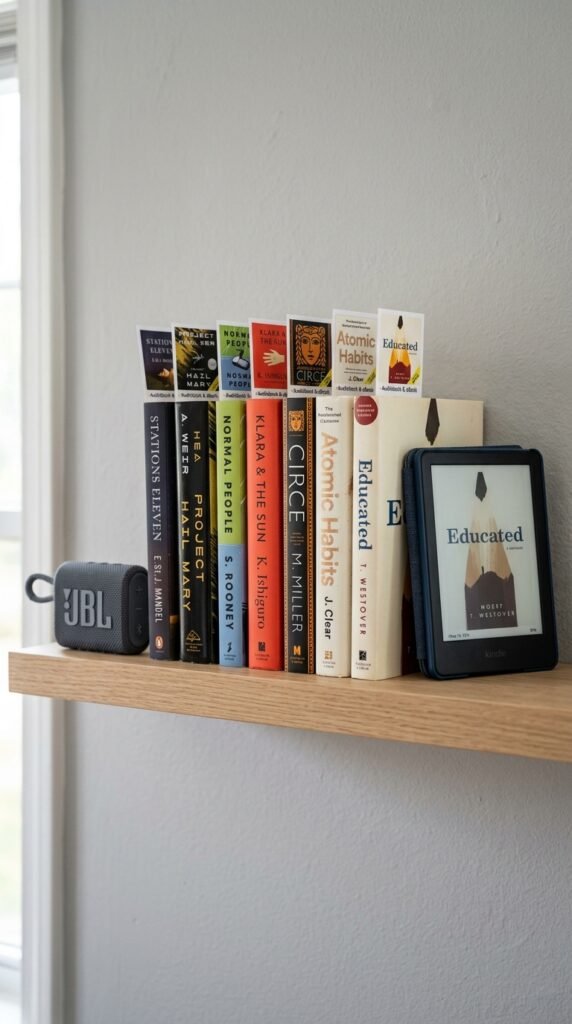
If you consume books across formats — physical, audio, digital — build a companion display that acknowledges all three. Print small cover thumbnails for audiobooks you’ve finished and tuck them next to the physical version (or a placeholder). Keep your e-reader on the shelf as part of the display. It makes your shelf an honest record of your entire reading life, not just the books that made it to print. Great for tracking and showing the full scope of your collection.
18. “Gift From Someone” Sentimental Section
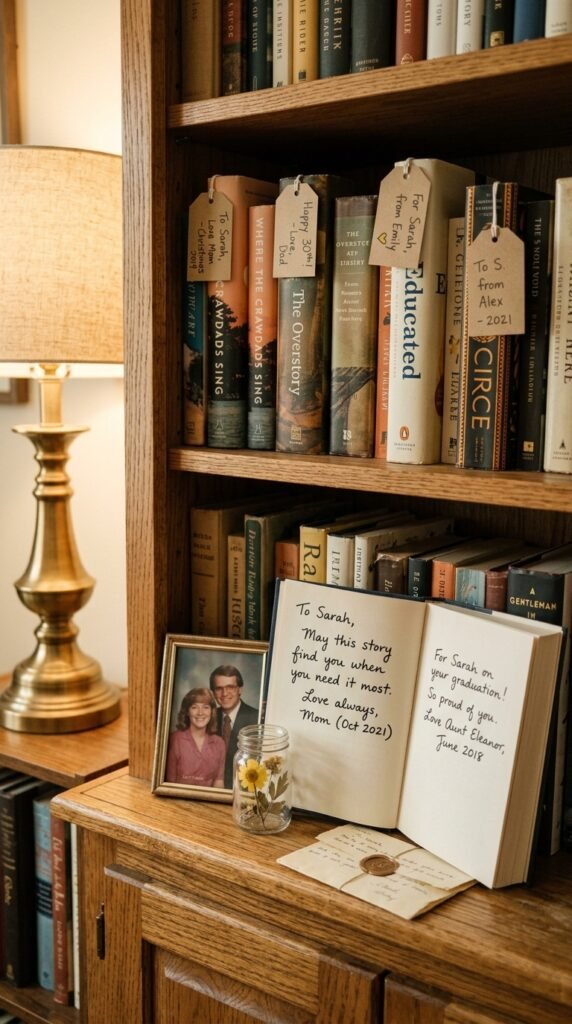
Dedicate a small shelf to books you’ve received as gifts. Keep the gift tags tucked inside. Add a small notecard noting who gave it and when, if the book doesn’t already have a handwritten dedication. This section becomes a map of your relationships and life moments. It’s also one of the most meaningful things a visitor can stumble across on your shelf. You don’t need many books here — even five or six creates something worth pausing at.
19. Research and Reference Cluster
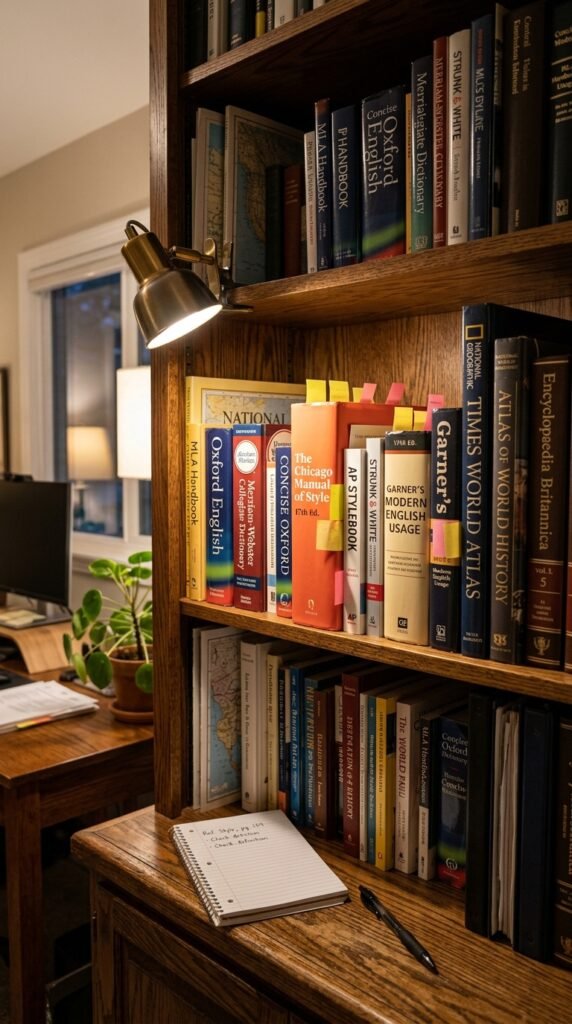
If you use reference books regularly — dictionaries, style guides, writing manuals, atlases — cluster them together near your desk or working space. Sort by type: writing references together, subject encyclopedias together, atlases flat-stacked on their own shelf. Use sticky-note tabs to mark pages you return to often. This isn’t decorative organizing — it’s functional. But keeping it neat and consistent makes the shelf look polished while staying practical for daily use.
20. Themed Reading Challenge Shelf
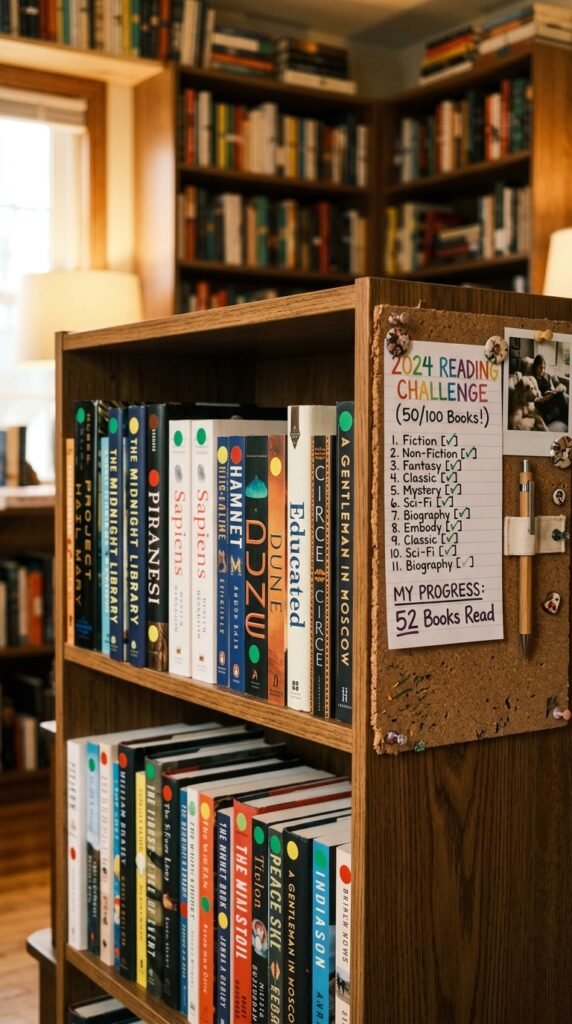
Doing a reading challenge this year? Give it its own physical space. Pull out your challenge books and arrange them on one dedicated shelf. Use small sticker dots to mark what’s done. Pin a checklist to the side of the bookcase. It turns your reading goal into a visible, tactile thing — not just a spreadsheet. Seeing the shelf fill up (or the stickers multiply) is genuinely motivating. And when the year ends, the shelf becomes a record of what you accomplished.
21. Bilingual or Multi-Language Display
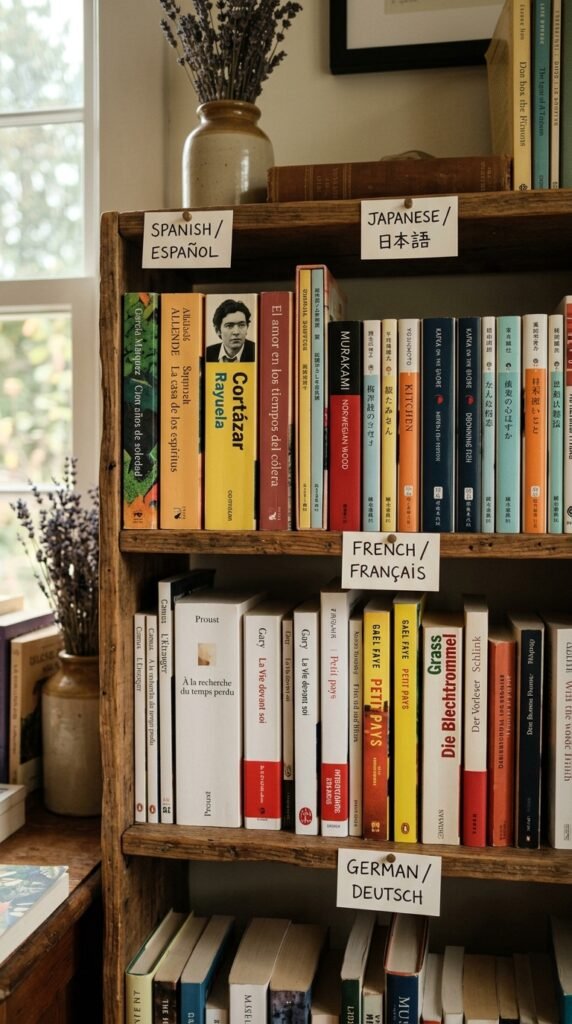
If you read in more than one language, let your shelf say so clearly. Group books by language — Spanish here, French there, Japanese in their own section with vertical spine text facing out. It’s a beautiful way to organize a diverse collection and makes each language section feel like its own mini-library. Label each zone with small handmade cards. This arrangement also helps when you’re in the mood to read in a specific language and don’t want to hunt through a mixed shelf.
22. Curated “Best Of” Display Shelf
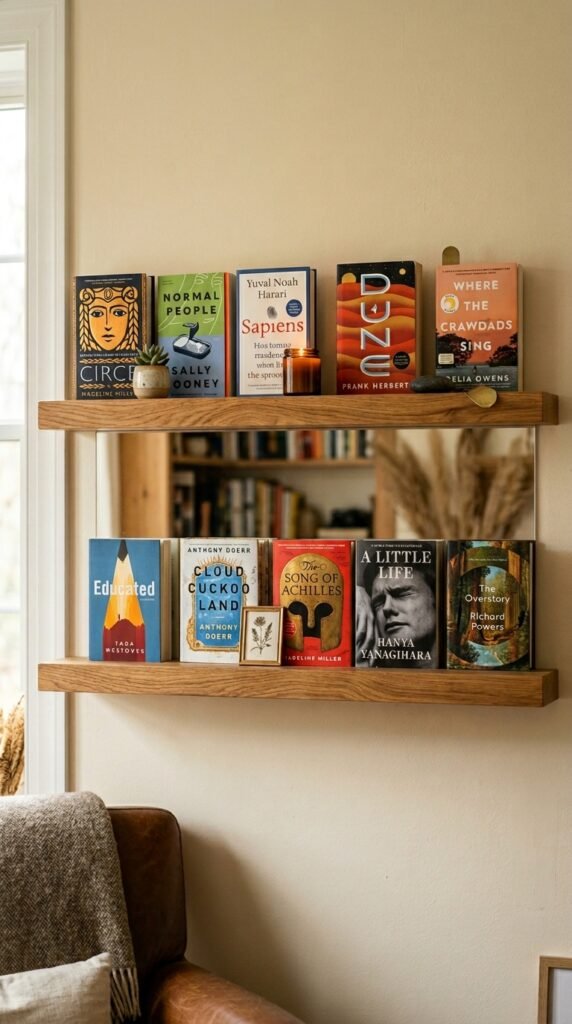
Take your absolute top ten to fifteen books and display them face-out on one prime shelf at eye level. Everything else goes behind them or on other shelves. This “best of” shelf is your collection’s highlight reel. Rotate it once or twice a year as your tastes and readings evolve. It becomes your most personal shelf — the one that answers the question, “What should I read next?” for any guest who visits. It also forces you to make real decisions about what you love most.
Conclusion
Your bookshelf doesn’t need to be perfect — it needs to work for you. Whether you organize by color, mood, series, or sentimental value, the best system is the one you’ll actually maintain. Start with one shelf. Try one method. See how it feels after a week of living with it. Most of these styles can be set up in an afternoon with no supplies beyond what you already own. Your collection deserves to be seen, used, and loved — and the right organization style makes all of that easier.