If your umbrellas have a habit of ending up in a soggy pile by the door, tangled in a corner, or mysteriously missing when it actually rains — you’re not alone. Umbrella storage is one of those small home organization wins that makes a huge difference in your daily routine. With the right setup, you can keep them tidy, dry, and grab-ready every single time.
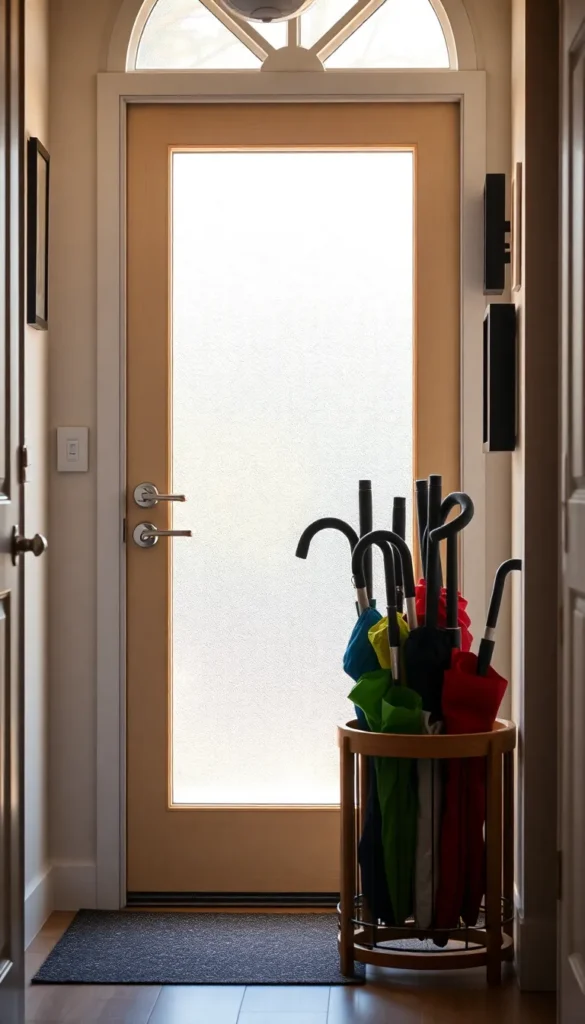
Why Umbrella Storage Actually Matters
It sounds simple, but poor umbrella storage leads to real problems — dripping water on floors, mold on fabric canopies, broken frames from being tossed around, and the classic “I can’t find it when I need it” moment right before a downpour.
A dedicated storage spot means:
- No more water damage on floors or nearby furniture
- Longer umbrella lifespan since they dry properly and stay protected
- A cleaner, more intentional entryway that makes a great first impression
Even a small tweak — like adding one stand or hook — can completely transform the area near your front door.
Choose the Right Umbrella Stand for Your Space
The classic umbrella stand is a classic for a reason. It keeps everything upright, grouped, and out of the way. Here’s how to pick the right one:
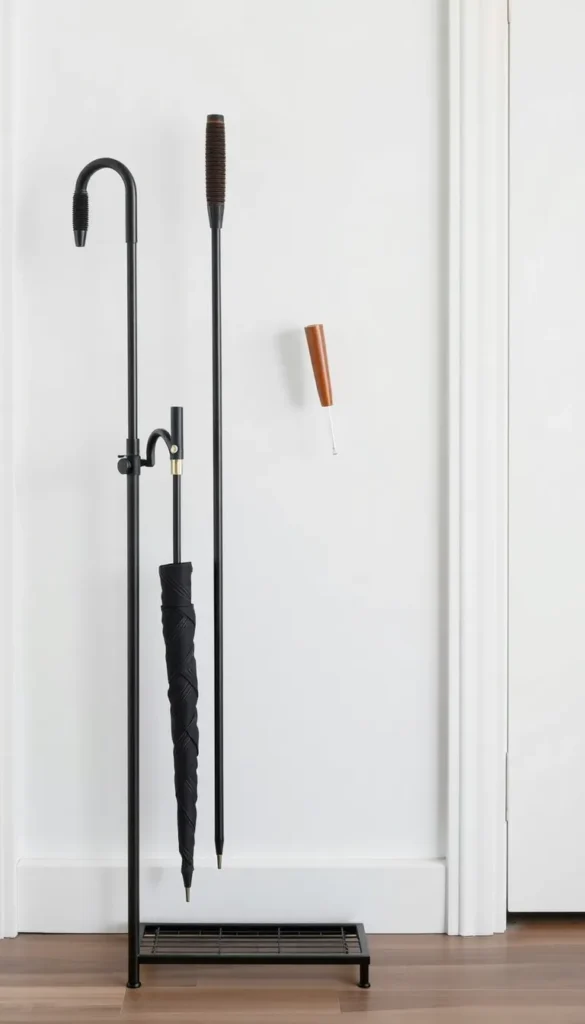
- Small entryways: Go for a slim, tall stand that takes up minimal floor space. Look for ones in metal or ceramic for an elegant, minimal look.
- Families with lots of umbrellas: Choose a wide-base stand or a divided rack that can hold 6–10 umbrellas without them flopping over each other.
- Renters or tight spaces: A wall-mounted umbrella holder screwed right next to the door takes up zero floor space.
Always look for stands with a drip tray at the bottom — this catches water and saves your floor from getting ruined after rainy days.
How to Store Umbrellas Inside a Closet
Not everyone has entryway space for a visible stand — and that’s completely fine. A closet setup can work just as well, if not better.
Step 1: Designate a specific spot. Pick one corner of your coat closet or hallway closet just for umbrellas. Mixing them in with shoes or bags is how they get lost.
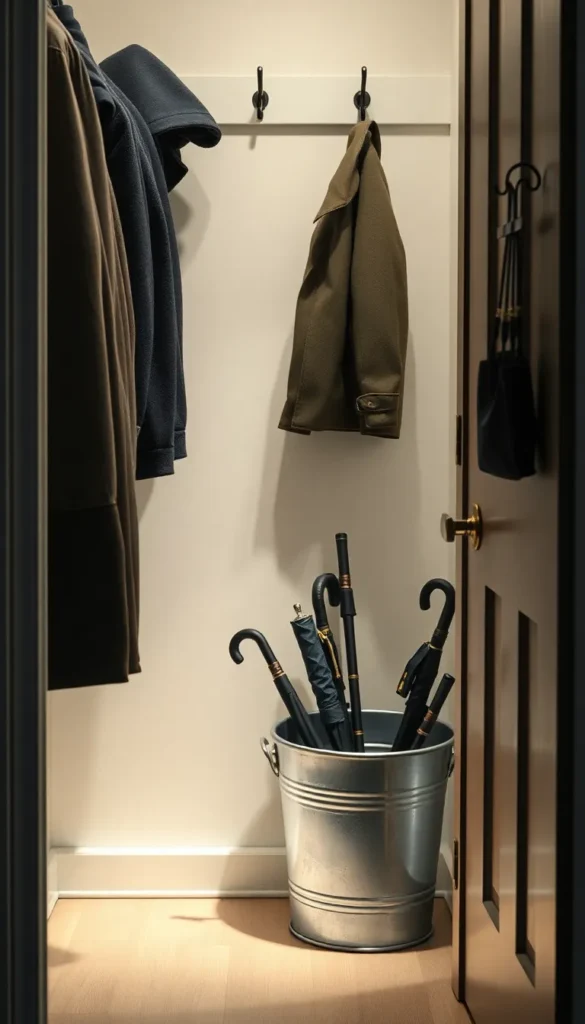
Step 2: Use a tall bin or bucket. A simple canvas bin, a galvanized metal bucket, or even a repurposed wine crate works perfectly. It holds umbrellas upright without needing a specialty product.
Step 3: Let them dry first. Never store a wet umbrella in a closed closet. Leave it open or hang it near the door to dry, then store it. This prevents mildew and that musty smell.
Step 4: Use hooks for compact umbrellas. Folding or travel umbrellas can hang from a small over-the-door hook rack inside the closet door — keeping them separate from full-size ones.
Smart Add-Ons That Make Umbrella Storage Even Better
Once you have a system, a few extras take it to the next level:
- Label your spot. If you share a home, a small label or basket tag keeps everyone putting umbrellas back in the right place.
- Add an umbrella bag dispenser. You’ve seen these at store entrances — they hold plastic sleeves for wet umbrellas. A small home version keeps drips contained the moment you walk in.
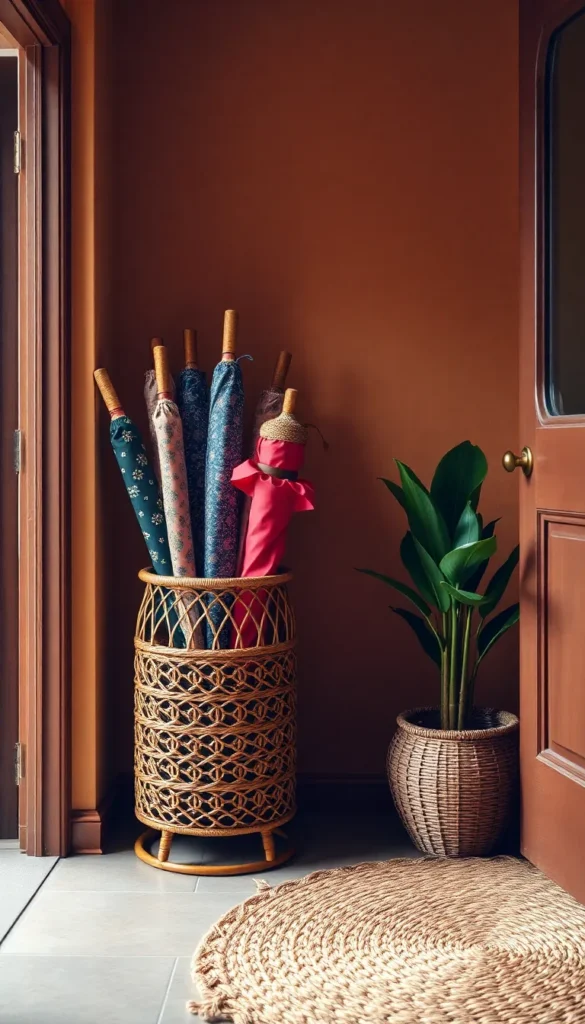
- Go decorative. Umbrella stands come in gorgeous styles — rattan, hammered brass, hand-painted ceramic. Treat it like décor, not just function.
- Rotate seasonally. Keep only current-season umbrellas accessible and store travel or backup umbrellas in a higher shelf or storage bin.
Keep It Simple and Stay Consistent
The best umbrella storage system is the one you’ll actually use every day. You don’t need to spend a lot — a $10 bucket and one hook can do the job. What matters is giving umbrellas a permanent, intentional home so they’re always dry, always accessible, and never creating chaos by the door.
Start small, stay consistent, and your entryway will thank you every rainy morning.
Save this for your next home organization project — and share it with anyone whose umbrella situation is a little out of control! 🌂