You finally unpacked from your last trip — but now your suitcase is just sitting there, taking up half the bedroom floor like it owns the place. Sound familiar? Whether you have one carry-on or a full set of mismatched bags, storing luggage smartly can free up serious space and keep your home feeling organized and calm.
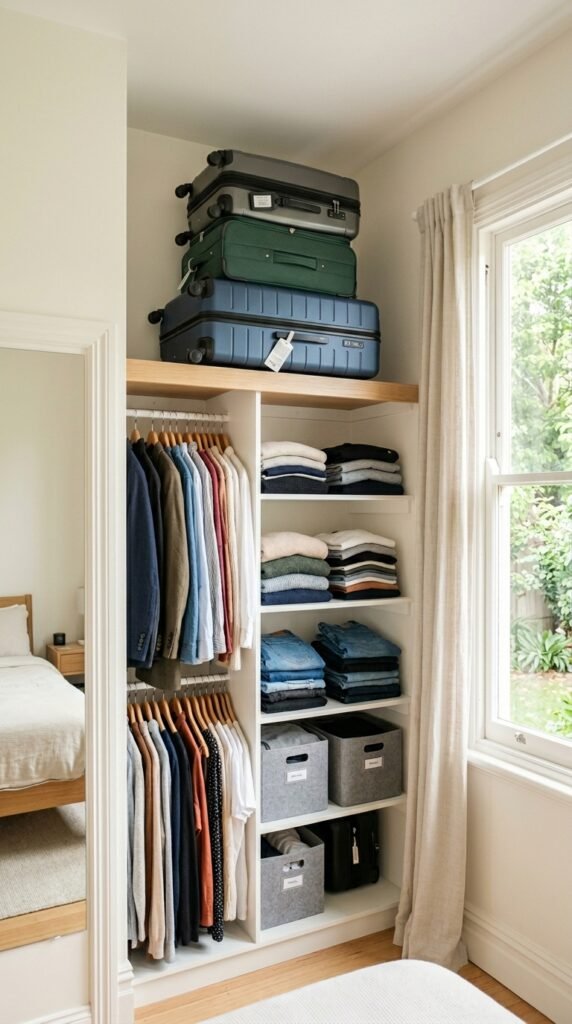
The good news? You don’t need a massive home or a dedicated storage room to do this well. A few clever strategies go a long way.
Clean and Prep Before You Store
This step gets skipped all the time — and it’s the reason luggage ends up smelly, moldy, or full of mystery crumbs six months later.
Before you tuck anything away:
- Empty every pocket completely. Check the hidden zipper compartments too.
- Wipe down the interior with a damp cloth or a few dryer sheets to keep it smelling fresh.
- Air it out for a few hours before closing it up — especially after beach or camping trips.
- Spot clean the exterior, particularly the wheels and handles where dirt collects.
A few minutes of prep now saves you a headache the next time you’re rushing to pack.
Nest Smaller Bags Inside Larger Ones
If you own more than one bag, nesting is your best friend.
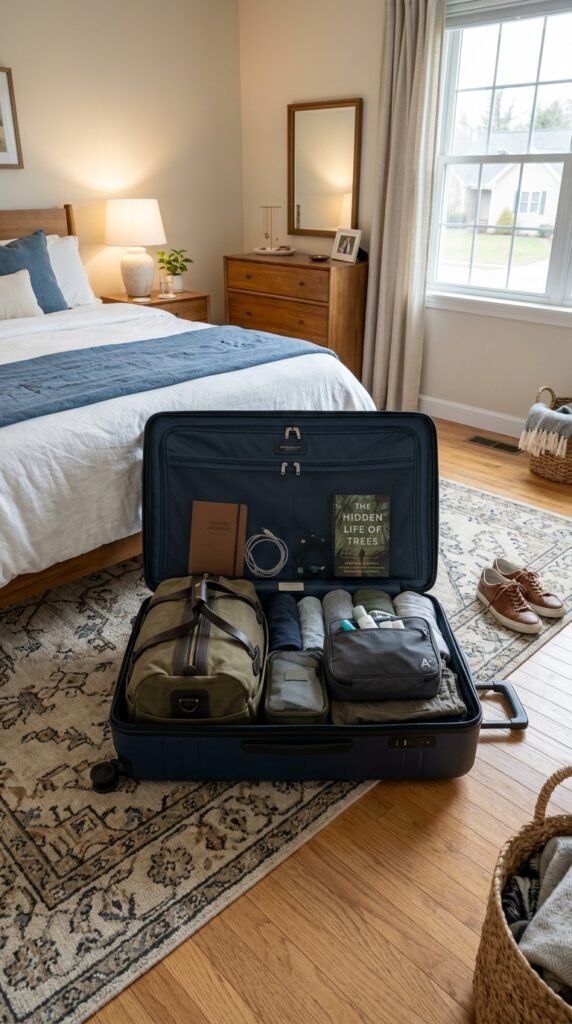
Pack your smaller bags inside your largest suitcase. A carry-on fits inside a checked bag. A weekender duffel slides right into a large rolling suitcase. This keeps everything together, saves shelf space, and means you always know exactly where your bags are.
Pro tip: Stuff packing cubes or travel pillows inside the nested bags to help them hold their shape and make use of every inch.
Use Vertical Space in Your Closet
Most people store luggage flat on a closet floor, which wastes the vertical space above. Instead:
- Install a high shelf above your hanging clothes specifically for luggage.
- Use sturdy shelf risers to stack bags safely without them toppling.
- Stand soft-sided bags upright rather than laying them flat — they take up far less floor space.
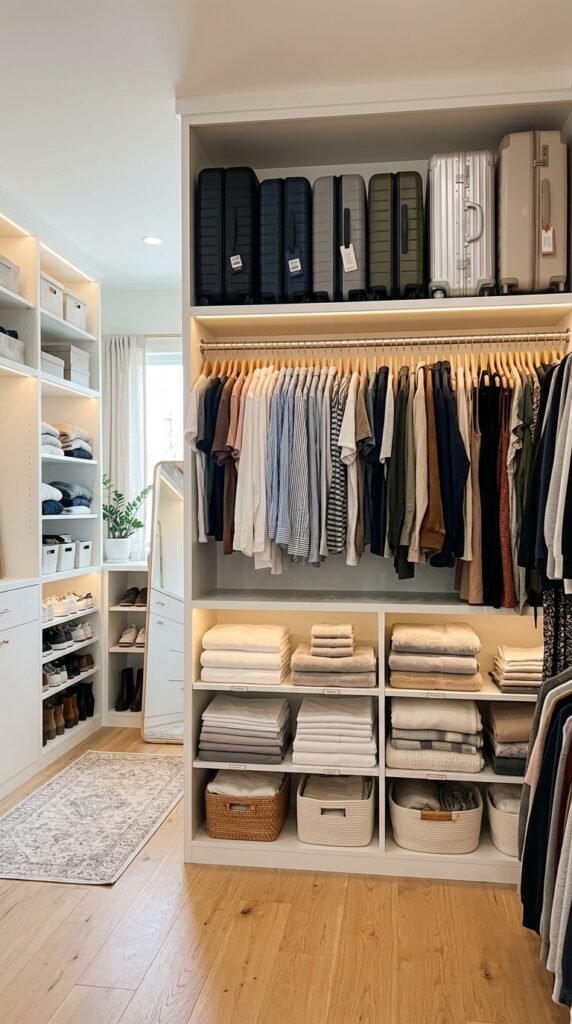
If you’re working with a small closet, even one extra shelf near the ceiling can completely change how much you can store.
Think Beyond the Closet
Closet full? Luggage doesn’t have to live there. Some smart alternative spots:
- Under the bed — flat rolling bags or soft duffels slide under most bed frames with ease. Use a bed riser if you need a little extra clearance.
- On top of wardrobes — that rarely used space above a wardrobe is perfect for a large suitcase you only pull out once a year.
- In a storage ottoman — smaller bags and backpacks can live inside a stylish ottoman that doubles as living room seating.
- In a garage or basement — totally fine for hard-shell bags, just make sure the space isn’t prone to moisture.
Wherever you store them, avoid damp or extremely hot areas, which can warp wheels, damage zippers, and degrade fabric over time.
Keep Frequently Used Bags Accessible
Not all luggage deserves the same real estate. Think about how often you actually use each piece:
- Daily or weekly bags (gym bags, tote bags) should live near the door or on an accessible hook.
- Monthly use bags (weekend bags, carry-ons) can go on a mid-level shelf.
- Rarely used bags (large checked luggage) can go on the highest shelf or in long-term storage.
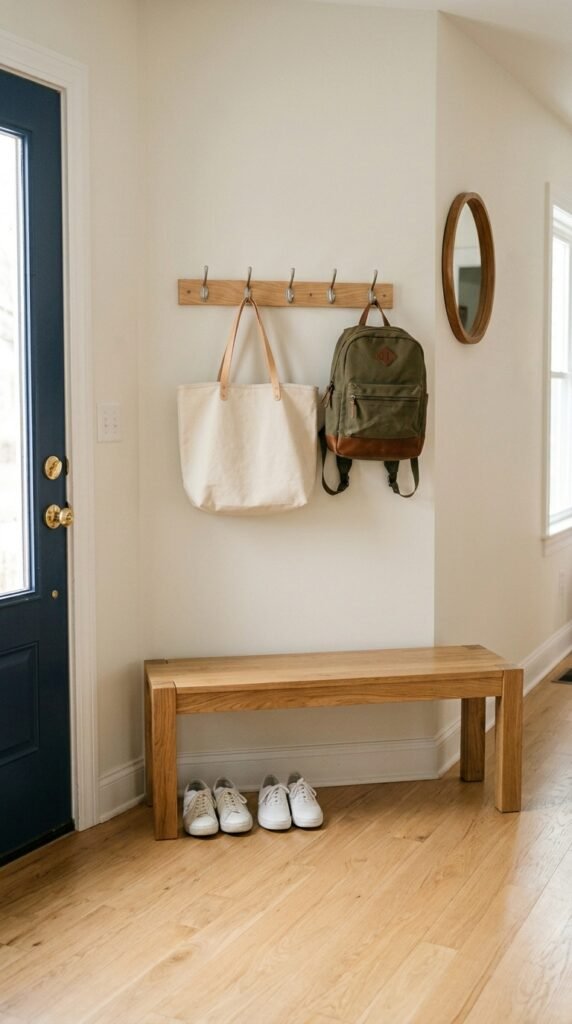
Organizing by frequency means you’re never digging past a giant suitcase just to grab your gym bag on a Tuesday morning.
Protect Your Bags for the Long Haul
A little protection goes a long way in keeping your luggage in great shape between trips:
- Use dust bags or pillowcases to protect hard-shell suitcases from scratches.
- Loosen zipper pulls slightly before long-term storage to reduce stress on the zipper track.
- Leave zippers slightly unzipped on soft bags to prevent mildew buildup from trapped air.
Your luggage works hard when you travel — it deserves a proper home when you don’t. With a little organization, you can reclaim your space, protect your bags, and make every future packing session that much smoother.
Save this guide and share it with anyone who’s been tripping over their suitcase for months! 🧳