Your favorite necklace deserves better than the bottom of a drawer.
You open your jewelry box and pull out your go-to gold necklace — only to find it knotted, scratched, and looking dull. Sound familiar? Most of us have been there. The truth is, how you store your jewelry matters just as much as how you wear it. With a few simple habits and the right setup, you can keep every piece looking brand new for years.
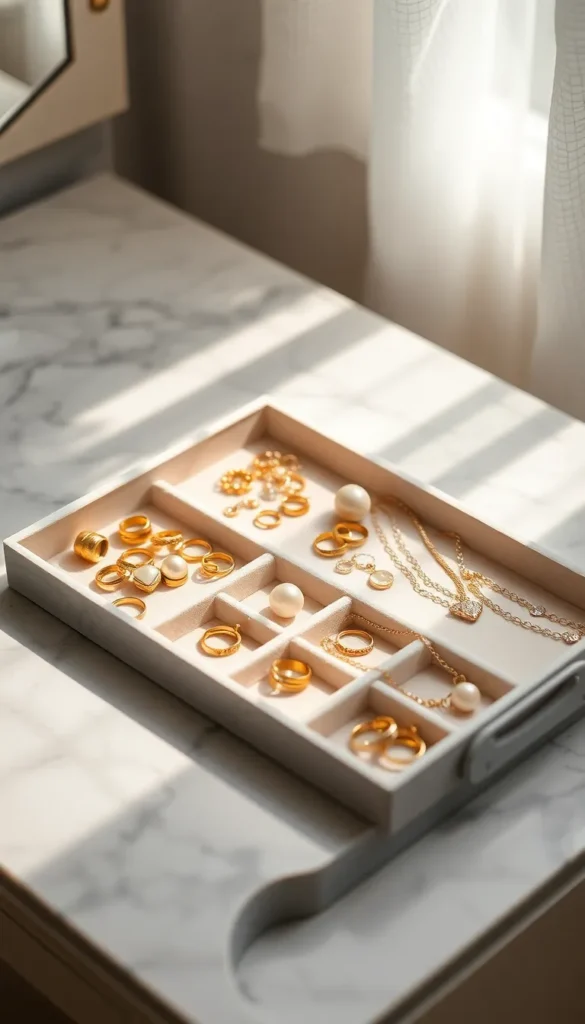
Why Jewelry Gets Scratched and Tarnished in the First Place
Before fixing the problem, it helps to understand it. Scratches happen when pieces rub against each other — especially harder gemstones like diamonds or sapphires scraping softer metals like gold. Tarnishing, on the other hand, is a chemical reaction. Silver and other metals oxidize when exposed to:
- Moisture (humidity, sweat, bathroom steam)
- Air (especially in open dishes or trays)
- Chemicals (perfumes, lotions, cleaning products)
- Other metals (mixed storage speeds up the reaction)
Once you know the culprits, protecting your pieces becomes much easier.
Rule #1 — Store Each Piece Separately
This is the single most important rule in jewelry storage. When pieces touch, they scratch. Period.
Here’s how to separate them smartly:
- Use a jewelry organizer with individual compartments for rings and earrings
- Hang necklaces on a wall-mounted hook rack or a standing jewelry tower to prevent tangling
- Place bracelets in a lined drawer divider so they don’t clink together
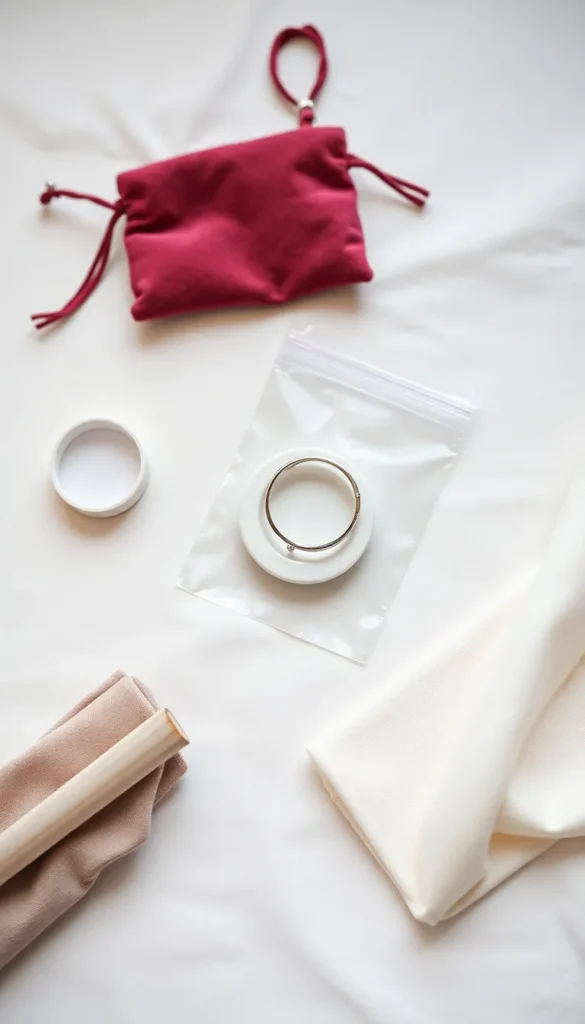
- Tuck delicate items in small zip-lock pouches or soft cloth bags if you’re traveling
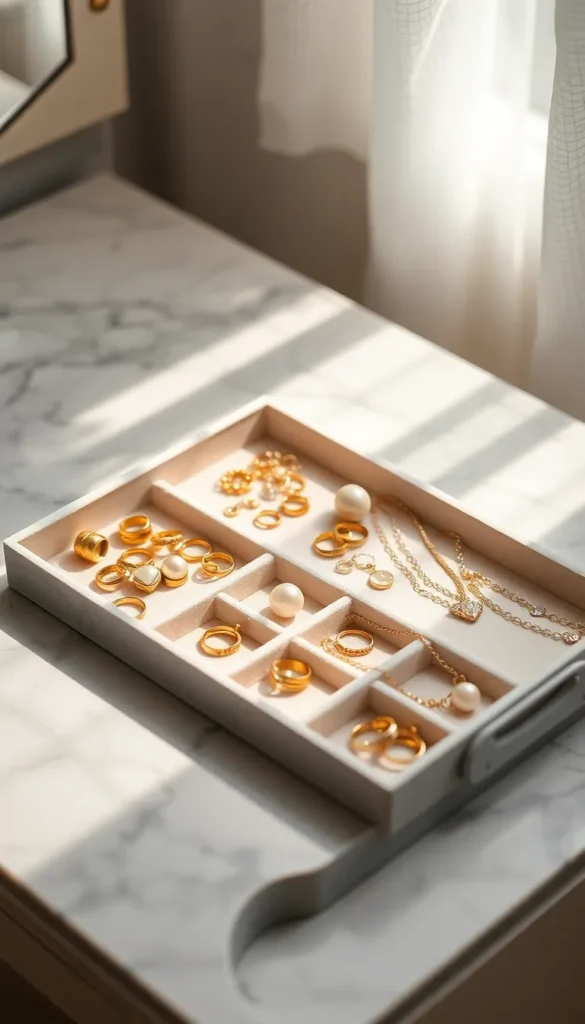
Rule #2 — Control the Environment
Your storage location matters more than the storage container itself. Avoid these common spots:
- ❌ Bathroom counters — steam and humidity accelerate tarnishing fast
- ❌ Windowsills — UV light can fade gemstones and damage certain metals
- ❌ Open dishes on dressers — dust and air exposure speed up oxidation
Instead, aim for:
- ✅ A cool, dry drawer away from direct light
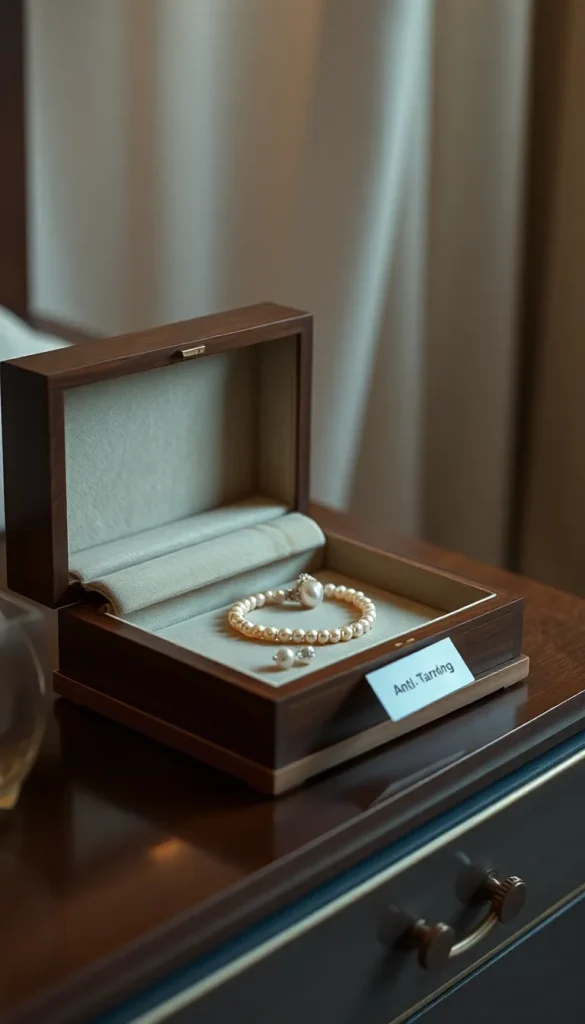
- ✅ A lined jewelry box with a lid to limit air exposure
- ✅ A bedroom vanity in a low-humidity space
For extra protection, toss a few anti-tarnish strips (available online or at craft stores) inside your jewelry box. They absorb the moisture and sulfur compounds that cause silver to darken.
Rule #3 — Clean Before You Store
Never put dirty jewelry away. Oils from your skin, traces of perfume, and lotion residue left sitting on metal speed up tarnishing dramatically. Get into the habit of doing a quick wipe-down before storing:
- Use a soft microfiber or lint-free cloth to gently buff each piece
- For silver, a polishing cloth works wonders on light tarnish
- For gemstone pieces, use a slightly damp cloth then dry thoroughly before storage
- Avoid paper towels — they’re more abrasive than they look
This 30-second habit can add years to the life of your jewelry.
Rule #4 — Use the Right Storage for Fine vs. Everyday Jewelry
Not all jewelry needs the same level of care. Here’s a quick guide:
| Type | Best Storage Method |
|---|---|
| Fine gold & diamonds | Individual soft pouches or felt-lined box compartments |
| Silver | Airtight zip bags with anti-tarnish strips |
| Costume/fashion jewelry | Open organizer trays — keep dry and away from humidity |
| Pearl jewelry | Soft cloth pouch, never airtight (pearls need to breathe) |
Your Jewelry Deserves a Little TLC
Taking care of your jewelry doesn’t require a big budget or a complete vanity overhaul. It just takes a little intention. Separate your pieces, control the environment, clean before you store, and match your storage method to the type of jewelry you own.
Do those four things consistently, and you’ll never pull out a tangled, scratched, or tarnished piece again.
Save this article to your Pinterest boards and share it with anyone who’s ever cried over a knotted necklace! 💛