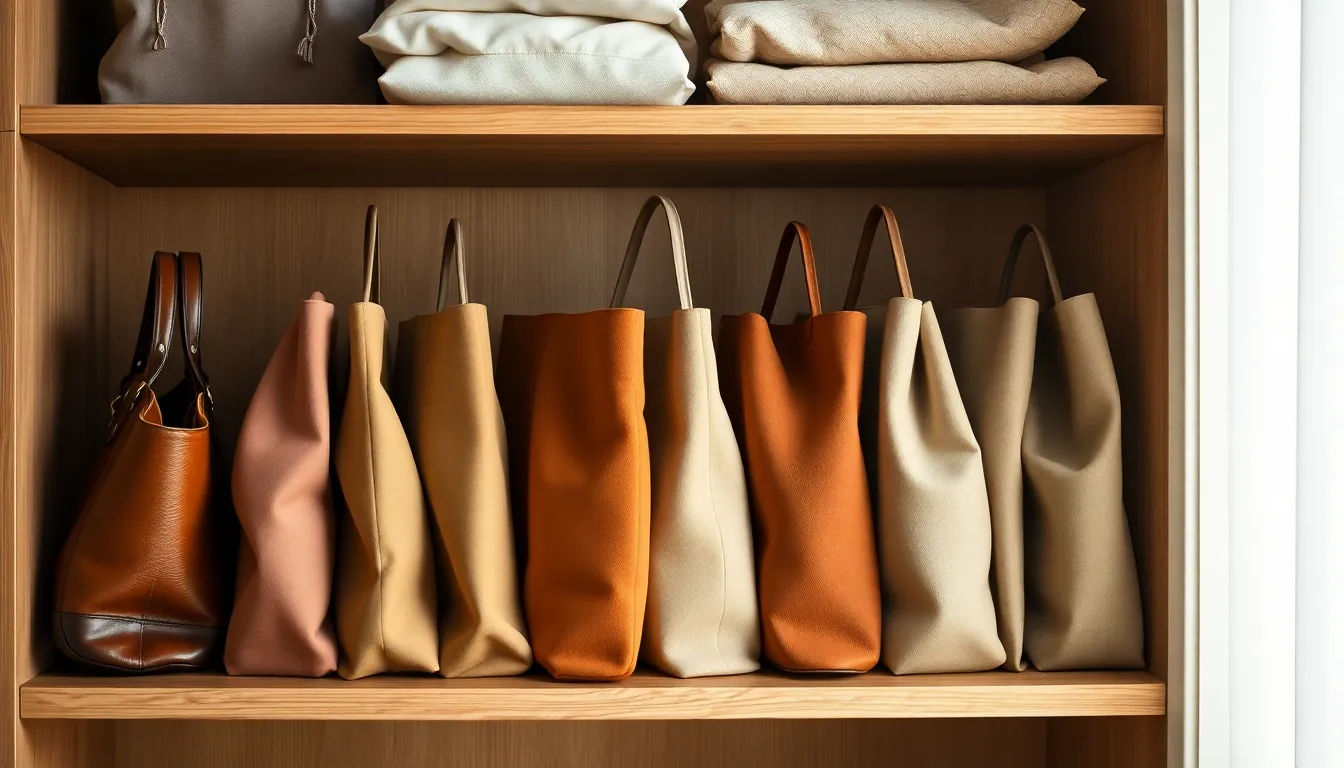
Your handbags deserve better than a pile on the closet floor. Whether you’re protecting a treasured leather tote or keeping your everyday canvas bag in top shape, the way you store your handbags makes all the difference. A little care goes a long way — and the good news is, you don’t need a fancy closet system to do it right.
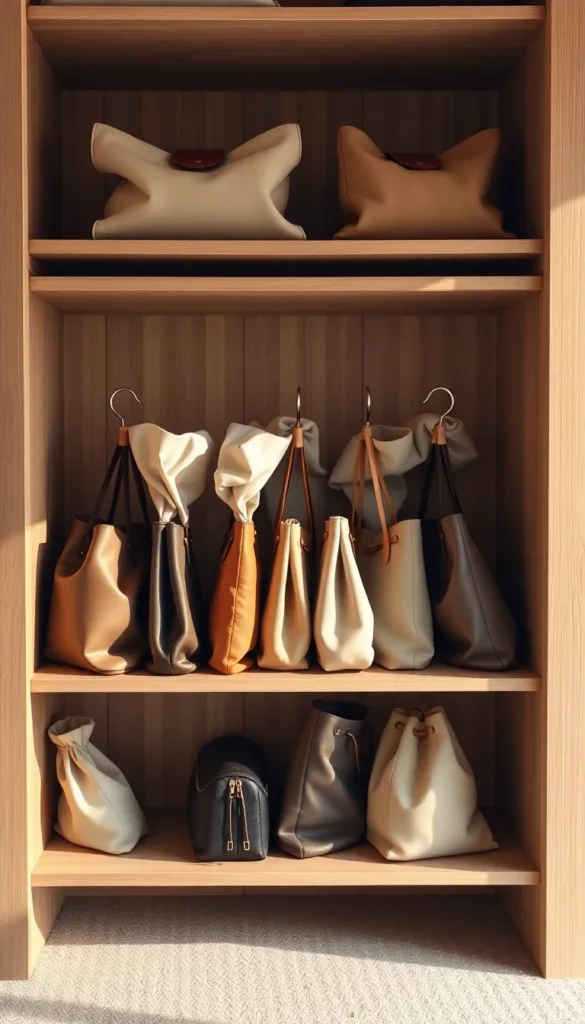
Why Proper Storage Actually Matters
Most bag damage doesn’t happen from use — it happens in storage. Creases form when bags collapse under their own weight or get squished between other items. Dust and moisture sneak in and dull the finish, fade the color, or worse, cause mildew on leather.
A few simple habits can add years to the life of your bags and keep them looking like they just came off the shelf.
Step 1: Clean Your Bag Before Storing It
Never store a dirty bag. Oils, lotion residue, and everyday grime can set into leather and fabric over time, leaving stains that are nearly impossible to remove later.
- Wipe down leather bags with a soft, dry cloth
- Use a gentle leather conditioner on smooth leather before long-term storage
- Spot clean fabric or canvas bags and let them dry completely
- Empty all pockets — forgotten receipts and wrappers attract moisture and bugs
Step 2: Stuff Your Bags to Hold Their Shape
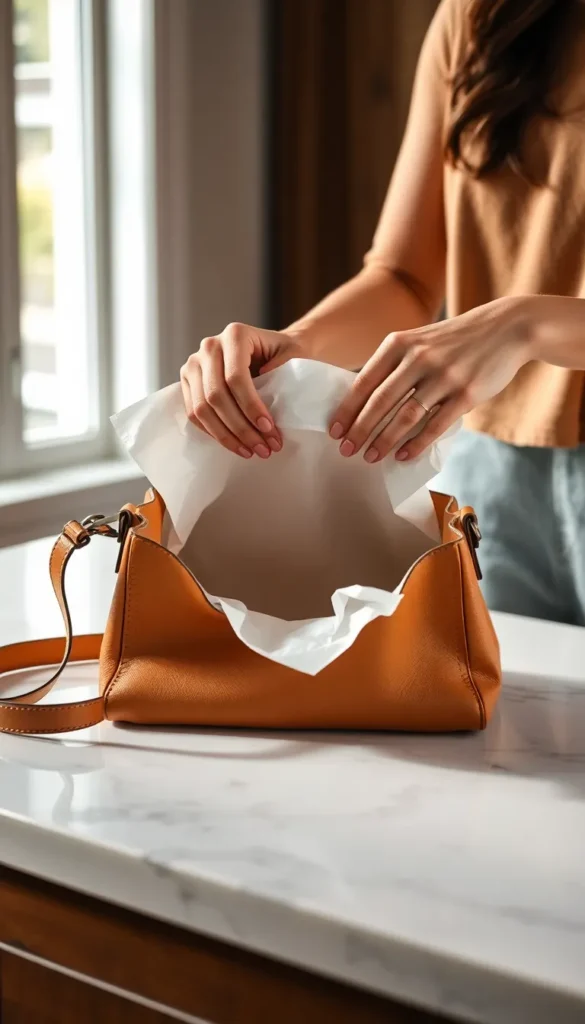
This is the single most effective thing you can do to prevent creasing. A bag that holds its shape in storage will look fresh every time you pull it out.
What to use for stuffing:
- Acid-free tissue paper (best for delicate or light-colored bags)
- Clean cotton t-shirts or soft scarves
- Bubble wrap for structured bags that need firmer support
- Avoid newspaper — the ink can transfer onto the lining
Fill the bag enough that it holds its natural shape without being overstuffed. You want it to look like it’s ready to be worn, not like it’s about to burst.
Step 3: Use Dust Bags — Always
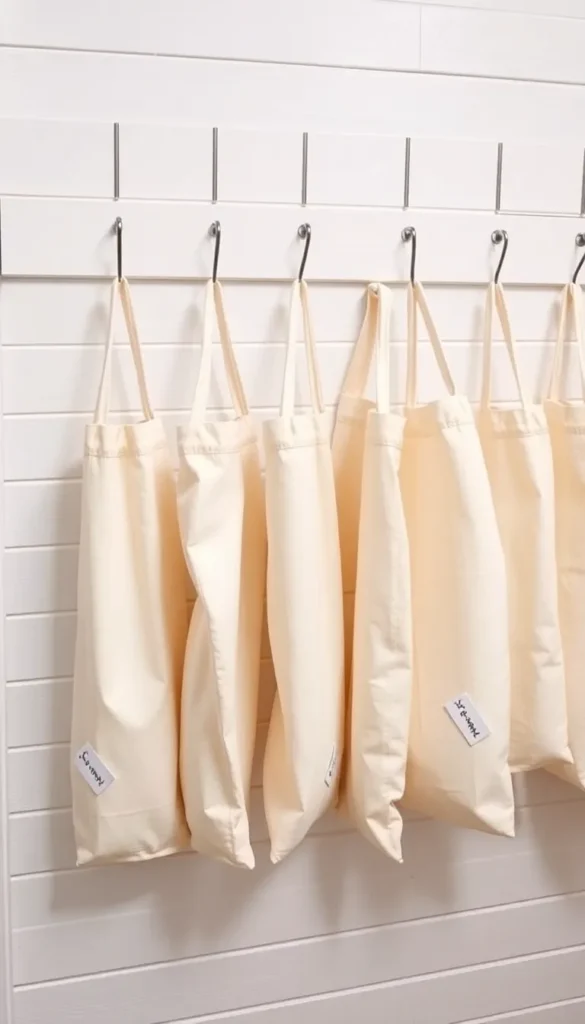
The dust bag that came with your handbag isn’t just fancy packaging. It’s your first line of defense against dust buildup, humidity, and color transfer.
- No original dust bag? Use a clean pillowcase instead
- Avoid plastic bags — they trap moisture and can cause mildew
- For leather bags, breathable cotton dust bags are ideal
- Label your dust bags if you have several similar-sized bags in storage
Step 4: Store Upright, Not Stacked
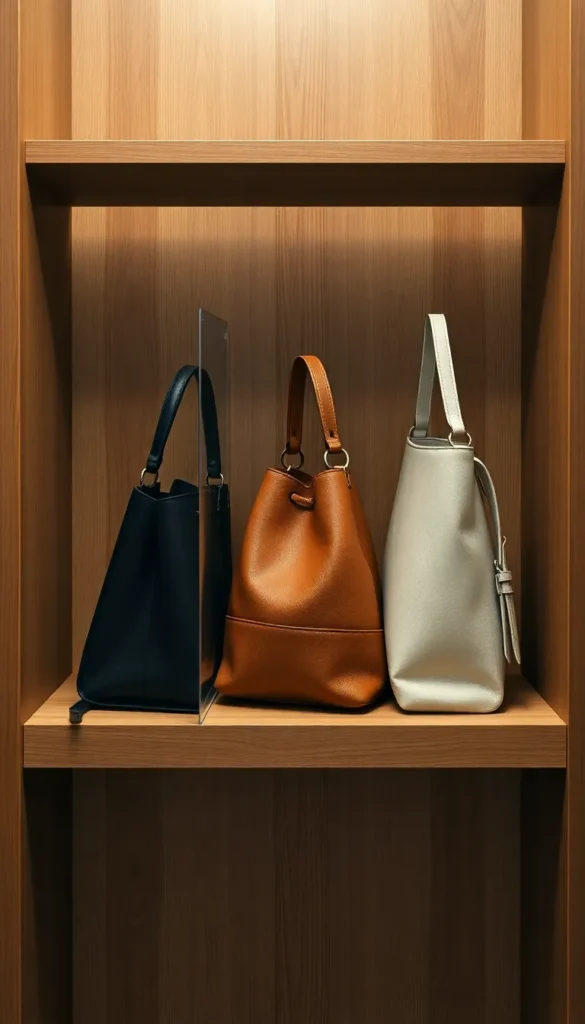
Stacking bags is one of the fastest ways to cause permanent creasing and hardware marks. Whenever possible, store bags upright on a shelf so they keep their structure.
Smart storage ideas:
- Use shelf dividers to keep bags from leaning into each other
- Hang bags with sturdy handles from hooks — but only if the handles can take the weight
- Use clear acrylic shelf risers to create extra rows of storage in a small space
- Store clutches flat in a drawer lined with soft fabric
Avoid hanging bags by one handle for extended periods — it can stretch the strap unevenly over time.
Step 5: Control the Environment
Where you store your bags matters just as much as how you store them.
- Avoid direct sunlight — UV rays fade leather and fabric quickly
- Skip the bathroom — humidity is leather’s worst enemy
- Stay away from heat sources like radiators or vents
- Aim for a cool, dry, dark spot — a bedroom closet is usually ideal
- Silica gel packets placed near your bags (not inside them) help absorb excess moisture
The Payoff Is Worth It
Taking five extra minutes before putting a bag away can mean the difference between a bag that lasts two years and one that lasts twenty. Stuff it, dust bag it, stand it upright, and keep it somewhere cool and dry — that’s really all it takes.
Save this guide and share it with a fellow bag lover who’s been piling their purses in a heap! Your collection deserves the same care you give to wearing it. 👜