Kids grow fast — like, blink and they’ve outgrown three sizes fast. One season you’re sorting tiny onesies, and the next you’re wondering how those tiny shoes even fit anymore. If your child’s closet feels like a chaotic pile of “maybe this still fits” and “I forgot we had that,” you’re not alone.
The good news? A size-based closet system is a total game changer. It saves you time, reduces morning meltdowns, and helps you actually see what your child owns. Here’s exactly how to set it up — and keep it working as your kids keep growing.
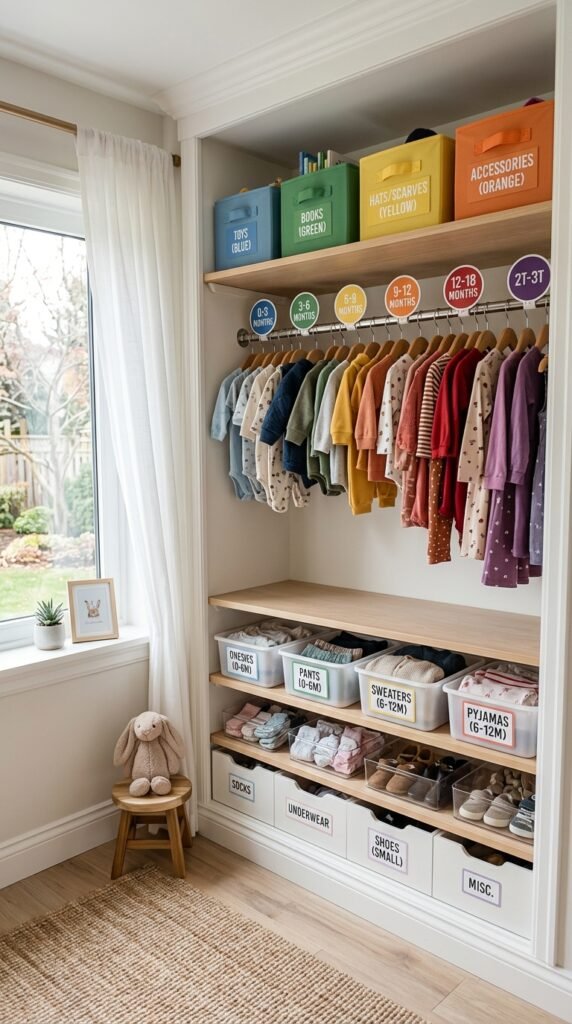
Start With a Full Closet Cleanout
Before you can organize, you need a clean slate. Pull everything out of the closet and sort it into three piles:
- Fits now — goes back in the closet
- Too small — donate, sell, or pass along
- Too big — store for later (more on this below)
Be ruthless. If it’s stained, stretched, or missing a button you’ll never sew back on, let it go. This step alone will cut closet clutter by half.
Set Up a “Current Size” Zone
This is the heart of the system — the section your child (and you) will use every single day. Keep only the size they’re wearing right now in this zone.
Hang clothes by category: tops together, bottoms together, dresses or full outfits on one side. Use slim velvet hangers to maximize space, and keep the hanging rod at a height your child can reach so they can start picking out their own clothes.
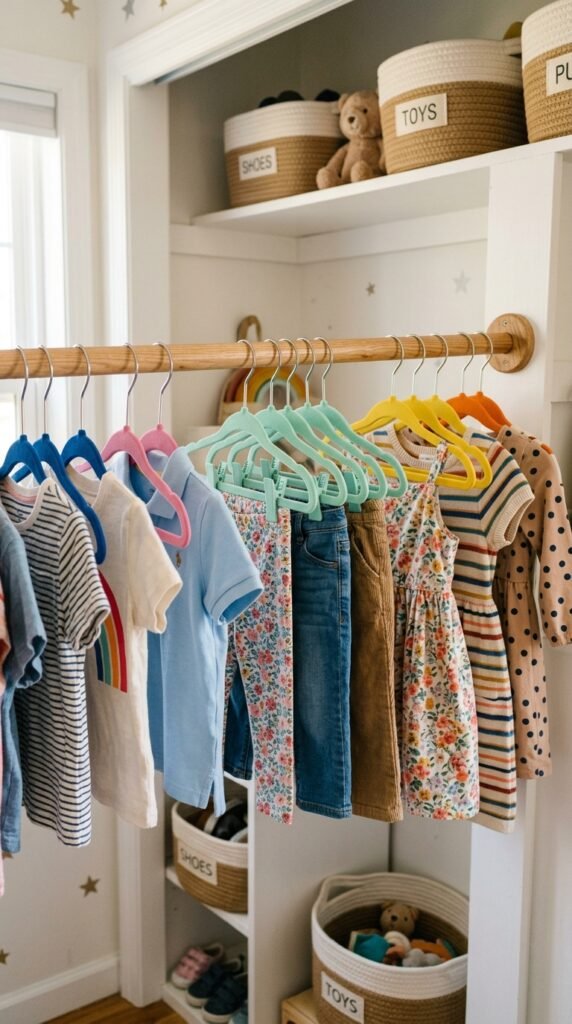
For folded items like leggings, pajamas, and underwear, use labeled bins or small baskets on a low shelf. Simple labels like “PJs,” “Socks,” and “Leggings” work perfectly — even for kids who can’t read yet, you can add a small picture icon.
Create a “Next Size Up” Storage Section
Kids grow in spurts, and you’ll often find yourself with a bag of hand-me-downs or sale finds that are almost the right size. Don’t let those float around the house — give them a dedicated home.
Use a separate shelf, a labeled bin, or even a small drawer for the next one or two sizes up. Here’s how to keep it tidy:
- Label bins clearly: Size 5T, Size 6, Kids Medium, etc.
- Keep only 2–3 pieces per category unless storage space allows more
- Do a quick swap every season — move “next size” items to the current zone as needed
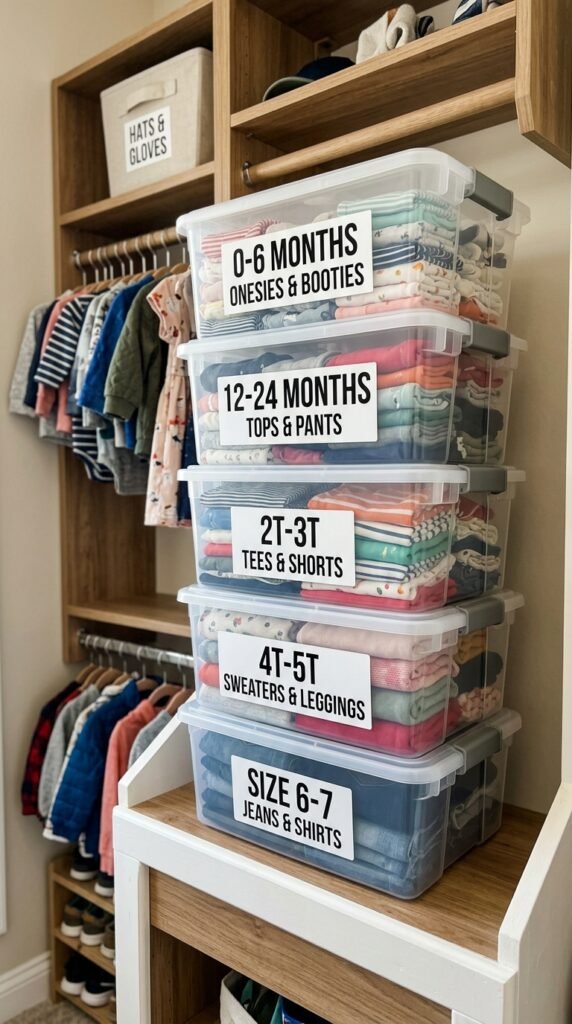
This prevents the frantic last-minute scramble when your child outgrows everything at once — and trust me, it will happen overnight.
Handle Seasonal Items Smartly
Not every size needs to be accessible year-round. Winter coats don’t belong in a summer closet, and swim cover-ups can hibernate in the off-season.
Use vacuum storage bags or labeled under-bed bins for out-of-season clothing. When you rotate seasons, that’s also a great time to reassess sizing. Pull out the bin, try things on, and move whatever fits into the active closet zone.
Pro tip: Always label storage bins with both the size and the season — for example, 4T / Winter. Future you will be very grateful.
Do a Monthly Size Check
Kids don’t send a memo when they’ve outgrown something. Build a quick monthly habit of doing a mini closet audit:
- Flip through hanging clothes and check waistbands and sleeve lengths
- Swap out anything that’s suddenly snug
- Refill from the “next size up” bin as needed
It takes less than 10 minutes and keeps the system from collapsing between seasons.
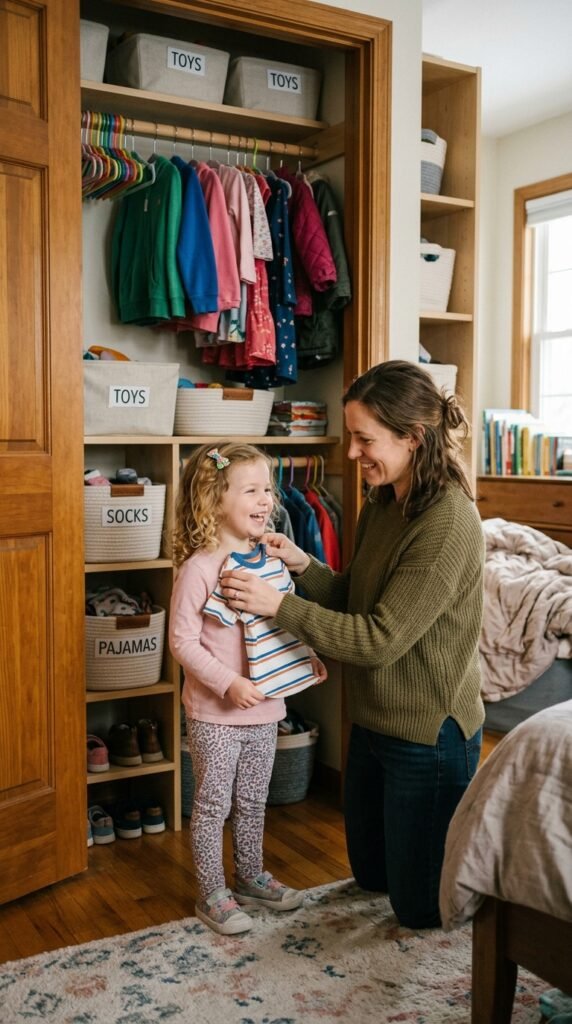
The Payoff Is Worth It
Once this system is in place, getting dressed in the morning becomes genuinely easy. No more digging through piles, no more “wait, does this still fit?” moments, and no more buying duplicates of things you already owned but couldn’t find.
A size-based closet grows with your child — all you have to do is maintain it.
Save this article and come back to it every season when it’s time to do your closet reset! Your future self (and your kids) will thank you.