If your child’s bedroom feels like a permanent tornado hit it, you’re not alone. When sleep space and play space blur together, kids have a harder time winding down at night — and an even harder time focusing during the day. The good news? You don’t need a bigger room or a full renovation. You just need a smarter layout.
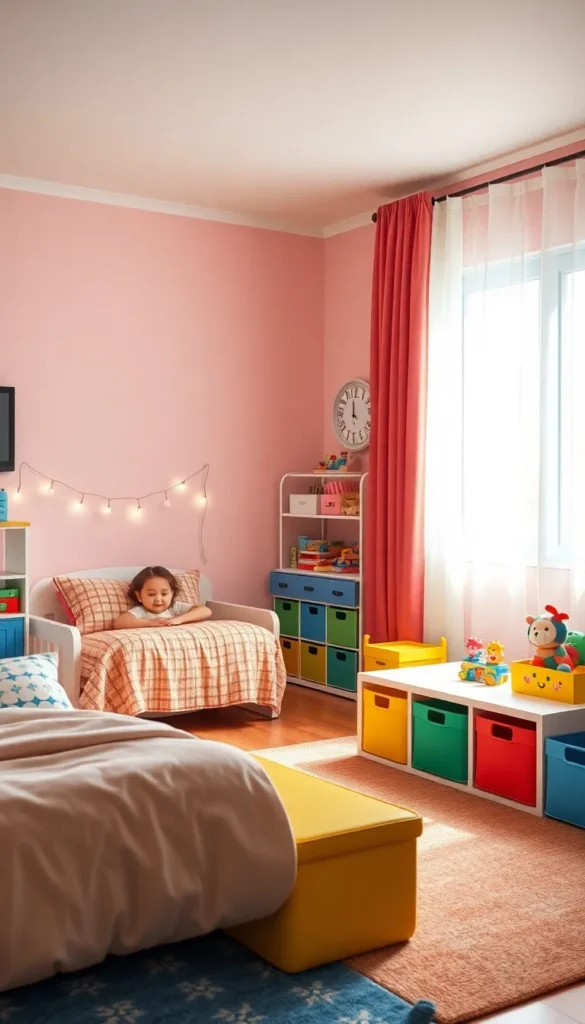
Creating defined zones tells your child’s brain what to expect in each corner of the room — rest here, play there. It’s a simple shift with a surprisingly big impact.
Start With a Simple Zone Map
Before you move a single piece of furniture, grab a pencil and sketch the room layout. Identify three key zones:
- Sleep Zone – the bed and everything that supports winding down
- Play Zone – where imaginative, active, or creative play happens
- Learning/Reading Zone – a quiet spot for books, puzzles, or homework
Even in a small room, you can carve out these areas using rugs, furniture placement, and lighting. You don’t need walls — just visual boundaries.
Set Up the Sleep Zone First
The sleep zone should feel calm, cozy, and separate from the chaos. Position the bed away from the play area if possible — ideally against a wall to give a sense of security.
Keep this zone minimal:
- Soft, neutral or muted bedding (avoid bright stimulating colors)
- A small nightstand with a lamp for a dim, warm glow
- Blackout curtains to support better sleep
- A stuffed animal or two — but keep toys out of the bed itself
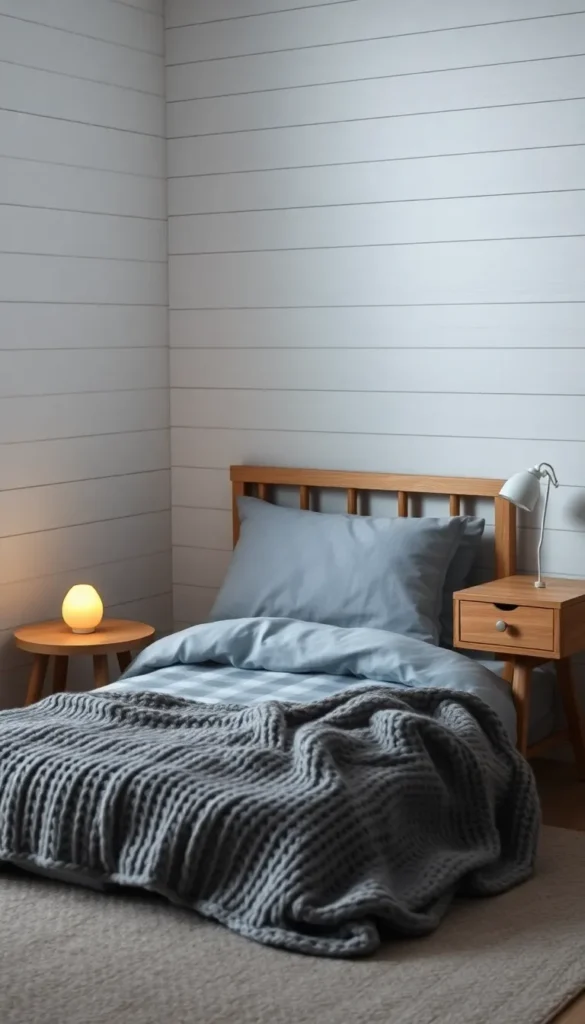
The goal is to make this corner feel noticeably different in energy from the rest of the room. When kids lie down, their brain should immediately start associating that spot with rest.
Create a Play Zone That Contains the Mess
The play zone is where the magic (and the mess) lives. Contain it by anchoring the space with a colorful rug — this becomes the visual border for play.
Smart storage is everything here:
- Open bins or baskets labeled by category (blocks, cars, art supplies)
- A low shelving unit kids can access independently
- A small table and chairs for building, drawing, or pretend play
- Wall hooks or pegboards for dress-up items or craft tools
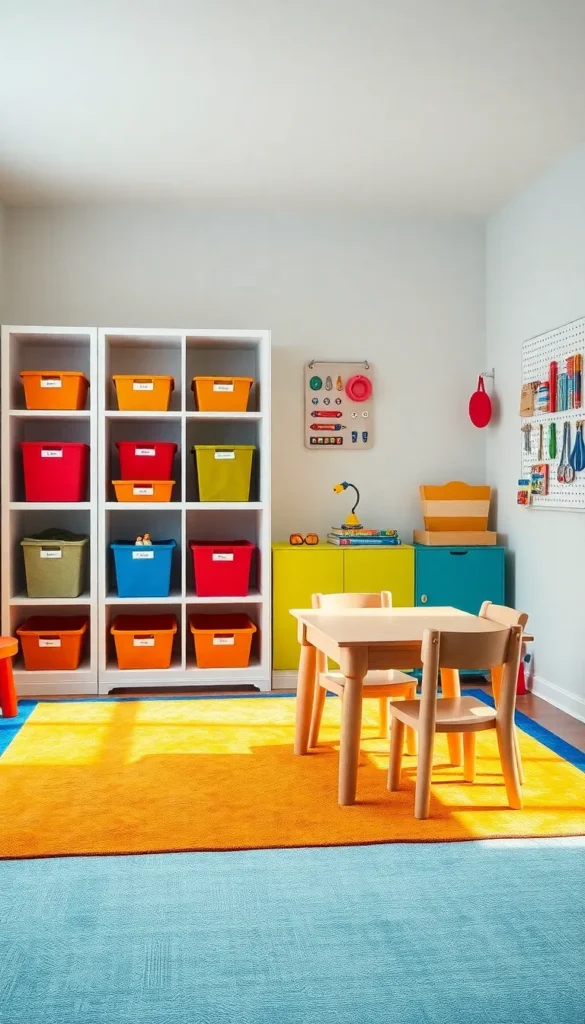
Rotate toys seasonally to keep the space fresh without adding more clutter. Fewer options often means more creative play.
Carve Out a Reading or Learning Nook
Even a small corner can become a dedicated reading nook — and kids absolutely love having a special spot that feels like their own little world.
Try one of these ideas:
- A floor cushion or bean bag tucked beside the bookshelf
- A canopy or teepee over a low mattress or cushion
- A window seat with storage underneath and a soft cushion on top
- Floating shelves at child height displaying books face-out
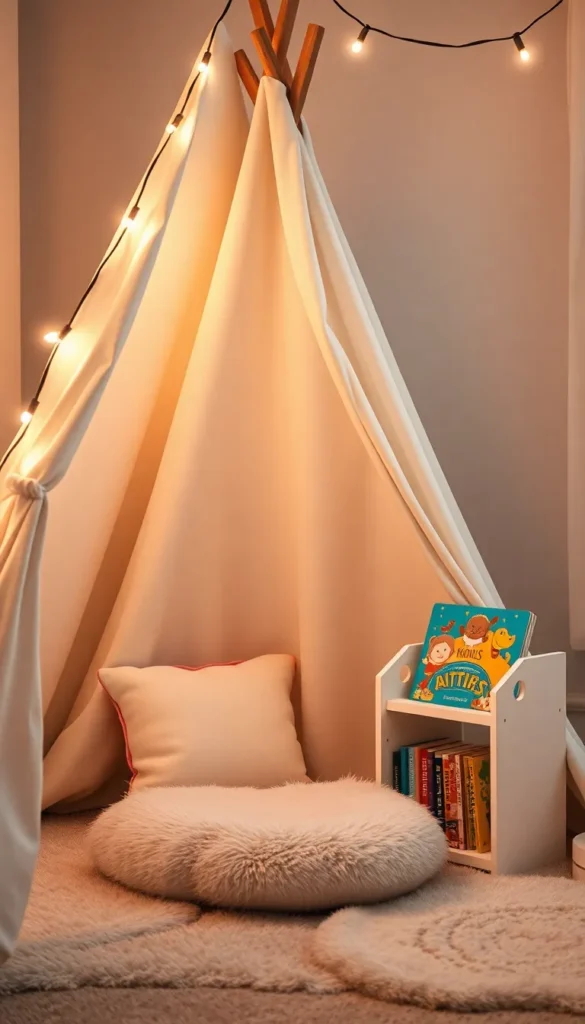
Good lighting matters here too. A small clip-on or floor lamp makes this zone feel intentional and usable even on cloudy days.
Use Rugs, Lighting, and Color to Define Each Zone
You don’t need physical dividers to separate zones. Use these design tricks instead:
- Rugs anchor each area and give kids a clear visual cue
- Lighting sets the mood — bright for play, warm and dim for sleep
- Color accents can subtly reinforce each zone (cool tones near the bed, bold colors in the play area)
- Curtains or a canopy over the bed create a soft enclosure without blocking space
Even in a shared bedroom, these layered cues help each child understand their space.
A Room That Works as Hard as They Play
Organizing a kids’ bedroom into zones isn’t about perfection — it’s about creating a space that supports how your child actually lives. When everything has a place and every corner has a purpose, mornings get easier, bedtimes get smoother, and the room stays tidier (most of the time).
Save this article and share it with a parent who needs a bedroom reset this weekend! A few small changes can make a world of difference for your little one.