Your hall closet is the first thing you interact with every morning and the last thing you deal with every night — yet somehow it becomes the most chaotic spot in the house. Coats piled on top of each other, shoes spilling onto the floor, random items with no real home. Sound familiar? The good news is that a well-organized hall closet is 100% achievable, and you don’t need a renovation or a big budget to get there.
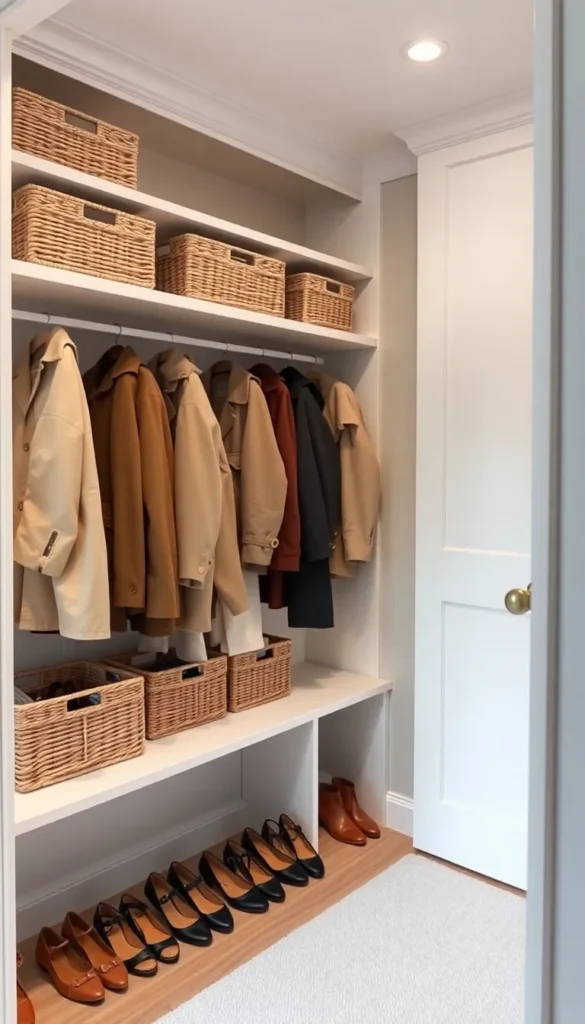
Step 1: Empty Everything Out First
Before you organize, you declutter. Pull every single item out of the closet and sort it into three piles:
- Keep — things you actually use
- Donate — items in good condition you haven’t touched in a year
- Toss — broken, worn-out, or mystery items with no purpose
This step feels brutal, but it’s the foundation of everything else. You can’t organize clutter — you can only move it around.
Step 2: Assign Zones Inside the Closet
Think of your hall closet like a tiny apartment. Every category of item needs its own “room.” Common zones for a hall closet include:
- Hanging zone — coats, jackets, and heavier outerwear
- Shoe zone — along the floor or on a dedicated rack
- Accessories zone — hats, scarves, gloves, and umbrellas
- Extras zone — bags, backpacks, or seasonal items
Mapping this out before you put anything back saves you from shuffling things around twice.

Step 3: Maximize the Coat and Jacket Area
The hanging rod is prime real estate. Use it wisely:
- Slim velvet hangers keep coats from slipping and save significant space compared to bulky plastic ones
- Hang coats by length — long coats together, shorter jackets together — so the space underneath opens up for other storage
- If your closet has a double rod option, install a second lower rod for kids’ coats or shorter items
One rod, organized intentionally, can hold twice as many items as a chaotic one.
Step 4: Solve the Shoe Situation
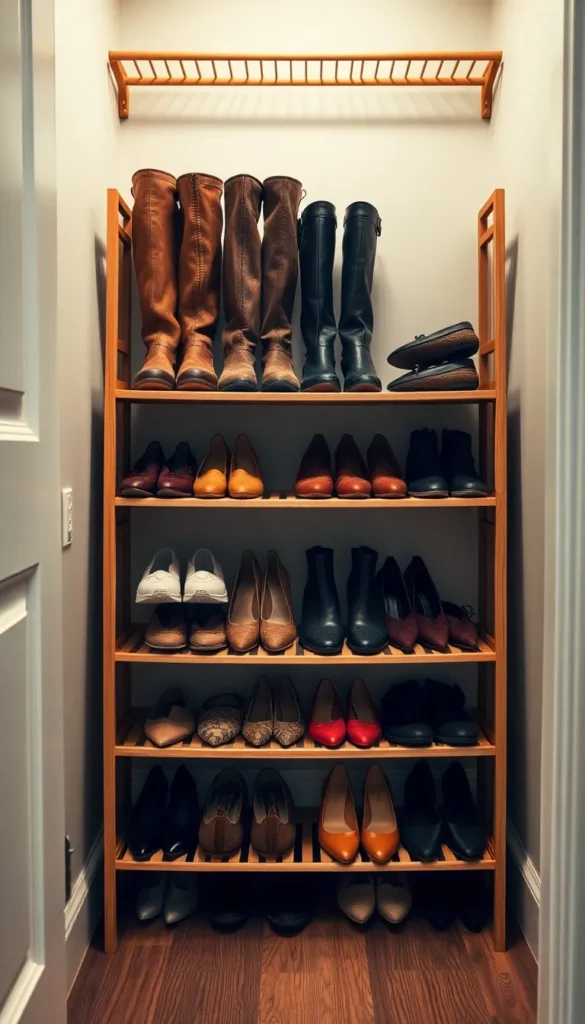
Shoes on the closet floor = instant chaos. Here are a few solutions depending on your space:
- Over-the-door shoe organizer — great for smaller closets, holds 12–24 pairs without taking any floor space
- Stackable shoe shelves — keep pairs visible and easy to grab
- Shoe cubbies or bins — ideal for families with multiple shoe sizes
Limit the closet to everyday shoes only. Seasonal or occasion shoes belong in bedroom closets or under-bed storage.
Step 5: Wrangle Hats, Scarves, and Gloves
These small accessories are notorious for creating a jumbled mess. The solution is containment:
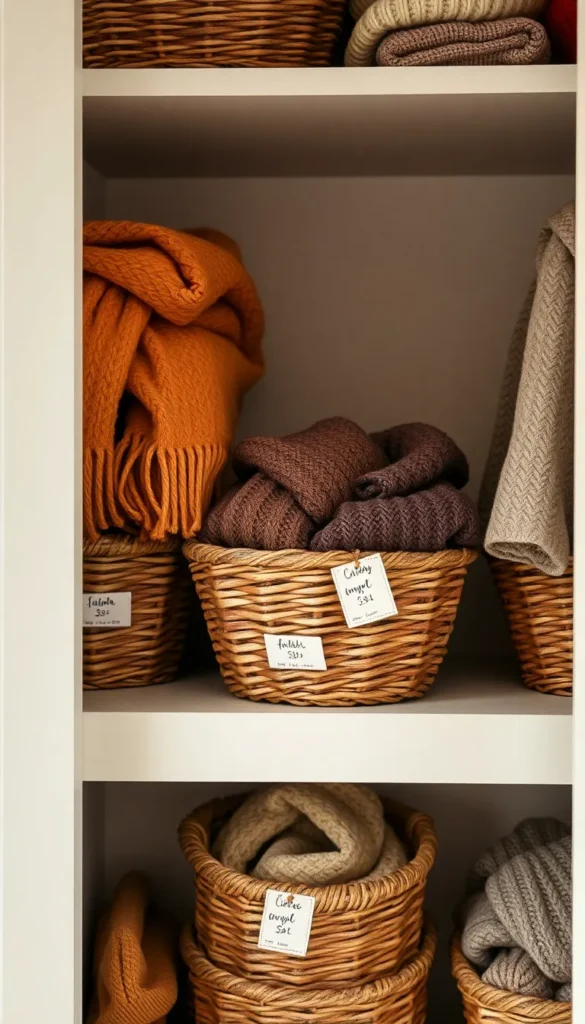
- Use a basket or bin on the shelf for each family member’s cold-weather accessories
- Add hooks on the inside of the closet door for hanging scarves and bags
- A small drawer organizer or divided bin keeps gloves paired and easy to find
Label the bins if you share the closet with kids — it turns “put it away” into a habit they can actually follow.
Step 6: Use Every Inch of Vertical Space
Most hall closets have one shelf — but that doesn’t mean you’re limited to one level of storage:
- Add a shelf riser to double your surface space
- Install floating shelves above the existing one for rarely used items
- Hang a hook strip or pegboard panel on the back wall for bags, umbrellas, or keys
The back wall and door are often completely wasted. Put them to work.
Final Thoughts: Small Closet, Big Impact
An organized hall closet doesn’t just look better — it genuinely makes your daily routine smoother. No more searching for matching gloves, no more digging under fallen coats for your shoes. When everything has a home, everything stays in its home.
Start with the declutter, build your zones, and add storage solutions one step at a time. You don’t have to do it all in one afternoon.
Save this guide and come back to it the next time your hall closet starts creeping back into chaos — because it will, and now you’ll know exactly what to do.