Your entryway is the first thing you — and every guest — sees when walking through the door. Yet somehow, it becomes the dumping ground for shoes, bags, mail, and everything in between. Sound familiar? The good news is that with a few intentional changes, you can transform even the smallest entryway into a space that feels calm, organized, and genuinely welcoming.
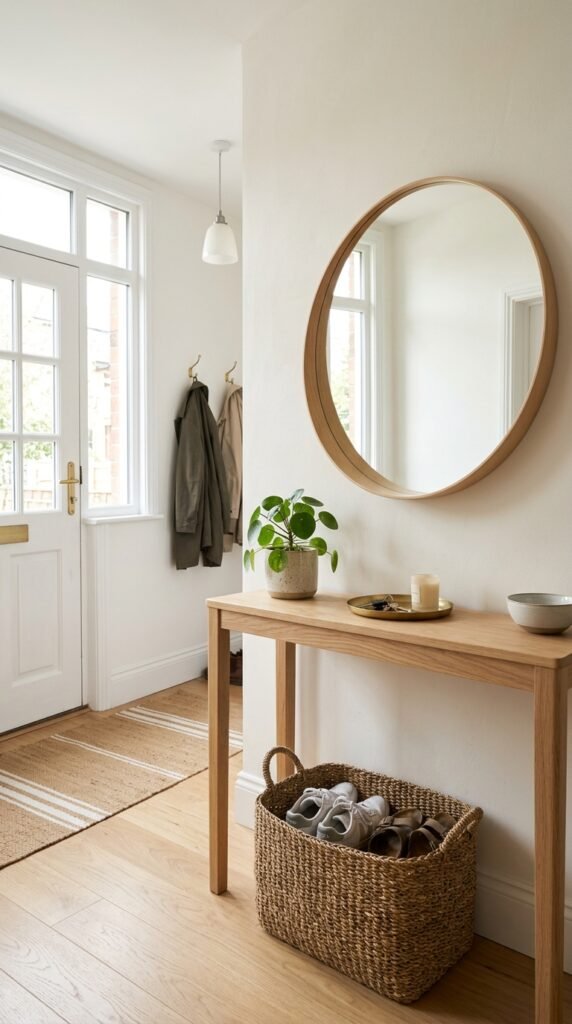
Start With a Complete Cleanout
Before you organize anything, you need to see what you’re actually working with. Pull everything out of your entryway — yes, everything. Shoes piled by the door, bags hanging on hooks, random mail stacked on a shelf. Get it all out.
Then sort it into three categories:
- Keep here — things that genuinely belong in the entryway
- Move elsewhere — items that drifted in from other rooms
- Donate or toss — things you no longer use or need
You’ll be surprised how much stuff ends up in that third pile. Old umbrellas, single gloves, expired coupons — the entryway collects it all. Once you’ve cleared the slate, you’re ready to set up a system that actually works.
Give Everything a Designated Home
The secret to a clutter-free entryway? Every single item needs a place to live. When things don’t have a home, they pile up on the nearest flat surface. That’s how the chaos starts.
Here’s a simple framework that works for most entryways:
- Shoes → a low bench with storage, a woven basket, or a small shoe rack
- Bags and coats → wall hooks or a slim coat rack
- Keys → a small dish, hook, or wall-mounted key holder
- Mail → a wall-mounted organizer or a single designated tray (not a pile on the floor!)
- Seasonal extras → a lidded bin or basket tucked out of sight
The more specific your system, the easier it is to maintain. If your hooks are full, that’s a sign it’s time to rotate seasonal coats to your closet — not a sign to add another hook.
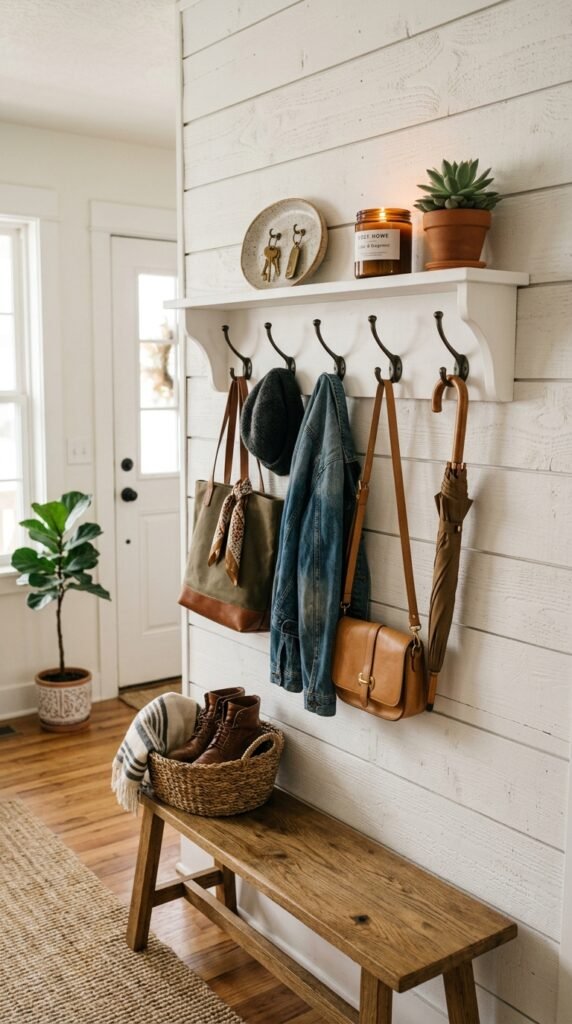
Limit the Furniture to What You Actually Use
One of the biggest entryway mistakes is overcrowding the space with furniture “just in case.” A bench, a console table, a coat rack, a shoe cabinet — that’s a lot for a 6-foot entry. Pick the pieces that match how you actually use the space.
If you sit down to put on shoes, a bench makes sense. If you just kick them off at the door, a simple basket works better. Keep it functional, not aspirational.
For small entryways, think vertical:
- Floating shelves keep the floor clear
- Tall, slim coat racks take up minimal footprint
- Wall-mounted hooks replace bulky freestanding racks
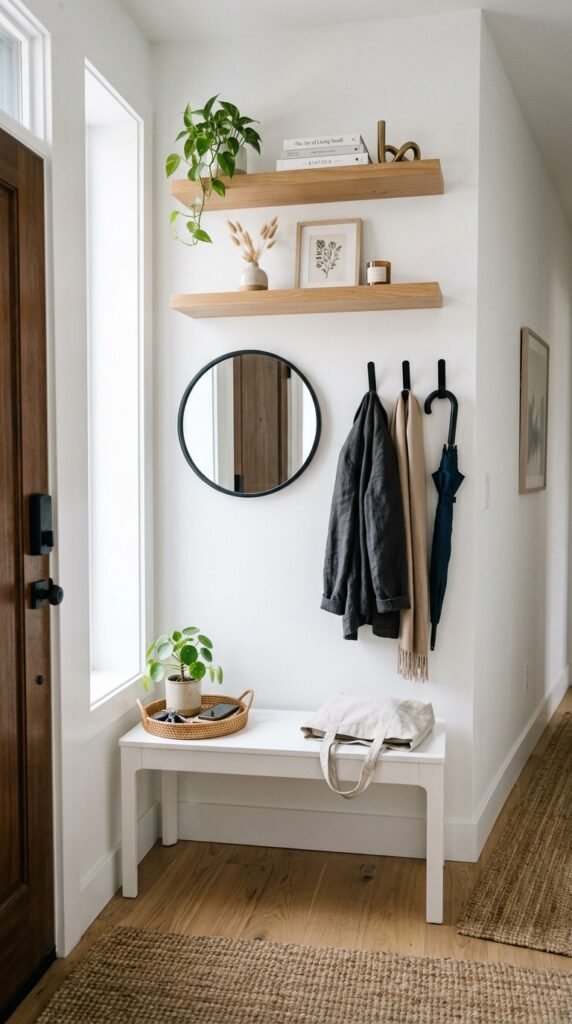
Add a Touch of Warmth and Style
Once the clutter is gone and your storage is sorted, this is where the fun begins. A few simple styling touches can make your entryway feel intentional and inviting rather than purely functional.
Try adding:
- A small plant or fresh flowers — even a single stem in a vase makes a difference
- A mirror — it opens up the space and is genuinely useful on the way out the door
- A small rug or runner — adds warmth and defines the zone visually
- Soft lighting — a plug-in sconce or a small table lamp on a console creates a welcoming glow
You don’t need to spend a lot. A $10 plant and a thrifted mirror can completely transform the feel of a space.
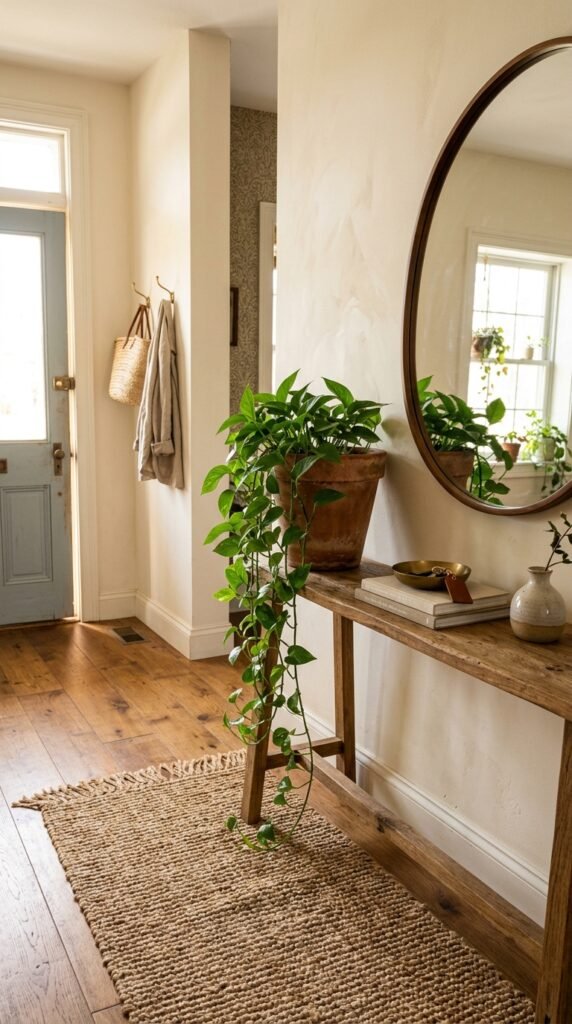
Make It Easy to Maintain
The best entryway system is one you’ll actually stick to. That means keeping it simple. If your system requires too many steps, it won’t last beyond the first week.
Do a quick 5-minute reset every few days — return items that have wandered in, toss any trash, and straighten the shoes. That’s it. When the system is set up correctly, maintenance is almost effortless.
A welcoming entryway doesn’t require a renovation or a big budget — it just takes a clear-out, a smart storage system, and a couple of thoughtful touches. Save this article and come back to it the next time your entryway starts creeping back into chaos. You’ve got everything you need to make it beautiful.