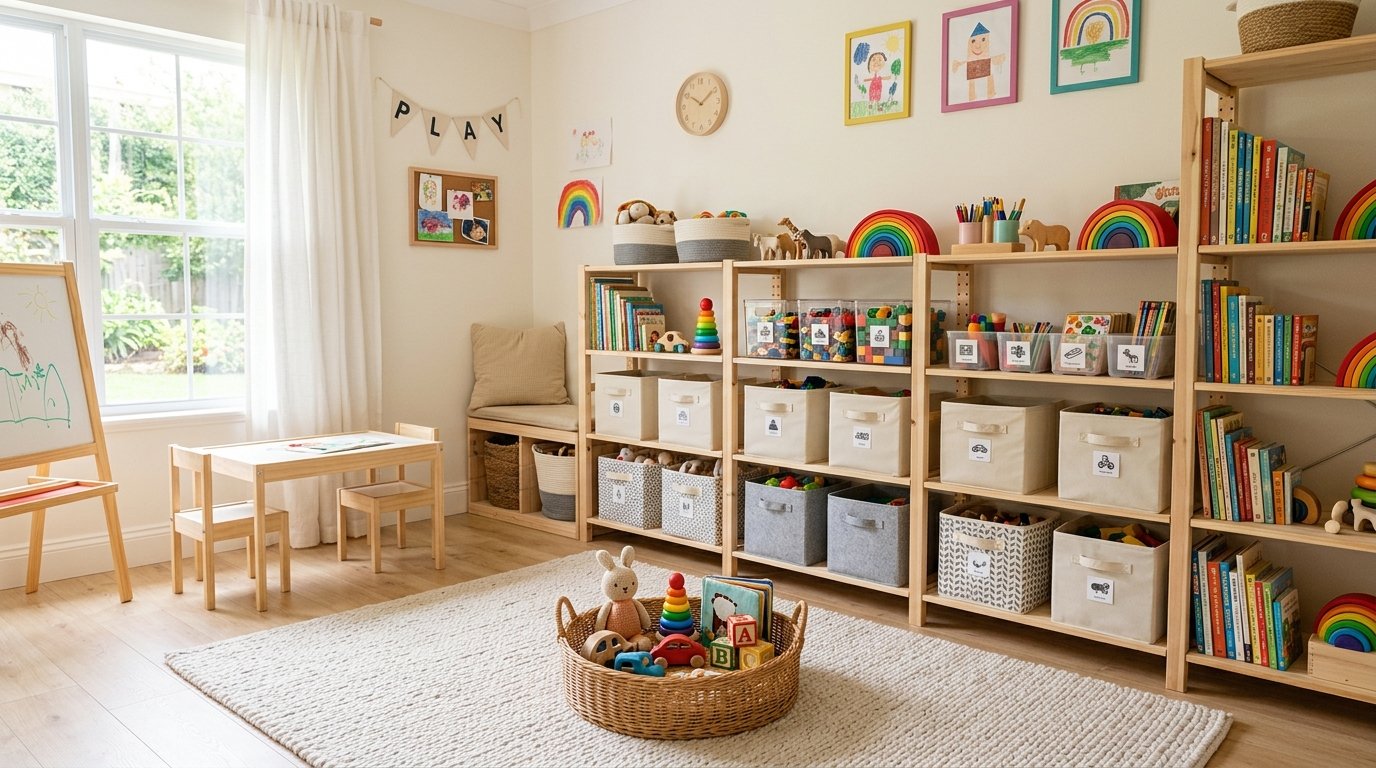
If your playroom looks like a toy store exploded inside it, you’re not alone. Between birthday gifts, holiday hauls, and random impulse buys, kids’ toys have a sneaky way of multiplying overnight. The good news? You don’t need a bigger playroom — you just need a smarter system.
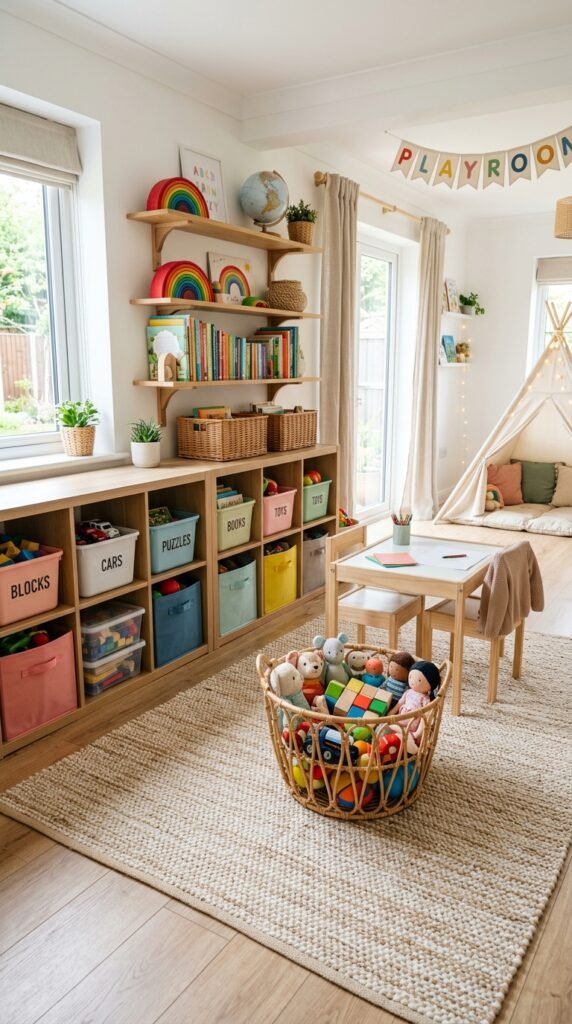
Toy rotation and a solid declutter routine can transform even the most chaotic play space into a calm, functional room your kids will actually enjoy. Here’s exactly how to do it.
Start With a Full Toybox Audit
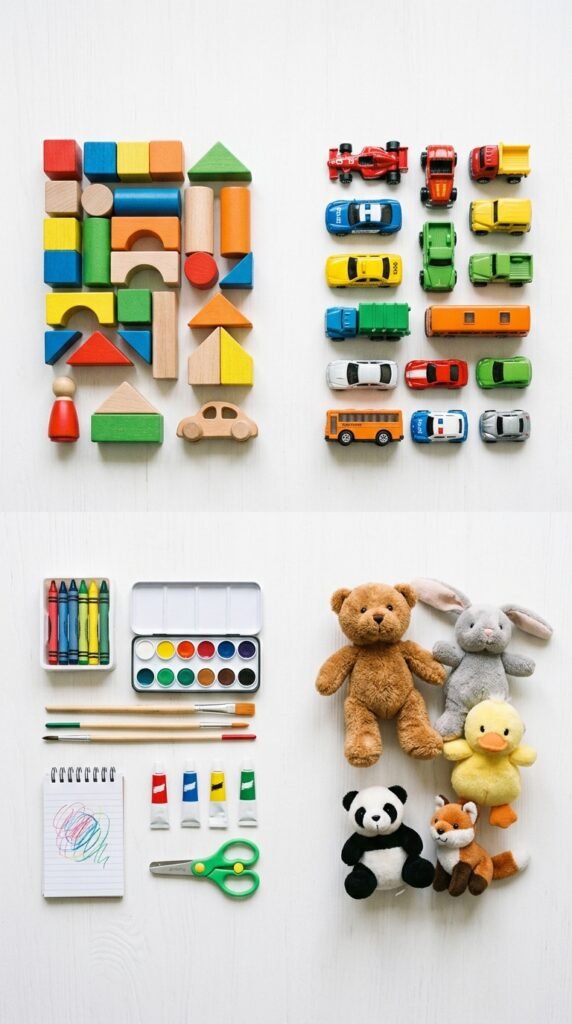
Before you can organize anything, you need to see what you’re working with. Pull everything out — yes, everything — and sort it into four piles:
- Keep – toys your child actively plays with
- Donate – toys in good condition they’ve outgrown
- Toss – broken, missing pieces, or beyond repair
- Store for rotation – toys that are still loved but just need a break
Be ruthless but realistic. If something hasn’t been touched in three months, it’s a strong candidate for the donate or rotation pile. Kids often play better with fewer choices, not more.
Declutter by Age and Interest
Once everything is sorted, take a closer look at what’s left. Ask yourself:
- Is this age-appropriate right now?
- Does my child reach for this on their own?
- Does it support imaginative, creative, or active play?
Toys that check those boxes stay. Everything else gets rotated out or donated. Don’t feel guilty about letting go — a toy that sparks joy for another child is never a waste.
Set Up a Simple Toy Rotation System
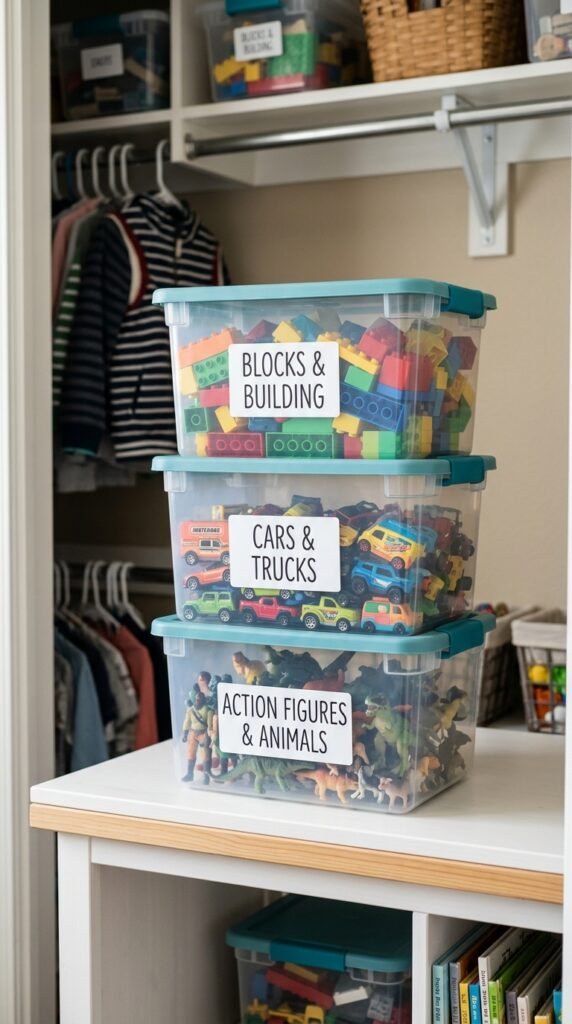
This is the secret weapon of organized parents everywhere. Toy rotation means splitting your child’s toys into two or three sets and only having one set accessible at a time. Every few weeks, you swap them out.
Here’s how to set it up:
- Choose your rotation bins — clear lidded bins or labeled boxes work great
- Divide toys into 2–3 equal sets — include a mix of types in each (building toys, pretend play, puzzles, etc.)
- Store out-of-rotation bins in a closet, under a bed, or on a high shelf
- Swap every 2–4 weeks — or whenever your child starts to lose interest
When “new” toys come back out of storage, kids light up like it’s their birthday. The novelty effect is real, and it works every single time.
Organize What Stays in the Playroom
Now that you’ve downsized, it’s time to set up the playroom itself. The goal is a system even a toddler can follow — because if it’s too complicated, no one (including you) will keep it up.
Some simple ideas that actually work:
- Open bins at child height for easy grab-and-put-back access
- Picture labels on bins so younger kids know exactly where things go
- A designated spot for everything — loose parts, stuffed animals, art supplies, books
- Limit the “free zone” — keep one small basket for random items so the rest stays tidy
Avoid deep toy chests where things get buried and forgotten. Shallow bins and low shelves encourage independent cleanup far better.
Make Cleanup a Daily Habit
A great system only works if it gets used. Build a quick 10-minute tidy into your daily routine — before dinner, before bath time, or before bed.
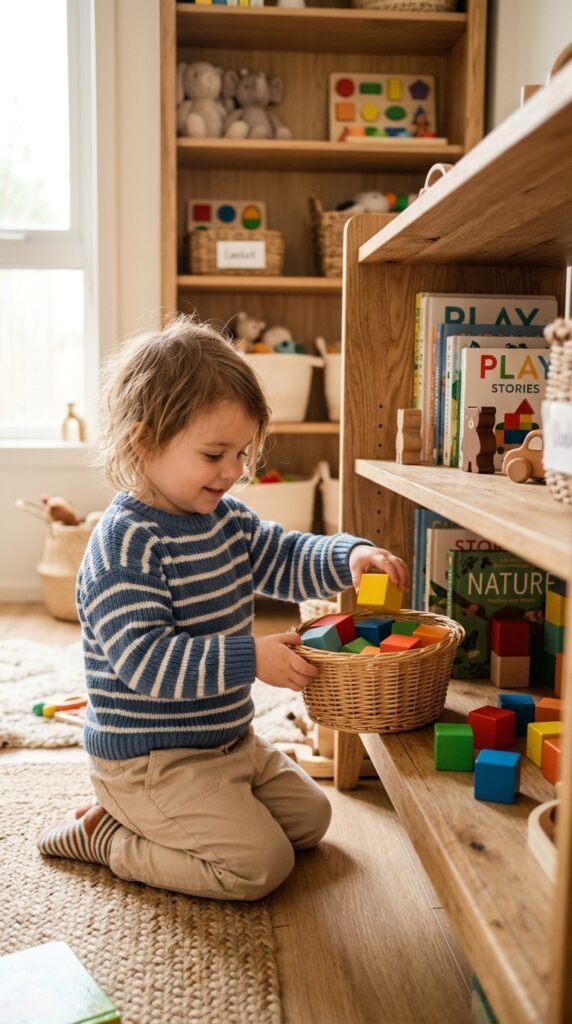
Make it fun:
- Play a cleanup song
- Set a timer and race to finish
- Let kids sort and “own” their space
When kids help create the system, they’re far more likely to maintain it. Give them ownership and keep the routine consistent.
The Payoff Is Worth It
A decluttered, well-organized playroom isn’t just easier on the eyes — it reduces overwhelm for both you and your kids. Less clutter means more focused play, fewer meltdowns over lost pieces, and a lot less time spent tidying up massive messes.
Start with just one shelf or one bin today. You don’t have to do it all at once. Small steps lead to big changes — and a playroom that actually feels good to be in.
Save this for your next playroom refresh and tag a fellow parent who needs this system! 🧸