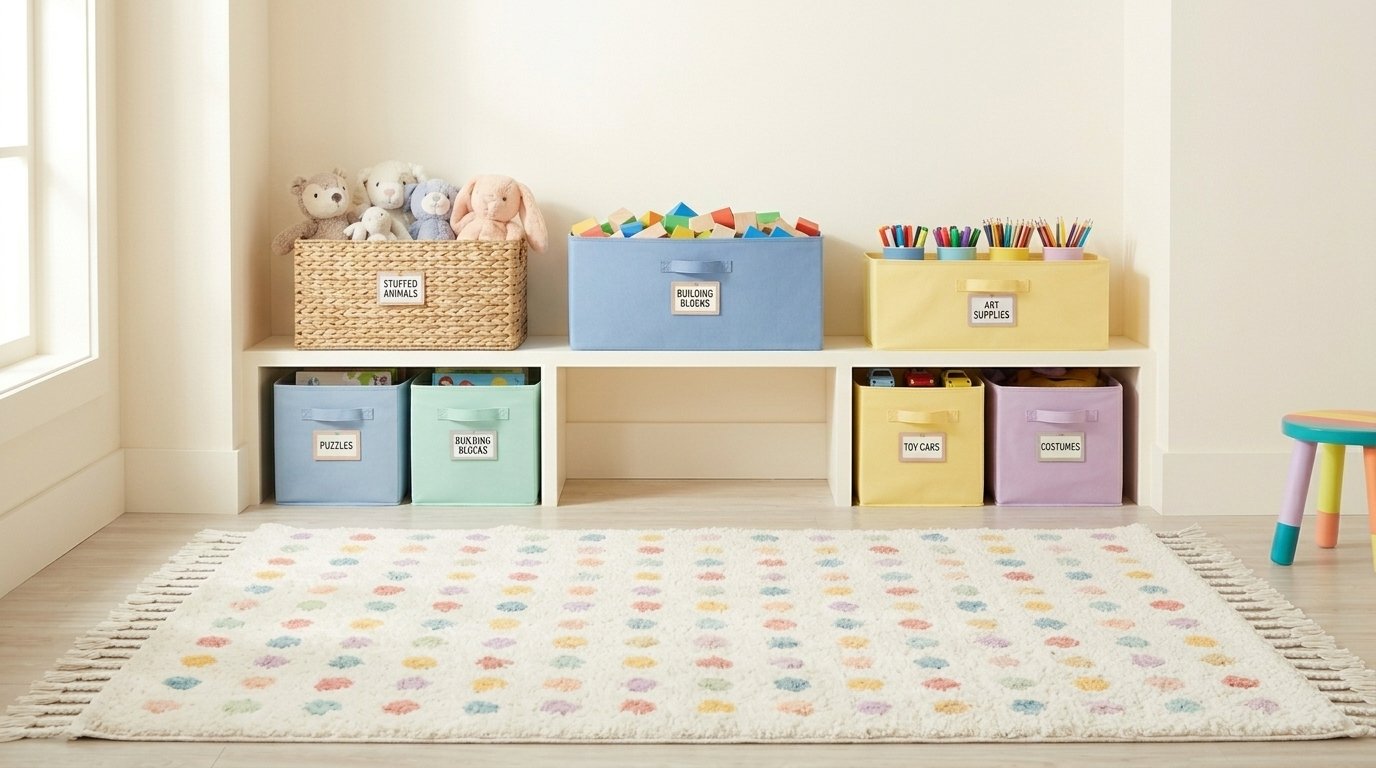
If your toy room looks like a glitter bomb went off inside a LEGO factory, you’re not alone. The real problem isn’t too many toys — it’s a system that doesn’t work for little hands and even littler attention spans. The good news? A few smart changes can transform chaos into a space where kids actually clean up after themselves. Yes, really.
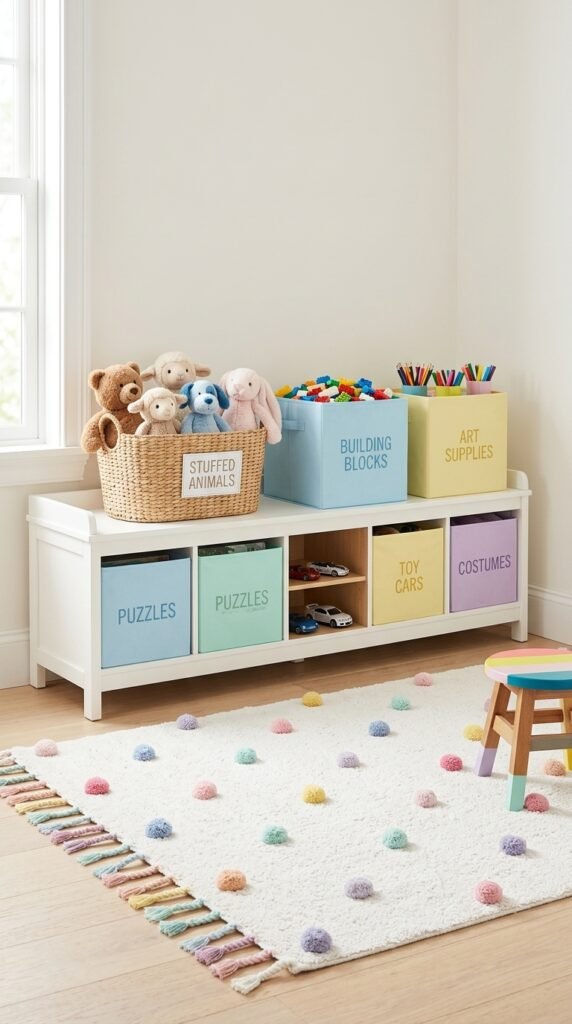
Start with a Toy Purge (Do This First)
Before you organize a single thing, edit what you’re working with. Too many toys overwhelm kids and make clean-up feel impossible.
- Pull everything out and sort into three piles: keep, donate, and toss
- If a toy has missing pieces, broken parts, or hasn’t been touched in months — let it go
- Involve your kids in this step so they feel ownership over the space
- Rotate toys seasonally to keep things fresh without adding more clutter
A leaner toy collection is easier to manage for everyone.
Choose Storage Kids Can Actually Use
Here’s the secret most parents miss: kids won’t put things away if the storage is too hard to use. Lidded bins, high shelves, and complicated systems are the enemy of clean-up independence.
What works best:
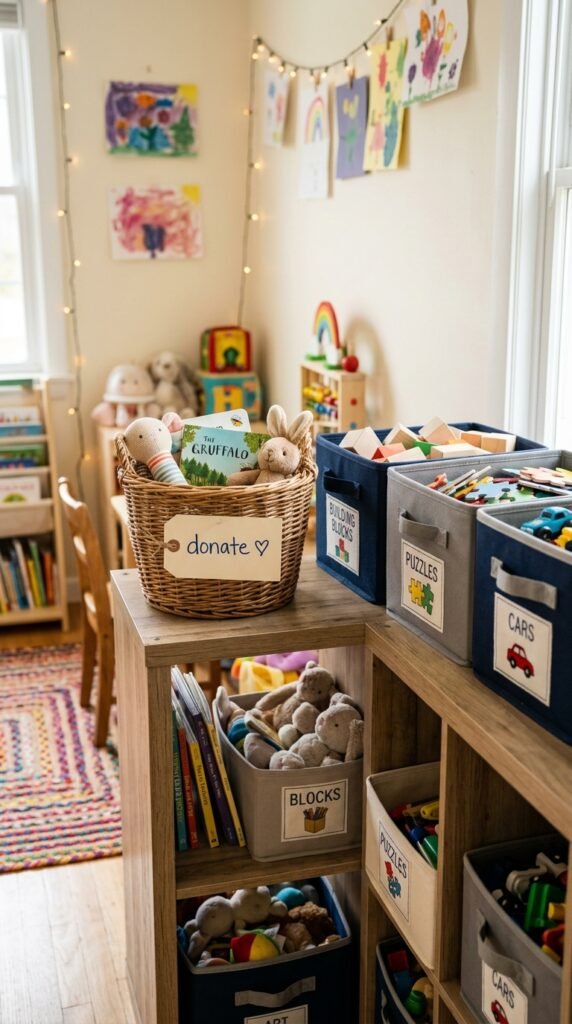
- Open bins and baskets — no lids, no excuses
- Low shelving units so kids can reach everything themselves
- Clear containers for smaller items like crayons, puzzle pieces, and figures
- Cube shelving (like IKEA KALLAX) with fabric bins for a clean, flexible look
Avoid anything that requires more than one step to open or close.
Label Everything (Even for Non-Readers)
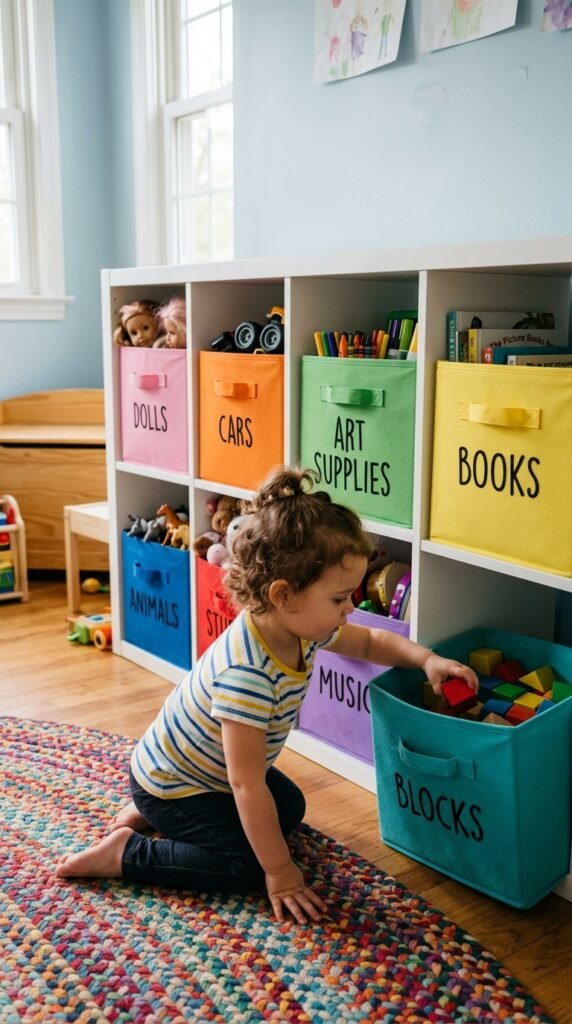
Labels are the backbone of any toy organization system. And before you think my kid can’t read yet — that’s exactly why picture labels exist.
- Use photo labels or picture + word labels for pre-readers
- Print images of what goes inside each bin and tape or laminate them on
- For older kids, simple word labels or handwritten tags work perfectly
- Label the shelf as well as the bin so kids know where to return things
This one step alone cuts down clean-up time dramatically because kids stop asking “where does this go?”
Create Zones for Different Types of Play
A toy room works best when it’s divided into activity zones — areas dedicated to specific types of play. This makes clean-up intuitive because everything has a home.
Zone ideas to try:
- 🎨 Art and craft corner with a small table, supply caddy, and easy-access paper
- 🧱 Building zone with blocks, LEGOs, and magnetic tiles in flat, stackable bins
- 📚 Reading nook with a soft rug, bookshelf at eye level, and good lighting
- 🧸 Pretend play area with dress-up hooks, a play kitchen, or puppet theater
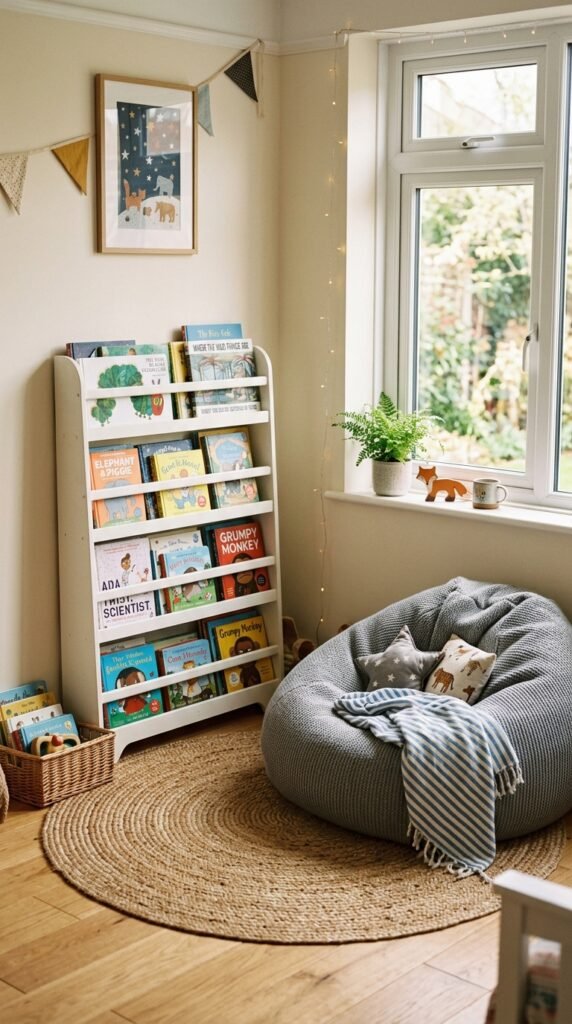
When play zones are clear, clean-up becomes a matter of returning things to their zone rather than figuring out a complicated system.
Teach the One-In, One-Out Rule
Organization only works long-term if you manage the incoming flow of toys. Birthdays, holidays, and grandparents can quickly undo even the best system.
- Introduce the one-in, one-out rule: when a new toy arrives, one goes to donate
- Store a donation box in the toy room or closet so it’s always accessible
- Review the toy collection every few months and purge as needed
Making this a regular habit keeps the room manageable without constant overhauls.
Make Clean-Up Part of the Routine
Even the best-organized toy room needs a daily reset. Build clean-up into the existing routine rather than treating it as a punishment.
- Set a 10-minute tidy timer before dinner or bedtime
- Play a clean-up song to make it fun for younger kids
- Celebrate the clean room — let kids feel proud of their space
- Model the behavior yourself so they see it as normal, not a chore
A toy room that functions is one your kids will actually maintain. You don’t need to spend a fortune — you just need the right system, the right storage, and a little consistency. Start with one zone, get it working, and build from there.
Save this for your next weekend project and tag a parent who needs this! 🧸✨