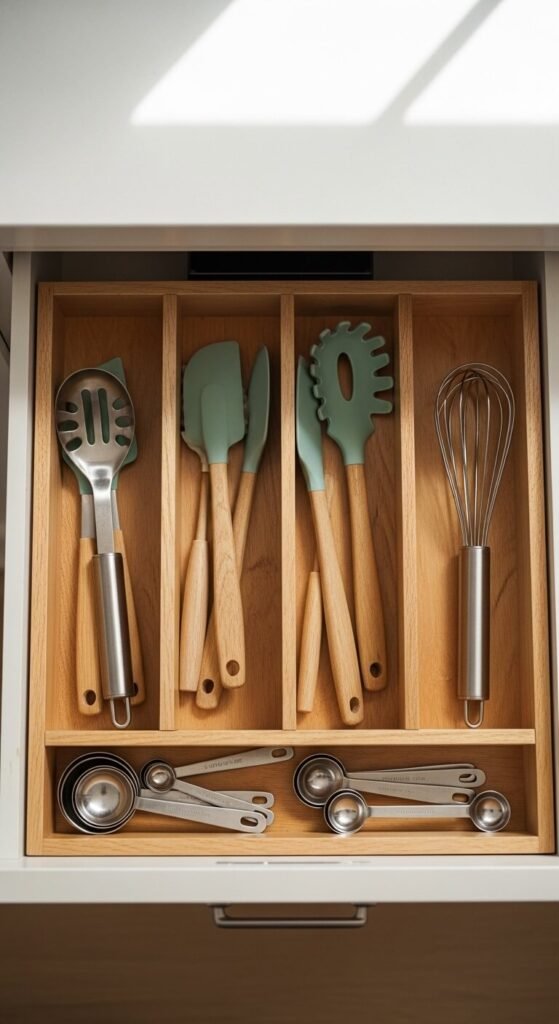
You open a kitchen drawer and a tangled mess of spatulas, mystery gadgets, and rogue rubber bands stares back at you. Sound familiar? A disorganized kitchen slows you down, wastes your energy, and makes cooking feel like a chore before you even start. The good news: you don’t need a kitchen renovation or a big budget to fix it. A few smart changes — many using items you already own — can turn those chaotic drawers into calm, functional spaces. Here are 28 practical tricks that actually work.
1. Sort Everything Out First
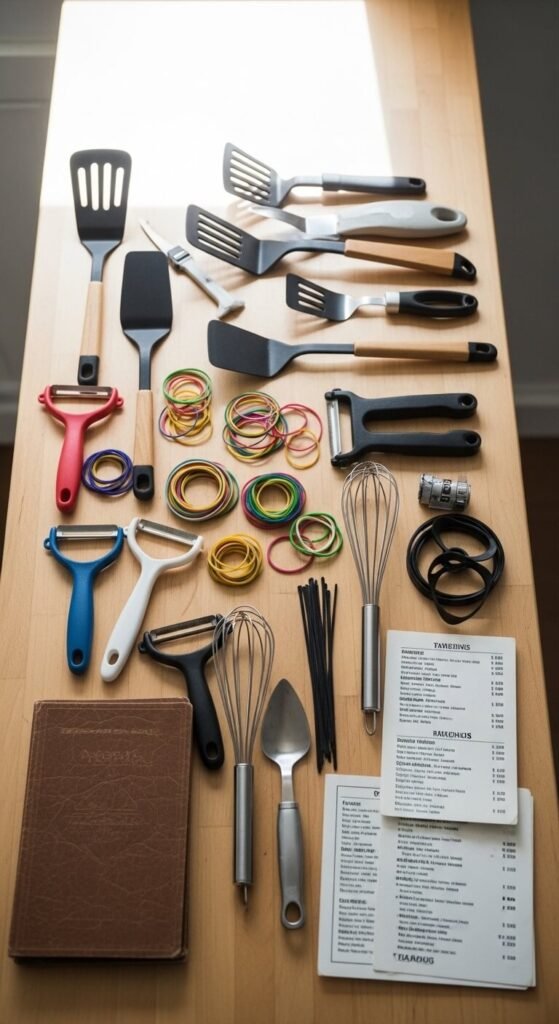
Before buying a single organizer, pull everything out.
Lay it all on the counter. Sort into three piles: keep, donate, toss.
Be ruthless. If you haven’t used it in six months, it probably doesn’t belong in your most-used drawer.
Getting rid of duplicates alone can free up 30–40% of drawer space. This step costs nothing and makes every other trick on this list work better.
2. Use a Bamboo Drawer Divider Set
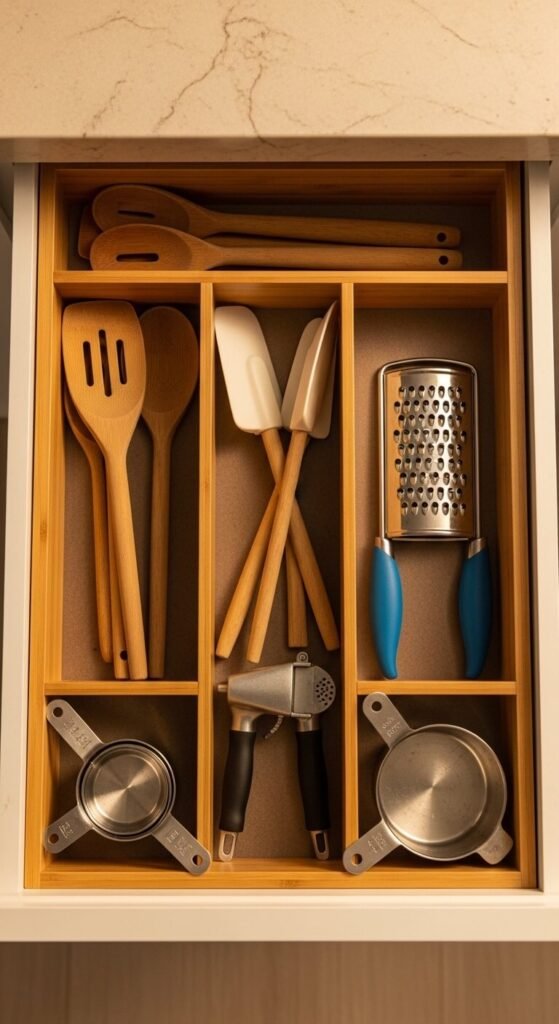
Bamboo dividers are affordable, adjustable, and look great.
You can find a set for under $15 online or at most home goods stores.
They expand to fit different drawer widths — no cutting, no tools needed.
Assign one section per category: stirring tools, flipping tools, measuring tools. Once everything has a home, putting things back becomes automatic. Your kitchen instantly feels more professional.
3. Repurpose an Ice Cube Tray for Small Items
Small items are drawer chaos waiting to happen.
Twist ties, bag clips, batteries, spare keys — they disappear into corners and multiply overnight.
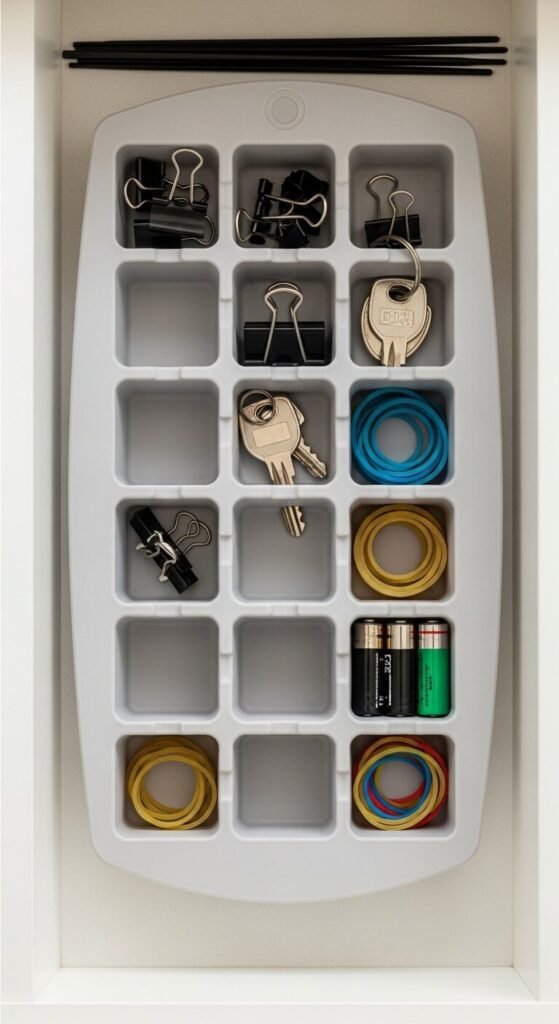
Drop a silicone or plastic ice cube tray into your junk drawer.
Each cube becomes a micro-compartment. It costs nothing if you already own one. Even a $1 store version works perfectly. This is one of the easiest wins in any kitchen.
4. Store Knives with a Drawer Insert Knife Block
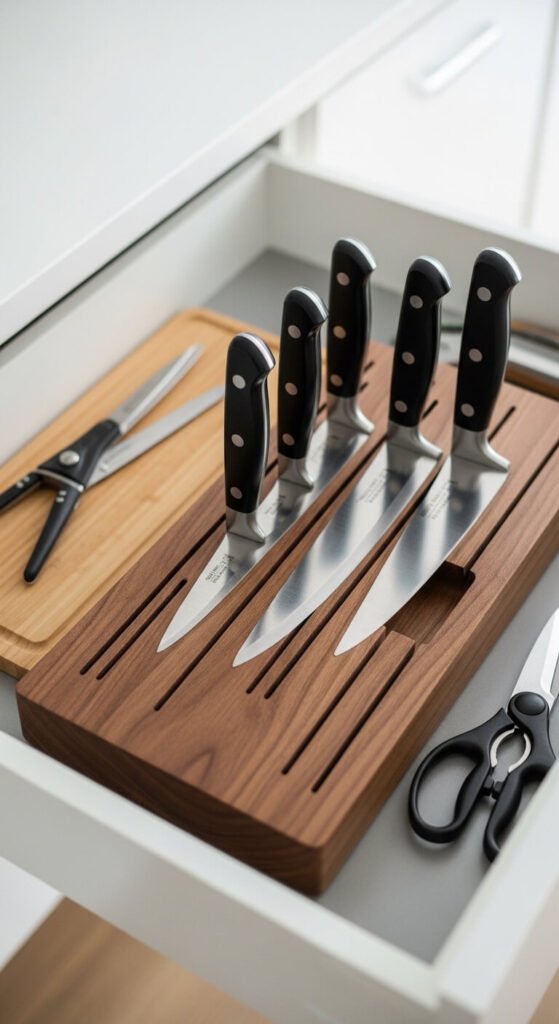
Keeping knives loose in a drawer is both dangerous and bad for the blades.
An in-drawer knife block solves both problems.
These inserts hold each blade in its own slot, protecting edges and keeping fingers safe.
You can find them for $20–$35 and they fit most standard kitchen drawers. It’s a simple swap that makes knife storage safer and makes grabbing the right knife faster every single time.
5. Line Drawers with Non-Slip Shelf Liner
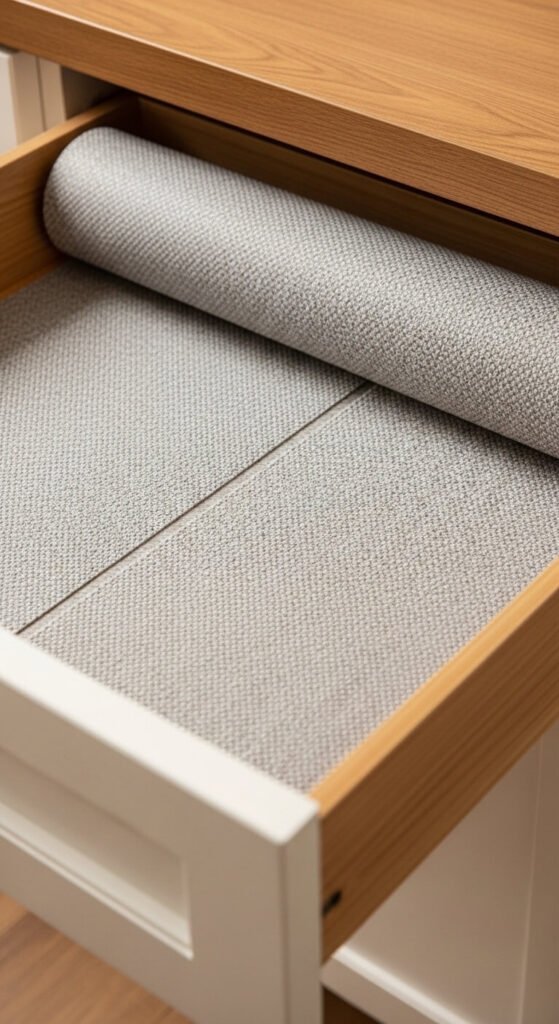
Things slide around in drawers — and that sliding undoes your organization fast.
Non-slip shelf liner grips items in place and protects the drawer bottom from scratches.
A roll costs around $5–$8 and can line an entire kitchen’s worth of drawers.
Cut it to size with scissors. No adhesive needed — it stays put on its own. It’s a tiny upgrade that keeps everything exactly where you put it, even after the drawer is slammed shut.
6. Create a Dedicated “Go-To” Cooking Tools Drawer
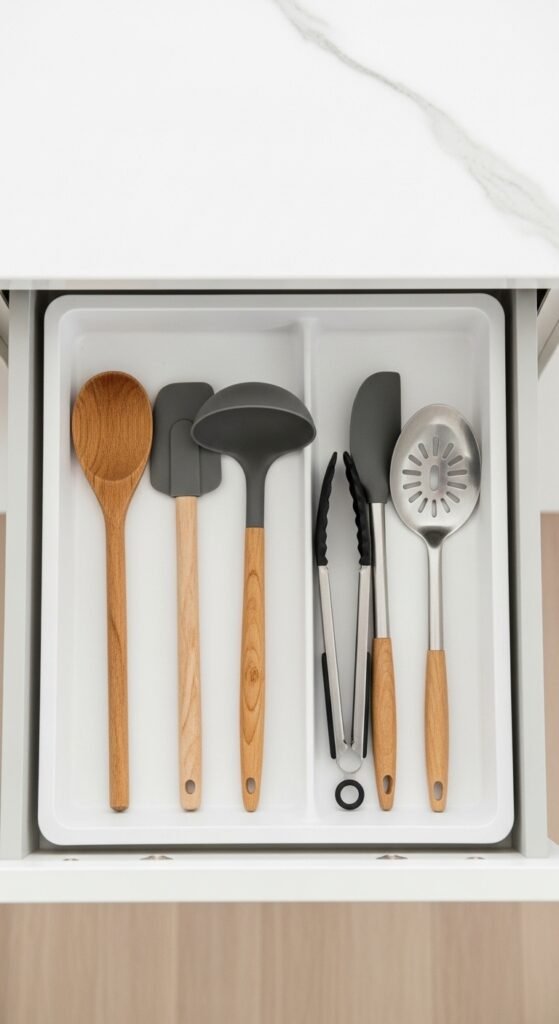
Most home cooks use the same five to seven tools daily.
Give those tools their own dedicated drawer, right next to the stove.
Everything else can live farther away. This single change cuts the time you spend digging through drawers while something is actively cooking.
Keep this drawer minimal. The moment it gets crowded, move things out. A less-is-more approach here saves real time on busy weeknights.
7. Use Muffin Tins as Drawer Organizers
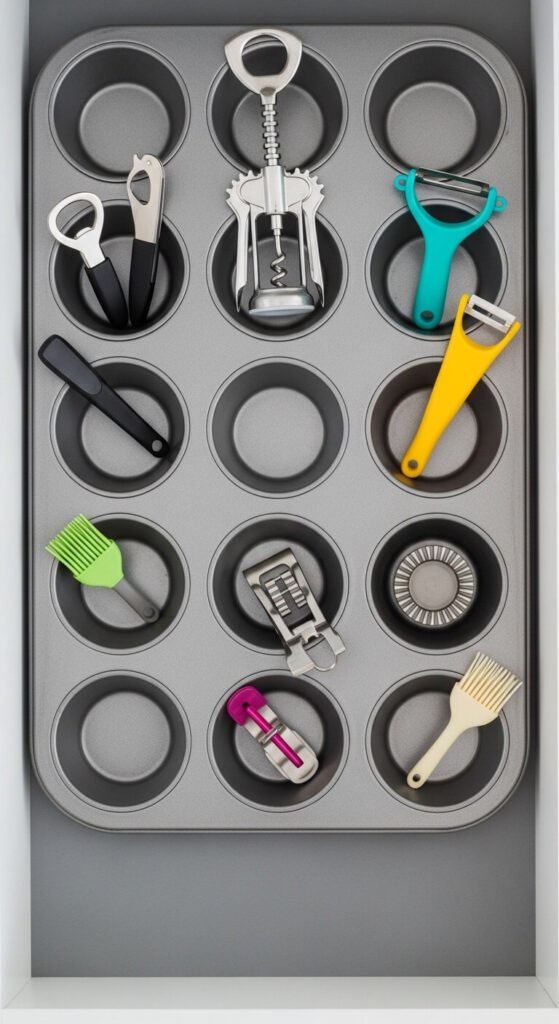
You likely already own a muffin tin you’re not using every day.
Lay it flat in a shallow drawer, and each cup becomes its own storage compartment.
It’s perfect for small gadgets: peelers, corn holders, pastry brushes, can openers.
A standard 12-cup tin fits most kitchen drawers. This zero-cost trick works especially well in wide, shallow drawers where traditional dividers don’t sit as neatly.
8. Group Items by Task, Not by Type
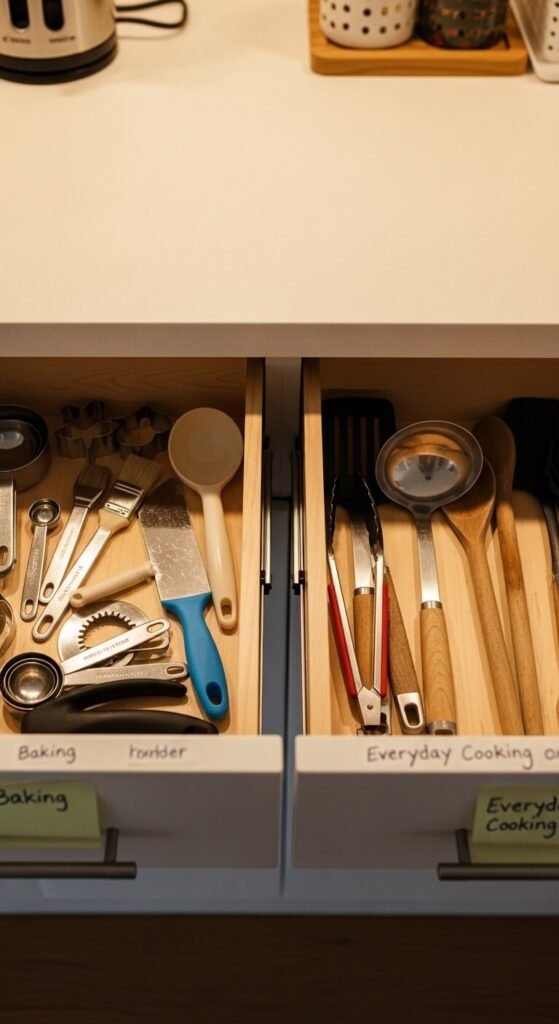
Most people organize by what things are. Try organizing by what they do.
Group your baking tools together, your grilling tools together, your prep tools together.
When you’re mid-recipe, you grab everything you need from one place — not from three different drawers.
This approach reduces back-and-forth movement in the kitchen significantly. It takes some rethinking upfront but becomes completely intuitive within a week.
9. Label Every Drawer (Yes, Every One)
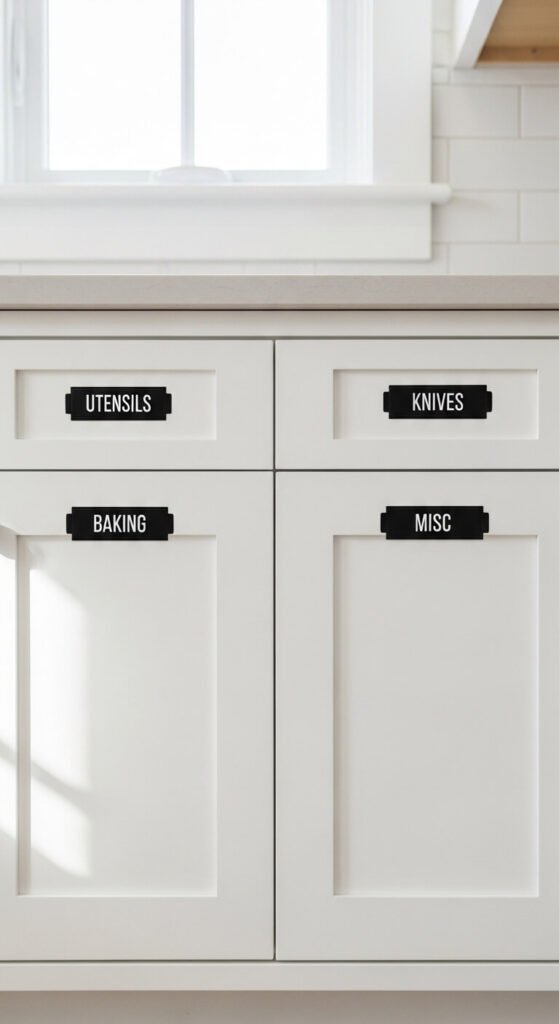
Labels feel unnecessary — until you live with them for a week.
They make putting things away mindless, which means your system actually gets maintained.
Use a label maker or print on sticker paper. You can even use washi tape and a marker for a budget-friendly version.
Label the outside of each drawer so the whole household knows where things go. When everyone can follow the system, the drawers stay organized without constant effort from you.
10. Roll Dish Towels Upright Instead of Stacking
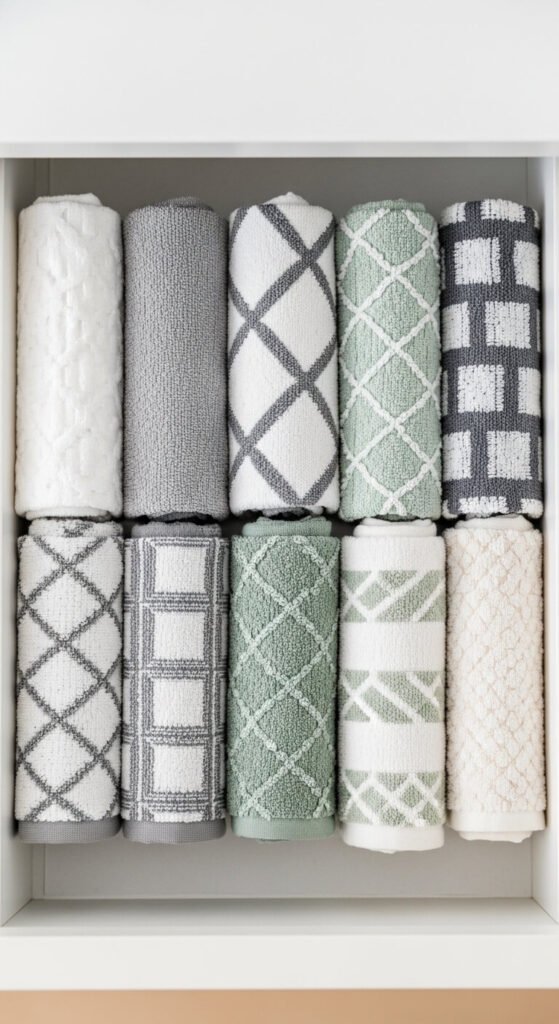
Stacked dish towels are a mess. You pull one out, the whole pile topples.
Roll your towels and stand them upright — like files in a filing cabinet.
You can see every towel at once, grab one without disturbing the others, and fit more towels in the same space.
This works for hand towels, cleaning cloths, and cloth napkins too. No products needed — just a different folding method. It takes 10 minutes to reset and stays tidy for weeks.
11. Install a Pegboard-Style Drawer Insert for Flexible Layouts
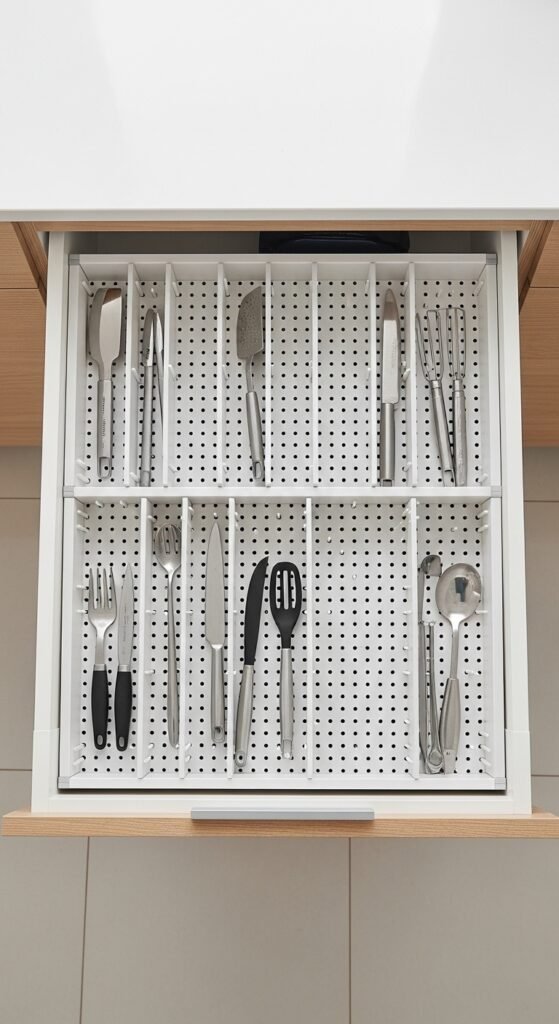
One-size dividers don’t fit every drawer — or every tool collection.
Pegboard-style inserts let you arrange pegs in a grid, creating custom compartments.
You decide the size of each section based on what you actually own.
These inserts run about $25–$40 and are available from kitchen organization brands. If your tool collection changes seasonally (you bake more in winter, grill more in summer), you can rearrange the pegs in minutes without buying anything new.
12. Dedicate One Drawer Entirely to Plastic Wrap and Foil
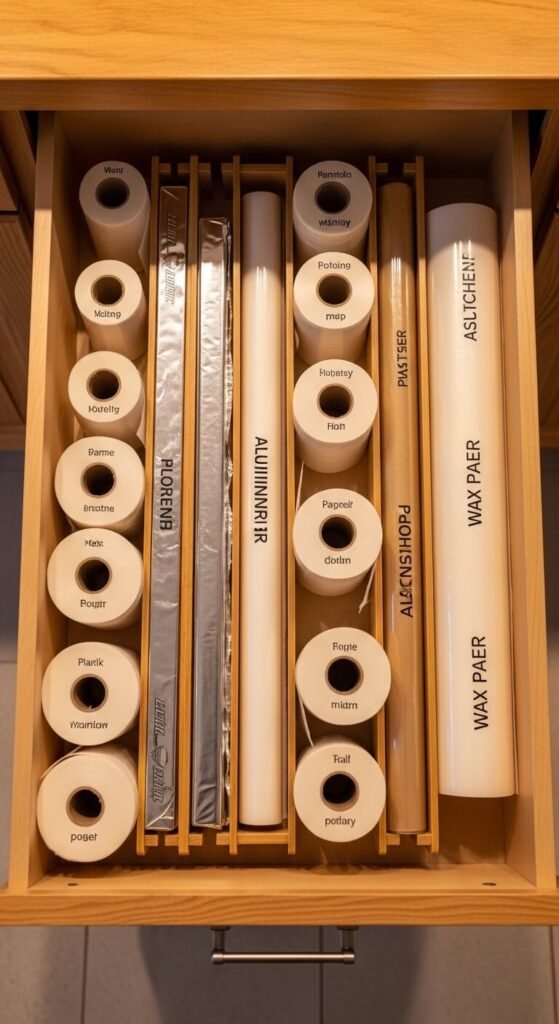
Foil, plastic wrap, and parchment paper are awkward to store.
They fall over, unroll, and get mixed up with everything else.
Give them their own drawer with a simple divider or a purpose-built foil organizer.
Stand the rolls on their sides or lay them flat in individual slots. Some organizers even have built-in cutters, so you don’t need the flimsy box edges anymore. This is one of the most satisfying drawer organization wins in the whole kitchen.
13. Use Binder Clips to Tame Bag Clips
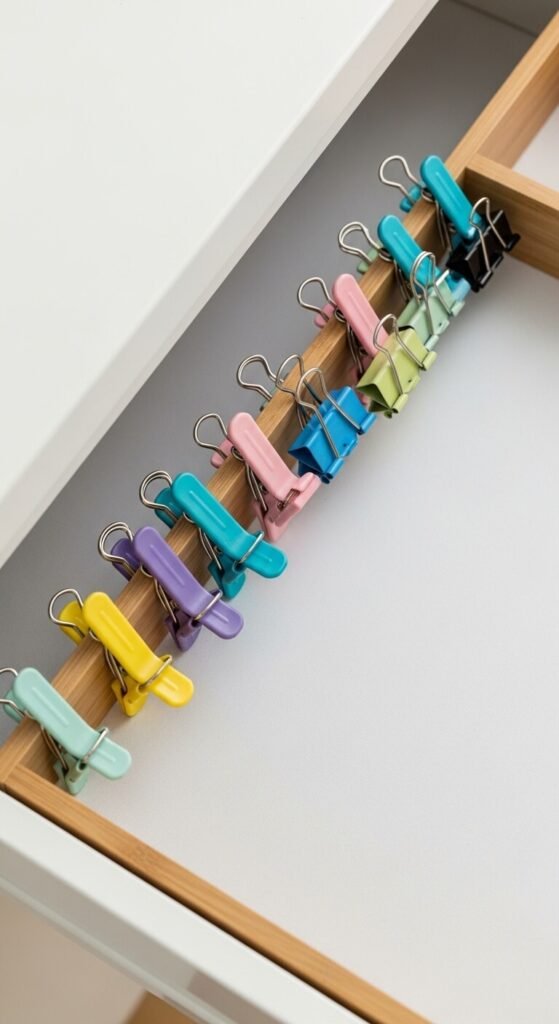
Bag clips are one of the most chaotic small kitchen items.
They scatter, pile up, and are always impossible to find when you need them.
Clip them onto a piece of cardboard or a small strip of wood standing in the drawer.
They hang neatly in a row, visible and accessible. Even clipping them to a binder clip ring or a carabiner loop works well. No product to buy — just a smarter way to use what you already have.
14. Keep a “Miscellaneous” Drawer — But Give It Rules
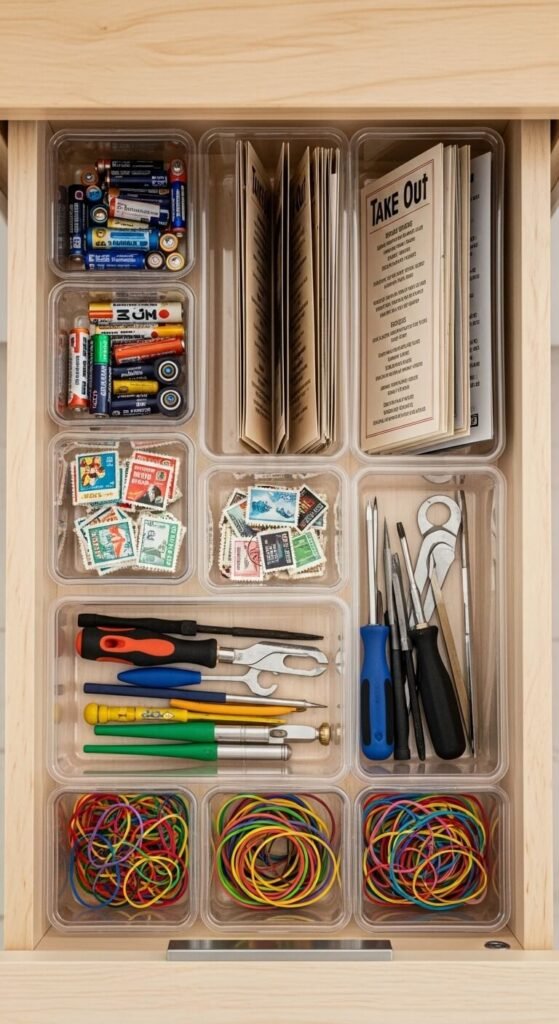
Every kitchen needs a miscellaneous drawer. Pretending otherwise sets you up to fail.
The key is giving it structure so it doesn’t become a black hole.
Use three or four small bins — dollar store containers work fine — and assign each bin a category: batteries, takeout menus, tools, and a “deal with it later” bin.
Once the bins are full, that’s a signal to sort, not to jam in more stuff. Constraints keep the chaos contained.
15. Sort Measuring Spoons on a Metal Ring
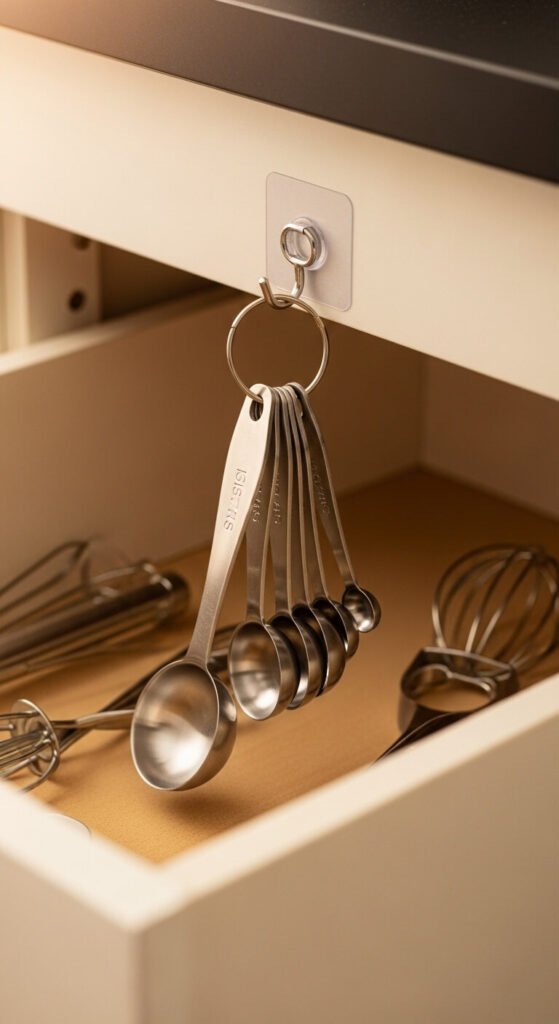
Measuring spoons are notorious drawer escapees.
They separate from their sets, get buried, and are always the last thing you find when your hands are covered in flour.
Thread them back onto a metal ring (a keyring works fine) and hang them from a small adhesive hook inside the drawer wall.
They stay together, stay visible, and take up almost no space. This trick costs essentially nothing if you have a spare ring on hand.
16. Use Vertical Dividers for Baking Sheets and Cutting Boards
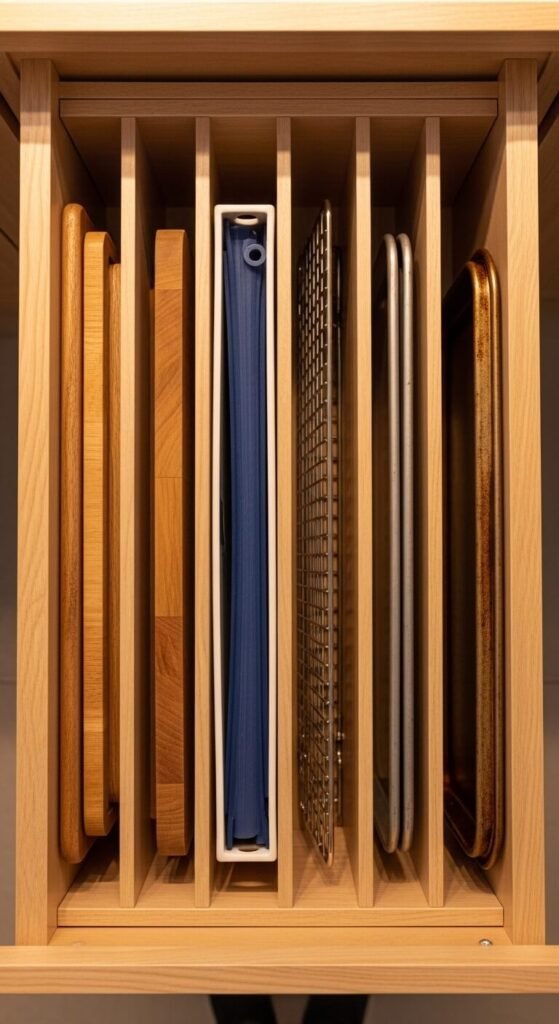
Baking sheets and cutting boards don’t have to live in an awkward leaning stack.
Add vertical dividers to a deep base drawer to create slots where each item stands upright.
Think of it like a filing system — each board or tray has its own slot.
You can DIY this with small strips of wood and wood glue for under $10. Or buy a tension-mount rack designed for pots and pans. Either way, you stop lifting heavy stacks to get the one thing at the bottom.
17. Keep a Running “Replace Soon” List in Your Junk Drawer
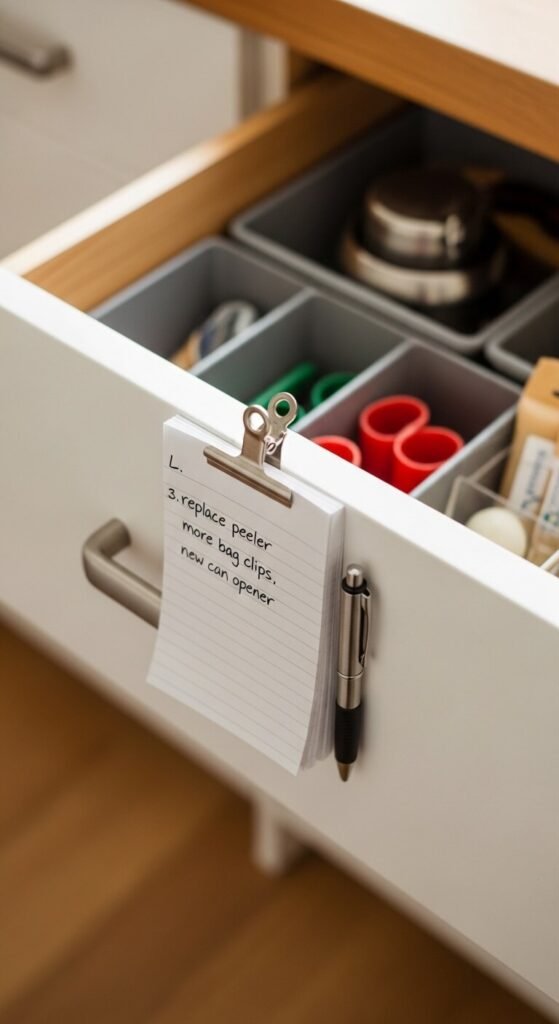
Organization breaks down when things run out and never get replaced.
A dull peeler, a broken clip, a missing battery — they create workarounds that build clutter.
Clip a small notepad inside one drawer. When you notice something needs replacing, write it down immediately.
Take the list with you when you shop. This keeps your kitchen tools functional, which keeps your system working. A magnetic notepad from the dollar store is all you need.
18. Assign a Drawer to Each Family Member’s Snack Bag or Lunch Items
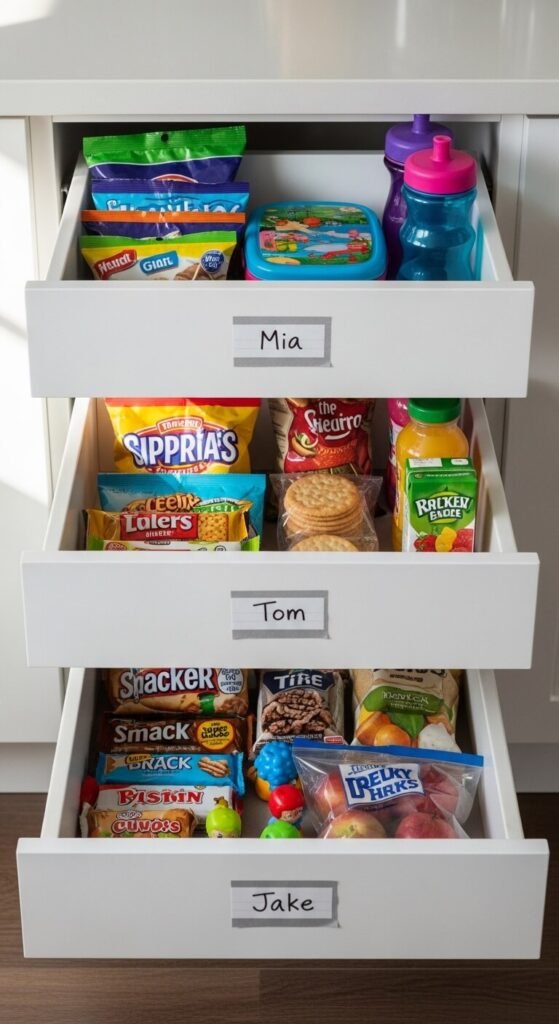
In a busy household, snack bags and lunch supplies clutter every surface and drawer.
Give each family member their own dedicated drawer.
It creates accountability — each person manages their own space — and eliminates the morning scramble to find the right lunchbox or snack bar.
This works especially well for kids. When children know their drawer is “theirs,” they’re far more likely to keep it tidy without being asked. The system practically manages itself.
19. Use Tension Rods to Create Sub-Sections in Deep Drawers
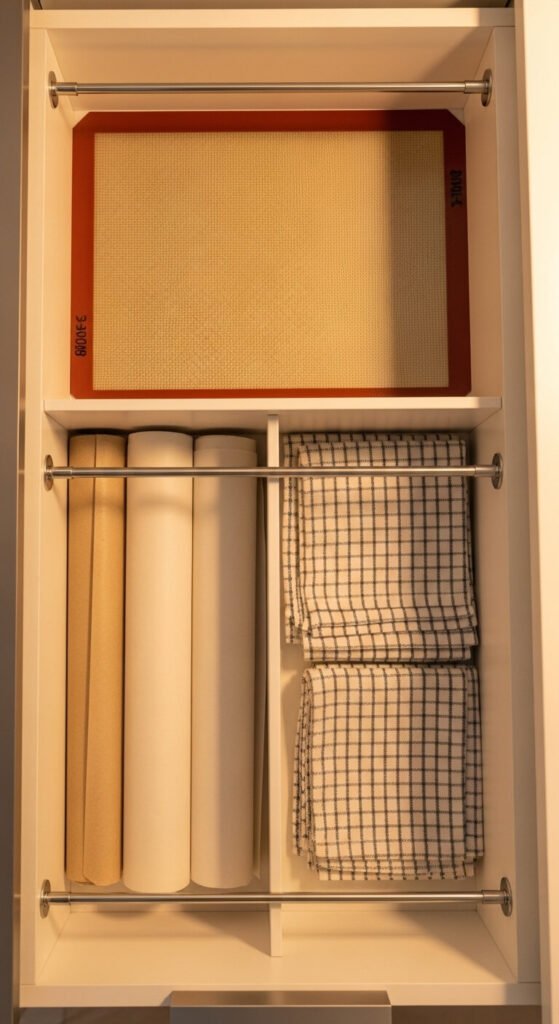
Deep drawers are wonderful for storage but terrible for organization.
Everything sinks to the bottom or slides to the front.
Install small tension rods horizontally to divide the depth of the drawer into front, middle, and back zones.
Each zone holds a different category of item. Tension rods are $3–$6 each and require no drilling or tools — they expand to grip the drawer walls. It’s a renter-friendly fix that works instantly.
20. Store Spice Packets Flat in a Shallow Bin
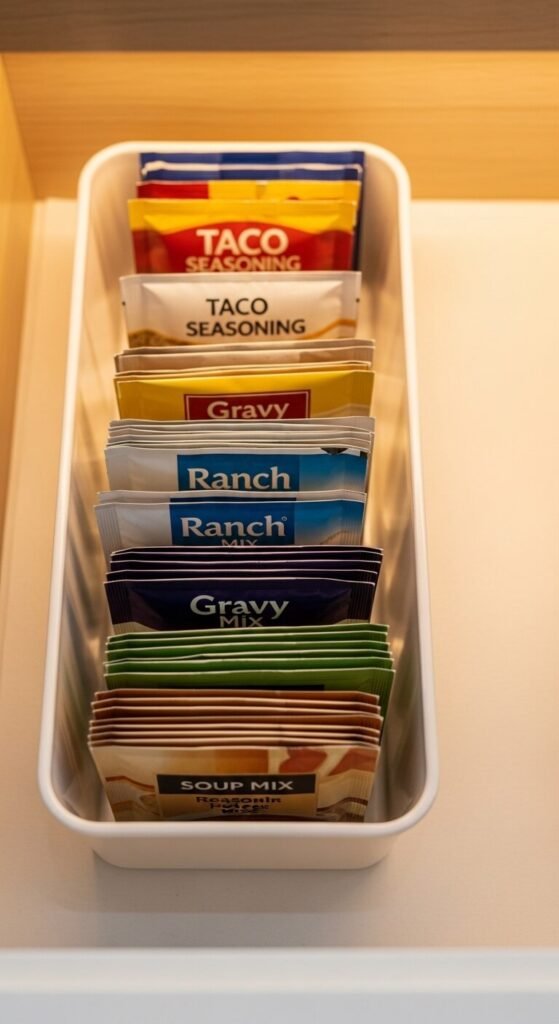
Loose spice packets are a drawer nightmare.
They hide under everything, expire unnoticed, and multiply faster than you’d expect.
Drop a small flat bin into a drawer and store packets standing upright, labels facing forward — like a mini card file.
You can see every packet at a glance, pull one without disturbing the rest, and notice quickly when something is running low. Use a repurposed food storage container or a $2 bin from a dollar store.
21. Hang a Slim Rack on the Inside of a Cabinet Door Above the Drawer
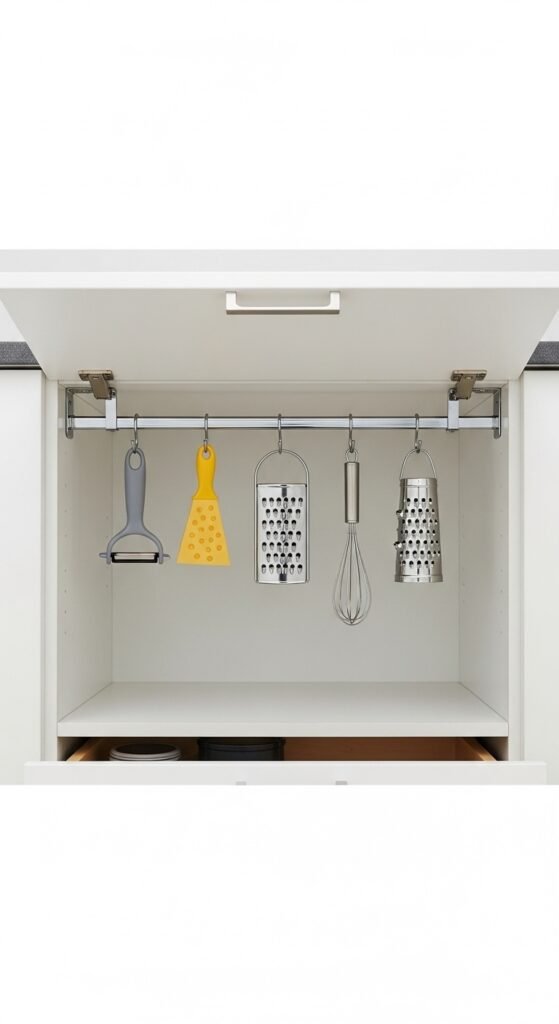
Sometimes the best drawer organization happens outside the drawer.
An over-door rack mounted on the cabinet door directly above a drawer extends your storage vertically.
Hang peelers, zesters, small whisks, and graters on the hooks.
These items are shallow enough that they won’t block the drawer from opening. You free up significant drawer space for bulkier tools, and frequently grabbed items are still right there at hand level.
22. Nest Bowls and Lids in a Drawer with a Lid Organizer
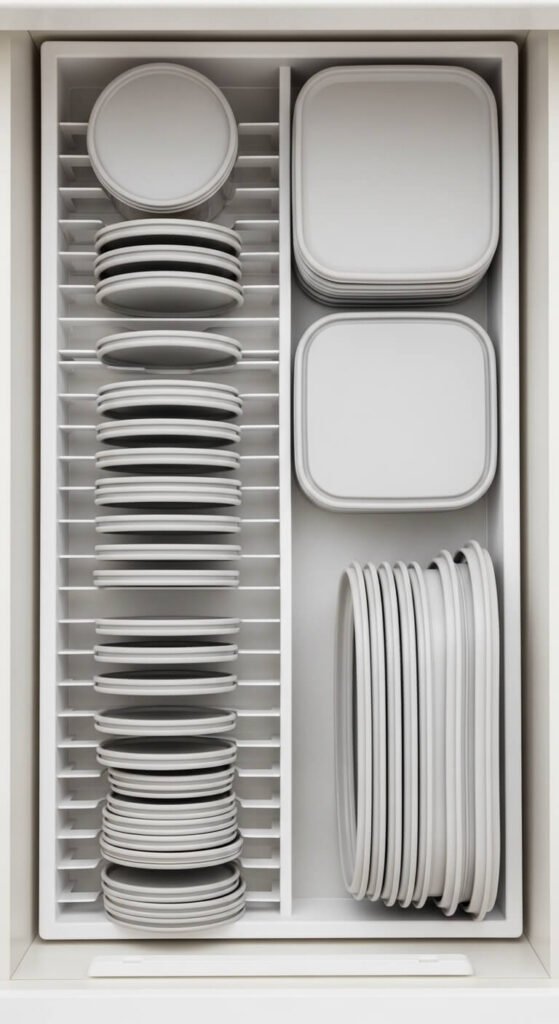
Plastic container lids are the single most chaotic item in most kitchens.
They don’t stack well, don’t stay sorted, and fall out every time you open the drawer.
A lid organizer with vertical slots holds each lid upright, sorted by size.
These organizers cost around $10–$15 and completely solve the problem. Match it with a stacked bin for the containers themselves. The time you save not hunting for matching lids will add up faster than you’d expect.
23. Use a Silverware Tray Backwards for Larger Utensils
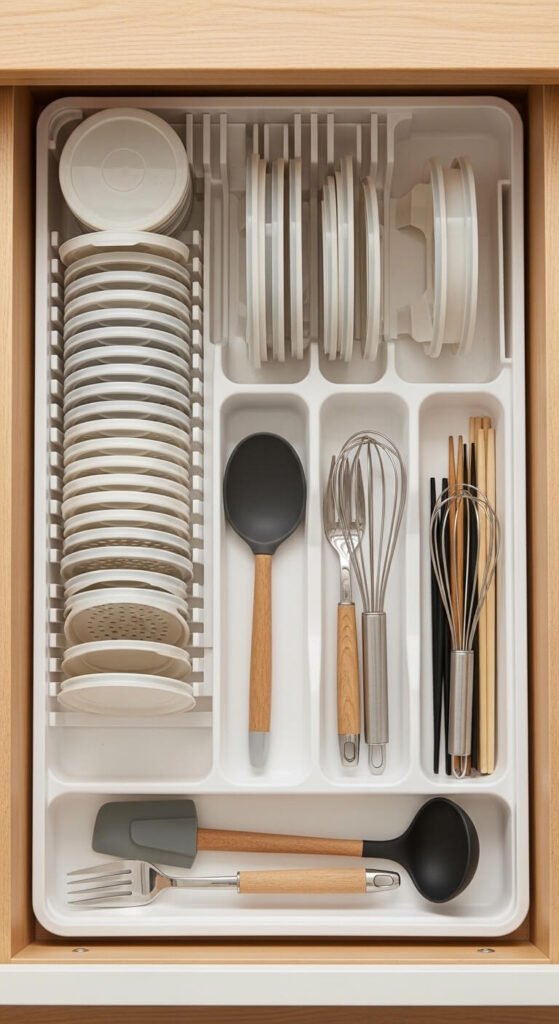
Standard silverware trays have a fixed layout — but who says you have to use them forward?
Flip the tray so the narrow end faces the back of the drawer.
The larger compartments, now at the front, fit spatulas, ladles, and whisks much better.
The narrower back slots can hold chopsticks, skewers, or corn holders. Same tray, smarter layout. This zero-cost reorientation can completely change how usable your utensil drawer is.
24. Create a Charging and Battery Drawer
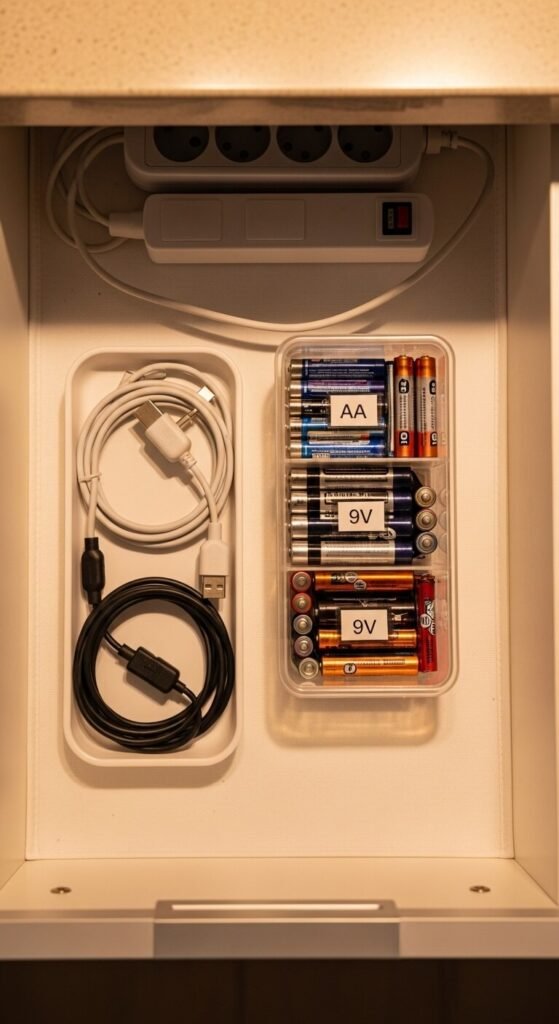
Tangled charging cables and loose batteries end up in kitchen drawers by default.
Stop fighting it — just give them a proper home.
Designate one shallow drawer as the charging and battery zone. Use a divided bin for batteries sorted by size (AA, AAA, 9V) and a small cable organizer to prevent cord tangles.
Label everything. When a remote stops working or a toy dies, everyone knows exactly where to look. Simple, practical, and one less frustration in a busy day.
25. Stack Cutting Boards by Frequency of Use
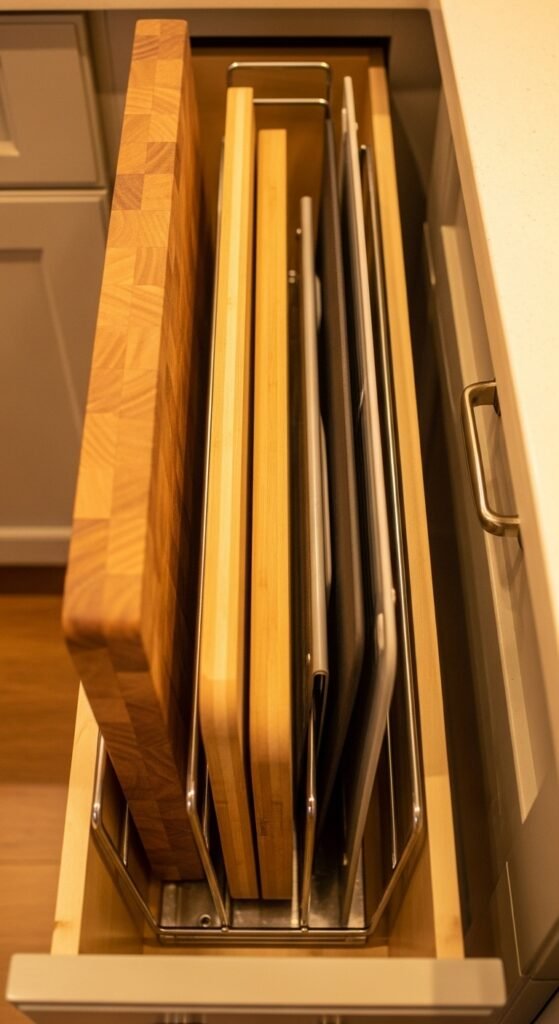
Not all cutting boards are used equally.
Your most-used board should always be the first one you reach.
Store boards vertically using a metal file folder stand or tension dividers, and arrange them front-to-back by frequency: daily board in front, occasional boards in the middle, specialty boards at the back.
A simple metal file stand from an office supply store costs around $8 and handles most board sizes easily. No frustrating rearranging every time you cook.
26. Use Egg Cartons for Organizing Bottle Caps and Small Parts
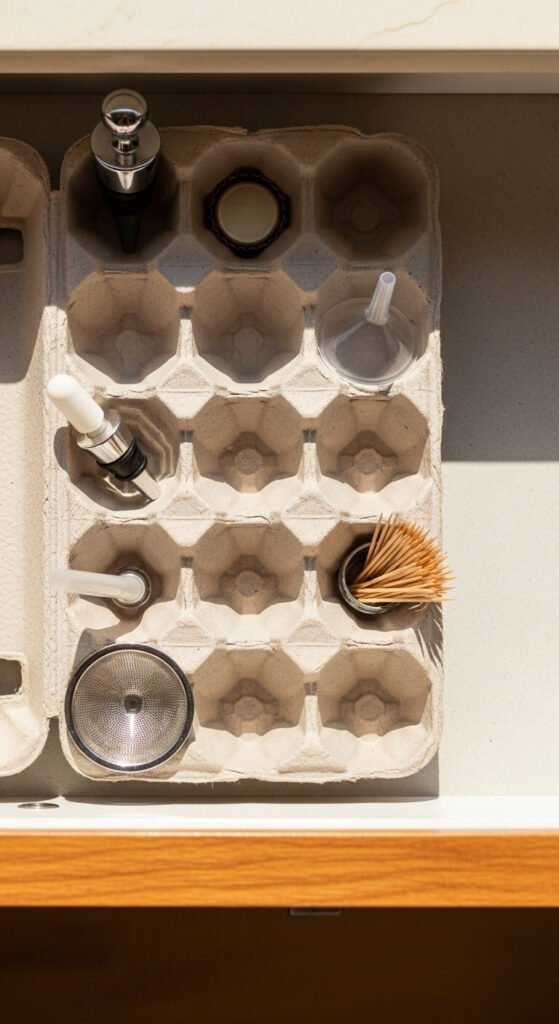
You don’t need to spend anything to organize tiny items.
An empty egg carton laid flat in a shallow drawer creates 12 instant compartments.
Use it for bottle stoppers, small funnels, citrus seeds, cocktail tools, or any collection of small loose items that tend to scatter.
It’s completely free, easy to swap out when it wears out, and surprisingly effective. If you have kids doing a school project with small items, this same trick works brilliantly there too.
27. Keep a Drawer for Takeout Menus — But Cull It Seasonally
Takeout menus breed in kitchen drawers if you let them.
Give them a dedicated spot — but set a rule: only keep menus for places you’ve ordered from in the last three months.
Use a small file holder or rubber band them by cuisine type.
Every season, flip through and pull out anything outdated. This takes five minutes and prevents the slow creep of clutter that turns a tidy drawer into an unmanageable pile. Digital menus are great, but some people just like having a physical copy.
28. Do a 10-Minute Drawer Reset Once a Month
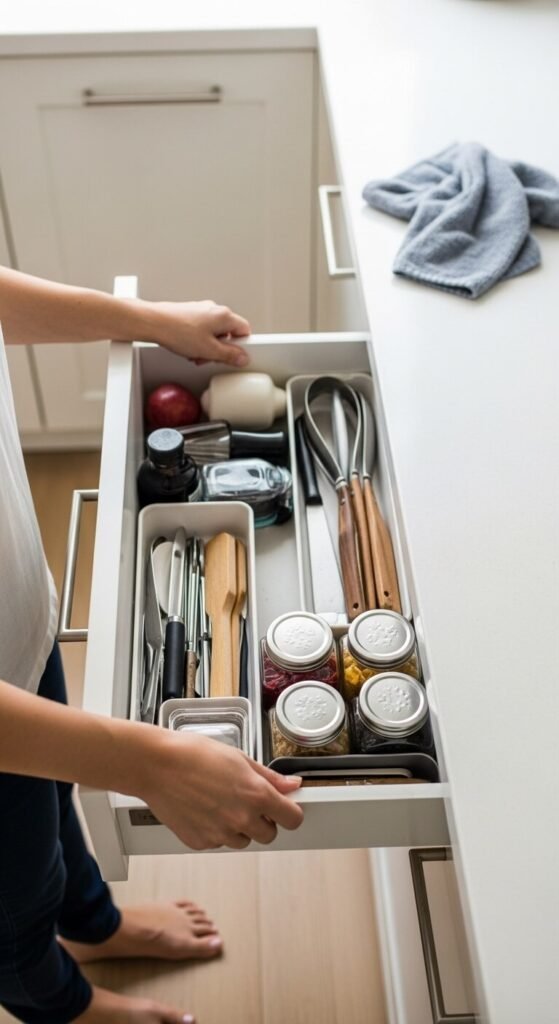
Organization isn’t a one-time event. It’s a maintenance habit.
Once a month, pull each drawer all the way out. Wipe the liner, remove anything that doesn’t belong, and reset the layout.
It takes about 10 minutes for the whole kitchen.
This monthly reset catches small problems before they become big ones. A drawer that gets a quick reset every 30 days stays functional all year. The effort is small. The payoff — a kitchen that actually works — is big.
Conclusion
A well-organized kitchen drawer doesn’t require expensive gadgets or a weekend renovation. It requires a clear system, a few smart tools, and the habit of putting things back where they belong. Start with the tricks that match your biggest pain points — whether that’s knife storage, tangled utensils, or the chaos of plastic lids. Pick two or three from this list, try them this week, and build from there. Small changes stack up. Before long, every drawer in your kitchen will work for you instead of against you — and cooking will feel like the pleasure it’s supposed to be.