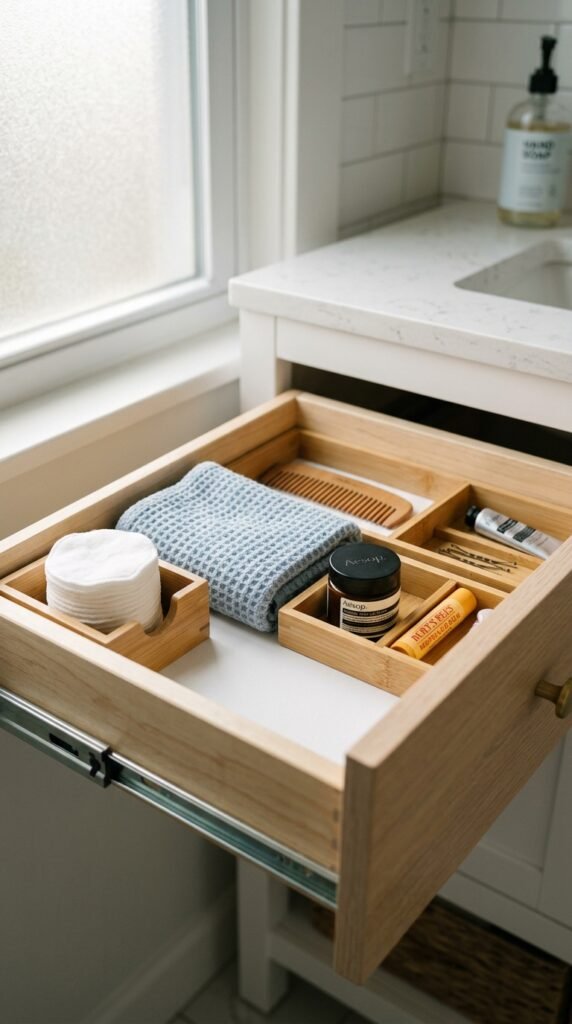
Your mornings set the tone for everything that follows. When you open a bathroom drawer and find chaos — tangled hair ties, half-empty tubes, mystery caps — that small frustration adds up. A calm, organized drawer changes the whole experience. It saves time, cuts stress, and makes you feel in control before the day even starts. These 23 bathroom drawer organization systems are simple, affordable, and actually doable. No fancy renovation required. Just small changes that make a real difference.
1. The Bamboo Divider Grid System
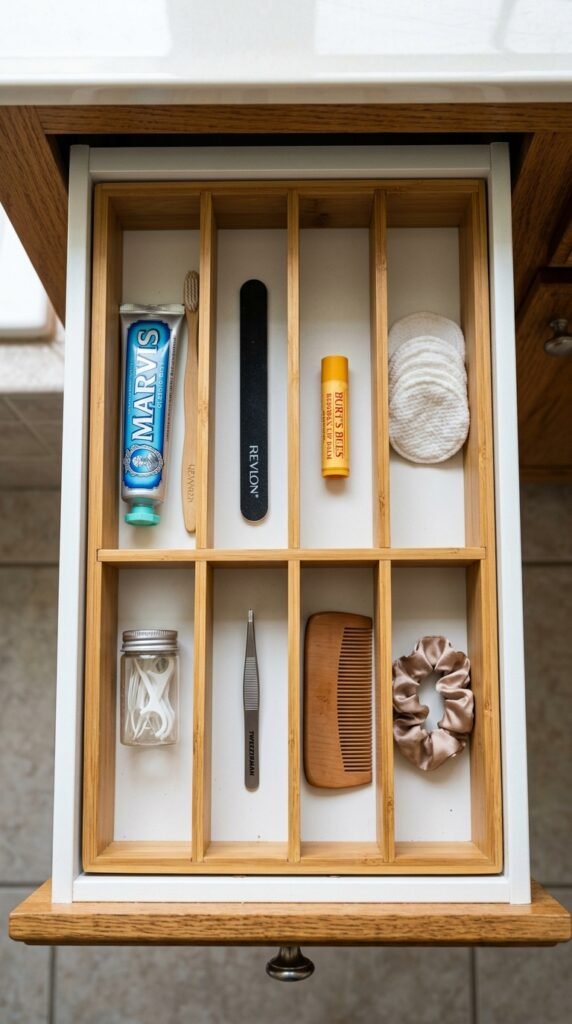
Bamboo dividers are one of the easiest ways to bring order to a cluttered drawer. You can find adjustable bamboo grid sets for under $15 at most home stores or online. They snap together in different configurations so you can customize sections to fit your exact items. No tools needed. Just measure your drawer width, pick your grid layout, and drop items in. Each item gets its own lane. No more digging. Clean, simple, and naturally beautiful.
2. The Repurposed Ice Cube Tray Organizer
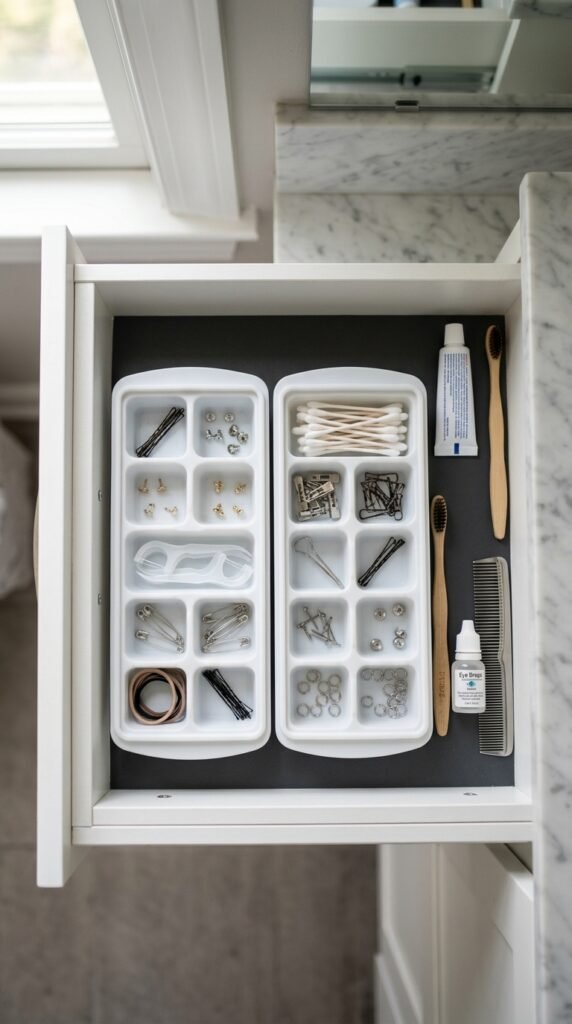
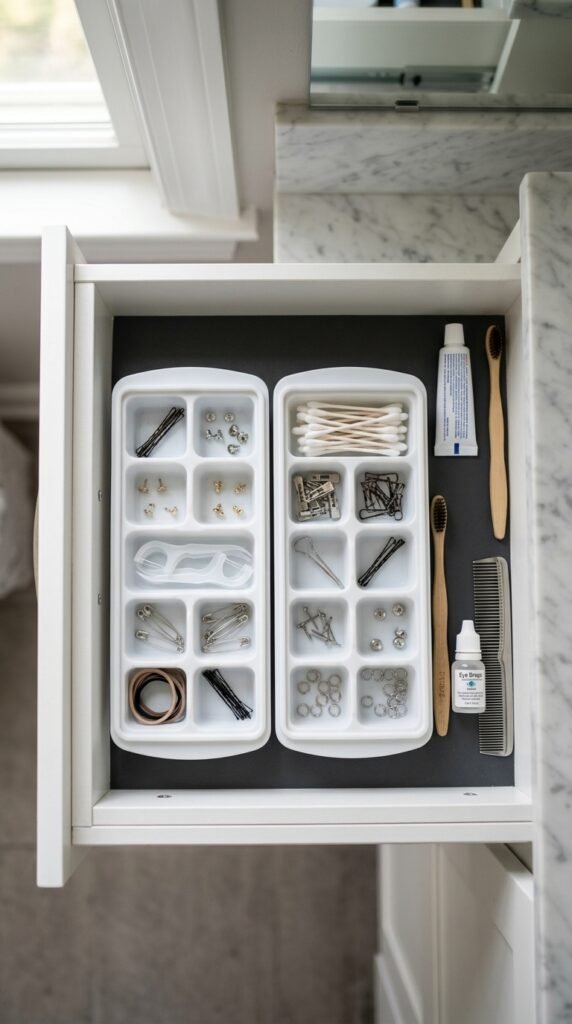
You already have the organizer — it’s in your freezer. Silicone ice cube trays work perfectly for tiny bathroom items like bobby pins, earring backs, and nail clips. They’re flexible, easy to clean, and completely free. Pull out two trays, line them side by side in a shallow drawer, and sort your smallest items into the cubes. This works especially well for jewelry and hair accessories. It costs nothing and takes less than five minutes to set up.
3. The “One Category Per Zone” Drawer Rule
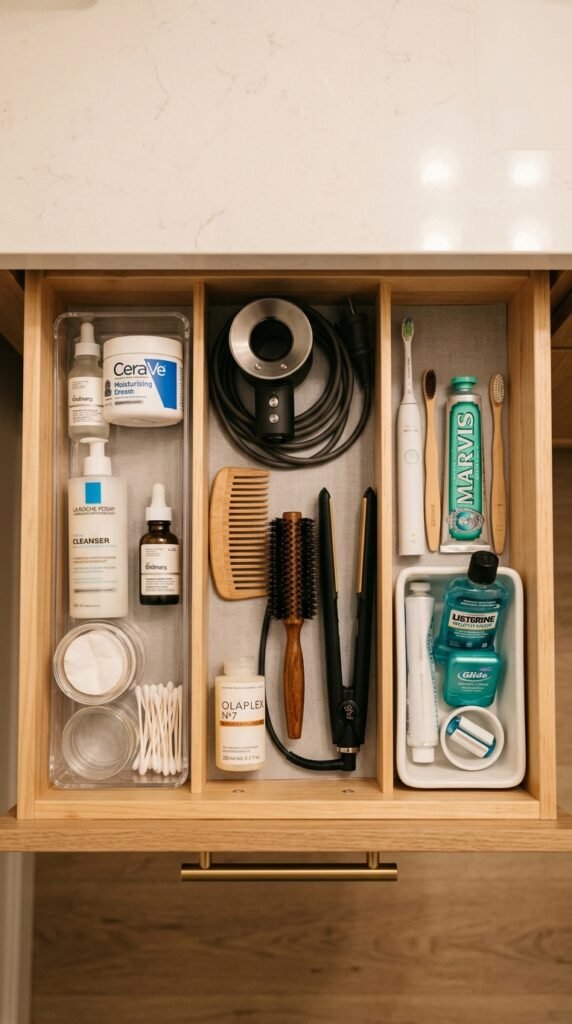
The simplest organization rule is also the most effective: one category per zone. Decide on three zones — for example, skincare, hair tools, and dental care. Assign everything to a zone and never cross the lines. You don’t even need physical dividers to start. Just mentally commit to each area and group items accordingly. Once the habit forms, the drawer stays tidy naturally. Add small trays or containers later if you want firmer boundaries. This is a zero-cost starting point.
4. The Acrylic Stackable Tray System
Clear acrylic trays are a game-changer for visibility. When you can see everything at a glance, you stop losing things. Stackable sets are available for around $10–$20 and come in multiple sizes. Line them up based on how often you use each item — daily-use items in the front tray, occasional-use items behind. The transparency means no guessing. You see exactly what you have, which also helps you avoid buying duplicates of things you already own.
5. The Label Everything Approach
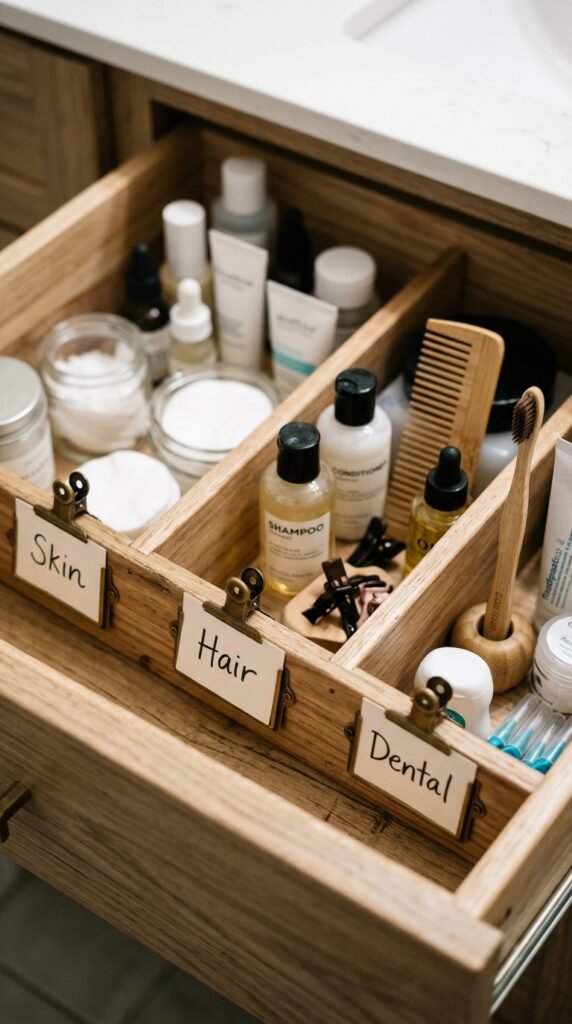
Labels seem overly simple. That’s exactly why they work. When every section has a clear label, you and anyone else in your household always know where things go back. Use a label maker, small cardstock tags, or even masking tape with a marker. The key is consistency — label by category, not by specific item. That way, when products change, the system stays intact. Labeling takes ten minutes and dramatically reduces the “where does this go?” confusion that leads to drawer chaos.
6. The Daily-Use Front Row System
Think of your drawer like a store shelf. The front row holds your daily essentials — the things you reach for every single morning. Everything else lives in the back. This simple front-and-back rule means your most-used items are always within arm’s reach, and your backup products stay organized but out of the way. Reorganize the front row any time your routine changes. No special containers needed — just intentional placement. This habit alone can cut your morning routine time noticeably.
7. The DIY Contact Paper Liner Upgrade
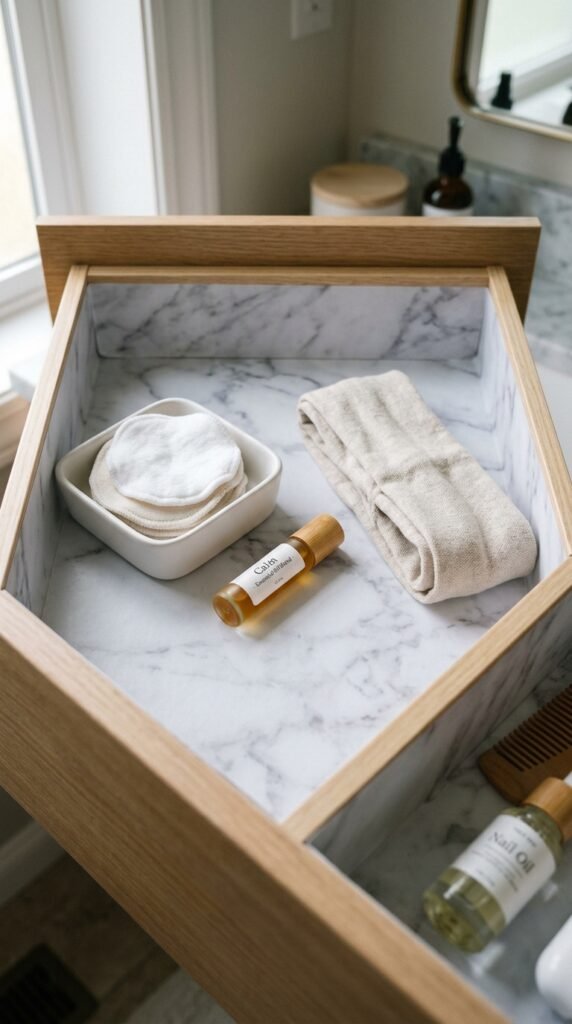
A contact paper liner transforms a boring drawer into something that feels intentional and clean. It only costs a few dollars and takes about 15 minutes to apply. Choose a marble print, solid white, or a soft pastel — whatever matches your space. The liner protects the drawer bottom from product spills and makes cleanup effortless. Just wipe it down. It also gives the drawer a finished, curated look that makes you want to keep it tidy. Peel-and-stick versions require no tools.
8. The Small Ceramic Dish Collection
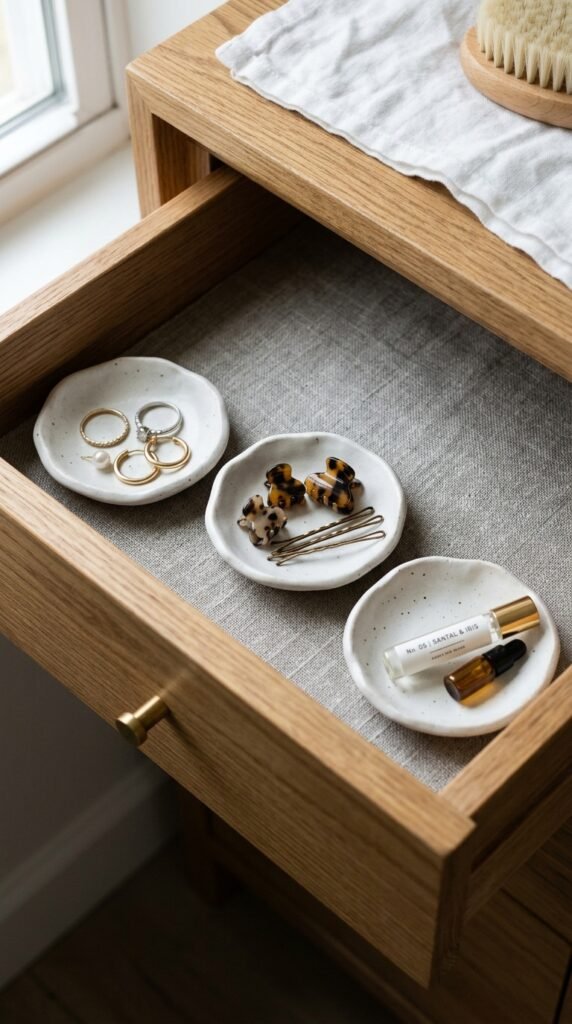
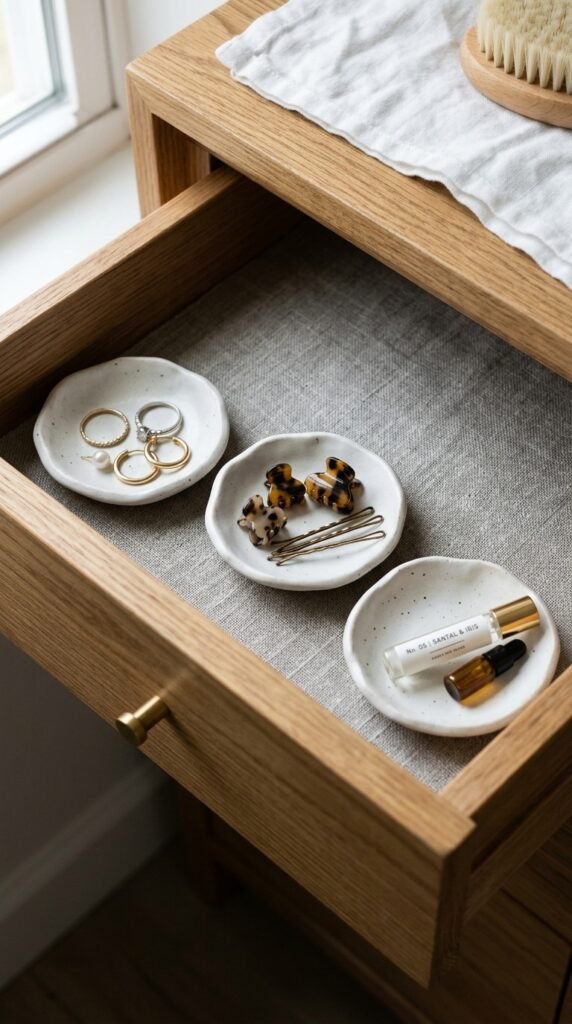
Small ceramic dishes — the kind sold as trinket trays or ring dishes — work beautifully inside bathroom drawers. They’re weighty enough to stay in place, easy to clean, and visually calming. Check thrift stores and dollar stores first. Three or four small dishes arranged side by side can organize jewelry, hair ties, and small skincare items without any drawer inserts. The natural weight and smooth material also feel satisfying to use daily, which subtly encourages you to keep the habit going.
9. The Elastic Band Drawer Separator
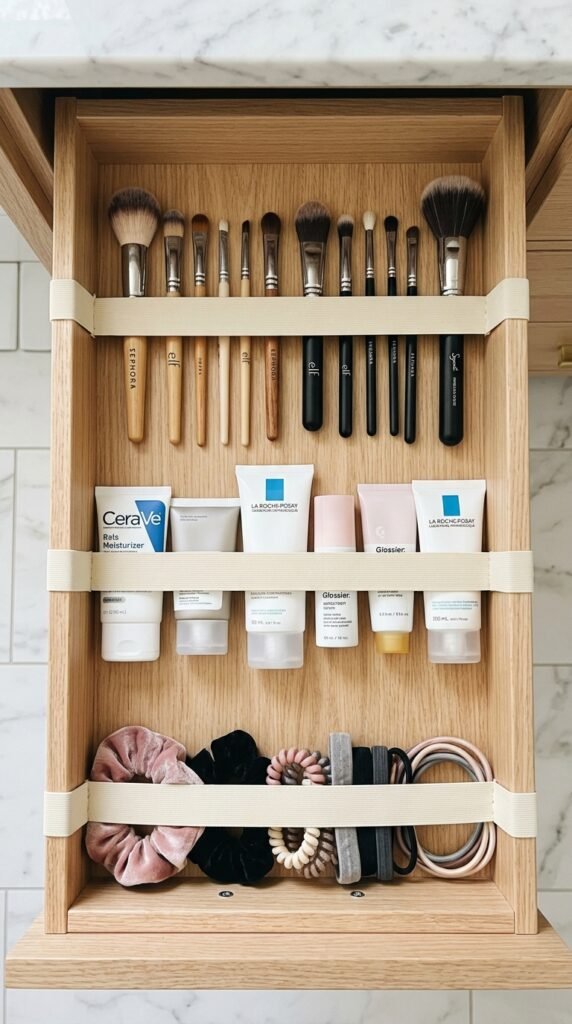
This is the most budget-friendly drawer hack possible. Stretch wide elastic bands across the drawer to create sections — no tools, no adhesive, no cost. Craft stores sell wide elastic for a few dollars per yard. Cut pieces to span the drawer width and press them firmly against the sides. They hold themselves in tension. Items in each section stay separated. It’s not permanent, so you can adjust the layout anytime. This works especially well in shallow makeup drawers or junk drawers that need quick sorting.
10. The Rolled Towel and Cloth Method
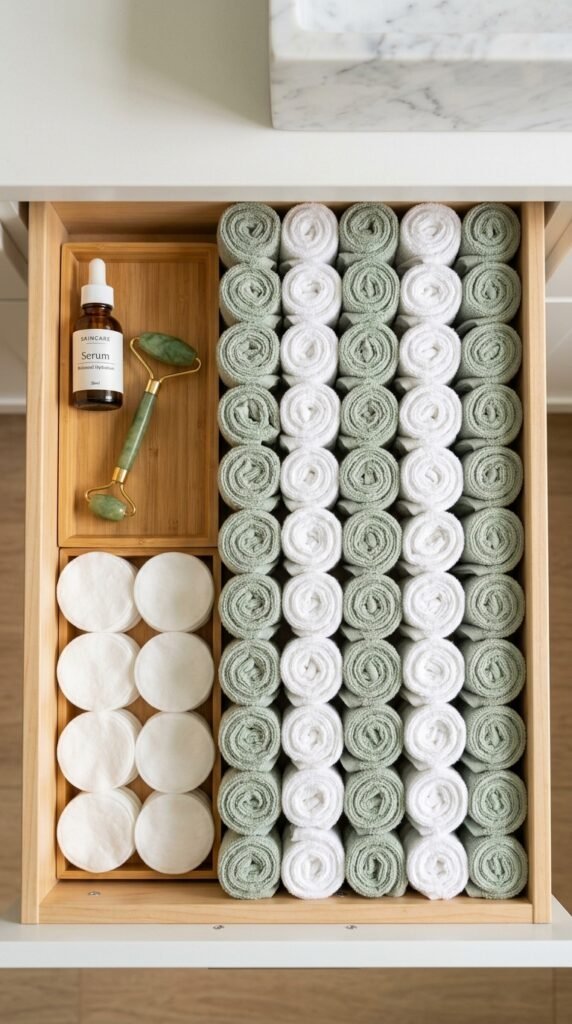
Rolling soft items instead of stacking them is a small but powerful shift. Rolled washcloths, cotton rounds, and face cloths stand upright in a drawer, which means you can see every piece at once. Nothing gets buried. It also looks incredibly calm and spa-like. No organizers needed — just roll and stand. For cotton rounds, use a small glass jar or ceramic cup as a holder inside the drawer. This system works best in wider drawers where the rolls have room to stay upright without falling.
11. The Tiered Spice Rack Insert Trick
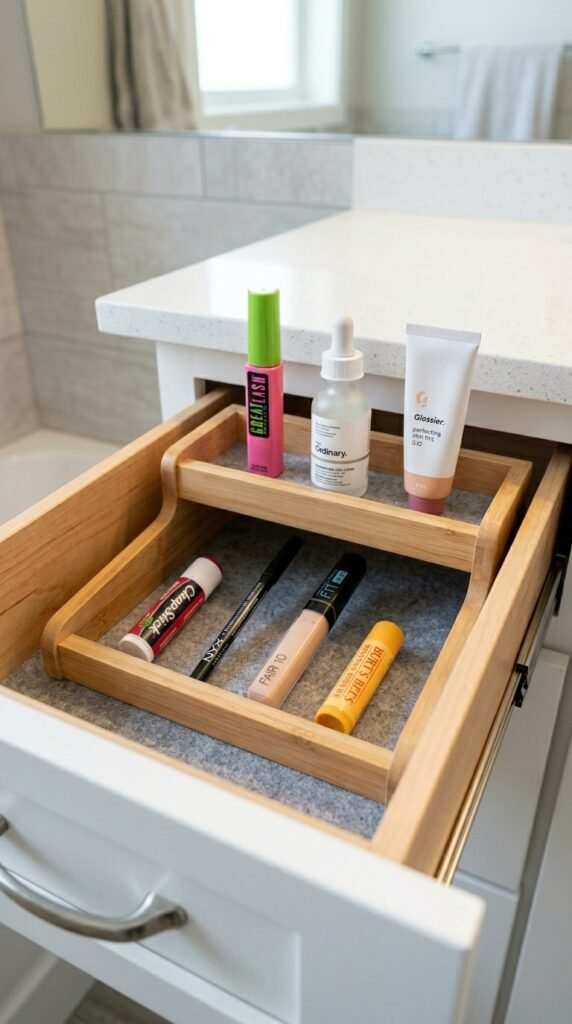
Tiered inserts — originally designed for spice racks — let you see the back row of your drawer without removing everything in front. These cost around $8–$15 and fit inside most standard bathroom drawers. Taller items go on the raised back tier. Shorter items sit in the front tier. Everything is visible at once. You stop losing products because they’re hidden behind other products. This is one of the most practical space-use hacks for shallow but long bathroom drawers.
12. The Color-Coded Category System
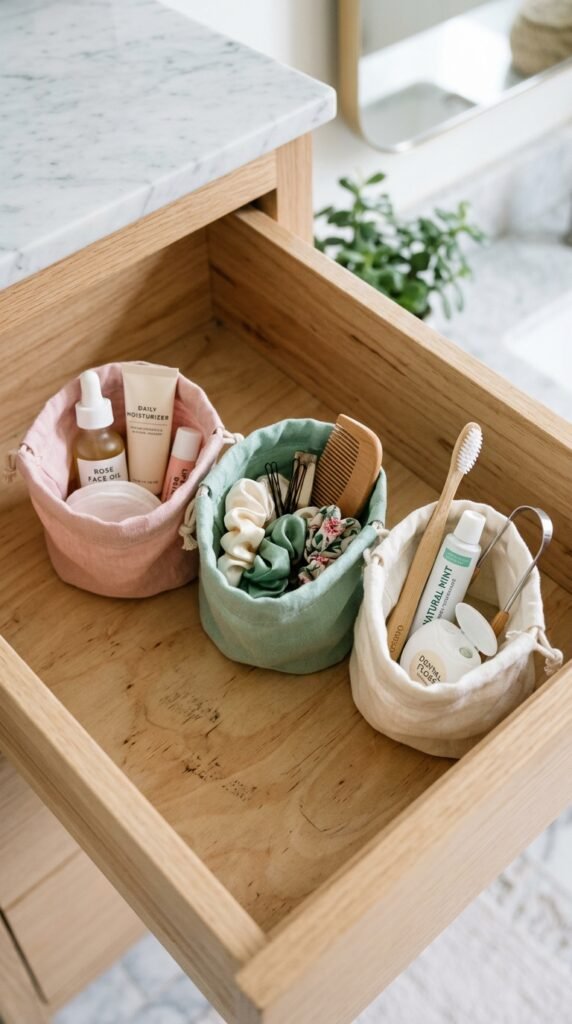
Color coding turns organization into something almost playful. Assign a color to each category — pink for skincare, green for hair care, white for dental. Use small fabric pouches, colored rubber bands on containers, or colored labels. The visual cue becomes automatic over time. You stop thinking about where things go — your eye goes straight to the color. Small fabric pouches cost around $1–$2 each and can be found at dollar stores, craft stores, or made from fabric scraps at home.
13. The Drawer-Within-a-Drawer Box Insert
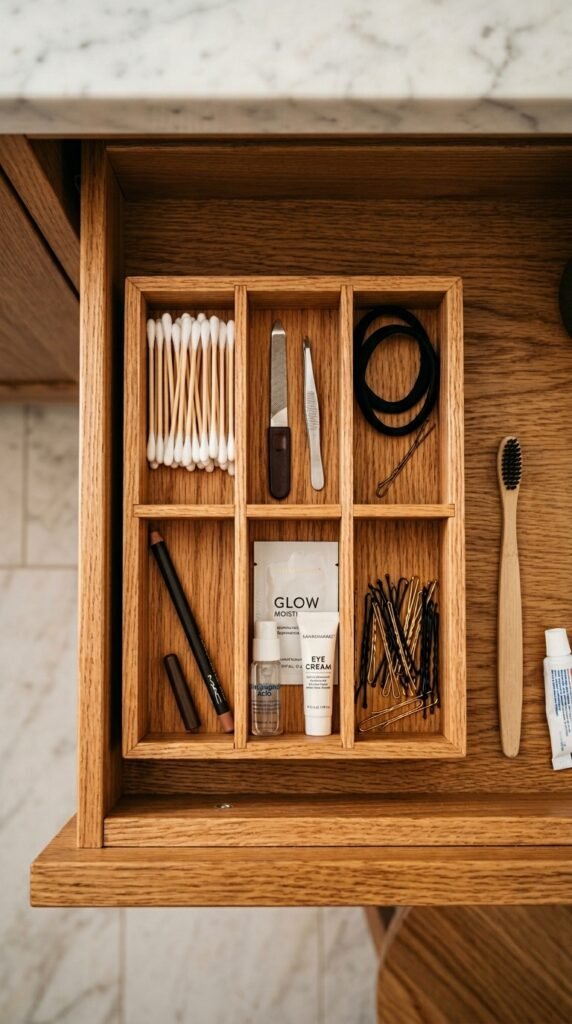
A small box insert creates a drawer within a drawer — a dedicated, contained zone inside a larger, messier space. Wooden craft boxes from hobby stores cost $5–$10 and come in various compartment configurations. Sand and seal them if you want a finished look. Place the insert in the center of your drawer and assign each compartment a micro-category. The rest of the drawer can hold larger items around the box. It’s a contained, low-effort system that works in drawers of any size.
14. The Under-Product Shelf Riser Hack
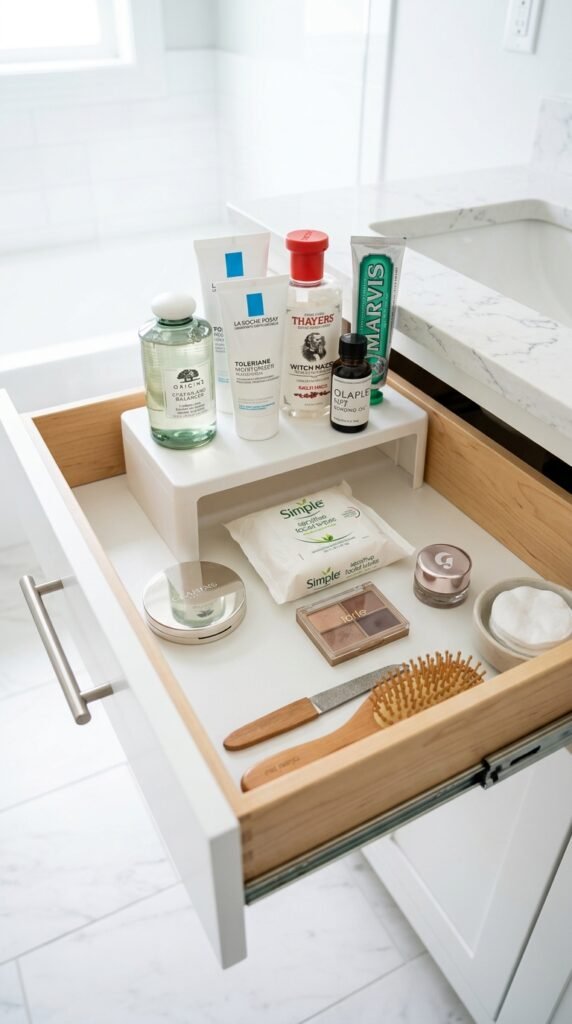
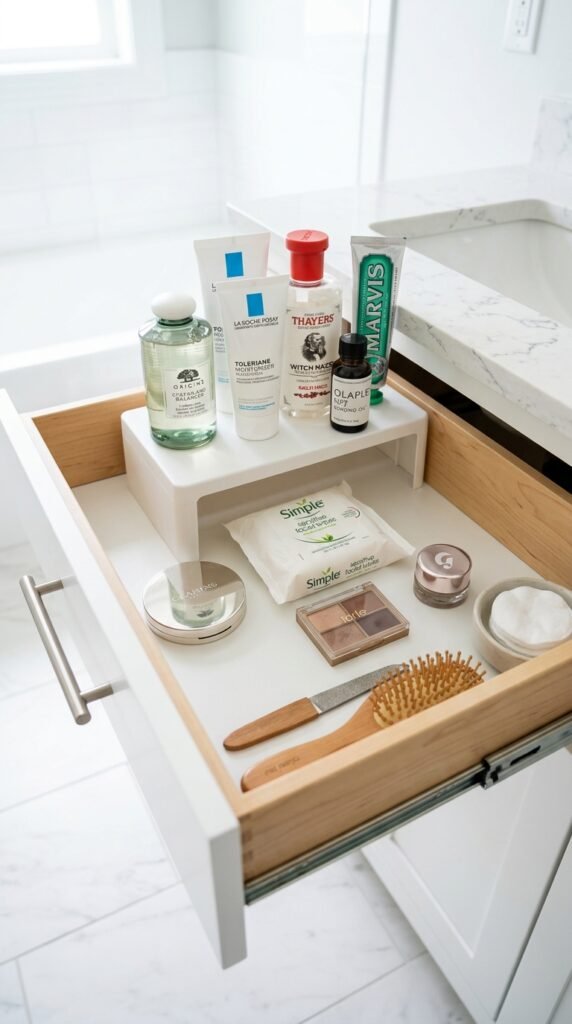
Mini shelf risers elevate the back row of your drawer so you can see everything clearly without digging. These are often sold as bathroom counter organizers, but they fit beautifully inside deep drawers. Place the riser at the back half of the drawer. Tall items like bottles and tubes stand on top. Flat items sit on the drawer floor in front. Everything is visible at a glance. Shelf risers cost around $6–$12 and can be found at most home goods stores or online.
15. The Clear Zip Pouch Grouping Method
Clear zip pouches let you group categories while keeping everything visible. Buy a set of three to five small clear pouches — most multipacks cost under $10. Label each one and fill by category. When you travel, grab the relevant pouch and go — no repacking needed. Inside the drawer, they lay flat and stay organized without rigid dividers. The flexibility is the point. You can rearrange, swap, or add pouches as your routine changes. Nothing is permanent, which makes the system easy to maintain.
16. The Dedicated “Tomorrow Morning” Prep Drawer
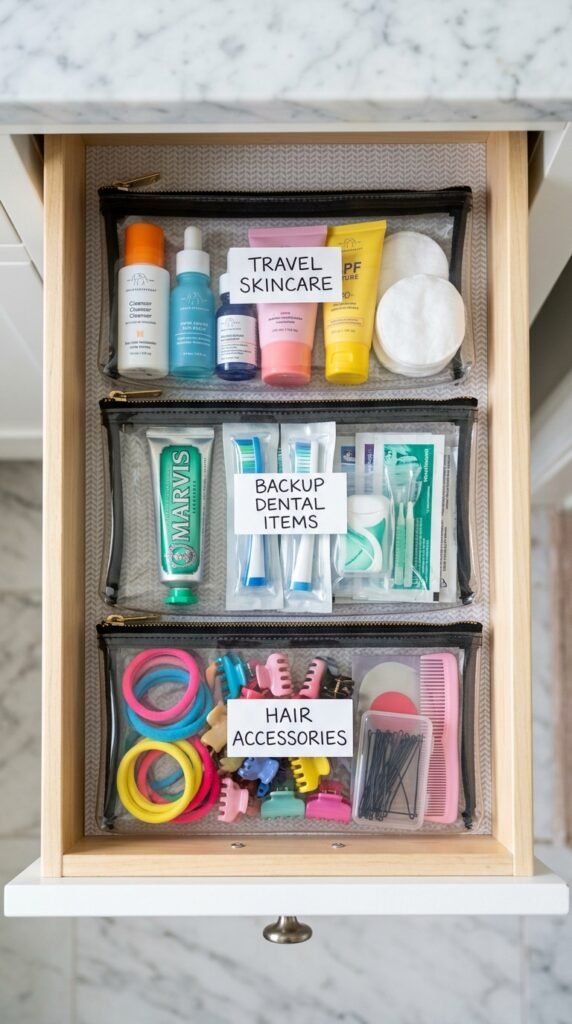
Create a prep drawer you load the night before. Every evening, place tomorrow’s essentials in one specific drawer — whatever you know you’ll need. Your face wash, your hair tie, your vitamins, your morning items. When morning comes, that drawer is already curated for you. You’re not hunting or deciding. Everything is right there. This habit costs nothing and takes 90 seconds at night. It’s one of the most calming morning routines because the thinking is already done before you wake up.
17. The Vintage Cutlery Tray Repurpose
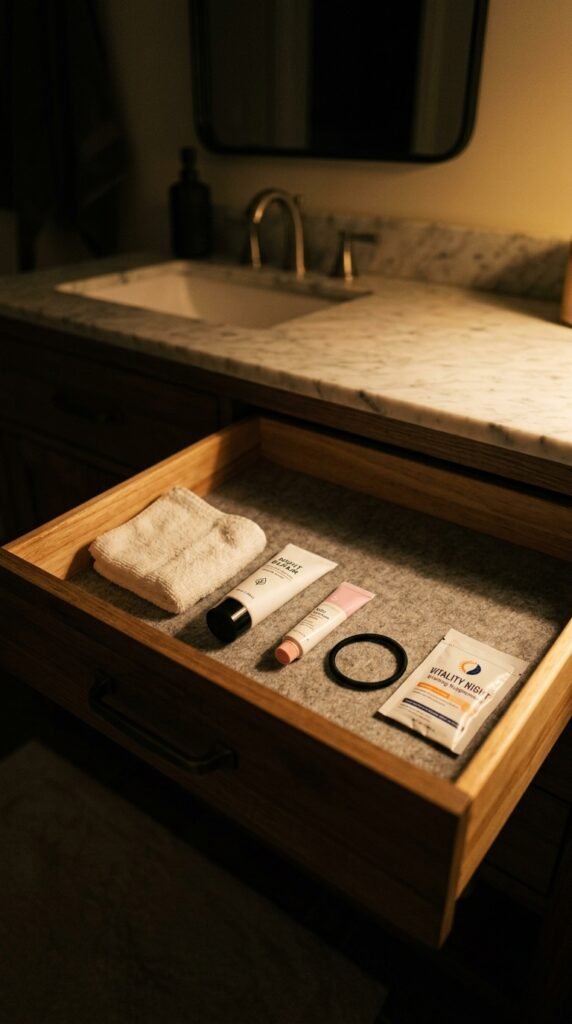
That old cutlery tray at the thrift store is a perfect bathroom drawer organizer. Most thrift stores have them for $1–$3. The long compartments are ideal for makeup brushes, hair tools, and skincare tubes. The center wide slot fits a folded cloth or several rolled items. Silverware trays are sturdy, easy to clean, and built to hold items upright. They’re usually the exact length of a standard bathroom drawer, which means they slide right in with no wasted space. A $2 find that works as well as a $25 organizer.
18. The Minimalist “One-In, One-Out” Drawer Rule
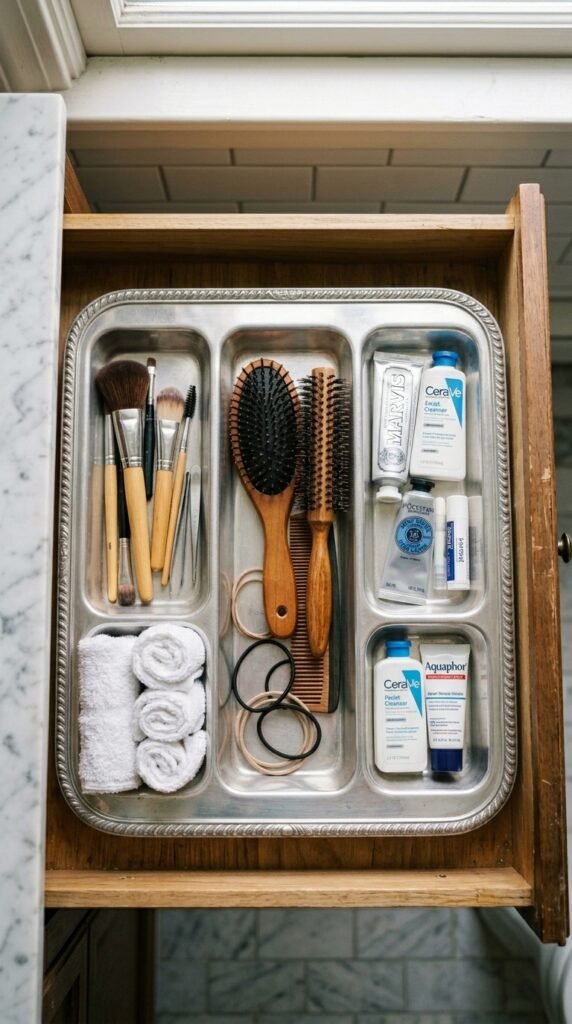
Organization isn’t just about containers — it’s about editing what you own. The one-in, one-out rule means when a new product enters the drawer, an old one leaves. This keeps the drawer from gradually refilling with clutter over time. Go through the drawer once a month. Remove expired products, duplicates, and things you haven’t touched in 60 days. The goal isn’t a perfectly sparse drawer — it’s a drawer where every item earns its place. Less stuff means the system you build actually lasts.
19. The Drawer Fragrance Trick for Calm Mornings
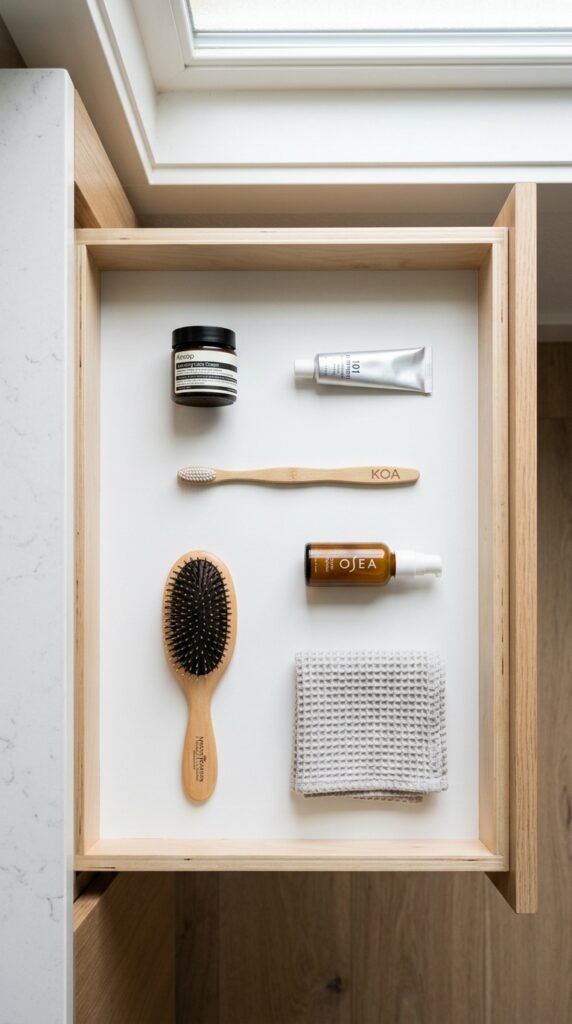
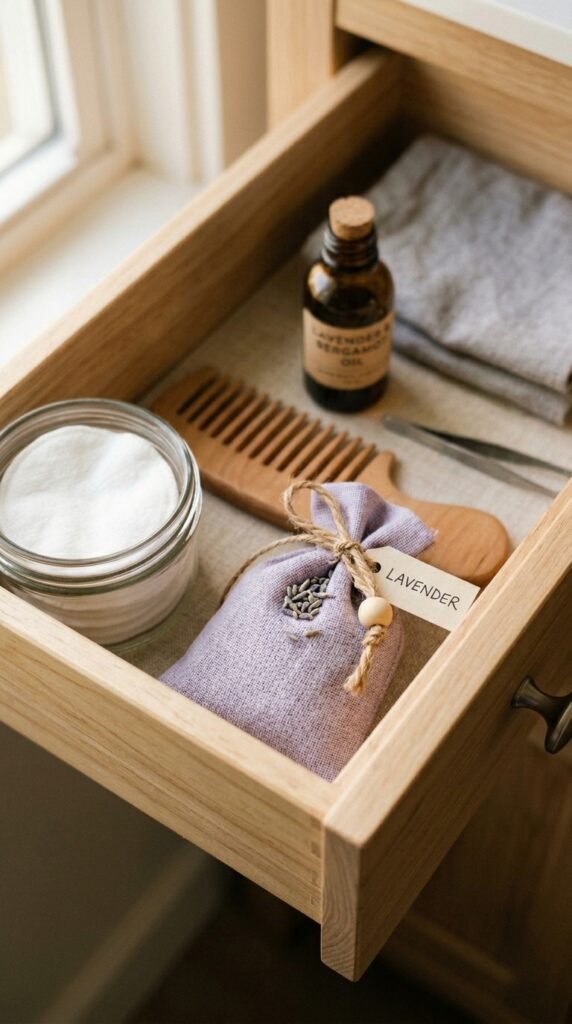
A small lavender sachet or cedar block tucked into the corner of your drawer does something simple but meaningful — it makes the drawer smell calm. That sensory detail reinforces the feeling of order every time you open it. Buy dried lavender sachets for $2–$4 at home goods stores, or make your own with a small fabric square and dried herbs from the grocery store. Cedar blocks also work and double as a natural moth repellent for any fabric items stored nearby. A tiny addition with a surprisingly big impact.
20. The Designated Backup Product Drawer
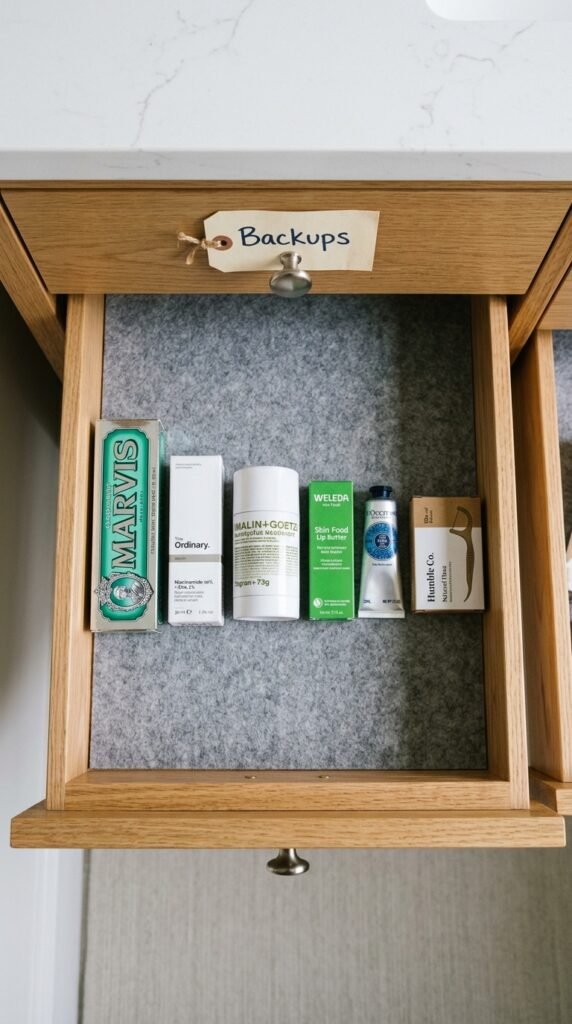
Stop letting backup products take over your daily-use drawer. Give them their own dedicated space. One drawer — ideally a deeper one — becomes the backup zone. Store one spare of each product category here. When your daily item runs out, you come here, grab the backup, and add it to your shopping list. No more running out of things unexpectedly. No more backup products cluttering your daily drawer. This separation alone can make your main drawer feel twice as organized.
21. The Magnetic Strip for Metal Tools
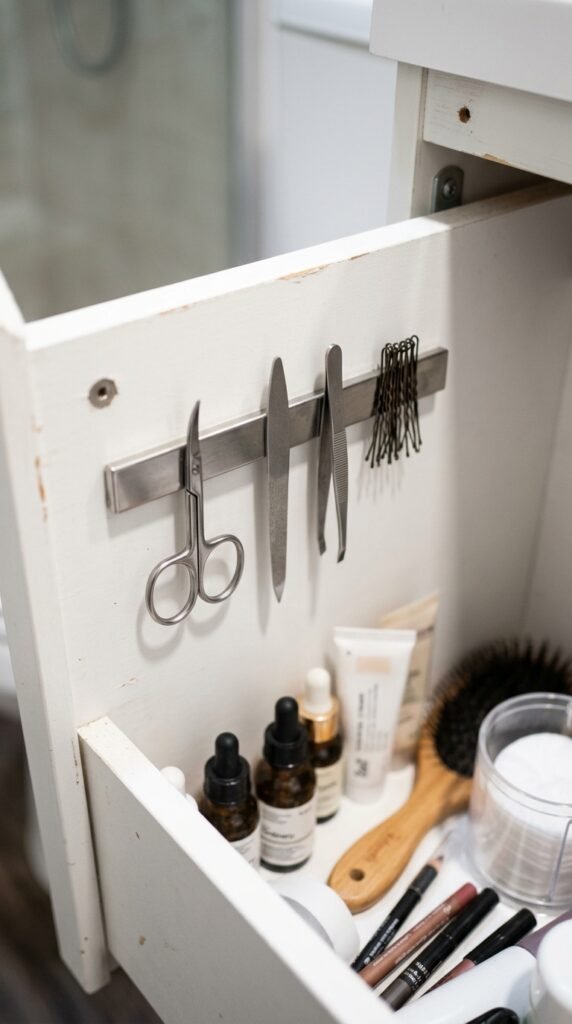
A self-adhesive magnetic strip attached to the inside wall of a deep drawer keeps metal tools visible and accessible without taking up floor space in the drawer. Nail scissors, tweezers, metal nail files, and bobby pins all cling to the strip. This frees the drawer floor entirely for non-metal items. Magnetic strips cost $5–$8 and install with peel-and-stick backing. No drilling needed. It’s a practical use of vertical space that most people completely overlook in bathroom organization.
22. The Seasonal Rotation System
Your bathroom needs change by season. Rotate your drawer contents twice a year — once in spring, once in autumn. Pack away heavy winter creams in spring. Store SPF and lighter products out of reach in winter. Use small labeled bins or bags to keep the off-season products dust-free in a cabinet. Your active drawer stays streamlined because it only holds what’s relevant right now. This also gives you a natural moment to audit products, discard expired items, and reassess what your routine actually requires.
23. The “Spa Drawer” Sensory Experience Setup
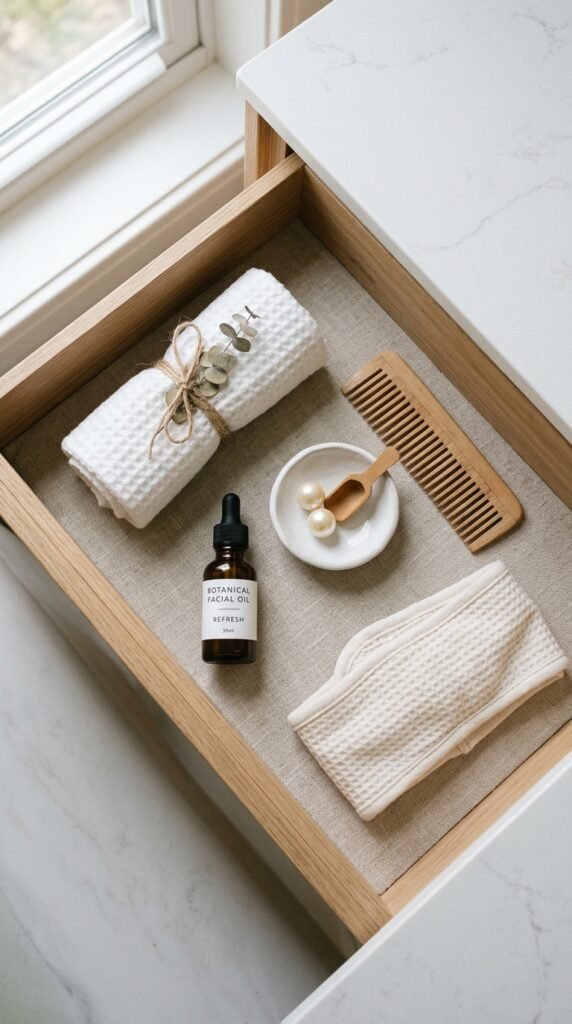
The final system is about more than just function — it’s about how the drawer makes you feel. Choose a few items that represent your ideal morning ritual. Arrange them with intentional spacing. Use a liner that matches the room. Add a small sensory detail — a sachet, a smooth stone, a rolled cloth. When you open this drawer, it should feel like a small moment of calm. That feeling is worth building. Morning routines improve when the environment supports them, and a single organized drawer can genuinely shift the tone of your whole day.
Conclusion
You don’t need a bathroom renovation to feel calm in the morning. You need better systems in the spaces you already have. Start with one drawer. Pick one method from this list — the bamboo dividers, the ceramic dishes, the front-row rule, or even just a contact paper liner. Do it this week. Keep it simple. The goal isn’t perfection. The goal is a drawer that works for you, takes seconds to maintain, and sets you up for a smoother start. Small spaces, organized well, make a real difference in daily life.