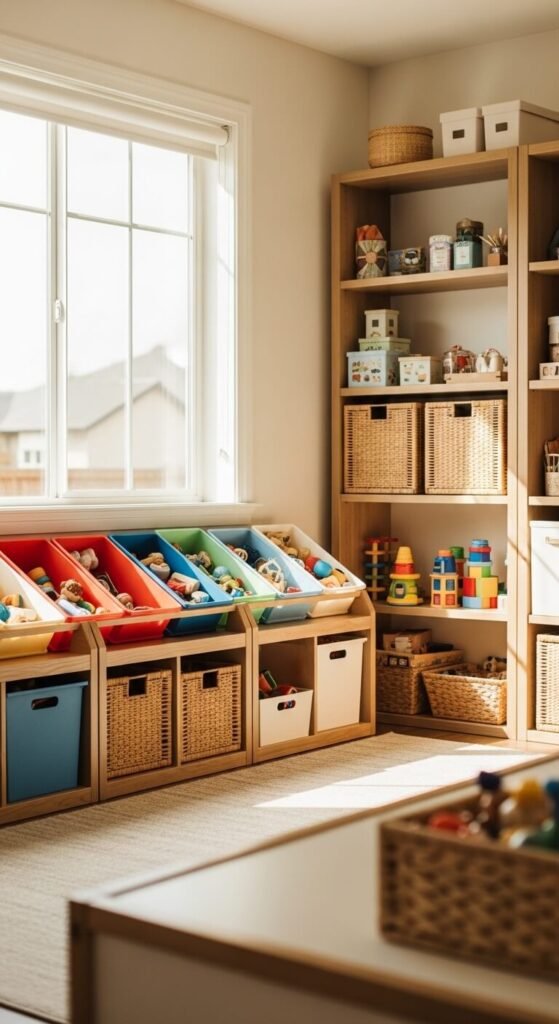
Kids and toy storage should go hand in hand — but most of the time, they don’t. Toys end up under the couch, behind doors, and in every corner of the house. The fix isn’t buying expensive furniture. It’s finding smart, simple systems that kids can actually use on their own. When storage is low, open, and easy to reach, kids are far more likely to put things away. This list covers 25 real, affordable ideas — from dollar store bins to repurposed furniture — that work in small spaces, shared rooms, and busy family homes.
1. Open Bins on Low Shelves
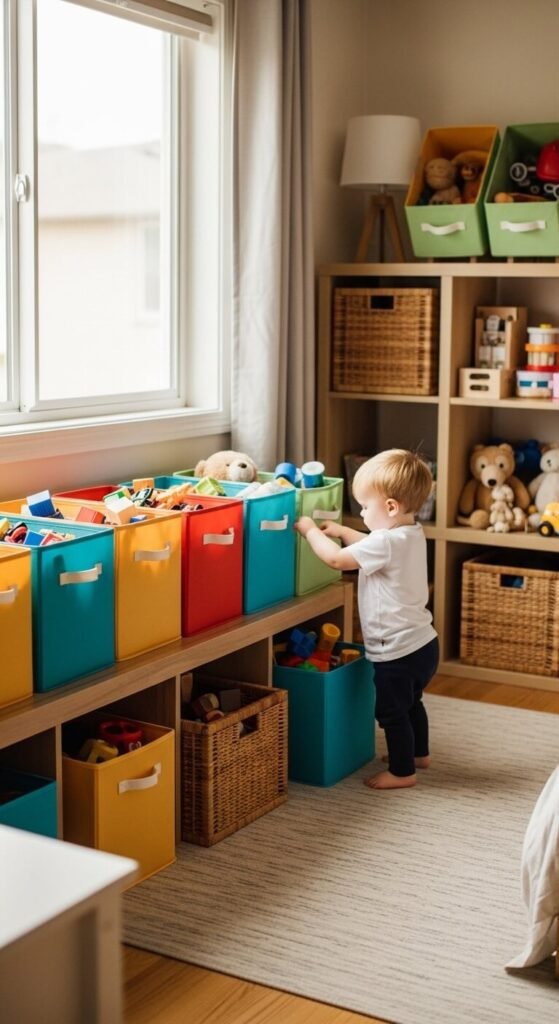
Open bins make cleanup fast. No lids to fight with. No labels to read. Kids just toss toys in and move on. A low shelf — around 12 to 18 inches from the floor — lets even toddlers reach without help. You can grab a simple 3-cube or 5-cube shelf from any big box store for under $40. Use fabric bins that match your room colors. Each bin gets one toy category: stuffed animals, cars, blocks. Simple sorting = faster cleanup.
2. A Hanging Shoe Organizer Behind the Door
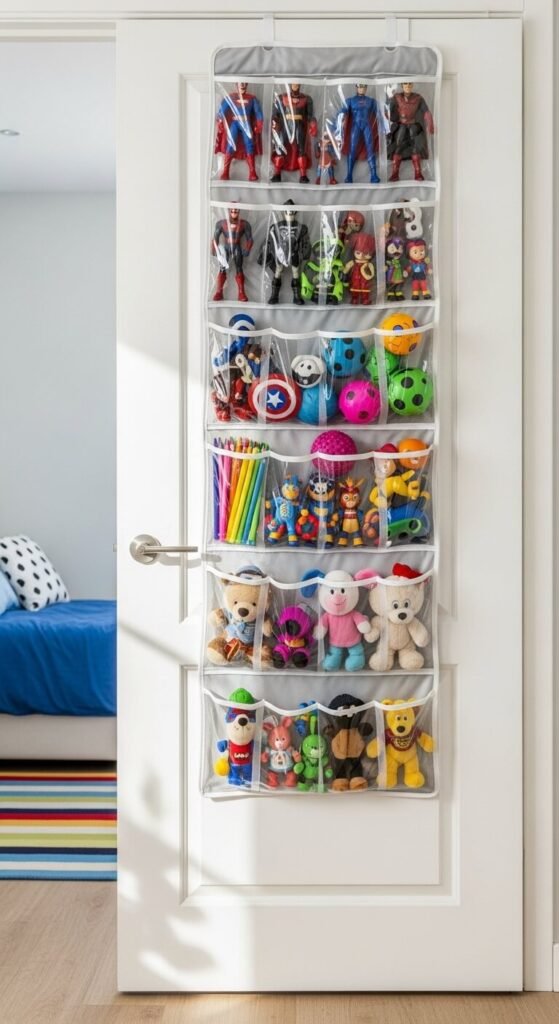
This is one of the cheapest storage wins you’ll find. A clear over-the-door shoe organizer costs around $10 to $15. Each pocket holds small toys perfectly — crayons, figurines, small cars, hair ties, or mini puzzles. Kids can see everything at a glance, which means they actually use it. It keeps tiny items off the floor without taking up any floor space. Hang one behind a bedroom door, closet door, or even a playroom wall using a tension rod.
3. A Toy Chest at the Foot of the Bed
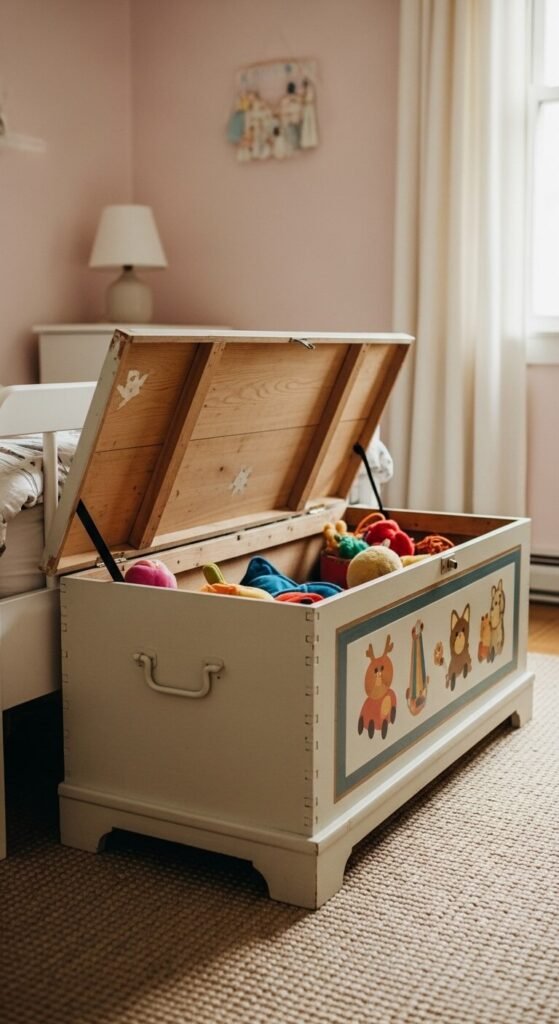
A toy chest is the classic “catch-all” storage option — and it works. It handles big, oddly shaped toys that don’t fit in bins. Things like dress-up costumes, foam swords, or oversized stuffed animals go in easily. Look for a chest with a safety hinge so the lid doesn’t slam on small fingers. You can paint an unfinished wood chest yourself for under $30. Add your child’s name or a favorite color to make it feel special and personal.
4. Labeled Stackable Crates
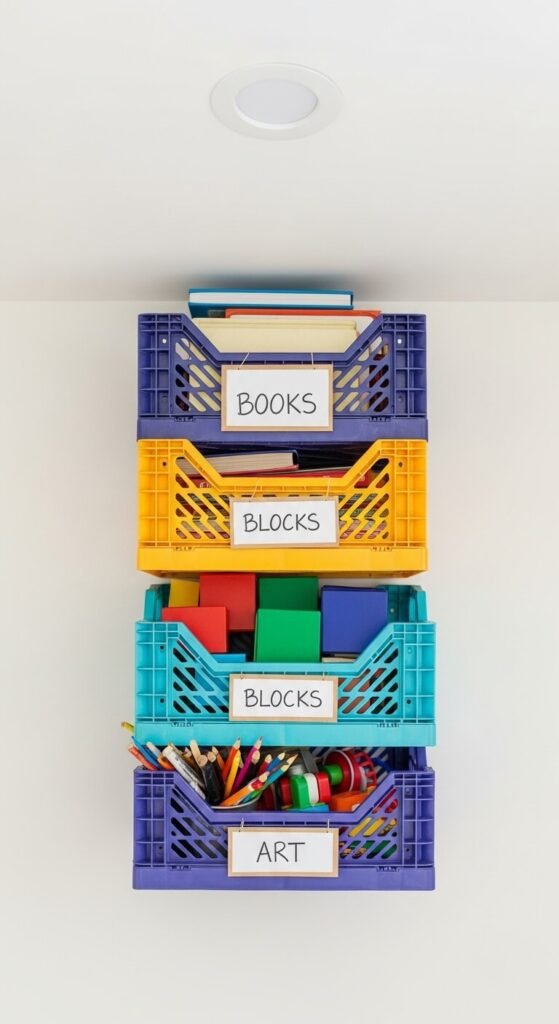
Stackable crates are affordable and tough. You can find them at dollar stores or hardware stores for $3 to $8 each. Stack two or three and label each crate with a picture or word for the toy category inside. Picture labels work best for younger kids who can’t read yet. Print simple images from your computer, laminate them, and tape or clip them onto the crates. When one category gets messy, just pull out the whole crate and sort.
5. A Rolling Cart with Drawers
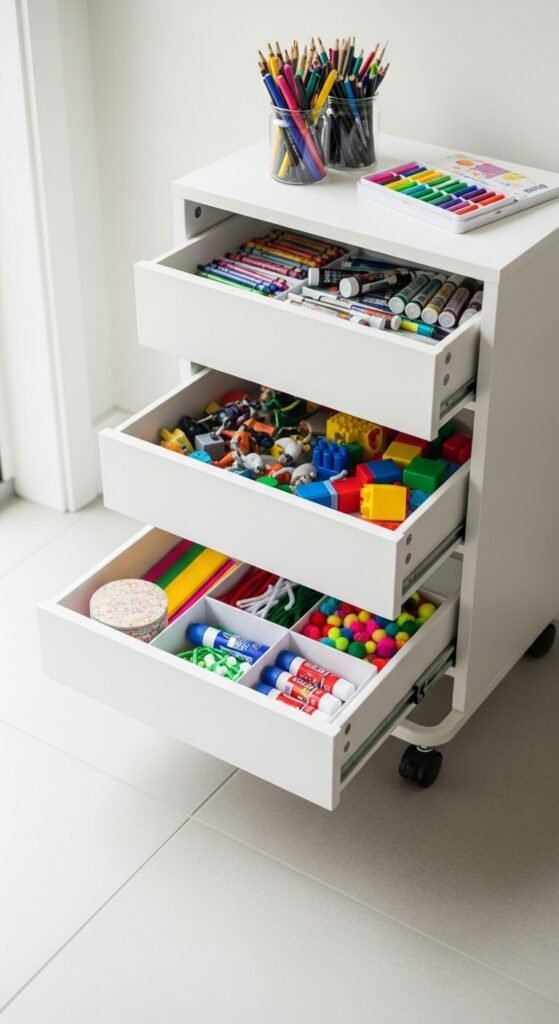
A rolling cart — the kind you see in craft rooms — is a game-changer for small spaces. You can roll it where you need it and tuck it away when you’re done. Use it for art supplies, small toy collections, or activity kits. The ALEX-style drawer cart from craft stores runs about $30 to $50. Add picture labels on each drawer so kids know where things go. Rolling storage teaches kids to move supplies to where they’re playing, then put it all back after.
6. Wall-Mounted Pegboard
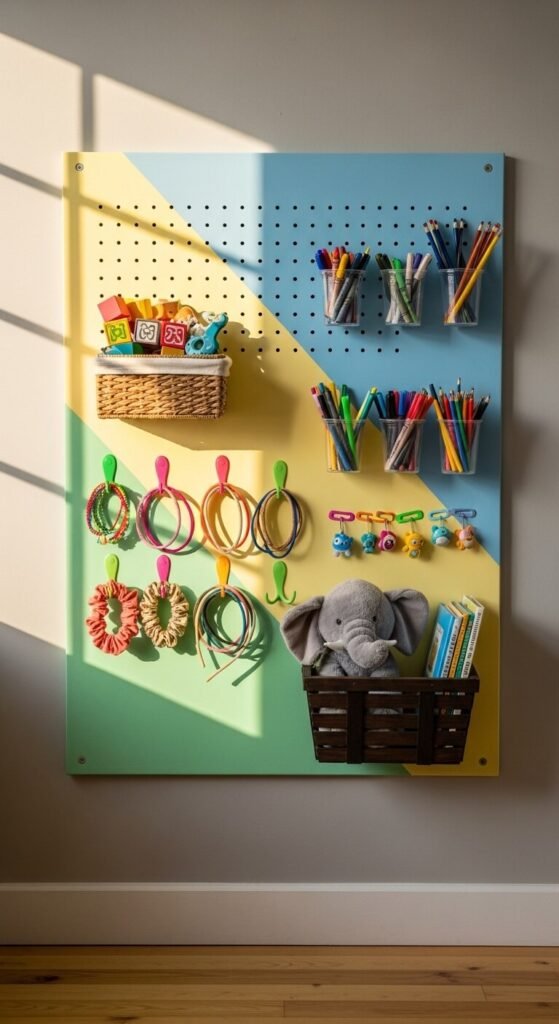
Pegboards turn any wall into instant storage. A 2×4 foot pegboard panel costs about $15 at a hardware store. Mount it low on the wall — at kid height — and add hooks and small baskets. Hang dress-up accessories, small bags of toys, or art tools. You can repaint the board to match the room. The best part: you can rearrange everything as your child’s toy collection changes. Add peg hooks for backpacks, jump ropes, or costume pieces too.
7. A Bookshelf Repurposed for Toys
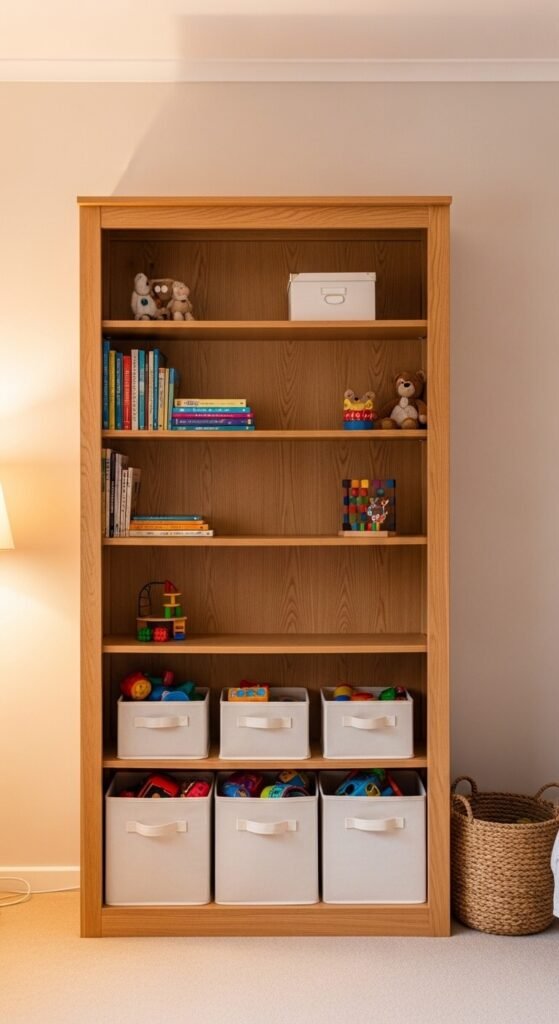
You probably already have a bookshelf somewhere in your home. Repurpose the lower shelves for toy bins and baskets while keeping the upper shelves for books. This makes it easy for kids to reach what they need without climbing. Add a few fabric bins in a matching color so the shelf looks tidy even when it’s full. Taller shelves can hold games and puzzles that need adult supervision. It’s storage you already own, just used smarter.
8. Under-Bed Rolling Storage Drawers
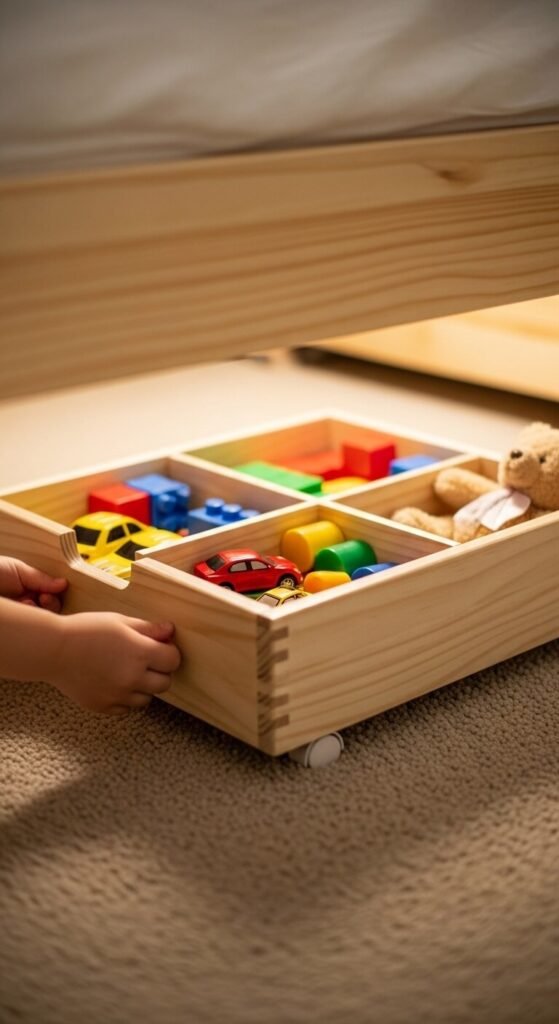
The space under a bed is often wasted. A flat rolling drawer turns it into easy-access storage for toys, games, or books. Look for under-bed rolling bins at discount stores for about $10 to $20 each. Use them for toys that are played with regularly but don’t need to be out all the time. Clear plastic bins let kids see what’s inside. This also gets toys completely off the floor, which makes bedroom cleanup feel much faster and less overwhelming.
9. A Hanging Hammock in the Corner
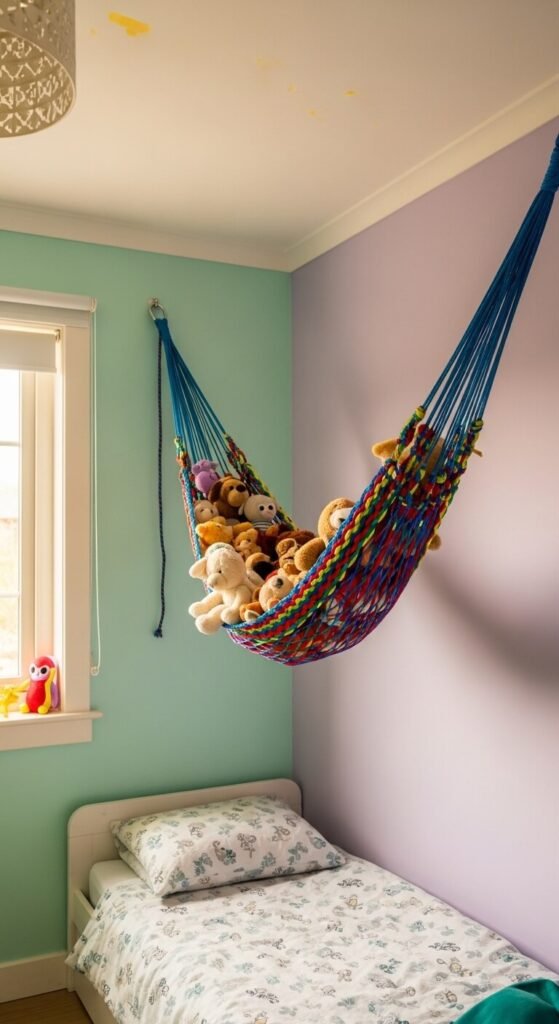
Stuffed animals multiply fast. A corner hammock gives them a home without taking up floor space. You can buy a stuffed animal hammock for $10 to $20 online, or make one using a piece of fabric and three corner hooks. Install it up high in the corner of the room. Kids can toss animals in easily, and the hammock becomes part of the room’s decor. It keeps plush toys visible and accessible without piling them on a bed or chair.
10. Wicker Baskets in a Row
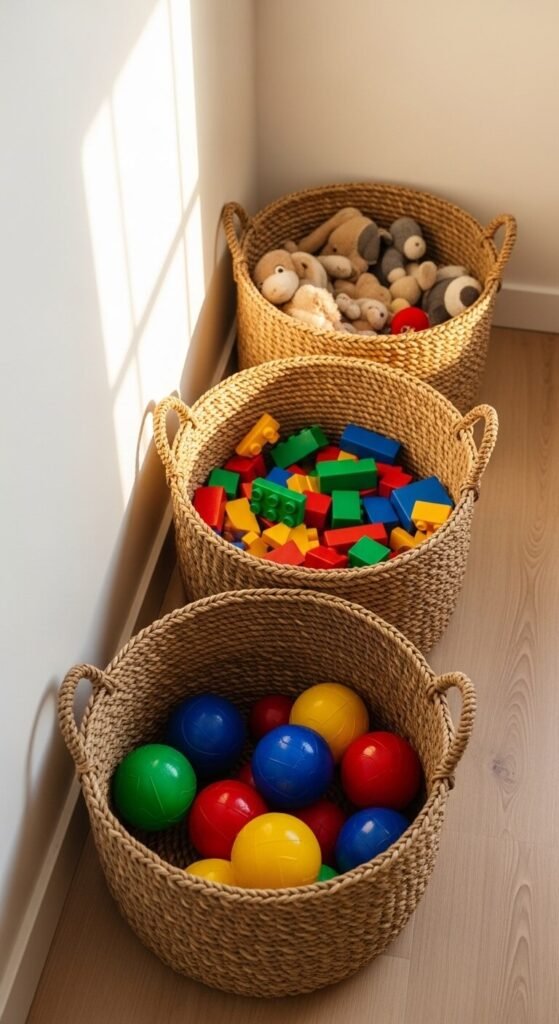
Wicker baskets look great and hold a lot. A row of three large baskets along a wall costs under $30 total if you shop at thrift stores or discount home stores. Each basket gets a simple toy category — one for balls, one for stuffed animals, one for building sets. Add a handwritten tag or a printed picture on each one. Wicker is sturdy enough for kids to toss things in and out daily. They also look tidy even when the toys aren’t perfectly sorted.
11. A Low Dresser Turned Toy Station
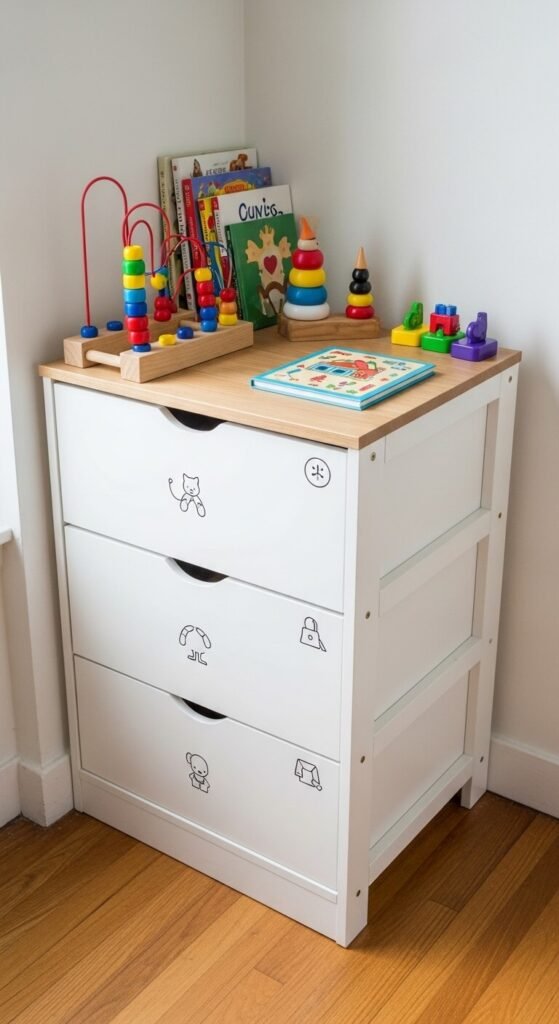
Thrift store dressers can be repurposed into fantastic toy stations. A low 3-drawer dresser lets kids open and close drawers independently. Paint it a fun color, add simple picture labels to each drawer, and assign each one a toy type — one for art supplies, one for small figures, one for games. You can grab a secondhand dresser for $10 to $30 and spend another $10 on paint. It looks built-in and intentional without the built-in price tag.
12. Clear Shoe Boxes for Small Sets
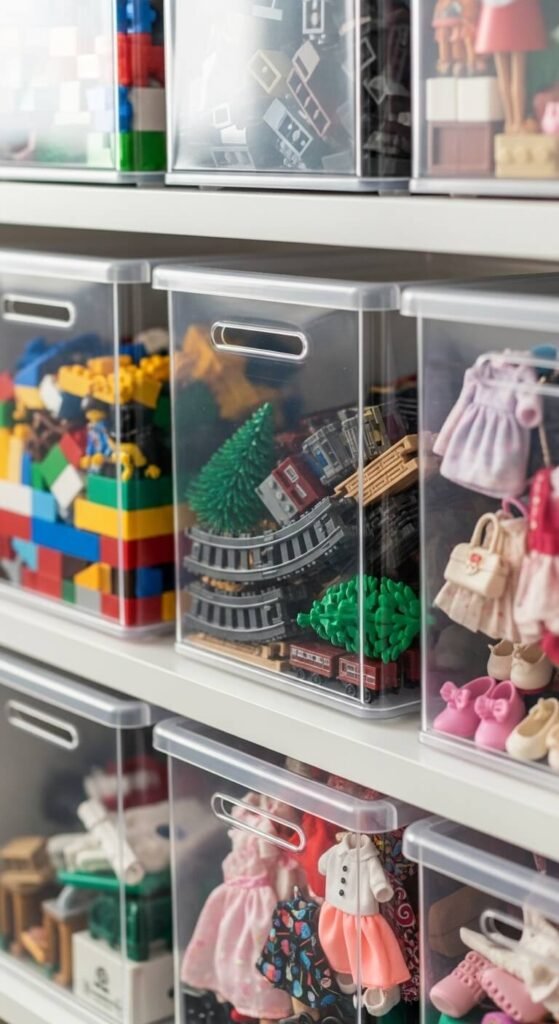
Small toy sets — LEGO themes, train accessories, doll sets — get lost fast. Clear plastic shoe boxes keep each set together. Stack them on a shelf or in a closet. Kids can see exactly what’s in each box without opening it. Shoe boxes from dollar stores cost about $1 each. Write the toy name on the lid with a marker or print a picture label. When a set is finished, everything goes back in the box. No more missing pieces mixed in with other toys.
13. A Fabric Hanging Organizer on the Wall
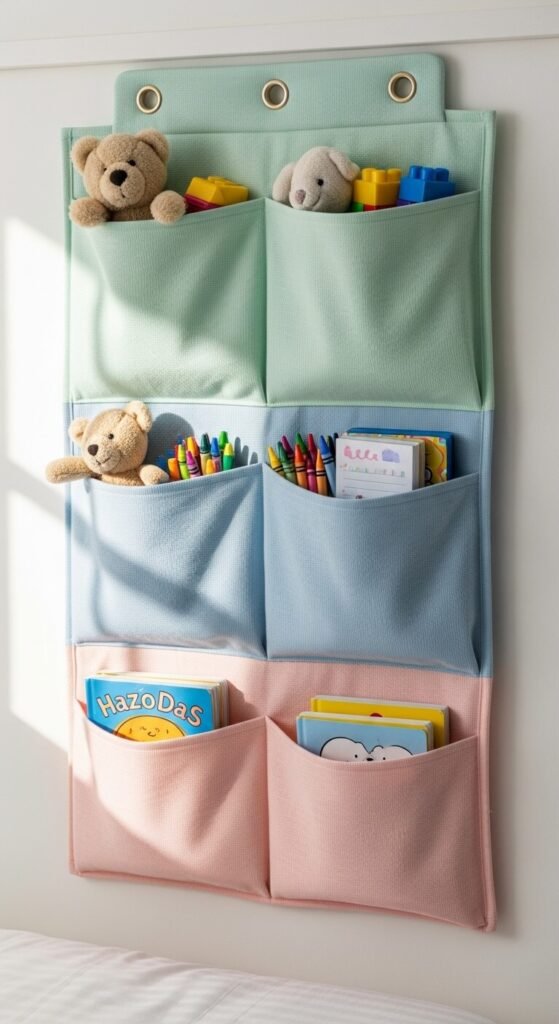
Fabric wall organizers hang like artwork but work hard as storage. Six to eight pockets hold small toys, craft supplies, and stationery. You can buy these for $15 to $25 online or sew one yourself using canvas and a wooden dowel. Hang it at a height your child can reach without a stool. Great for items kids use every day — colored pencils, small figures, hair accessories, mini notebooks. It keeps surfaces clear and puts everything in plain sight.
14. A Tension Rod Under the Sink or in a Closet
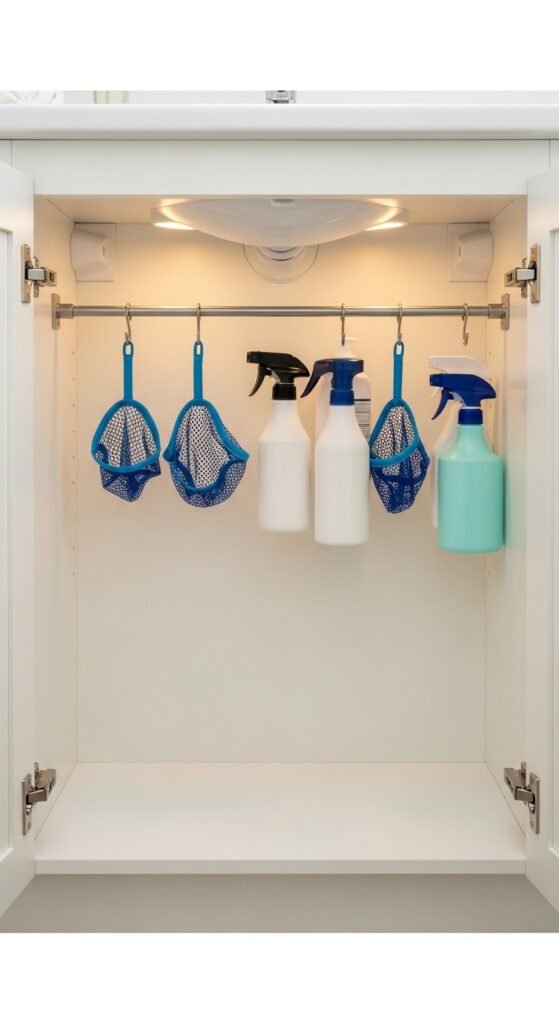
Tension rods aren’t just for curtains. Install one in a closet or under a cabinet and hang small mesh bags or hooks from it. Store bath toys in a mesh bag that air-dries between uses. Hang small toy bags for car trips or play kits. A tension rod costs $5 at any dollar store. No drilling required. You can use this trick in bathroom cabinets, under kitchen sinks, or inside closets. It adds a whole extra layer of storage where nothing existed before.
15. A Designated “Dump and Sort” Bin
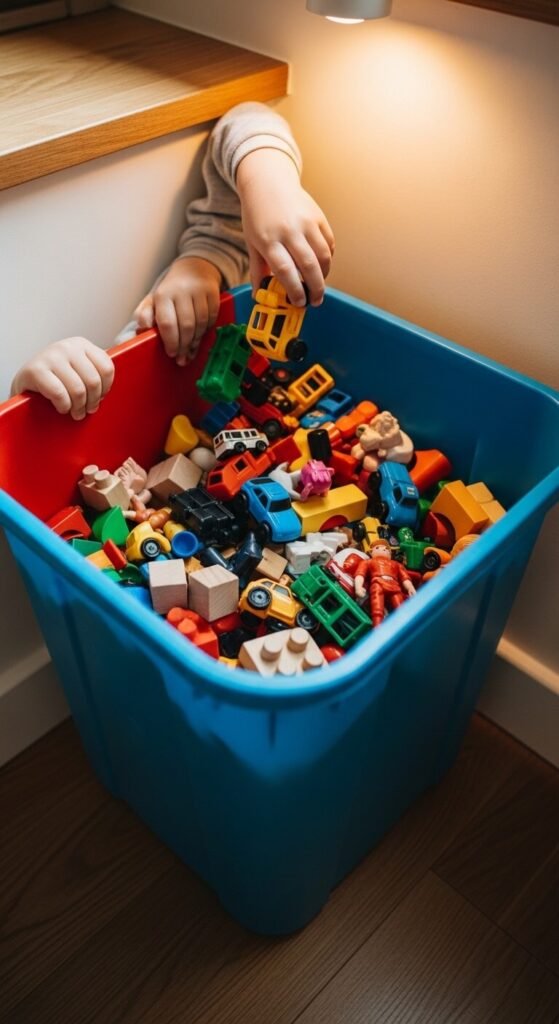
Sometimes you just need one spot for the day’s toy chaos. A big “dump bin” gives kids a single place to toss everything fast. It’s not the permanent home — it’s the first stop. At the end of the week, sit down together and sort the bin into proper places. This works especially well for families with multiple toy categories or shared playrooms. A large plastic storage bin from a discount store costs about $5 to $10. It reduces the daily overwhelm of cleanup for both kids and parents.
16. Mounted Bookshelves at Kid Height
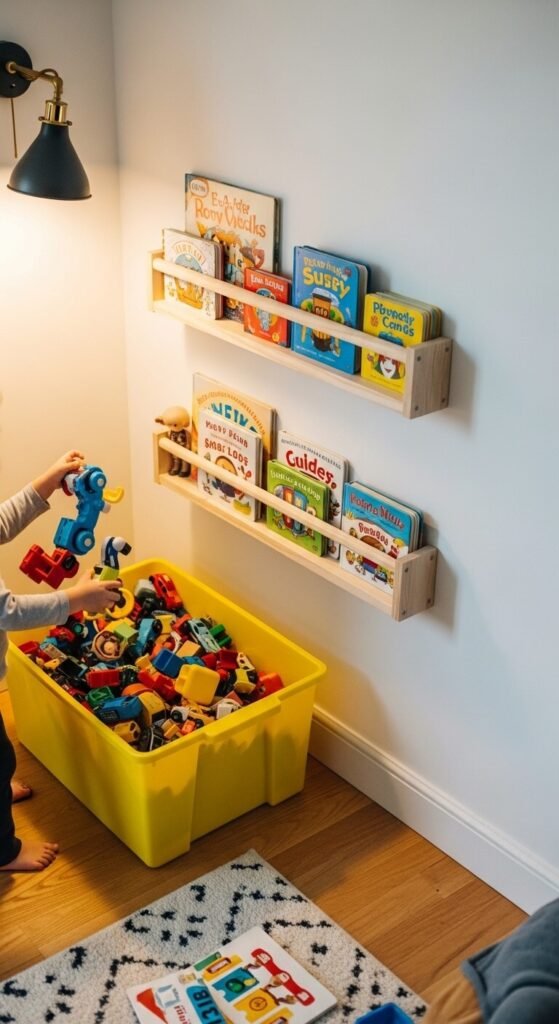
Wall-mounted shelves free up floor space and put toys at kid-level. Install two or three shelves low on the wall — around 12 to 24 inches from the floor. Use them for books, puzzles, and small toy collections. Pine shelves from a hardware store cost about $8 to $15 each. Bracket hardware adds another $5 to $10. That’s a full storage solution for under $30. Paint the shelves to match your room for a polished look. Kids feel ownership over things they can reach and display themselves.
17. A Pegboard Train Track Display
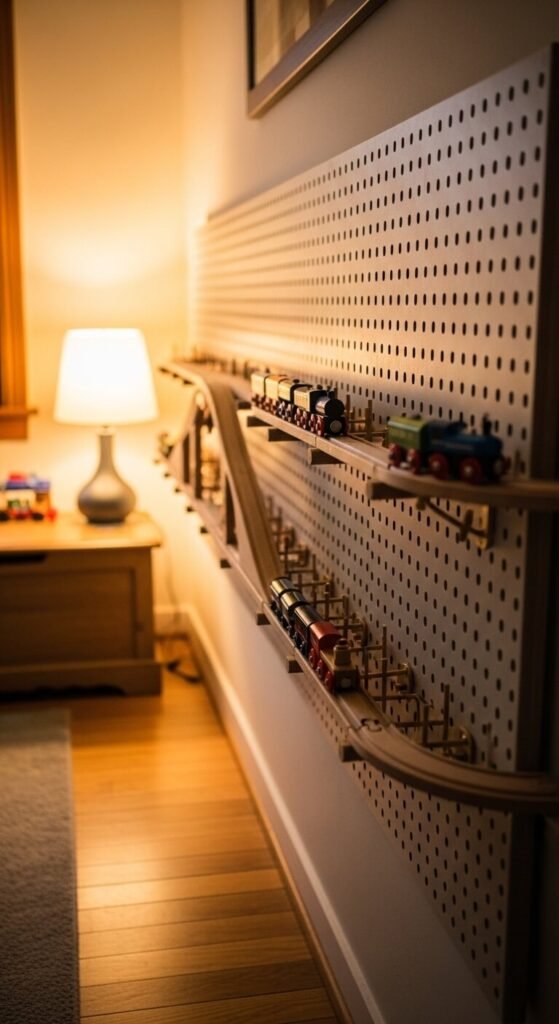
If your kid loves train sets or race tracks, display it on a pegboard instead of disassembling it every day. Mount the pegboard on the wall and use pegs to hold sections of track in place as a wall display. It doubles as art and storage. The tracks stay connected, so setup is instant. A 4×4 pegboard costs about $20. This idea also works for displaying die-cast car collections or building sets. It turns a toy into a feature — and eliminates the setup/teardown frustration.
18. Repurposed Locker Baskets
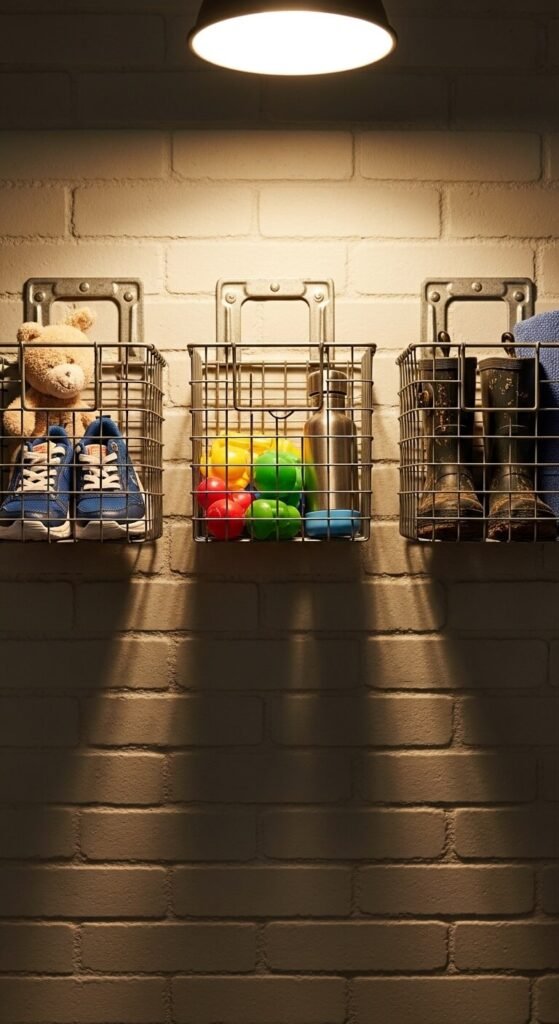
Metal locker baskets are a thrift store goldmine. Each kid gets their own basket on the wall for toys, shoes, or daily-use items. Mount three in a row in the mudroom, hallway, or playroom. They hold more than they look like they will. New locker baskets from school supply stores cost about $5 to $10 each. Used ones from thrift stores can be $1 to $3. Label each one with a child’s name. It builds ownership and gives every child a personal storage spot without taking up any floor space.
19. A Toy Kitchen with Real Storage
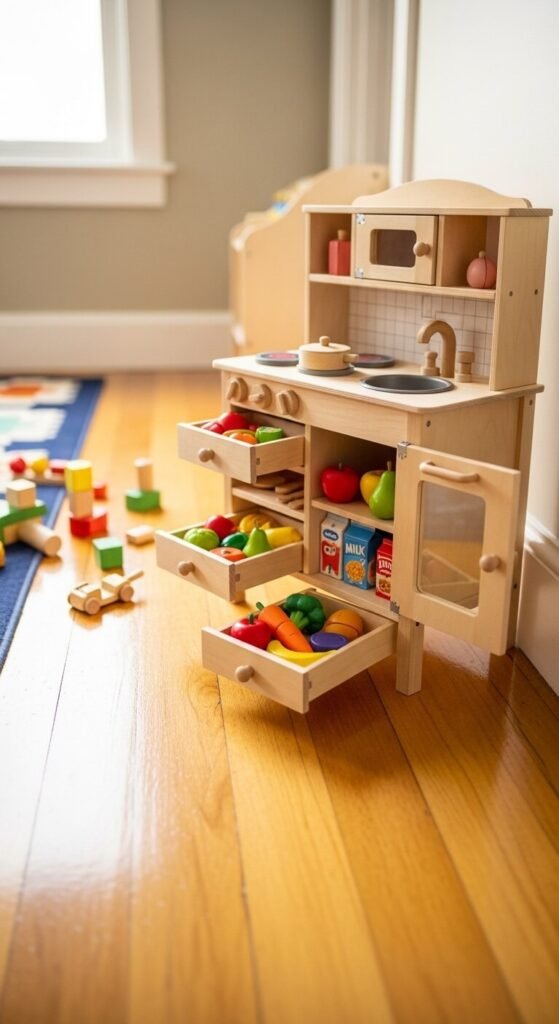
A toy kitchen isn’t just for play — its shelves and drawers are real storage. Use the toy oven drawer to store play food sets. Put toy pots and pans in the lower cabinet. Keep play utensils in a small bin on the counter. This kind of “in-character” storage teaches kids to put things back where they belong because it makes sense in their play space. It’s storage that disappears into the toy itself. Works just as well with toy workbenches, toy tool kits, or toy doctor stations.
20. A Labeled Backpack Hook for Each Kid
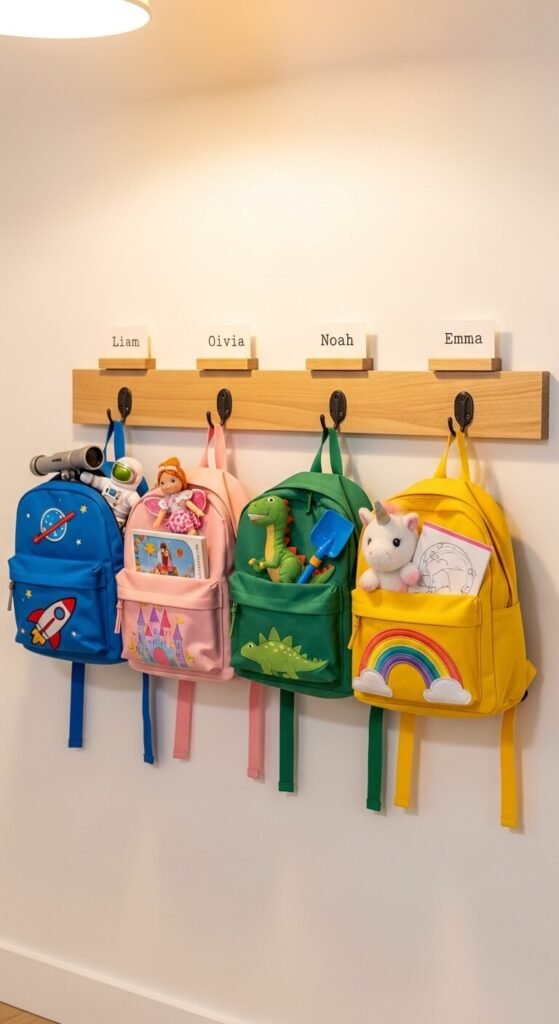
Outings always involve carrying toys. Give each child a small backpack hung on their own hook for “go bag” toys — travel games, small figures, coloring books. When the bag is on the hook, it’s packed and ready. When toys come out, they go back in the bag before it’s rehung. A command hook strip costs about $5 to $10. Backpacks from dollar stores cost $3 to $5. This system works great for car trips, waiting rooms, and grandparents’ visits. Kids learn to prepare and pack independently.
21. A Sectioned Tray for Tiny Pieces
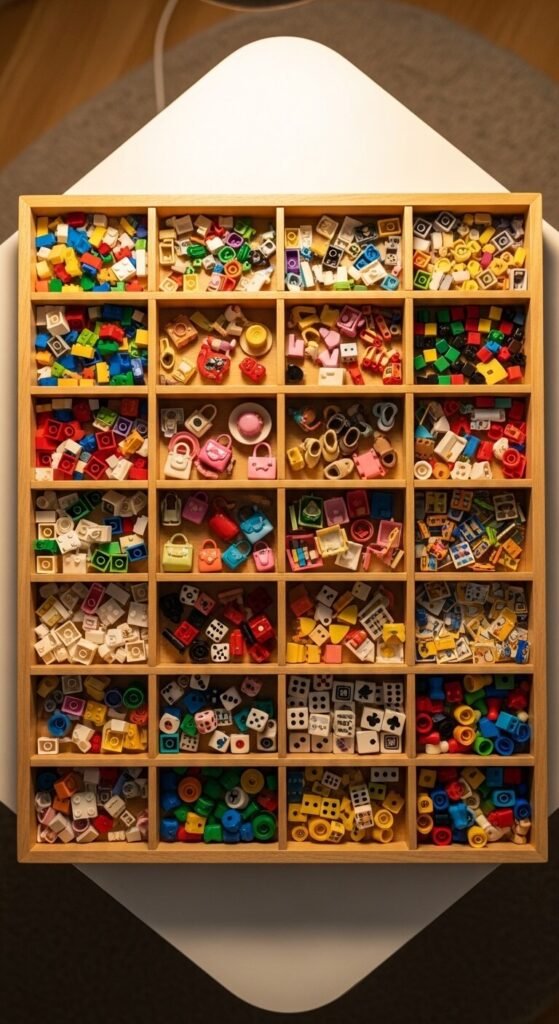
Tiny pieces are every parent’s nightmare. A sectioned tray — the kind sold for beads or hardware — sorts small toy pieces perfectly. LEGO bricks by color, doll accessories by type, game pieces by set. A plastic sectioned organizer costs $3 to $8 at craft stores. A wooden version runs $10 to $15. Keep it on a low table or shelf. Kids can see every tiny piece without dumping an entire bin. This cuts down on lost pieces and makes setup for small-piece toys much faster.
22. A Curtained Cubby Shelf
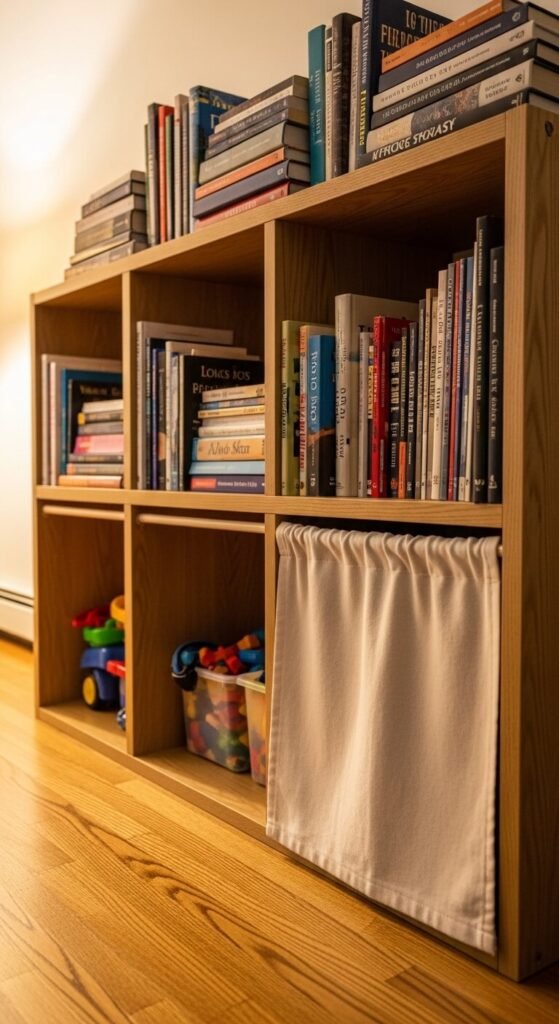
A curtained shelf hides the mess on demand. Attach a simple tension rod and fabric panel across the bottom of a cube shelf unit. Messy bins stay behind the curtain while the top stays open for display items. This trick works great in living rooms where you don’t want toys on full display. You don’t need to sew — just cut a piece of fabric to size and attach it with no-sew hem tape or curtain clips. Total cost: $5 to $15 depending on fabric. Instant tidy look.
23. A Laundry Basket as a Ball Storage Zone
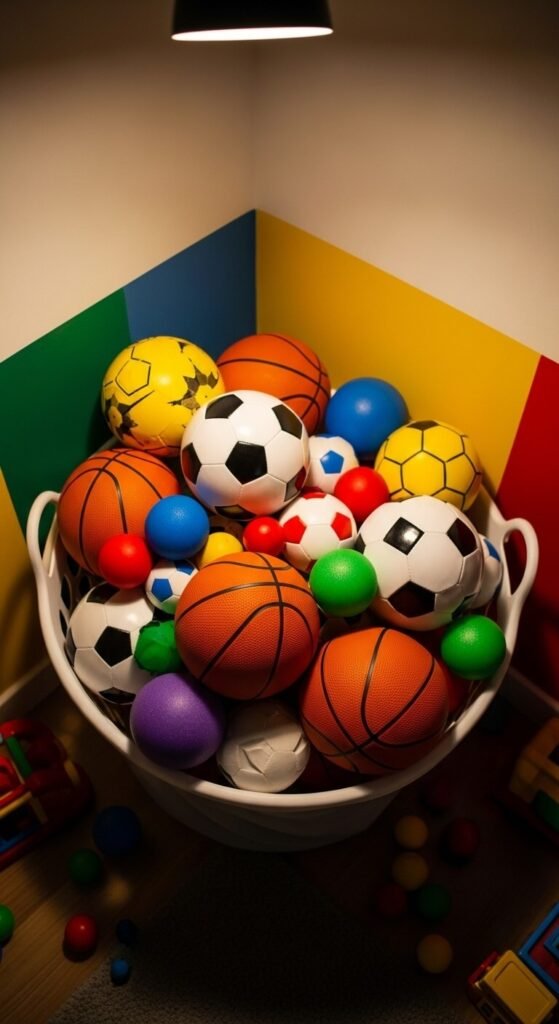
Balls are bulky and roll everywhere. A large round laundry basket corrals them in one spot. A tall round basket is actually the perfect shape for balls — they stack naturally and don’t roll away. A basic laundry basket from a discount store costs $5 to $8. Put it in a corner of the garage, mudroom, or playroom. Kids can toss balls in from across the room. No stacking or sorting required. This works for any round, bouncy toy — and the basket itself is soft enough that it won’t dent walls.
24. A Repurposed Spice Rack for Small Toys
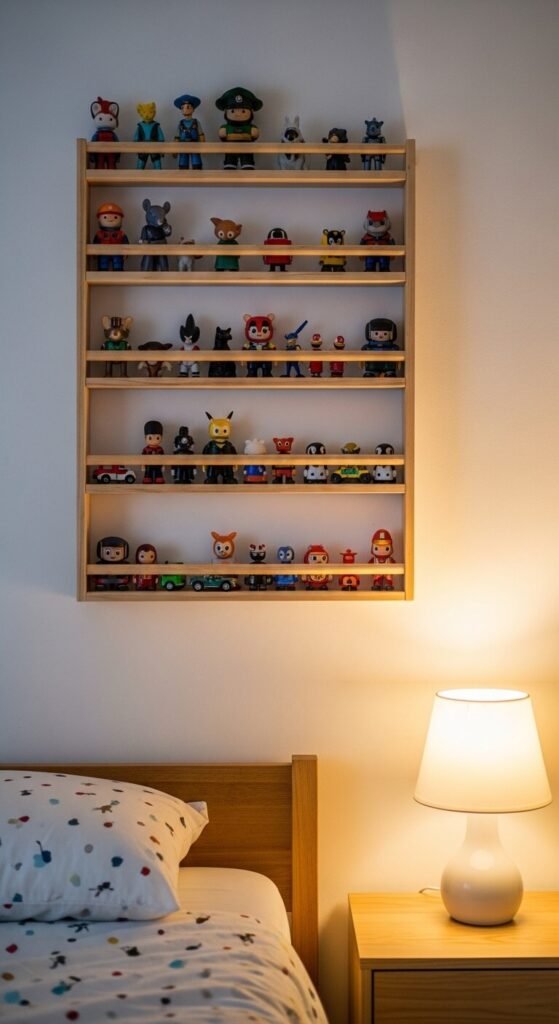
Wall-mounted spice racks from kitchen stores double as toy display shelves. Each small shelf holds a row of figures, cars, or miniature animals perfectly. They’re designed to hold small bottles, so small toys fit exactly. Mount three or four staggered on the wall at kid height. You can buy new spice rack shelves for $5 to $15 each, or find them at thrift stores for $1 to $3. It turns a toy collection into a wall display — which means kids are more likely to keep their favorites sorted and visible.
25. A Weekend “Toy Purge” Station
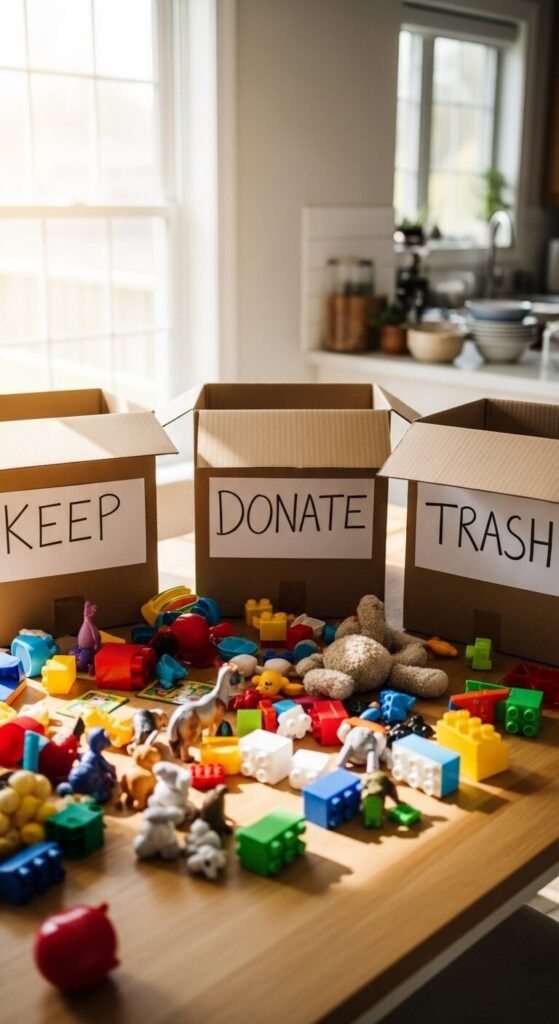
No storage system works if there are too many toys. A monthly purge station keeps the volume manageable. Set three boxes on the table: Keep, Donate, Trash. Go through toys together with your kids. Let them make the calls — it builds decision-making skills. Toys in good shape go in the donate box for a local shelter or thrift store. Broken toys go in the trash. Less stuff = less cleanup every day. This isn’t about throwing things away. It’s about keeping only what your kids actually play with.
Conclusion
Toy storage doesn’t have to be complicated or expensive. The best systems are the ones your kids can actually use — low shelves, open bins, clear containers, and simple labels. Start with one or two ideas from this list and see what works for your space. You don’t have to do everything at once. Even swapping one messy pile for a labeled basket makes a real difference in daily cleanup. The goal is a room that feels manageable — for your kids and for you. Pick one spot, make it work, and build from there.