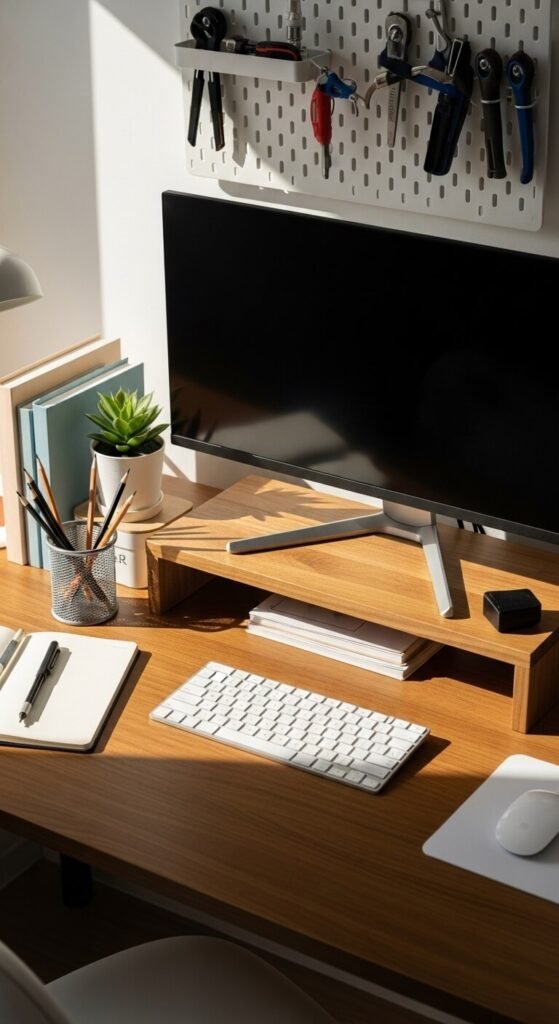
A messy desk is more than just an eyesore — it quietly chips away at your focus every single day. Studies show that physical clutter competes for your attention, making even simple tasks feel harder than they are. The good news? You don’t need a big budget or a full weekend to fix it. Small, smart changes to how your workspace is set up can make a real difference in how much you get done. Whether you work from home or in a corporate office, these 30 practical desk organization hacks will help you take back your space and your time.
1. Mount a Pegboard on Your Wall
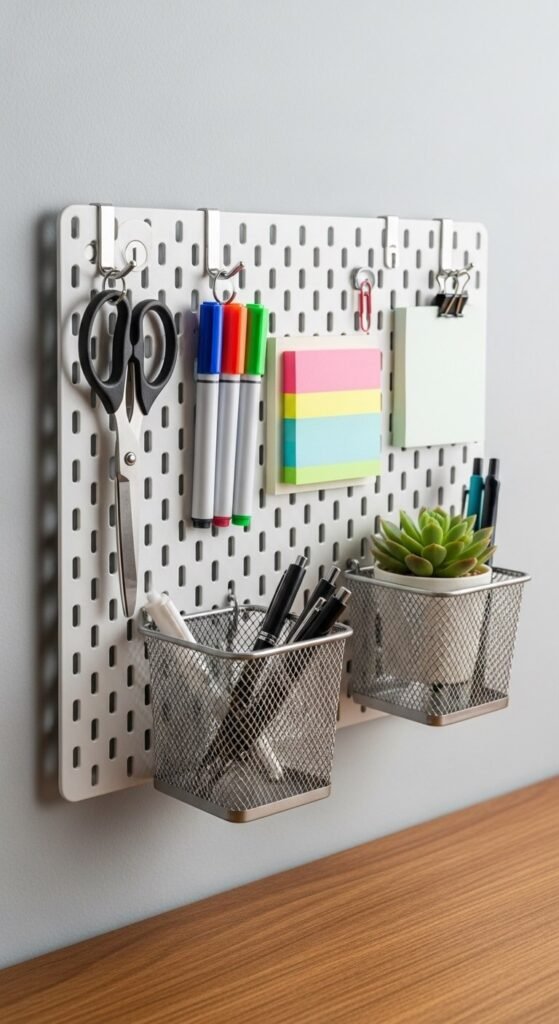
A pegboard turns your wall into a fully functional storage system. Mount it just above your desk and hang hooks, baskets, and clips to hold everything from scissors to chargers. It keeps supplies visible and off the surface. IKEA’s SKÅDIS pegboard runs under $20 and comes with attachable accessories. Use it for tools you reach for often so you’re not digging through drawers. Every item has a home, and your desk stays clear.
2. Use a Monitor Riser with Hidden Storage
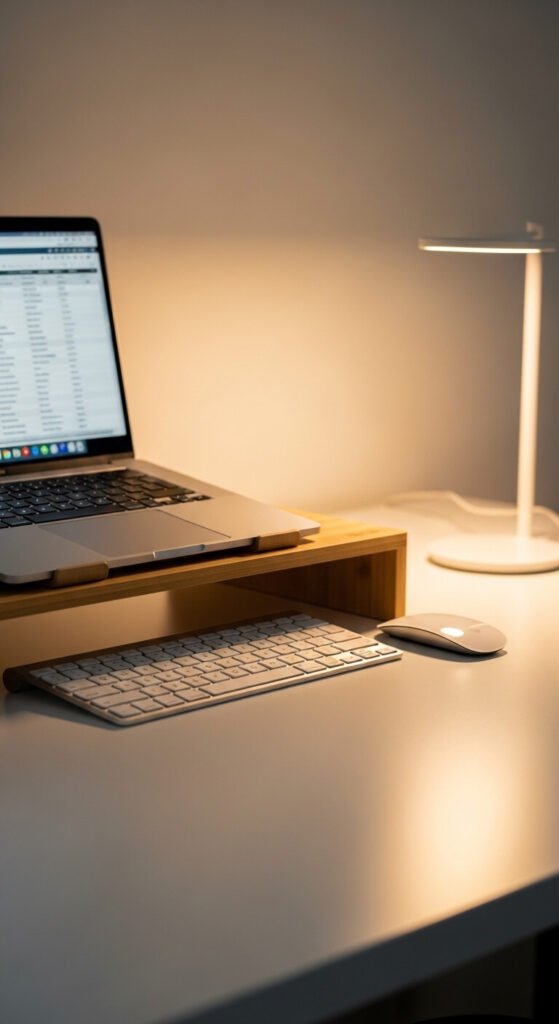
Raising your screen to eye level reduces neck strain — but the real win is the hidden shelf underneath. Store your keyboard, notebook, or small supplies beneath the riser when not in use. Bamboo risers from Amazon cost $15–25 and look polished. DIY version? Stack two thick hardcover books and wrap them in kraft paper. It instantly doubles your usable desk space without adding any extra clutter on the sides.
3. Assign Every Item a “Home Spot”
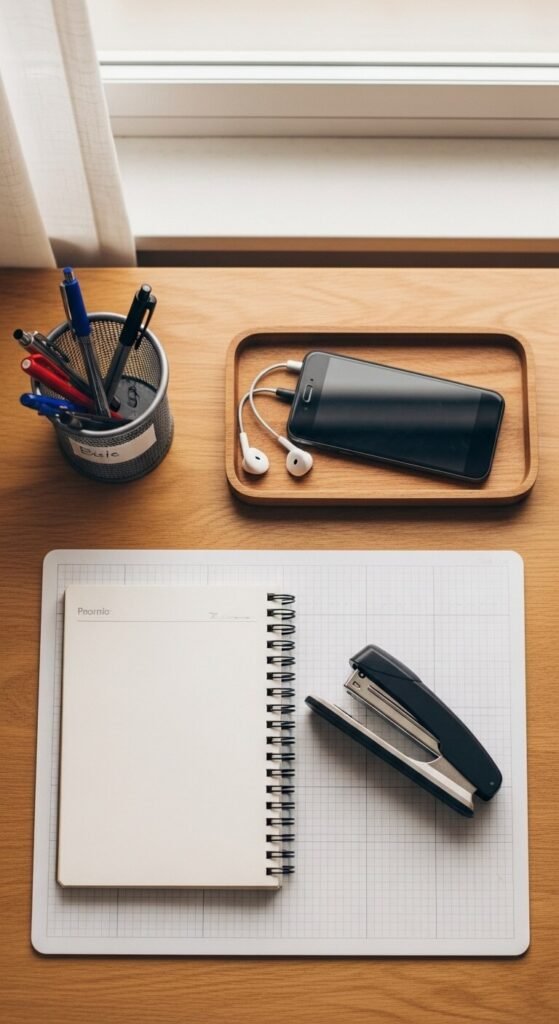
This is the single biggest habit shift you can make. Pick a specific, fixed location for every item on your desk — and always return things to that exact spot. No exceptions. This takes about a week to build but saves minutes of searching every single day. Use a desk mat with zones or small trays to define areas visually. When everything has a home, your desk resets itself in under two minutes.
4. Tame Cables with a Management Box
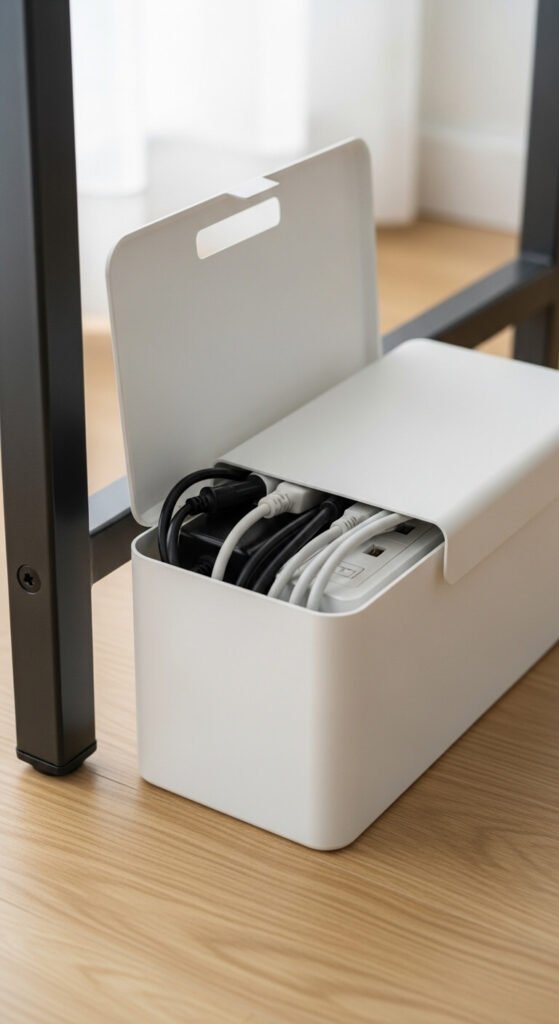
Tangled cables are visual noise that your brain registers as disorder — even if you think you’ve stopped noticing them. A cable management box hides your power strip and excess cord length out of sight. Pick one up for $10–15 on Amazon. No tools needed. Run cords along the back edge of your desk with adhesive cable clips, then tuck the power strip box below. Instant calm. The desk looks cleaner and so does your thinking.
5. Add Drawer Divider Trays
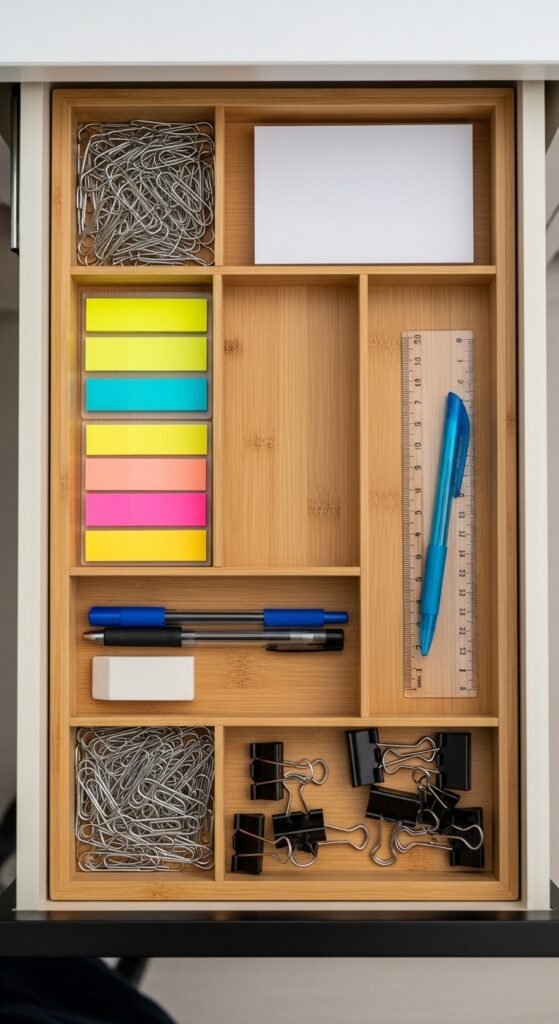
Desk drawers become black holes without structure. Toss in a set of bamboo or plastic drawer dividers to create compartments for different supplies. Group by category: writing tools in one section, sticky notes in another, clips and fasteners in a third. Sets start at $8–12. You can also cut cereal box cardboard into strips and arrange them inside for a completely free DIY solution. Organized drawers mean faster access and less frustration.
6. Hang a Small Whiteboard or Corkboard
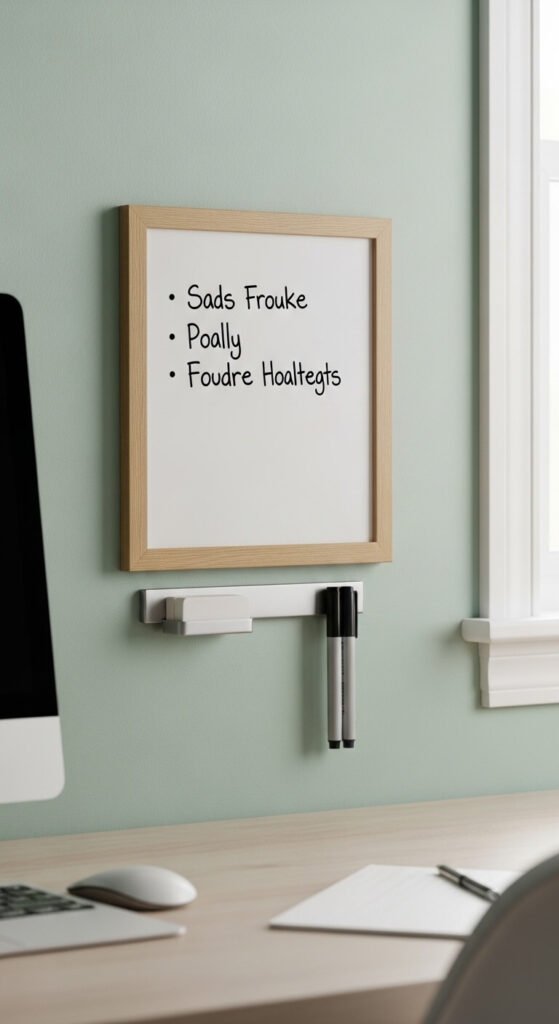
A whiteboard within arm’s reach keeps your most urgent tasks visible without cluttering your desk. Write your three priorities for the day each morning and erase when done. Small whiteboards go for $10–20 at office supply stores. Prefer a corkboard? Pin sticky notes, to-do reminders, and important cards without ever touching your desk surface. Either option turns your wall into a working tool — and keeps your brain from having to hold it all.
7. Use Magazine File Holders Vertically
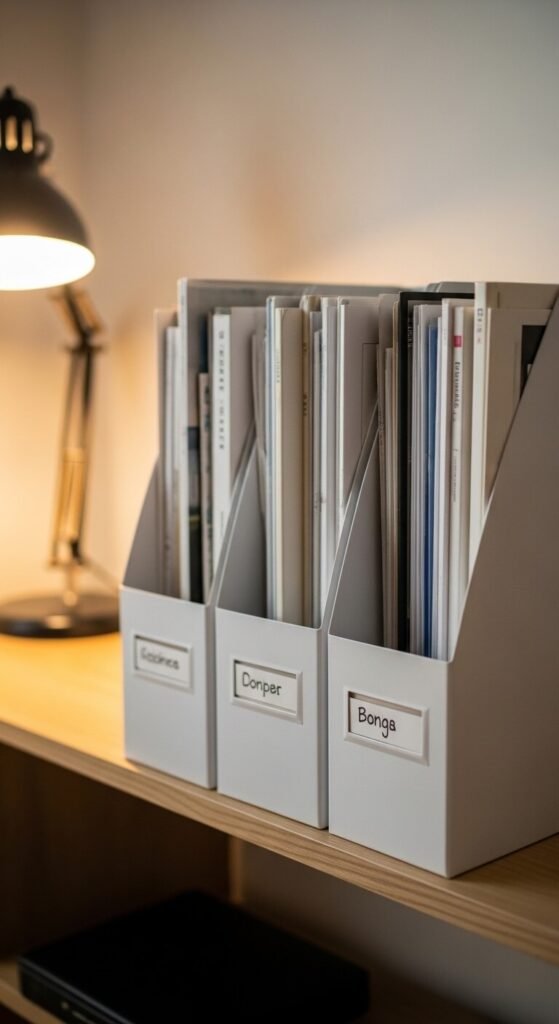
Horizontal paper stacks grow fast and slide into chaos. Stand your files upright in magazine holders instead. Label each one — Bills, Active Projects, Reference, Archive — and you’ll find any document in seconds. IKEA TJENA boxes cost around $3–4 each. You can also repurpose old cereal boxes by cutting at a diagonal and covering with contact paper. One row of upright holders handles more paper than a full stack ever did.
8. Follow the “One-Touch” Rule

Every item that lands on your desk should be handled exactly once. Pick it up, decide immediately: file it, act on it, or toss it. No “I’ll deal with it later” piles. This rule sounds simple but changes everything. Pair it with a small inbox tray to hold truly pending items — nothing else. If your inbox has more than five things in it, it’s time for a five-minute sort. This habit stops clutter from forming in the first place.
9. Try a Rolling Cart for Overflow Storage
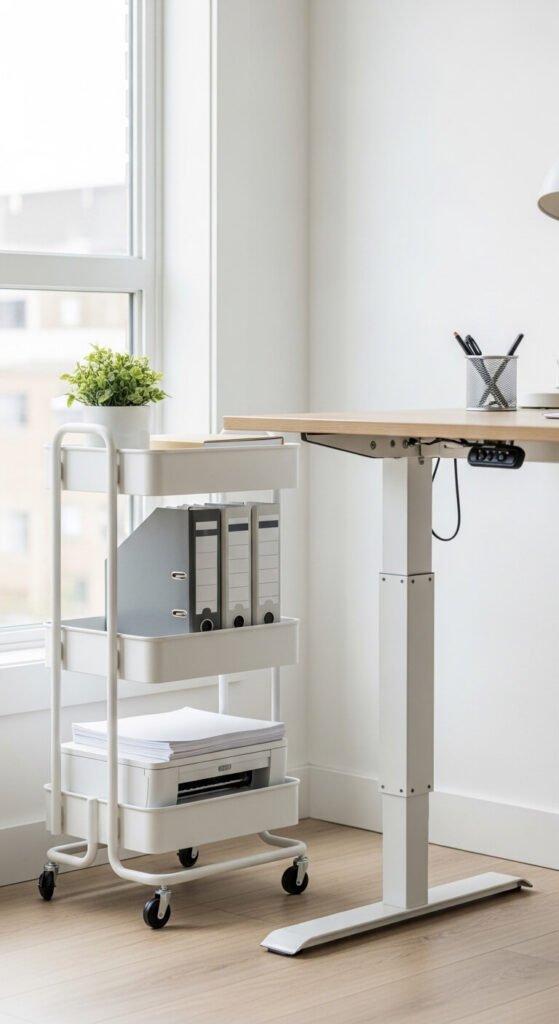
Not everything needs to be on the desk itself. A three-tier rolling cart gives you nearby storage that’s easy to access and rolls out of the way when not needed. IKEA’s RÅSKOG cart runs about $20 and fits most desk setups. Use the top tier for daily supplies, middle for current projects, and the bottom for paper stock or extras. It’s especially helpful in small spaces where drawer space is limited.
10. Go Minimalist: Keep Only What You Use Daily

Challenge yourself: remove everything from your desk and only put back what you reached for in the past week. Most people find they use maybe 10 items regularly. Everything else earns a drawer or a shelf. A minimalist desk means less visual noise, faster focus, and less daily tidying. Use one pen, one notebook, one small plant. That’s it. You’ll be surprised how much clearer your thinking feels when your surface isn’t covered.
11. Use Binder Clips as Cable Organizers
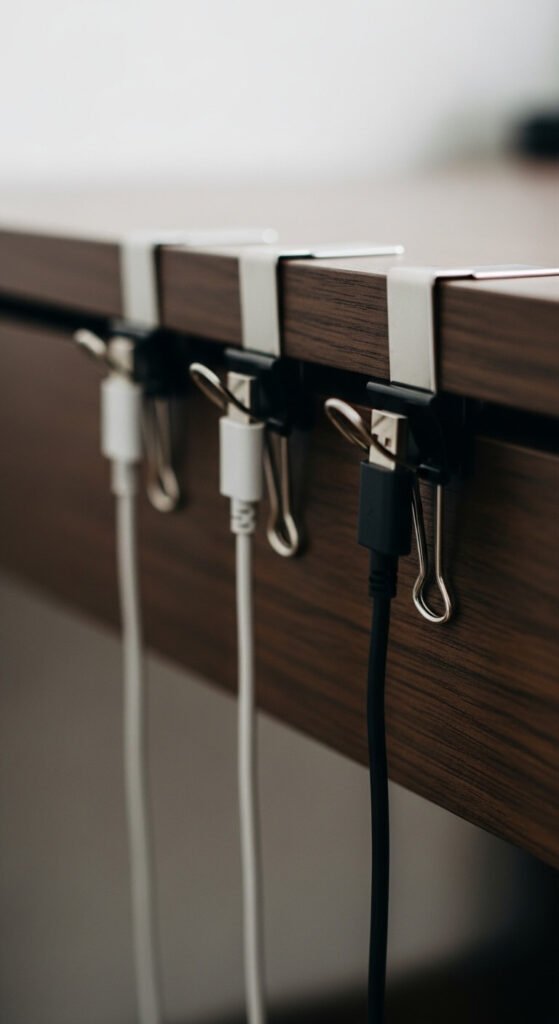
This is the most budget-friendly cable hack you’ll ever use. Clip a binder clip to the edge of your desk, thread your cable through the wire loop, and it hangs in place ready to plug in without sliding behind the desk. Use different clip sizes for different cables. A box of binder clips costs under $2. Label each one with a piece of tape if you have multiple cables. Simple, free, and it actually works every day.
12. Add a Floating Shelf Above Your Desk
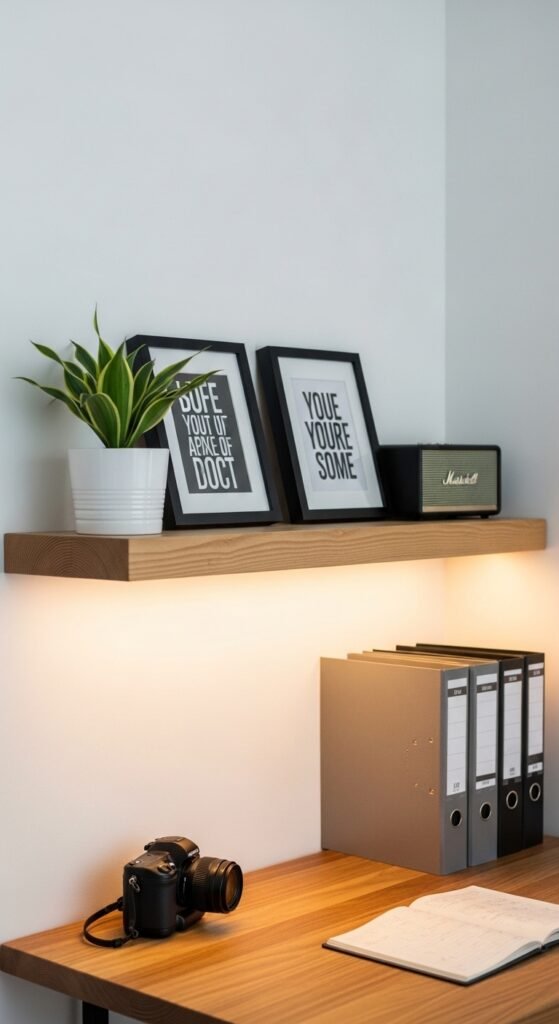
Your wall is free real estate. A single floating shelf above your desk gives you a second tier of storage without taking any floor or desk space. Use it for books, a small speaker, a plant, or decorative organizers. IKEA LACK shelves cost $8–10 and install in under 20 minutes. Keep only items you reference occasionally — not daily — up there. This creates visual height in the room while freeing up your actual work surface completely.
13. Spin Your Supplies with a Lazy Susan
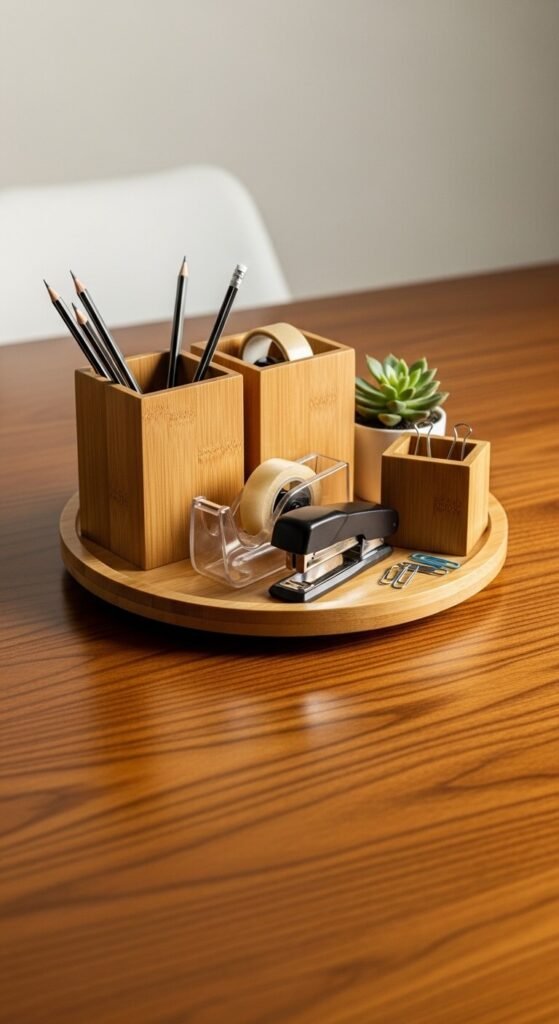
Corner areas of desks are awkward — a lazy Susan turns that dead zone into rotating, accessible storage. Spin it to grab what you need without reaching or shuffling things around. Bamboo versions run $10–20 on Amazon. You can group small supplies like tape, scissors, a stapler, and clips all in one spinning spot. It cuts the time you spend searching and keeps that back area of your desk tidy without requiring much thought.
14. Repurpose Mason Jars as Pen Holders
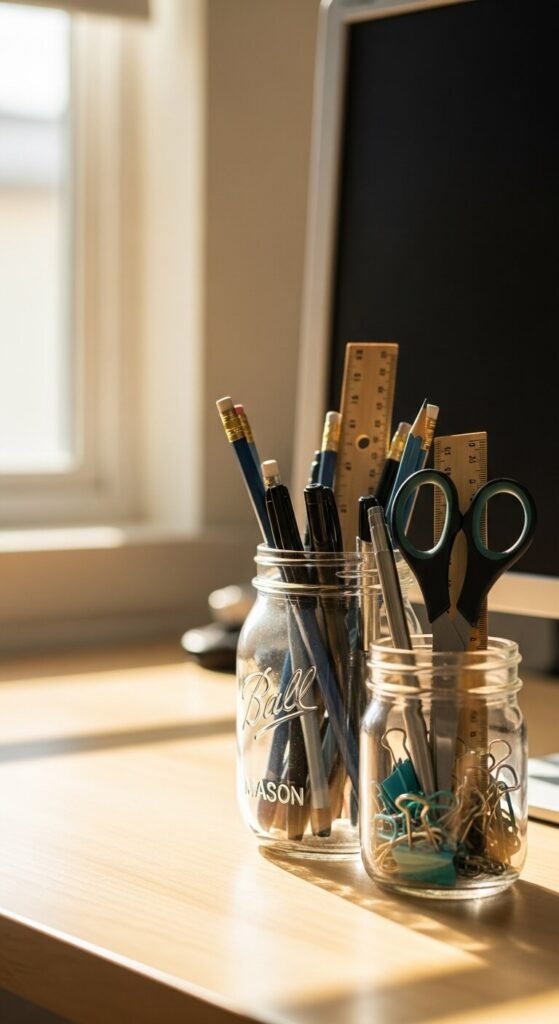
Mason jars cost almost nothing and look clean on any desk style. Group your supplies by size and type: tall jar for pens and pencils, medium for scissors and markers, small for clips and push pins. Paint them, wrap them in twine, or leave them plain. You can find mason jars at dollar stores, thrift shops, or already in your kitchen. This free or near-free hack keeps your most-used tools upright, visible, and easy to grab.
15. Color-Code Your Folders and Binders
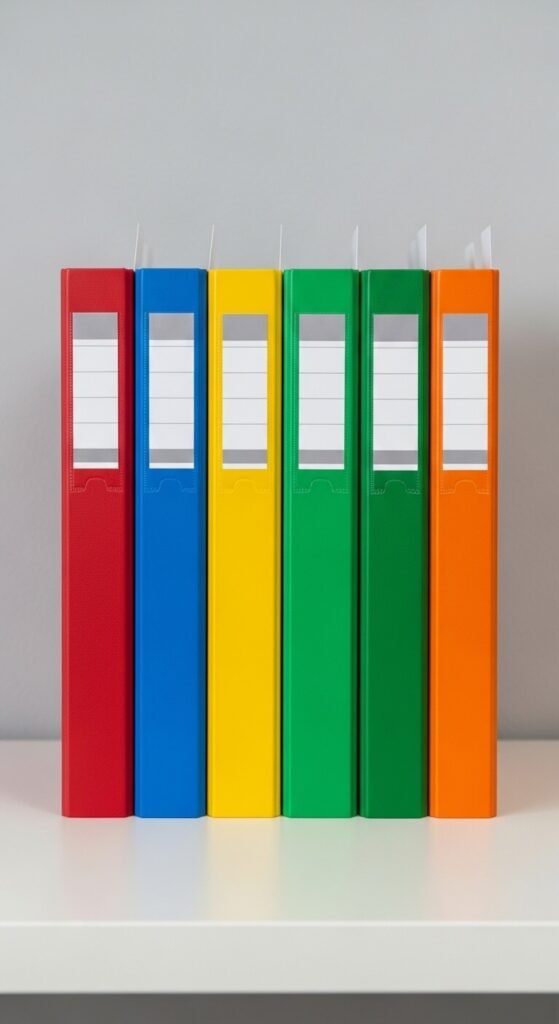
Color coding is one of those tricks that sounds unnecessary until you actually try it. Assign one color per project or category — red for urgent, blue for client work, green for finances, and so on. Within seconds your eye finds what it needs without reading a single label. Colored folders cost around $5 for a pack of 25. Once you start, you’ll wonder how you ever managed with a stack of identical manila folders.
16. Place a Small Plant on Your Desk

A single small plant does more than add visual warmth — research links greenery to lower stress and better concentration. You don’t need a big one. A small succulent, pothos cutting, or snake plant works perfectly and survives neglect. Keep it in the corner of the desk where it won’t take up working space. A small plant in a $2 thrift-store pot costs almost nothing and makes the workspace feel less sterile. Your brain appreciates the difference.
17. Use Sticky Notes with a System
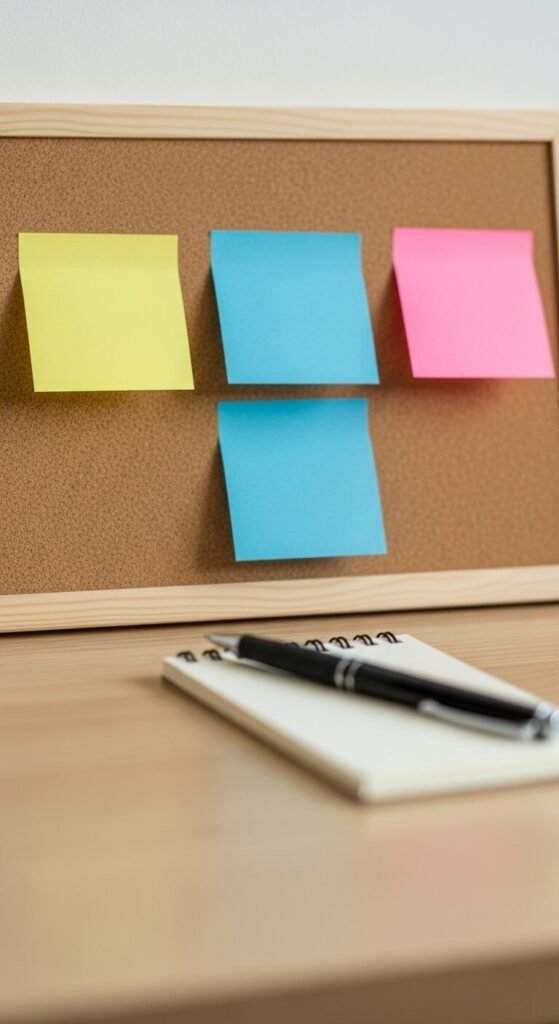
Sticky notes are wonderful tools that turn into wallpaper fast. Use them with intention: one note per task, stick only active items, and toss immediately when done. Color-code them to match your folder system — yellow for today, pink for follow-up, blue for reference. Keep the stack on your desk small: five notes max at a time. When your sticky notes have rules, they work for you instead of decorating your monitor frame indefinitely.
18. Add a Headphone Hook Under the Desk
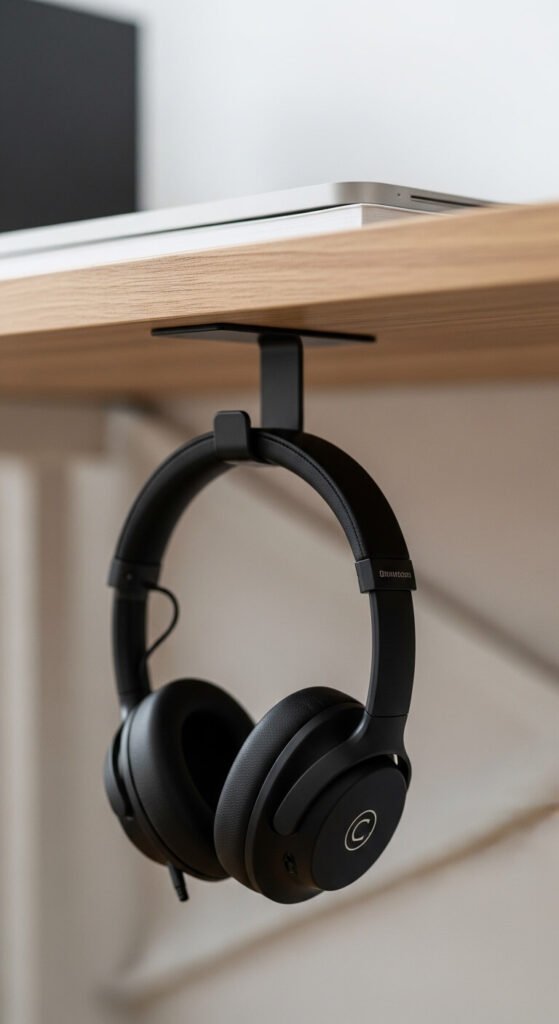
Headphones take up disproportionate desk real estate for something you’re not always using. A headphone hook mounted under your desk edge keeps them off the surface and within reach. These hooks cost $5–10 on Amazon and install in seconds — some are adhesive, no drilling needed. If you don’t want to spend anything, a large binder clip on the desk edge works fine too. Freeing up that one spot feels surprisingly satisfying.
19. Create a Dedicated Charging Station
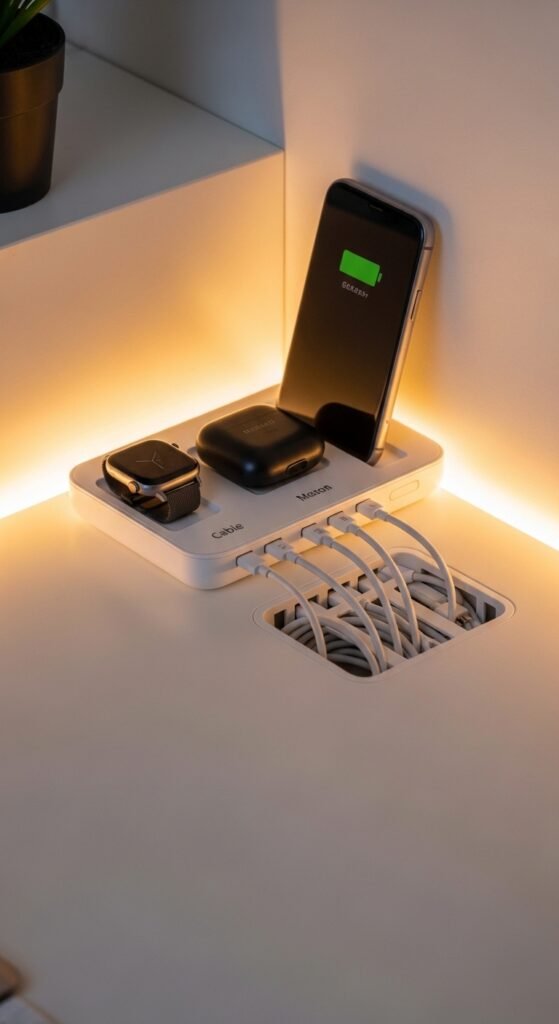
Charging cables spread fast when there’s no designated spot. Set up a small tray or charging station in one corner of your desk specifically for devices. Everything that needs power goes there — phone, earbuds, smartwatch. Charging docks with multiple ports run $15–25. Or use a small decorative tray ($3–5) with a short multi-port USB hub hidden behind it. No more hunting for cables or finding your phone at 4% battery at 9 AM.
20. Mount Under-Desk Storage Bins
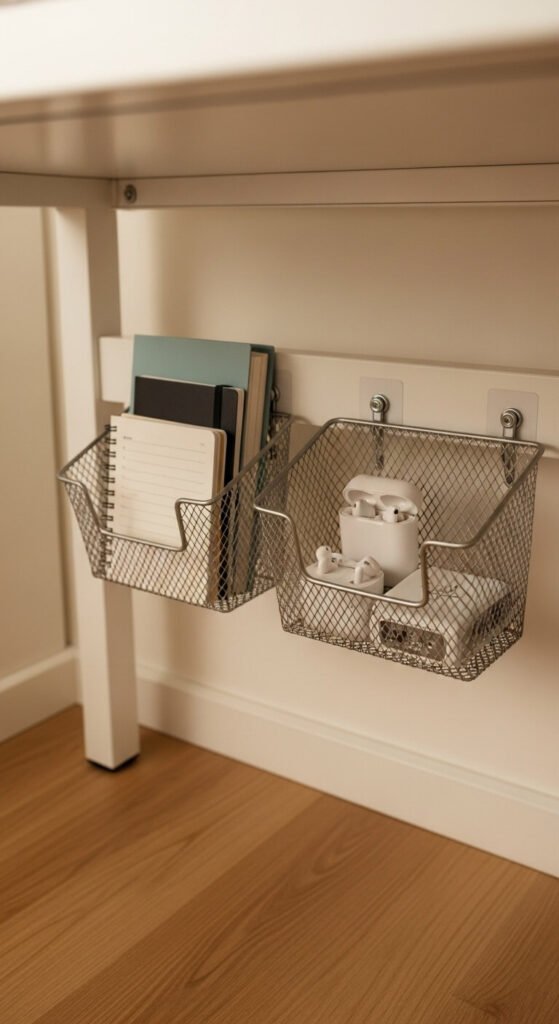
The space under your desk is almost always wasted. Adhesive or screw-mounted under-desk bins add storage without taking any surface or floor space. Use them for a charging cable bundle, a small notebook, or your phone when you need to focus. Under-desk organizers run $10–20 on Amazon. For a free DIY version, hot-glue a small plastic container to the underside of a deep drawer ledge. Maximizing hidden space is one of the simplest tricks in the book.
21. Stand Your Files Upright with a Vertical Organizer
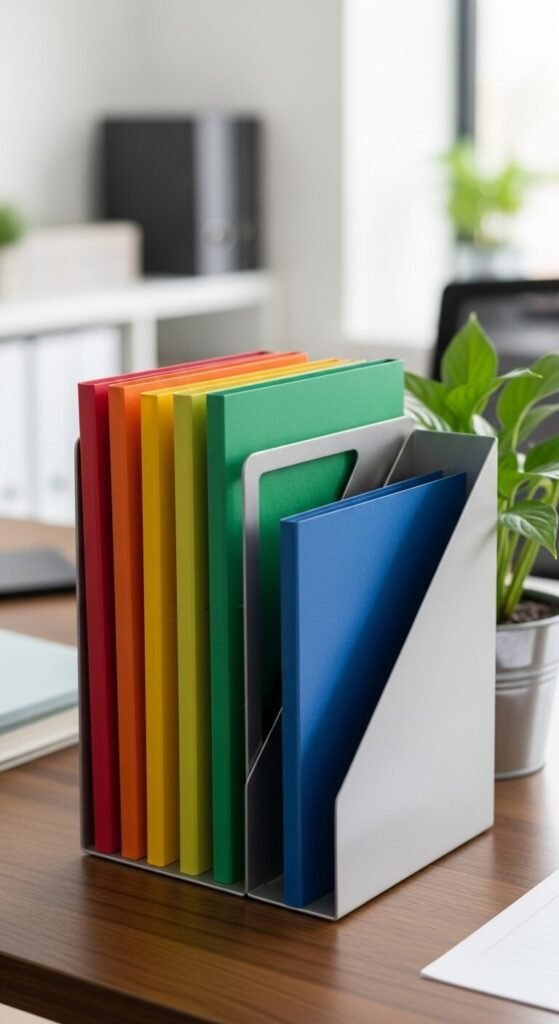
A stack of papers is hard to search. A row of upright labeled folders is searchable in two seconds. Use a vertical file organizer with 4–6 slots and label each one by project or category. Metal options start at $10–15 and last for years. Keep only active projects in it — archive everything else to a filing cabinet or box. When a project wraps up, remove the folder immediately. The organizer works best when it never gets overfull.
22. Repurpose a Spice Rack for Small Supplies
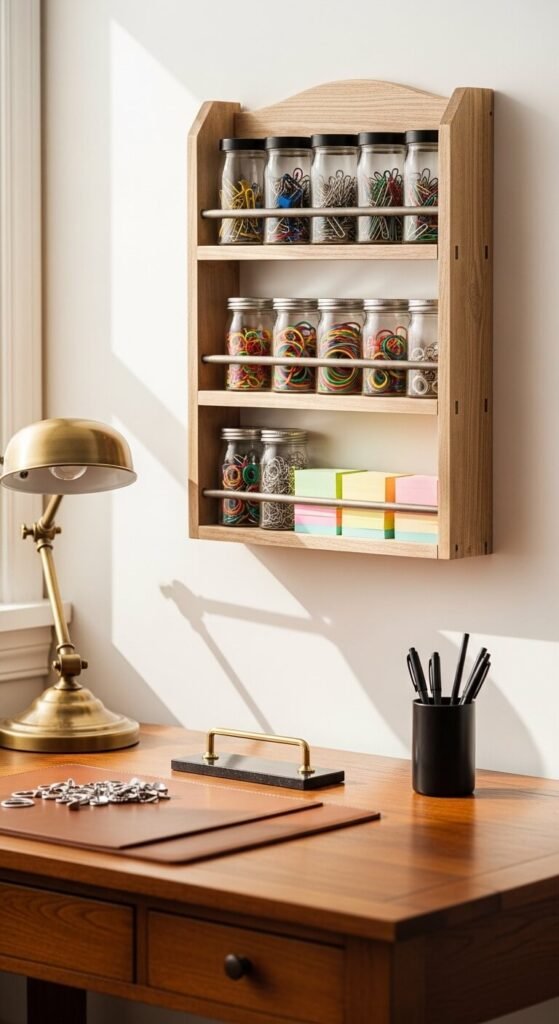
A kitchen spice rack makes a surprisingly great office organizer. Mount a small wall spice rack and fill the jars with paper clips, rubber bands, thumbtacks, push pins, and small sticky pads. Everything is visible, accessible, and off the desk. Thrift stores often sell spice racks for $1–3. Clear spice jars from the dollar store complete the look. It’s a creative, affordable solution that takes up zero desk space and actually looks intentional.
23. Wrap Cables with Velcro Ties
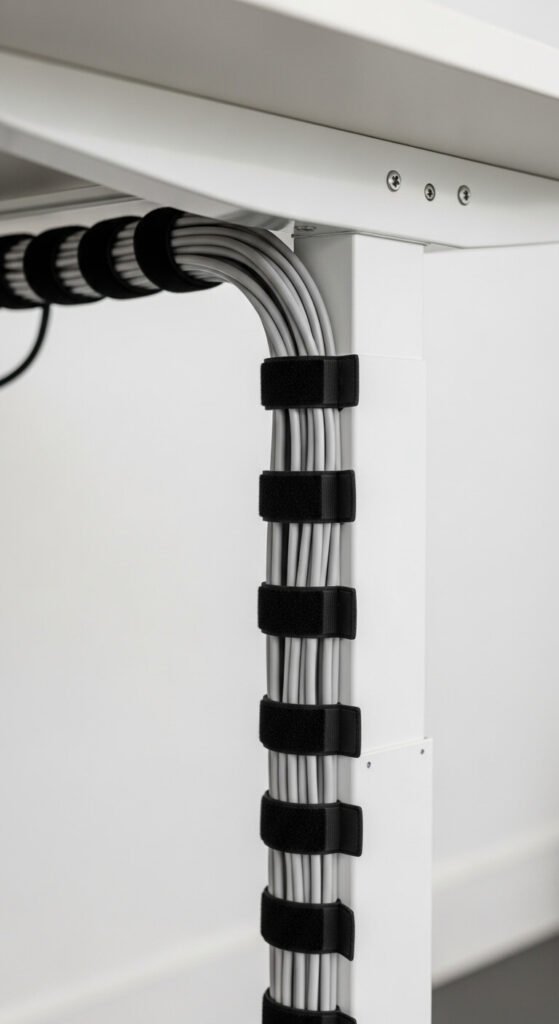
Velcro cable ties are one of the best $5 purchases for any desk setup. Unlike zip ties, Velcro ties are reusable and adjustable — wrap them around a bundle of cables, tighten, and done. They come in packs of 50–100 for a few dollars. Bundle cables going to the same direction together and run them along desk edges or down desk legs. This takes 15 minutes and eliminates the tangled mess that collects behind most desks. Do it once, enjoy it daily.
24. Keep a “Today Only” Inbox Tray
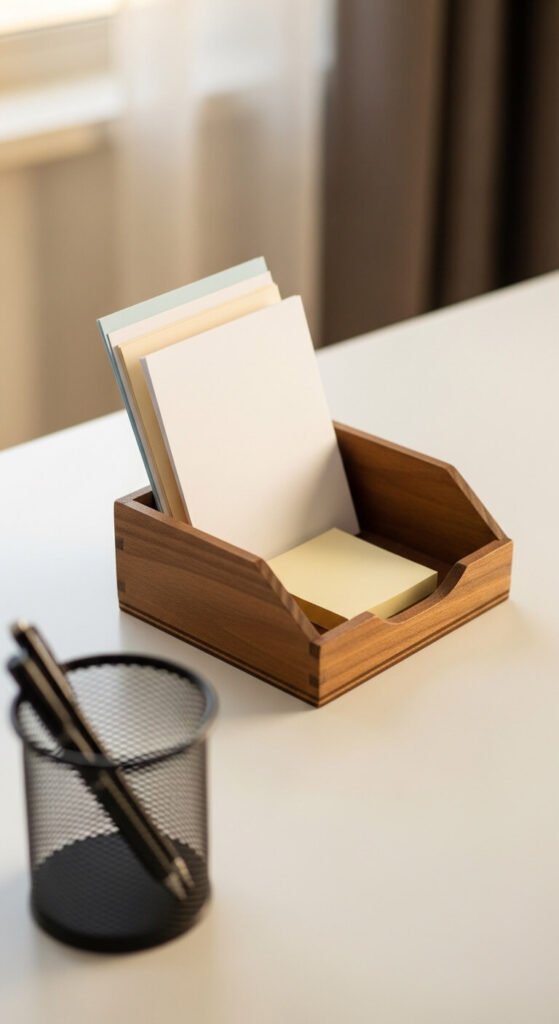
A general inbox turns into a dumping ground fast. Instead, use a small tray strictly for today’s action items only. If a paper isn’t something you’ll act on today, it doesn’t go in. Everything else gets filed, thrown out, or moved to a weekly folder. Empty the tray every evening — whatever’s left either gets done or consciously rescheduled. This discipline is simple but makes your desk feel managed rather than like it’s managing you.
25. Group Daily Essentials on a Small Desk Tray
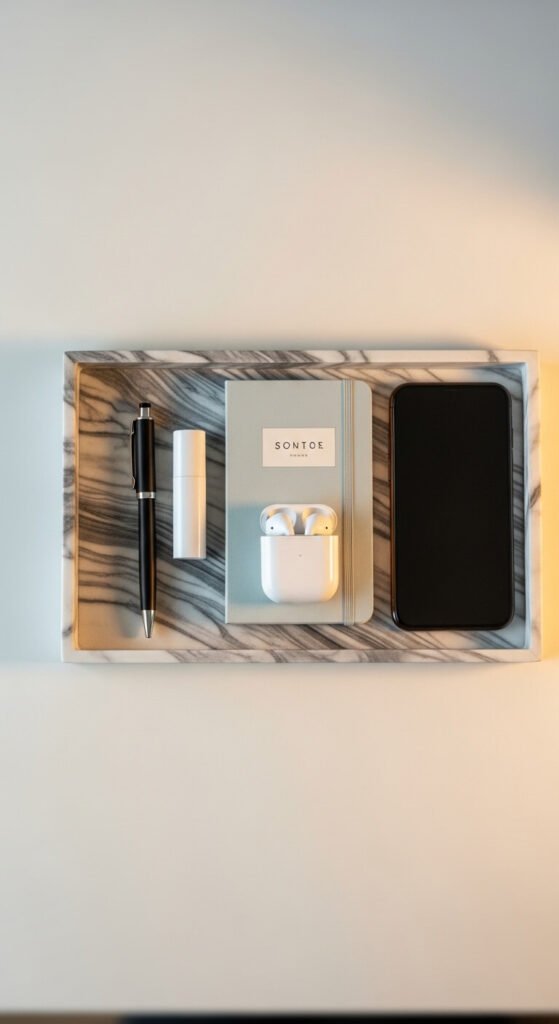
Corralling your personal daily items — phone, lip balm, ear buds, a pen — on one small decorative tray keeps them from spreading across the whole desk. The tray acts as a visual boundary. Anything inside is allowed; anything outside shouldn’t be there. Marble-look trays and small wooden trays sell for $5–10 at TJ Maxx, HomeGoods, or Amazon. You can also repurpose a picture frame face-up or a small cutting board. It’s deceptively simple and works every time.
26. Use a Book Stand for Reference Materials
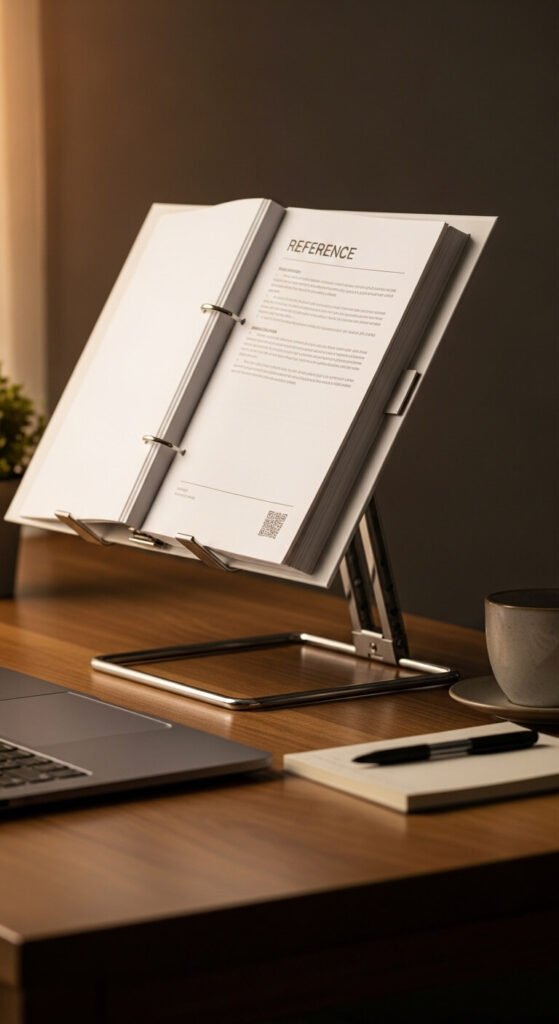
If you regularly refer to a manual, style guide, or printed reference while you work, a book or document stand saves you constant paper shuffling. It holds the page open at eye level so you can read and type without holding anything down with your hand. Adjustable stands cost $10–20 online. Bonus: it elevates documents to screen height, which reduces the neck movement that causes end-of-day soreness. A small tool that earns its space quickly.
27. Line Drawers with Grip Liner
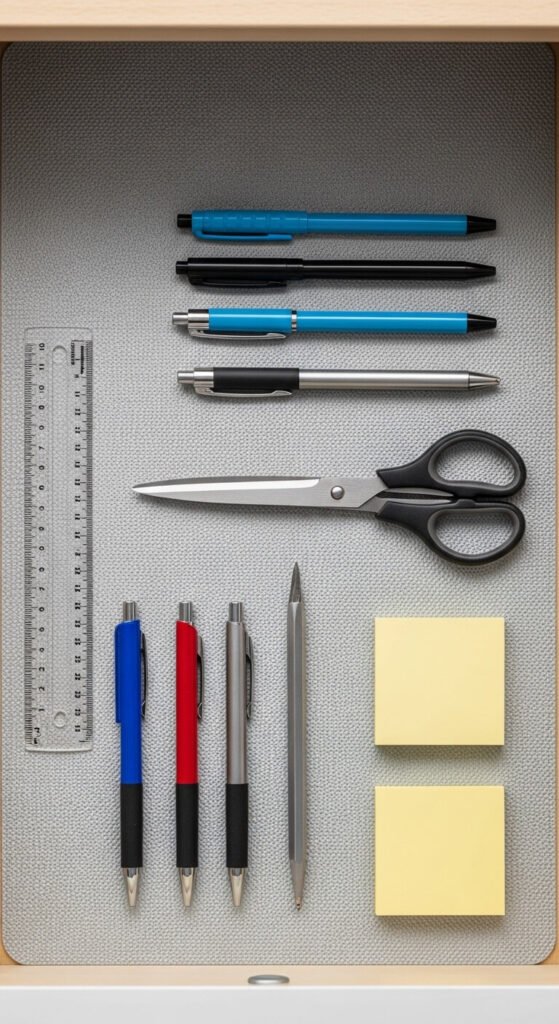
Items in unlined drawers slide around and end up mixed together every time you open and close them. Cut grip liner to fit each drawer and your supplies stay exactly where you put them. Grip liner costs $3–6 for a roll big enough to do every drawer in your desk. It’s also easy to wipe clean. Combined with drawer dividers, a lined drawer makes every item findable in one motion. A small change that makes the whole drawer system more satisfying to use.
28. Go Paper-Free with a Simple Scanning System
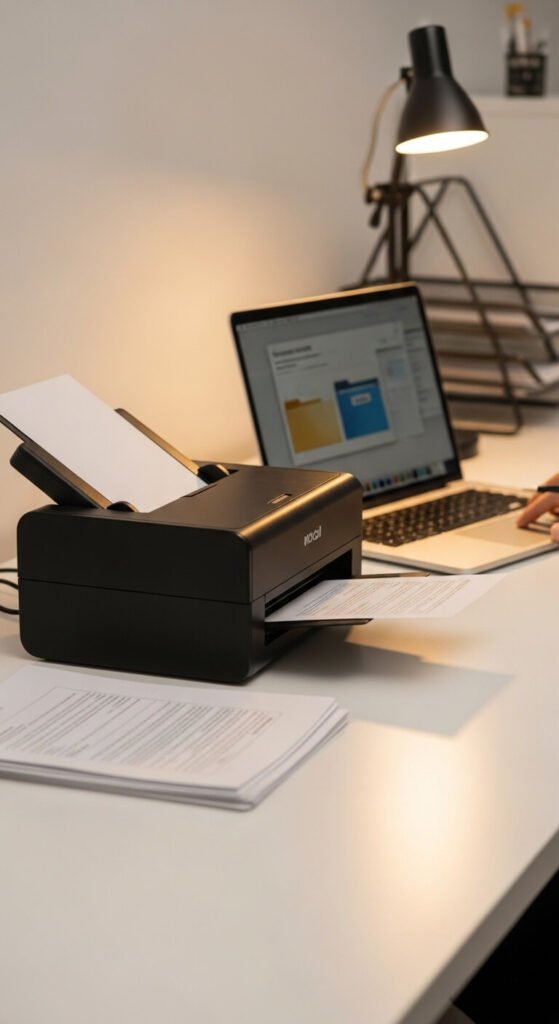
Paper is the number one driver of desk clutter for most people. A simple scanning system eliminates the pile permanently. Use a $50–80 portable scanner like the Doxie or Brother DS-640, or just use your phone with Adobe Scan (free app). Create a folder system on your computer that mirrors your physical filing categories. Scan receipts, contracts, and notes, then shred the paper. Once the paper flow stops landing on your desk, the rest of the organization becomes much easier to maintain.
29. Try the Pomodoro Timer and Notebook Stack Method

Pairing a physical timer with a single daily notebook is a low-tech organization system that removes digital distraction. Write your task list in the notebook each morning. Set the timer for 25-minute work blocks. Work on one thing per block. At the end of each session, cross it off. No apps required, no tab-switching, no notification spirals. A mechanical kitchen timer costs $5–10. A simple spiral notebook costs $1–2. Together they’re one of the highest-return desk tools you can own.
30. Run a 5-Minute Weekly Desk Reset
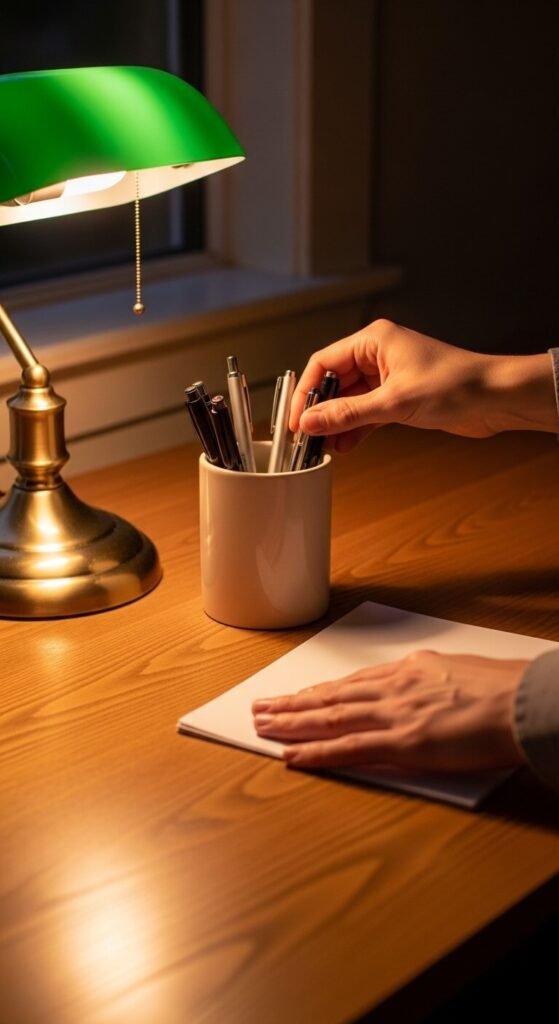
All the systems above fall apart without one habit: a weekly five-minute reset. Pick a day — Friday afternoon works well — and spend five minutes returning every item to its home, clearing any paper that’s accumulated, wiping down the surface, and reviewing your tray. That’s it. No deep clean, no big sort. Just five minutes. It’s the maintenance routine that keeps all your other organization efforts working long-term. Desks that get reset weekly almost never get out of control.
Conclusion
Organizing your desk doesn’t have to be expensive, complicated, or done all at once. Pick two or three of these hacks and start today. Maybe it’s clipping your cables, adding a small tray for your daily essentials, or finally putting a vertical file holder on your desk. Small changes compound quickly. Within a week, your workspace will feel calmer, your searching will slow down, and your focus will get sharper. A well-organized desk isn’t about being tidy for tidy’s sake — it’s about removing the small daily frictions that add up to hours of lost time every month. Your workspace shapes how you work. Make it work for you.