You finally splurge on that gorgeous structured tote — and six months later, it’s a sad, crumpled shell of itself shoved at the bottom of your closet. Sound familiar? The way you store your bags matters just as much as how you use them. Whether you’ve got a designer collection or a lineup of everyday favorites, proper storage keeps them looking brand new for years.
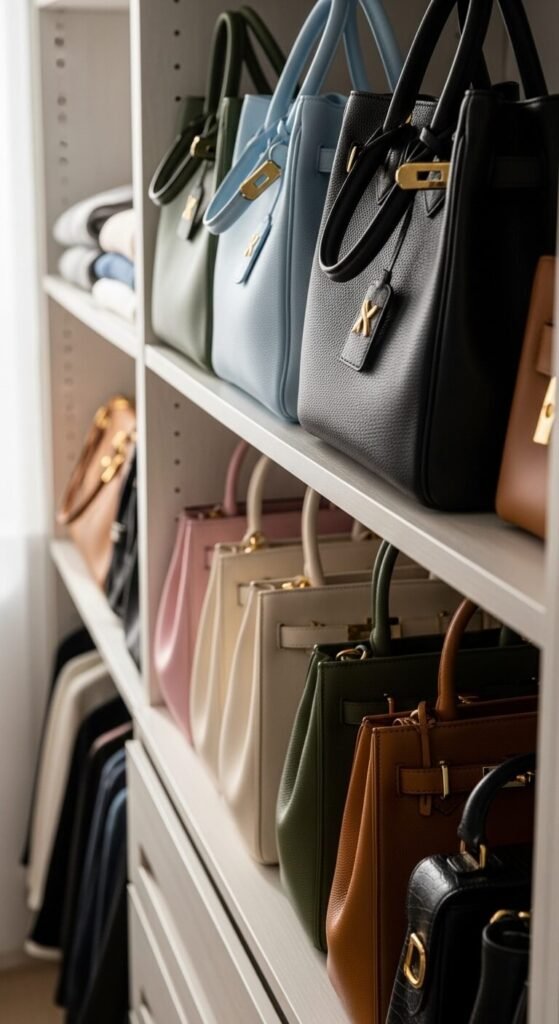
Here’s everything you need to know to store your bags the right way — no expensive closet system required.
Stuff Your Bags to Hold Their Shape
The number one rule of bag storage? Never store them empty.
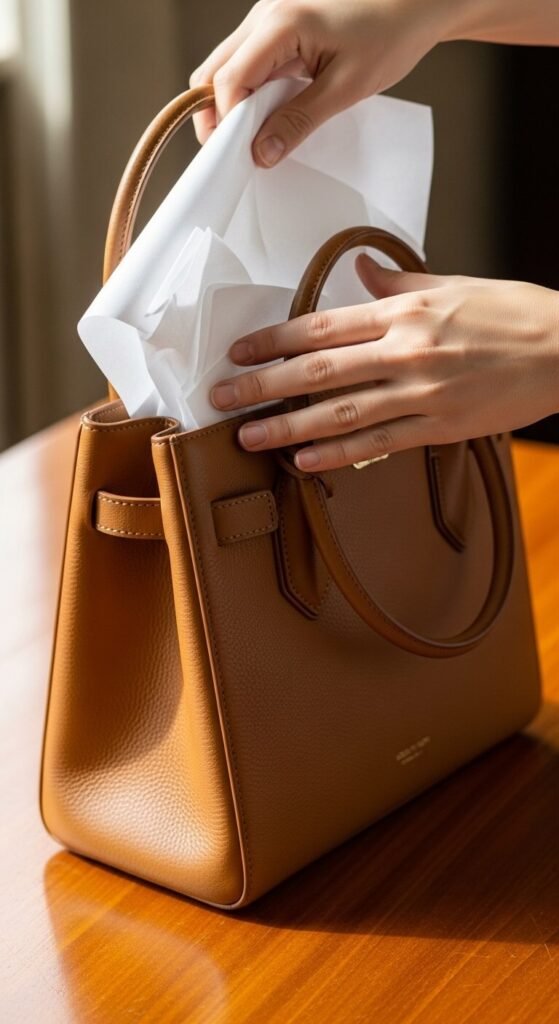
When a bag sits flat and unfilled, the sides cave in, creases form, and the structure slowly collapses. Instead, stuff your bags before putting them away.
What to stuff them with:
- Acid-free tissue paper (best for delicate leathers)
- Old t-shirts or soft scarves rolled into balls
- Bubble wrap for lightweight bags
- Purpose-made bag shapers or pillows
The goal is to fill the bag just enough so it holds its natural shape — not so much that it stretches the seams. For structured bags like box clutches or top-handle styles, this step is non-negotiable.
Store Them Upright, Never Stacked
Stacking bags is one of the most common storage mistakes. Heavy bags on top crush lighter ones underneath, flatten handles, and distort hardware over time.
Instead, store bags upright and side by side — just like books on a shelf. This keeps their structure intact and makes it easy to grab what you need without disturbing the whole collection.
A few smart upright storage options:
- A dedicated shelf in your wardrobe or closet
- Acrylic or fabric bin dividers to keep bags from leaning
- A bookcase or open shelving unit repurposed for bags
- Individual cubby shelves for larger collections
If you’re tight on space, shelf dividers are a game-changer. They act like bookends and keep everything standing tall without toppling over.
Use Dust Bags (and What to Do If You’ve Lost Them)
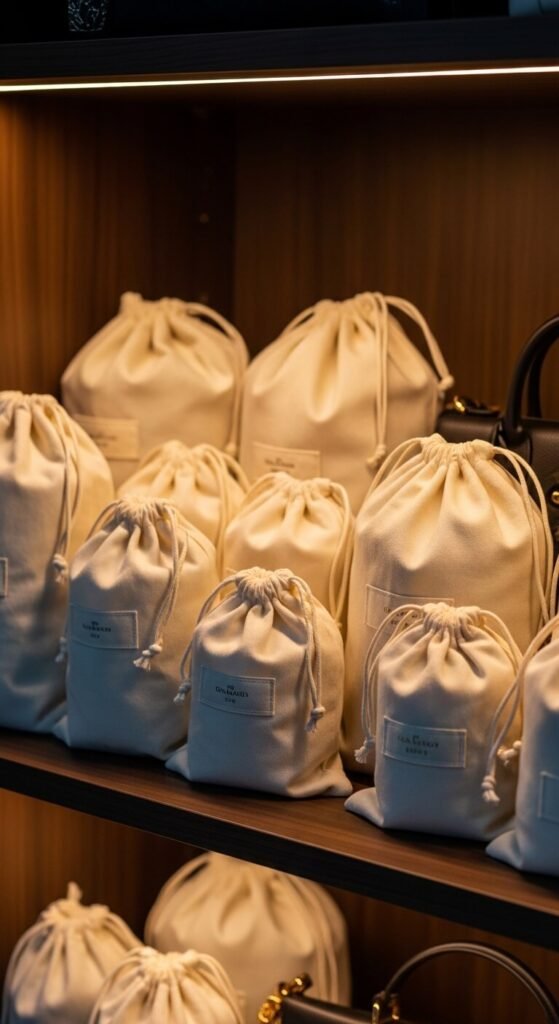
Dust, light, and humidity are silent enemies of leather and fabric bags. Keeping your bags in dust bags when they’re not in use protects the material and prevents color fading.
Most designer bags come with dust bags — use them. For everything else, here are some easy alternatives:
- Pillowcases work surprisingly well for everyday bags
- Cotton drawstring bags (cheap and available in bulk online)
- Breathable fabric pouches — avoid plastic, which traps moisture
Never store bags in plastic bags or bins. Trapped moisture leads to mildew, and leather needs to breathe.
Handle Hardware and Straps with Care
Hardware scratches, chain straps tangle, and thin straps can get permanently bent if stored incorrectly. A little attention here goes a long way.
Tips for straps and hardware:
- Tuck chain straps inside the bag before storing to prevent scratching the exterior
- Wrap hardware pieces loosely in tissue paper if bags are stored touching each other
- Store crossbody straps loosely coiled or flat — never tightly wrapped, which can crack the leather over time
- For bags with detachable straps, store them inside or alongside the bag in a labeled pouch
Climate Matters More Than You Think
Your storage environment plays a huge role in bag longevity. Extreme heat, cold, or humidity can warp, crack, or discolor both leather and fabric over time.
The ideal storage environment:
- Cool and dry — avoid attics, garages, or basements
- Away from direct sunlight, which fades color and dries out leather
- Not near heating vents or radiators
- A stable temperature — think bedroom closet, not storage unit
If you live in a humid climate, toss a few silica gel packets inside your bags or on the shelf nearby. They absorb excess moisture and are cheap to replace.
Rotate Your Collection Regularly
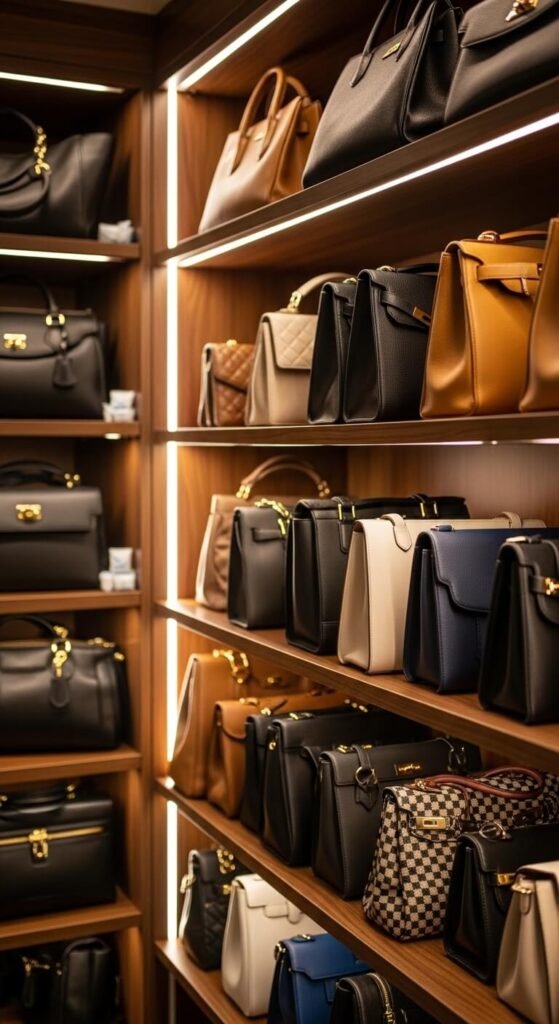
Even in storage, bags benefit from a little movement. If a bag sits in the same position for months, pressure points can develop and hardware can press into the leather.
Make a habit of rotating your bags every few weeks — take them out, air them out, and put them back in a slightly different position. It takes two minutes and makes a real difference over time.
The Right Storage = A Longer Life for Your Bags
Your bags are an investment — whether they cost $30 or $3,000 — and a little thoughtful storage goes a long way. Stuff them, stand them upright, keep them breathable, and protect them from light and moisture. That’s really all it takes.
Save this guide for later and share it with anyone whose bags could use a little TLC! Your future self (and your closet) will thank you. 👜✨