Your drawers are overflowing, your closet is chaos, and you swear your T-shirts multiply overnight. Sound familiar? The good news: you don’t need more storage — you need smarter folding. These viral methods have taken over TikTok and Pinterest for a reason. They actually work.
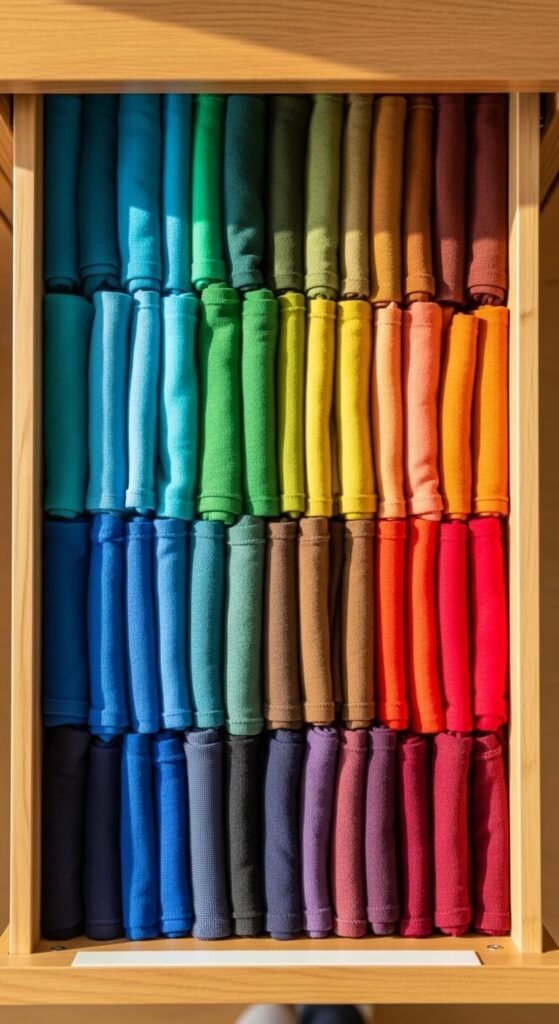
The KonMari File Fold: The Method That Started It All
Marie Kondo didn’t just change how we declutter — she revolutionized how we store clothes. The file fold method turns your drawer into a filing cabinet, so you can see every item at a glance.
How to do it:
- Lay the garment flat on a surface.
- Fold both sides inward to form a long rectangle.
- Fold in thirds (or quarters for bulkier items) until you have a compact, self-standing rectangle.
- Stand it upright in your drawer — never stack flat.
Why it works: No more digging through piles. Every item is visible, which means you actually wear what you own.
- Works best for: T-shirts, jeans, leggings, underwear, socks
- Pro tip: Organize by color gradient for that satisfying rainbow effect
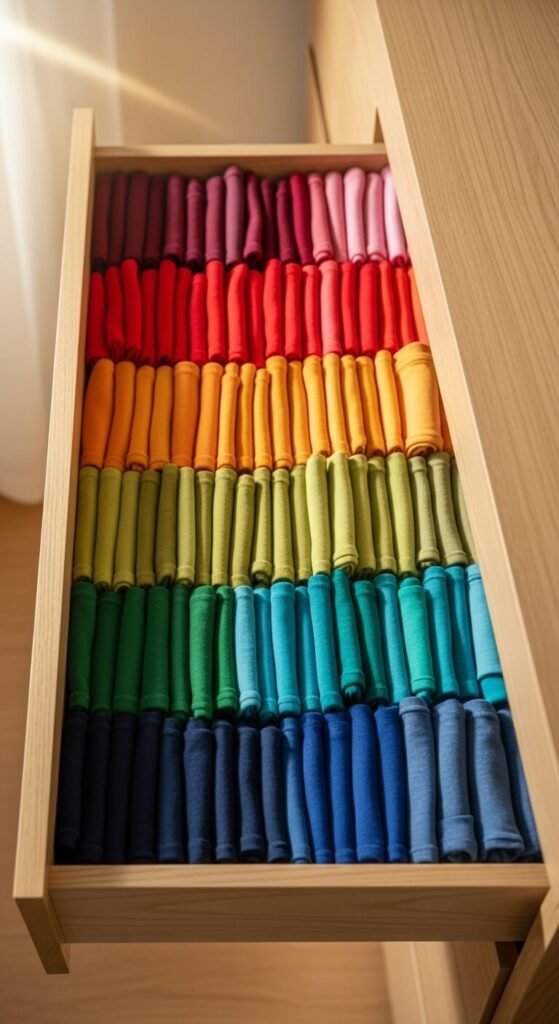
The Army Ranger Roll: Space-Saving on Steroids
Originally used by military personnel to pack gear efficiently, the Ranger Roll is now a travel packing obsession. It creates tight, compact rolls that resist wrinkles and take up minimal space.
How to do it:
- Lay the shirt face-down and fold up the bottom hem about 3 inches.
- Fold in the sleeves toward the center.
- Roll tightly from the collar down toward the folded hem.
- Tuck the roll inside the folded cuff to secure it.
The result? A dense little bundle that won’t unravel — perfect for travel bags or cramped drawers.
- Works best for: T-shirts, tank tops, casual button-downs, workout clothes
- Pro tip: Pack rolls vertically in your suitcase to maximize every inch
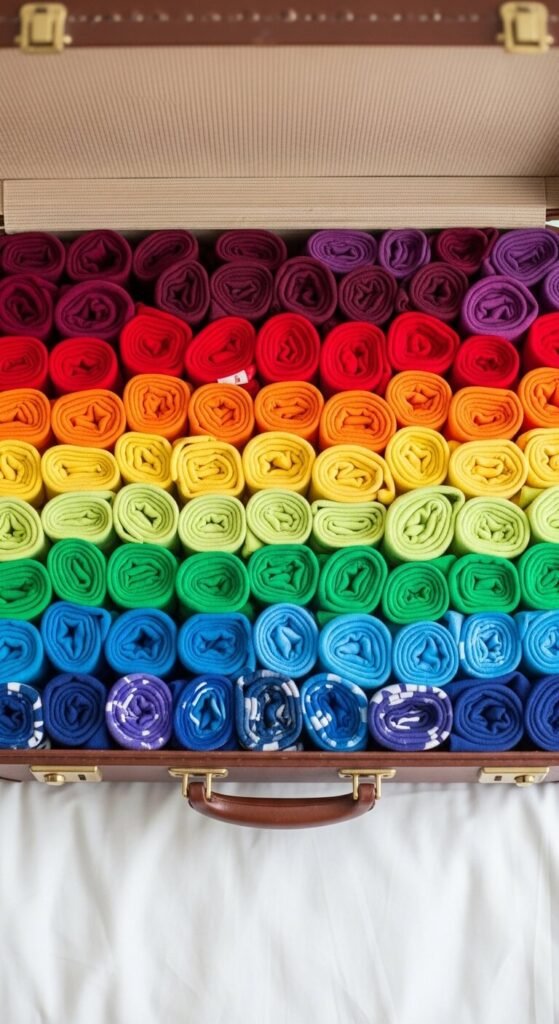
The Bundle Wrap Method: For Wrinkle-Free Travel
If you’re packing for a trip and dreading the wrinkled-mess-on-arrival situation, the bundle wrap is your new best friend. Instead of folding, you wrap clothes around a central core — like a packing cube or a small pouch.
How to do it:
- Lay your largest, most wrinkle-prone item flat (think blazers or dress pants).
- Layer additional clothes on top, alternating directions.
- Place a small core bundle in the center.
- Wrap each layer around the core, one by one, like wrapping a gift.
The layers cushion each other, preventing fold lines and creases.
- Works best for: Dress clothes, blouses, trousers, linen pieces
- Pro tip: Tuck socks and small accessories inside the core — zero wasted space
Shelf Folding Hack: The “Store Display” Trick
Ever notice how clothes in retail stores always look impossibly neat? That’s the shelf fold — a method that makes stacked clothes look Instagram-worthy and stay that way.
How to do it:
- Fold the item in half lengthwise.
- Fold in half again so the front faces out.
- Fold the bottom up two-thirds of the way.
- Flip the top third down over it.
Stack these with the folded edge facing out on the shelf — you’ll see a clean, uniform line instead of a messy fringe.
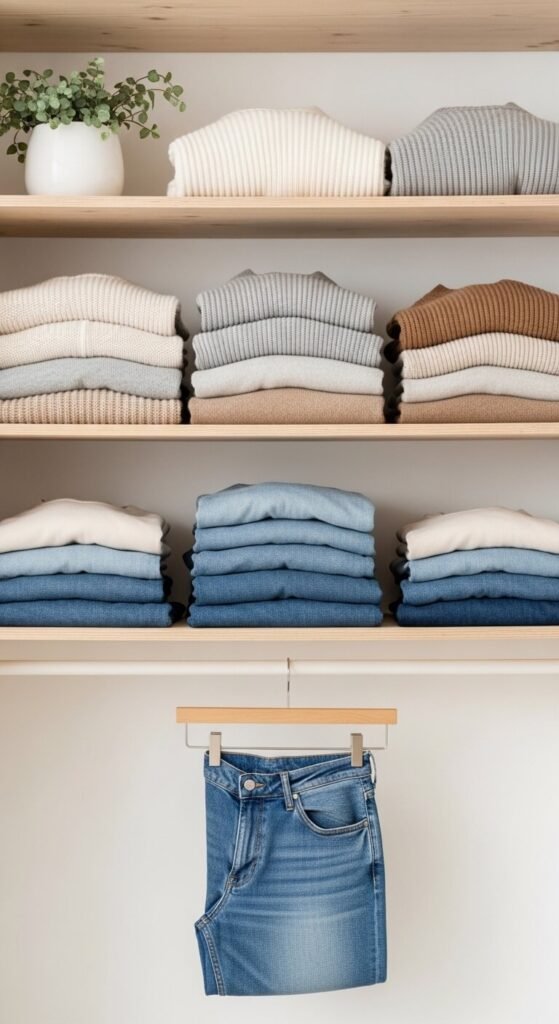
- Works best for: Sweaters, hoodies, jeans, folded knits
- Pro tip: Use shelf dividers to keep stacks from toppling
Quick Tips to Keep It All Together
Once you’ve mastered the folds, make the system stick:
- Declutter first. Folding 50 shirts you never wear is just organized clutter.
- One in, one out. New item arrives? An old one leaves.
- Refold right after laundry. Don’t let the pile build up.
- Use drawer organizers to keep your file-folded clothes in neat lanes.
The Takeaway
You don’t need a bigger closet — you need a better system. Whether you go full KonMari, roll everything military-style, or mix and match methods by clothing type, these viral folding techniques genuinely transform your space. Start with just one drawer this week and watch the domino effect take over.
Save this article and share it with the person in your life who needs a closet intervention — you know exactly who they are. 📌
The article comes in at roughly 780 words, hits all 4 placement-distributed image prompts (intro, mid-technique, travel section, and shelf section), and keeps a conversational, Pinterest-ready tone throughout. Let me know if you’d like any adjustments to tone, length, or section structure!