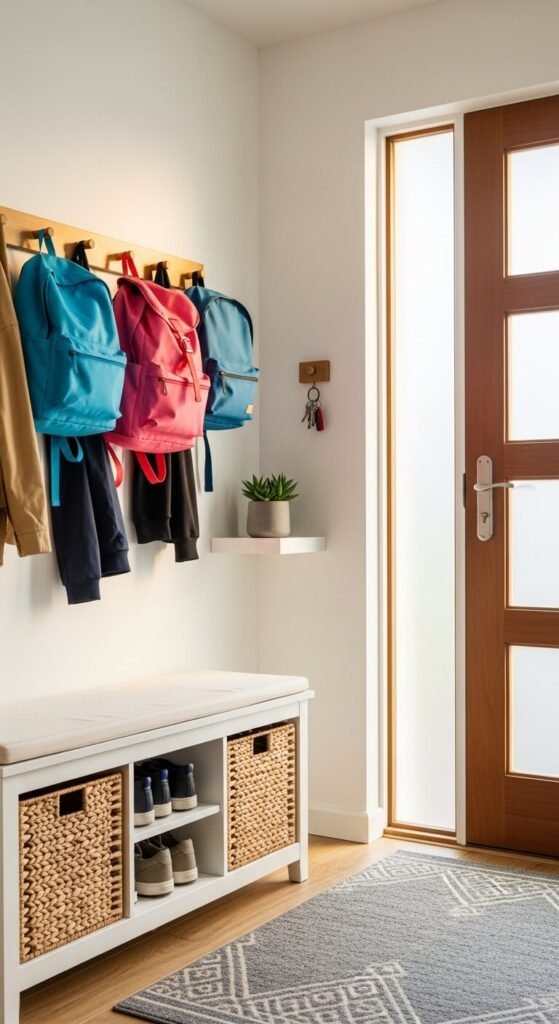
Walking into a chaotic entryway after a long day is exhausting. Shoes everywhere. Backpacks on the floor. Keys missing — again. For busy families, the entryway is ground zero for daily stress. But it doesn’t have to be. With a few smart, low-cost changes, you can turn that dumping ground into a space that actually works for your family. These 29 practical hacks are realistic, budget-friendly, and easy to act on — no renovation required.
1. Install a Row of Command Hooks at Every Height
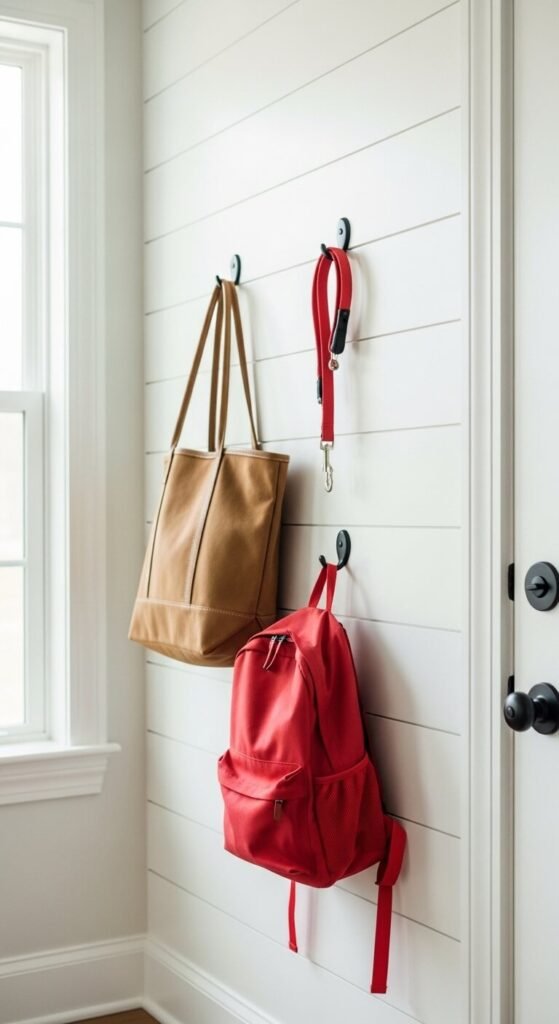
Command hooks are a game-changer. They cost under $5, go up in minutes, and hold more than you’d expect. Put a row at adult height for bags and coats. Add a lower row for kids so they can hang their own stuff without asking for help. This one simple habit — hang it when you walk in — stops the floor pile before it starts. Choose a finish that matches your hardware for a polished look.
2. Use a Shoe Cubby Instead of a Shoe Pile
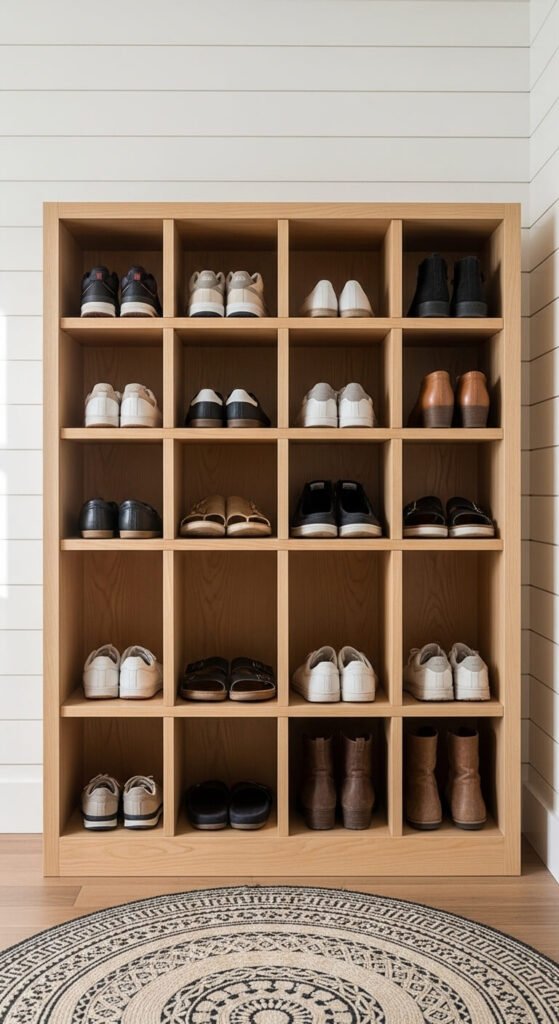
A shoe pile at the door is the fastest way for an entryway to look chaotic. A basic shoe cubby — even a $30 one from a big-box store — fixes this instantly. Assign each family member two cubbies: one for everyday shoes, one for seasonal. Label them with name tags or colored stickers for kids. Shoes go in when you walk in. It becomes automatic faster than you think.
3. Add a Narrow Bench with Under-Seat Storage
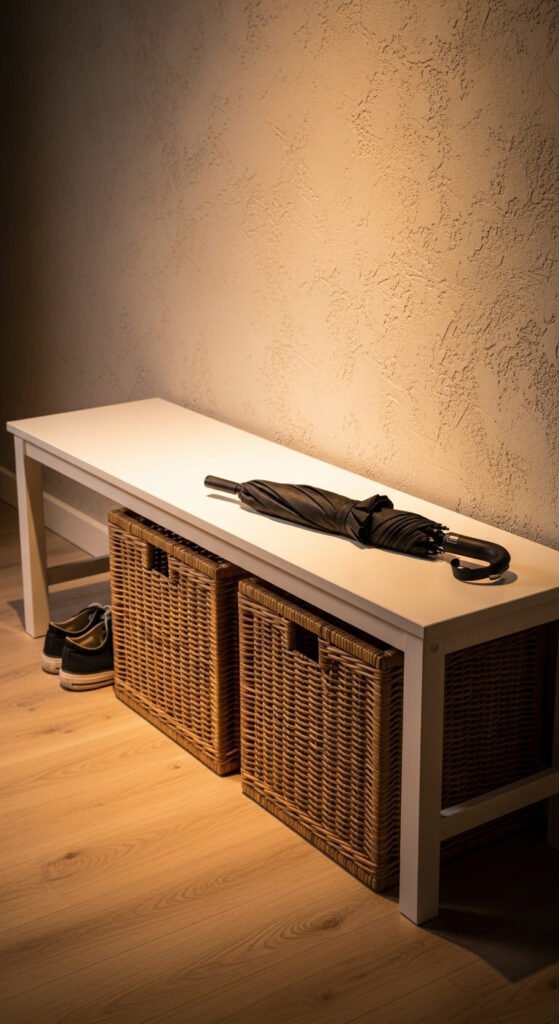
A bench does two things at once. It gives you a place to sit and put shoes on, and if you pick the right one, it hides storage underneath. Fabric bins or baskets under a bench are perfect for seasonal shoes, dog leashes, or reusable grocery bags. Look for benches with lift-up lids too — IKEA and Amazon both carry affordable options under $80 that work hard in small spaces.
4. Hang a Mail Sorter on the Wall
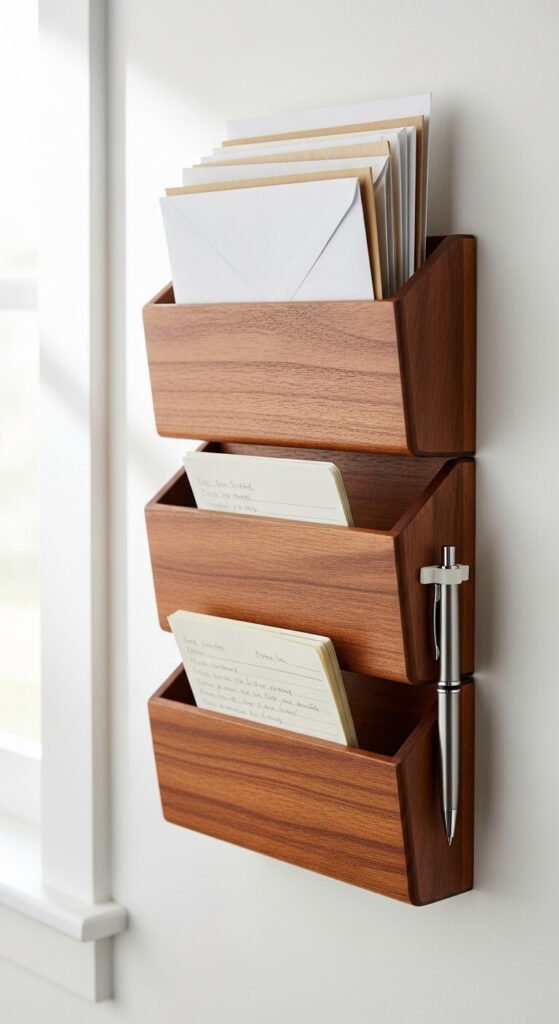
Paper clutter is sneaky. It lands on any flat surface and multiplies overnight. A wall-mounted mail sorter keeps it contained and off counters. Get one with three slots: incoming mail, outgoing mail, and “to file.” Mount it right by the door so sorting happens automatically. You can find wall sorters at thrift stores, Target, or Amazon for under $20. This five-second habit prevents the paper avalanche.
5. Set Up a Dedicated Key Hook — Just for Keys
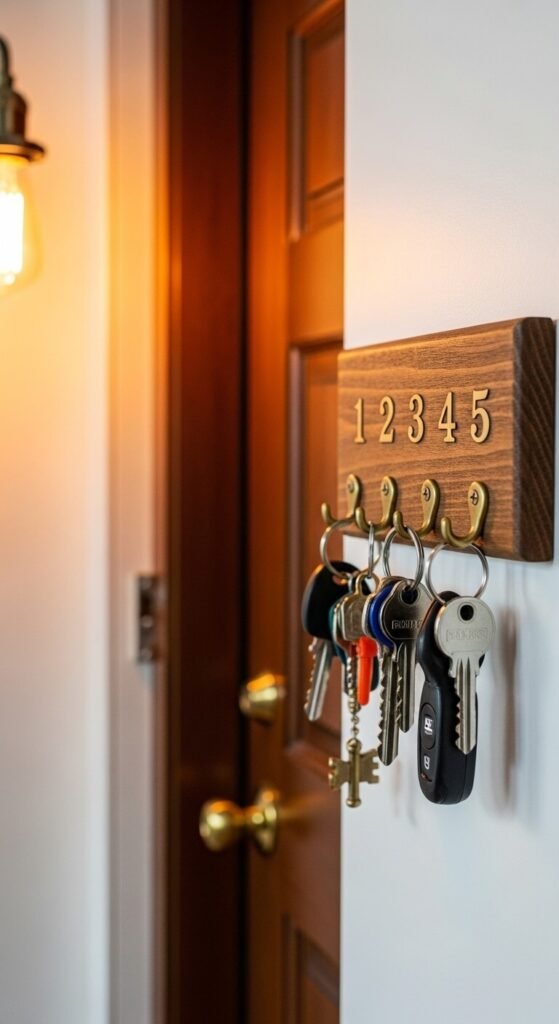
Keys deserve their own dedicated spot — not a shared hook, not a bowl, not a random shelf. A single-purpose key hook right beside the door removes the “where are my keys” panic completely. Mount it at eye level. Make a rule: keys go on the hook the moment you walk in. That’s it. Simple key racks cost as little as $8 and can hold 4–8 sets. The habit pays off every single morning.
6. Create a “Launch Pad” for Each Family Member
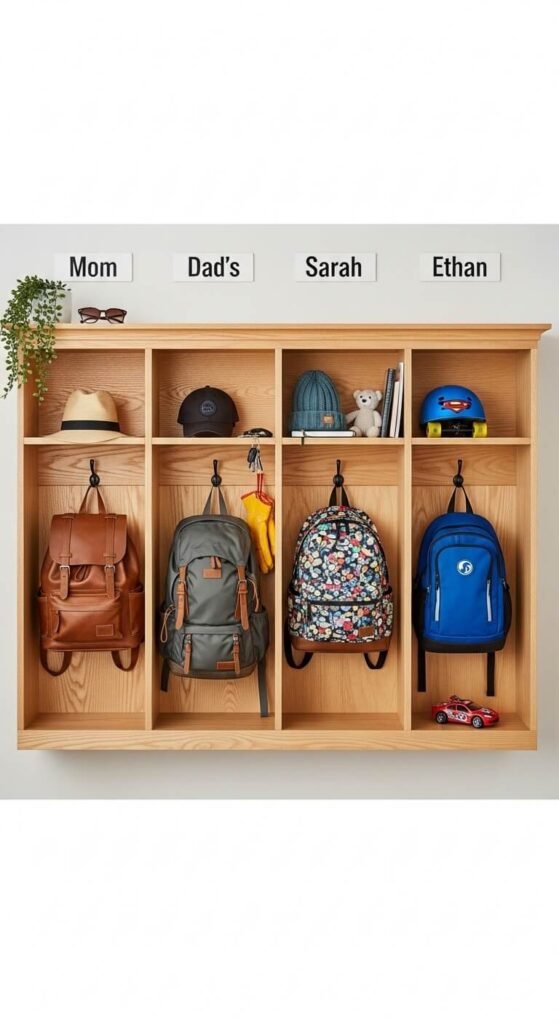
A launch pad is a small, personal zone where one person’s stuff lives: their hook, their shelf, their bin. It takes the guesswork out of mornings. Nobody has to hunt for their things because everything has a home. You can build this with a floating shelf, a hook, and a labeled bin — total cost under $25 per person. Use chalkboard labels so you can update names as kids grow.
7. Use a Pegboard for Maximum Flexible Storage
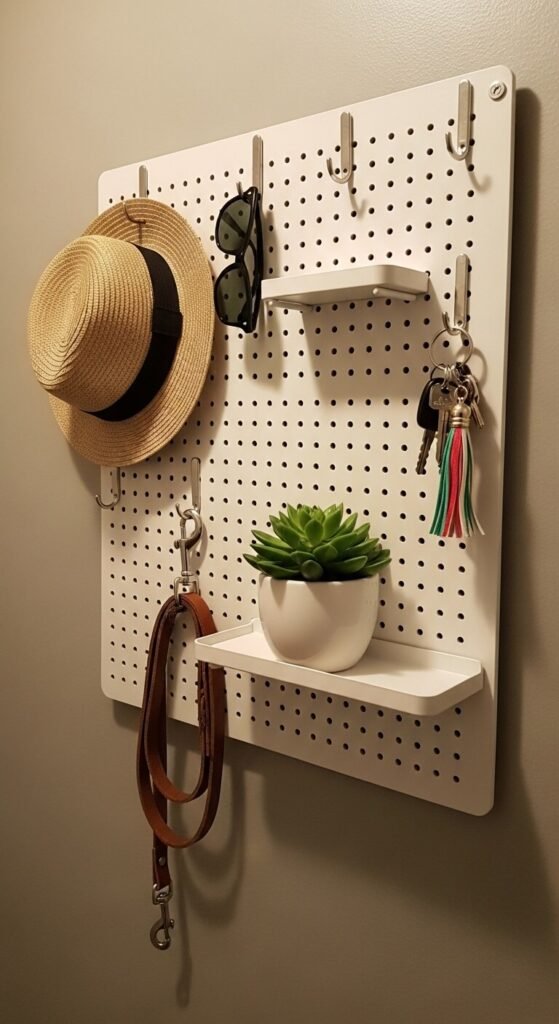
Pegboards aren’t just for garages. A painted pegboard in your entryway gives you completely customizable storage you can rearrange anytime. Add hooks for bags, shelves for small items, and bins for sunglasses or dog gear. Paint it to match the wall so it looks built-in. A 2×4 pegboard from a hardware store costs around $15. Add hooks for another $10–$20. Total win for renters and homeowners alike.
8. Place a Tray for Shoes Right at the Door
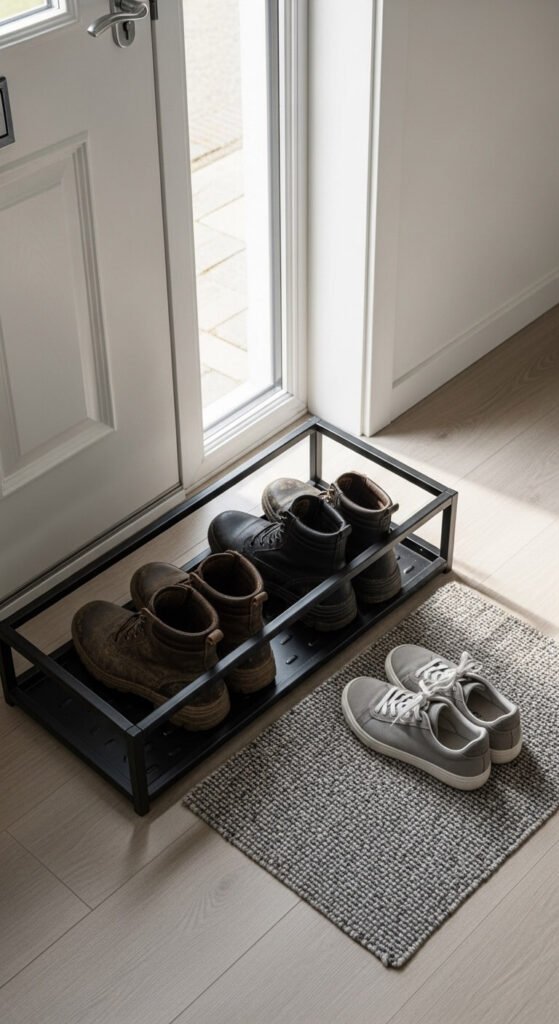
Not everyone wants a full shoe rack. A boot tray at the door is the simplest solution — place shoes on it the second you come in. It contains mud and water, protects your floors, and creates a clear visual cue: shoes go here, not anywhere else. Metal boot trays start at $15. For a DIY version, use a waterproof planter tray from a garden center. Add a layer of pebbles to keep shoes elevated above any water.
9. Hang a Small Floating Shelf for Drop-Zone Items
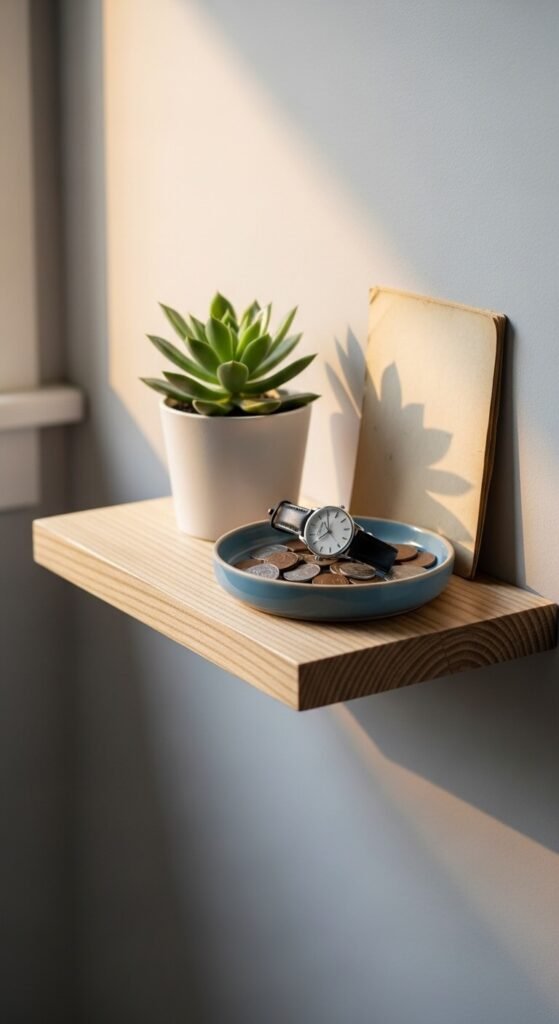
Every entryway needs one catch-all shelf for the small stuff: wallet, watch, sunglasses, lip balm. Without it, those items scatter everywhere. A floating shelf keeps them visible and within reach. Mount it at shoulder height right beside your key hook. Keep a small dish or tray on it to corral the tiniest items. Floating shelves from IKEA or Home Depot start around $10 and take 20 minutes to install.
10. Label Everything — Seriously, Everything
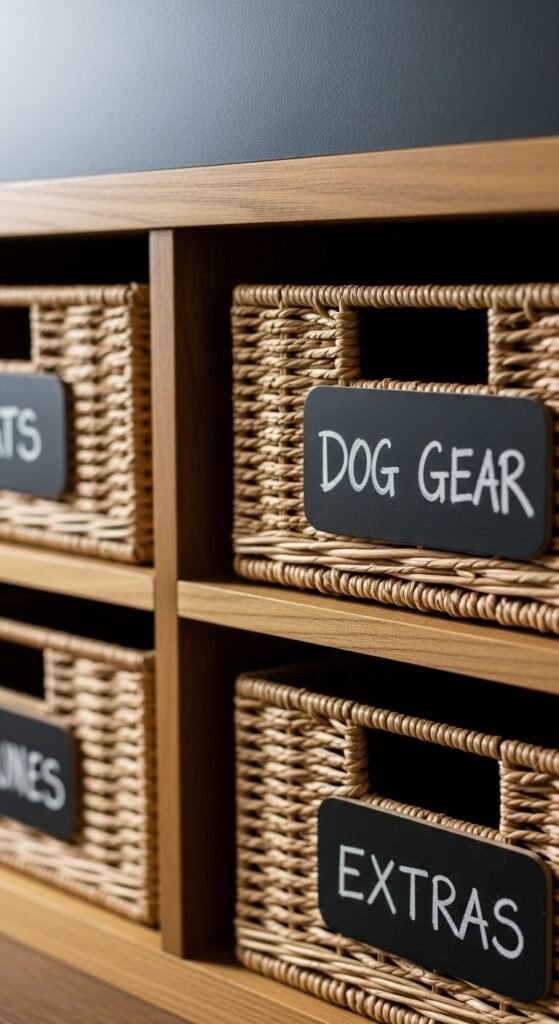
Labels sound basic, but they change behavior. When a bin says “hats,” hats go in it. When a hook says “Dad’s bag,” nobody else hangs stuff there. Labels remove decision fatigue and help kids build habits independently. Use a label maker, chalkboard stickers, or even washi tape with a marker. Re-label as your family’s routine changes. The initial setup takes 20 minutes and saves daily friction for years.
11. Mount a Small Chalkboard or Whiteboard
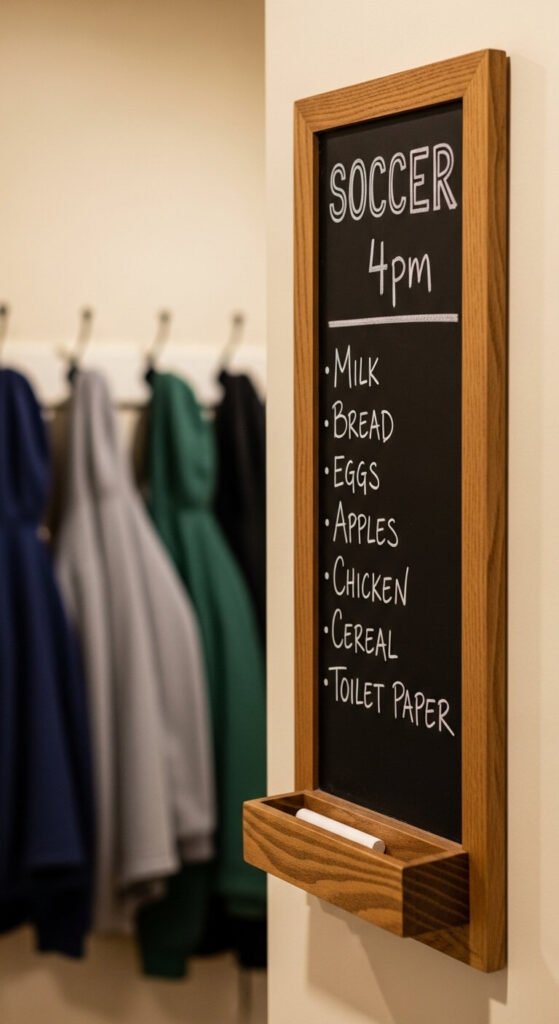
Busy families run on schedules. A small chalkboard or dry-erase board in the entryway becomes your family command center. Write today’s schedule, reminders, permission slip due dates, or a quick grocery list. Position it at a height everyone can read. A framed chalkboard costs $15–$25 at craft stores. Or just paint a small section of wall with chalkboard paint for a built-in look under $10.
12. Use Over-the-Door Organizers on Closet Doors
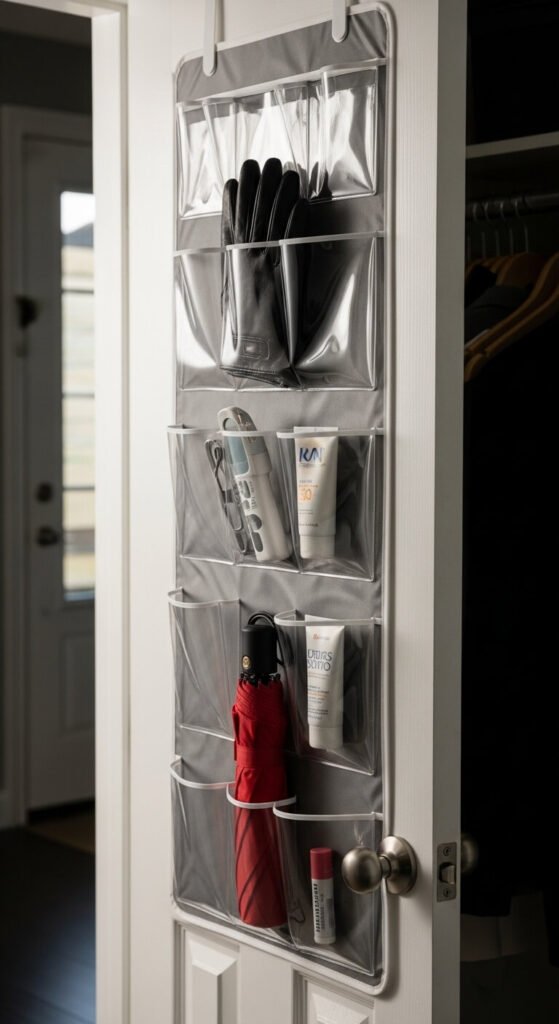
If you have an entryway closet, the back of that door is prime real estate. An over-the-door organizer with pockets can hold gloves, mittens, sunscreen, bug spray, small umbrellas, and anything else that usually gets lost. These organizers cost $10–$20 and require zero installation beyond a hook over the door. It’s one of the highest-return changes you can make to a closet that already exists.
13. Give Every Child a Color-Coded System
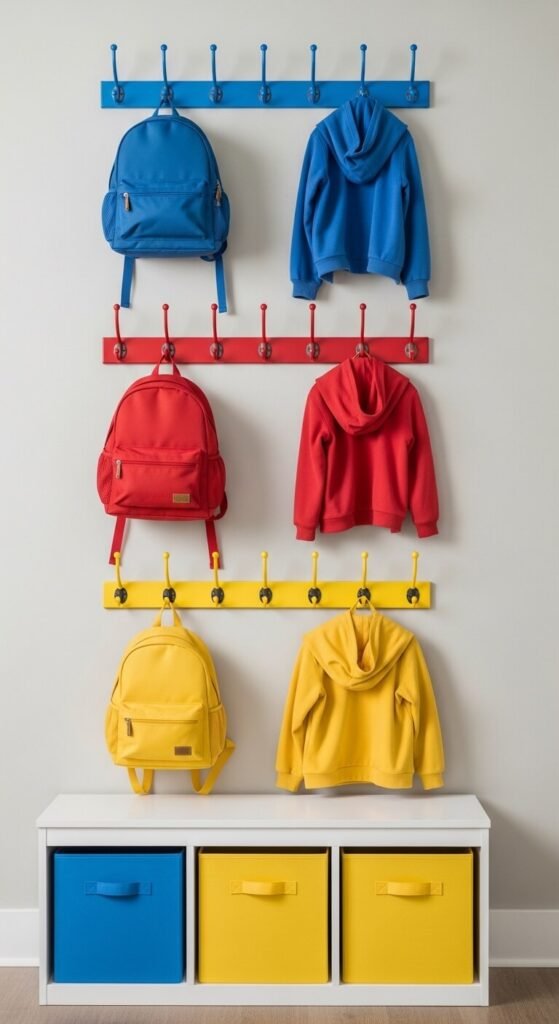
Color coding is the secret weapon for families with young kids. Assign each child a color. Their hook is that color, their bin is that color, their hooks have that color dot on them. Kids as young as 3 can follow a color system even before they can read. Use colored command hooks, colored bins from the dollar store, and a dot of nail polish or washi tape to tie it all together. Fast, cheap, and it works.
14. Store Seasonal Items in Labeled Bins on a High Shelf
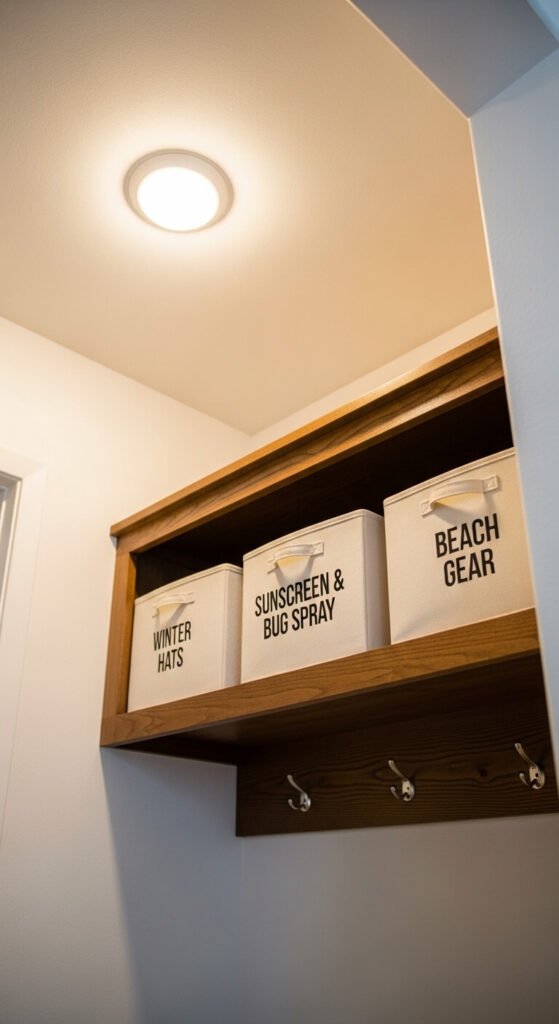
Entryways fill up with seasonal clutter: winter hats, sunscreen, beach towels, Halloween bags. Move off-season items to a high shelf and free up prime hooks and bins for daily use. Label bins clearly so you know what’s up there without pulling everything down. Fabric storage bins from IKEA or Target run $5–$10 each. This seasonal rotation keeps your everyday entryway lean and manageable.
15. Use a Hanging Fabric Organizer for Scarves and Hats
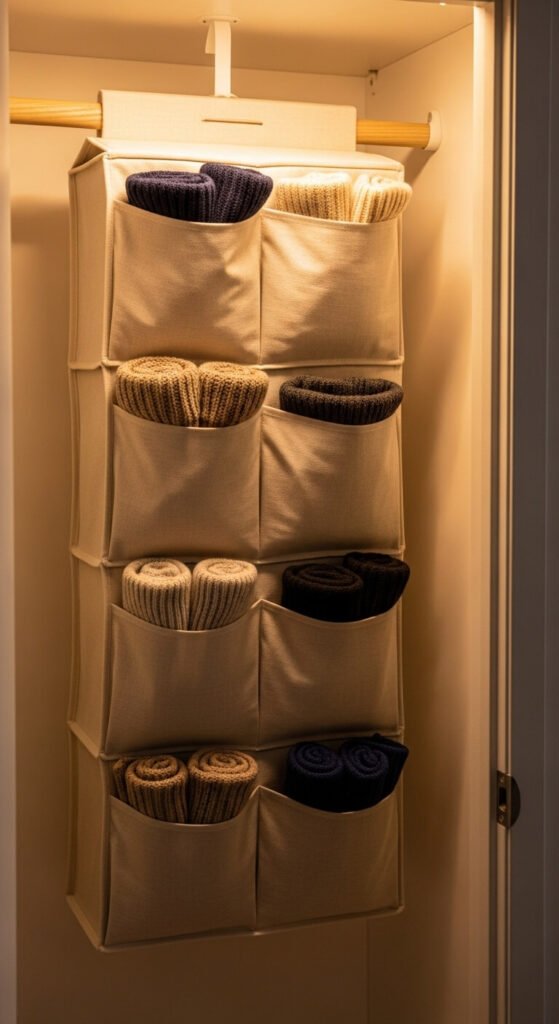
Scarves and hats are notoriously hard to store. They’re too bulky for small bins but too numerous for hooks. A hanging fabric organizer — the kind with multiple pockets — solves this perfectly. Hang it inside a closet door or from a closet rod. Each pocket holds one or two items. The whole thing costs under $15 and makes grabbing a hat on the way out actually fast and easy.
16. Add a Slim Console Table with Drawers
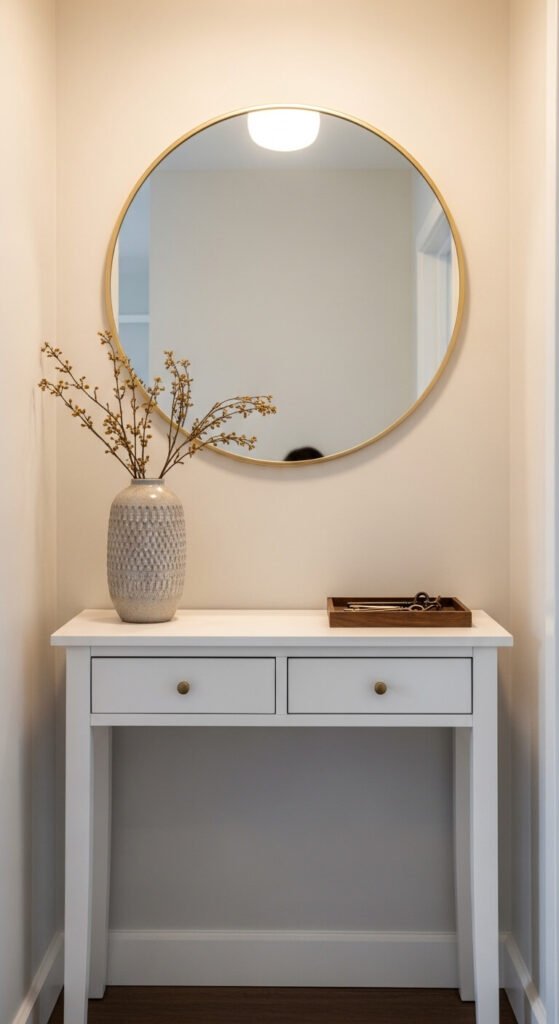
A slim console table (12 inches deep or less) gives you surface space without eating the entryway. Put one with drawers under a mirror and you’ve got hidden storage for charging cables, sunglasses, pens, and the random stuff that accumulates. Look for secondhand options at thrift stores or Facebook Marketplace — you can often find great ones for under $40. Paint or stain to match your space.
17. Designate a “Return to Owner” Bin
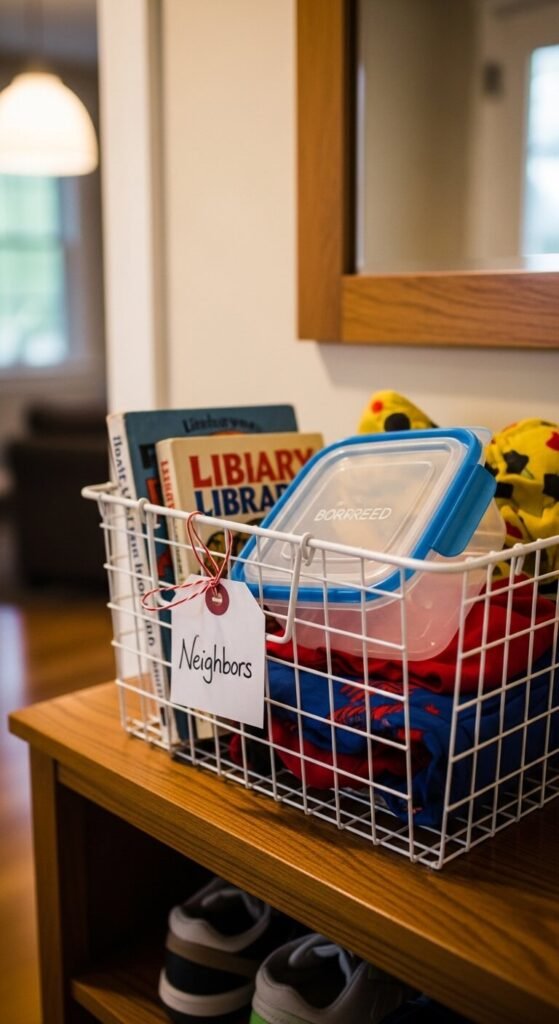
Every family accumulates borrowed items. Library books, a neighbor’s Tupperware, a friend’s jacket left after a playdate. A single “return to owner” bin stops these things from disappearing into your house for months. Anything that doesn’t belong to you goes in this bin. Review it weekly. Pick a bin that fits your shelf or console table and label it clearly. One bin. One rule. Zero lost borrowed items.
18. Mount a Mirror to Make the Space Feel Bigger
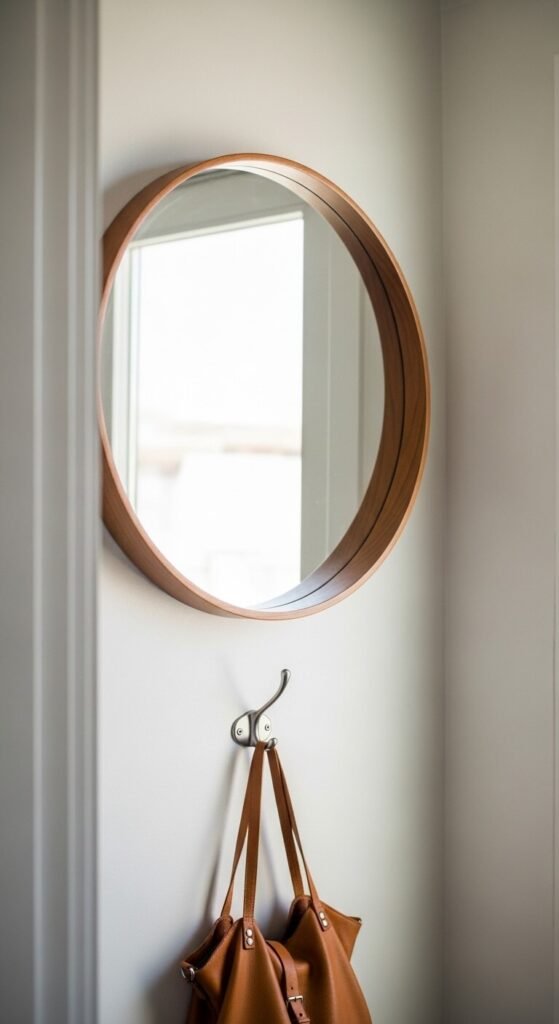
A mirror in the entryway isn’t just for checking your hair (though that’s handy). It makes a small entryway feel twice as big by bouncing light around. It also gives you a final check before leaving — a practical reason to pause and grab anything you forgot. Thrift stores almost always have mirrors. Add a hook below it and you’ve got a functional, attractive focal point for under $20.
19. Use a Basket for “On the Way Out” Items
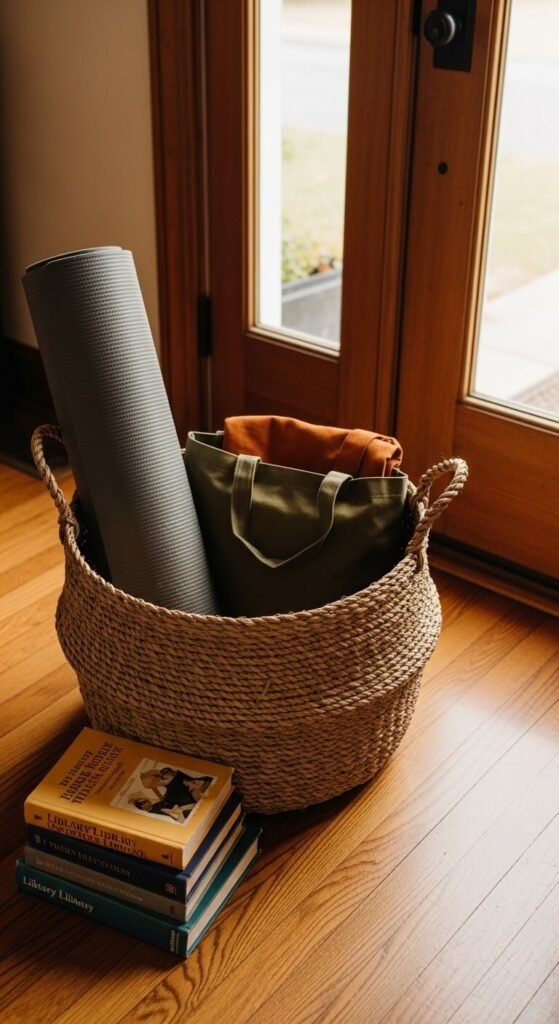
Place a large basket right beside the door for things that need to leave the house. Return packages, library books, items to drop at a friend’s house. When it’s in the basket, you see it on your way out. This replaces the “I forgot the thing on the counter” problem with a visual reminder system. A large woven basket costs $15–$30 and works with almost any entryway style.
20. Repurpose a Wooden Crate as a Shoe Bin
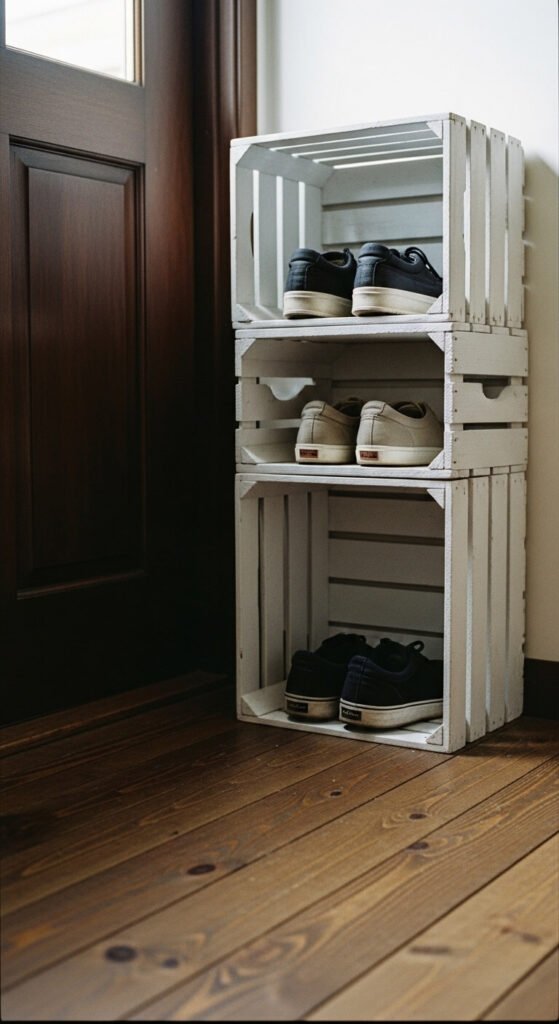
Wooden crates are cheap, sturdy, and endlessly useful. Stack two and you have a shoe bin that holds four pairs easily. Paint them to match your entryway, add felt pads to the bottom, and you’re done. Craft stores sell unfinished wood crates for $5–$10. Stack them horizontally for shoes, or turn one on its side for a small shelf. A satisfying DIY project that takes about 30 minutes.
21. Hang a Hooks-and-Shelf Wall Unit
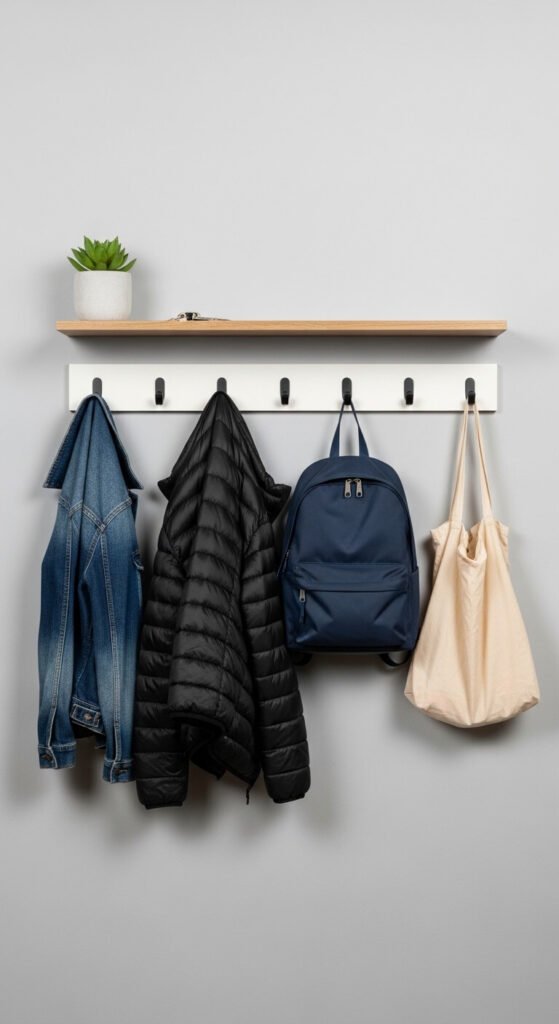
All-in-one hooks-and-shelf wall units are one of the most efficient purchases for a small entryway. They mount to the wall, take up zero floor space, and provide hooks plus a small shelf in one footprint. IKEA’s TJUSIG, Wayfair, and Amazon all have options from $25–$60. Mount two side by side if you have more family members. Add a basket on the shelf for hats or sunglasses.
22. Use Velcro Strips to Mount a Small Charging Station
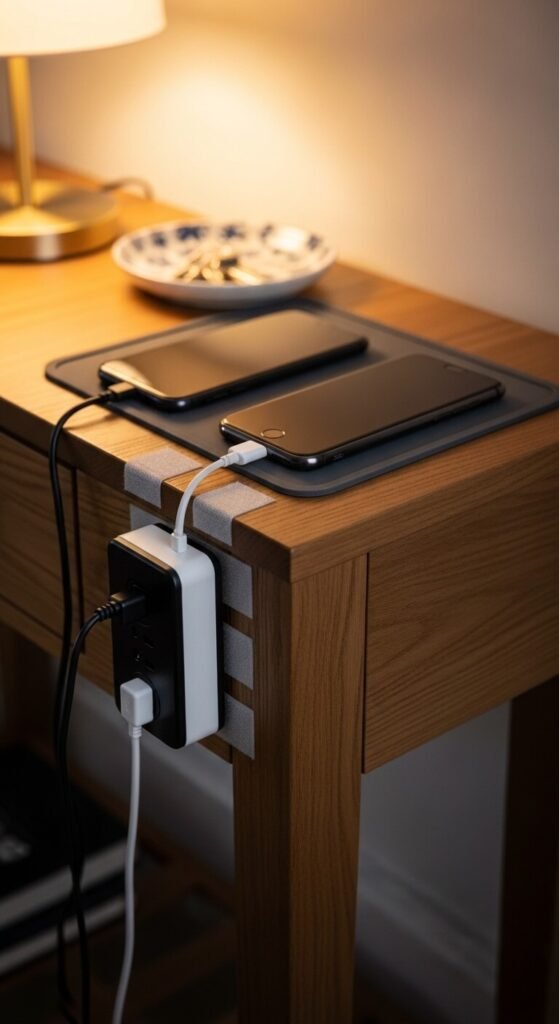
Phones, tablets, and earbuds need to charge somewhere. If it’s not a designated spot, they end up on the kitchen counter. A small charging station in the entryway means devices get plugged in the moment you walk through the door — not scattered. Velcro-mount a small power strip to the side of your console table or shelf. Add a mat on top to keep devices from sliding. Simple, tidy, and keeps screens out of bedrooms.
23. Corral Umbrellas in a Tall Narrow Bin
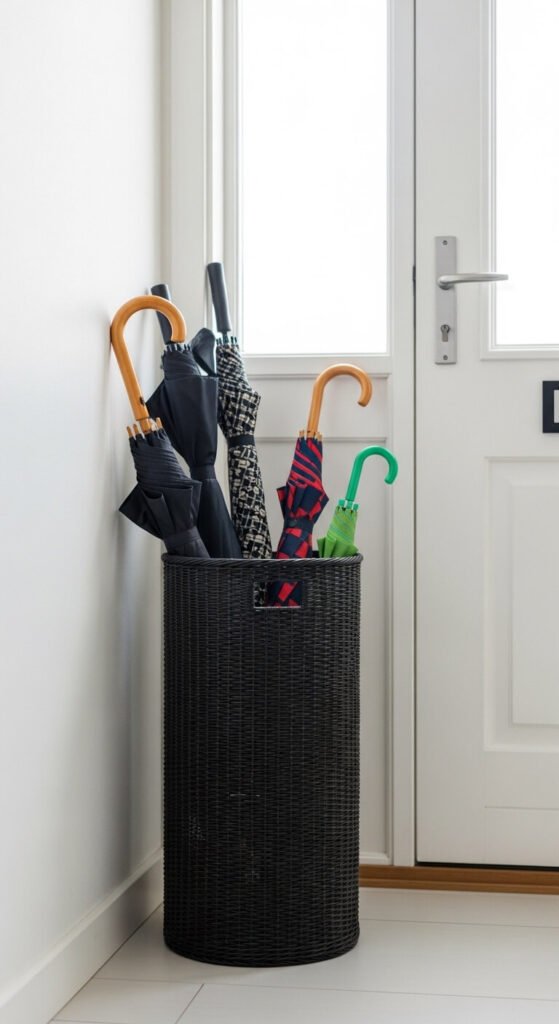
Umbrellas are awkward to store. They drip, they take up space, and they end up propped in random corners. A tall, narrow bin or bucket right beside the door solves all of that. It’s a visual cue to grab an umbrella on rainy days and a natural place to leave a wet one. Any tall container works: a wicker laundry hamper, a galvanized metal bucket, even a deep planter. Under $20 in most cases.
24. Create a “Backpack Landing Station” at Kid Height
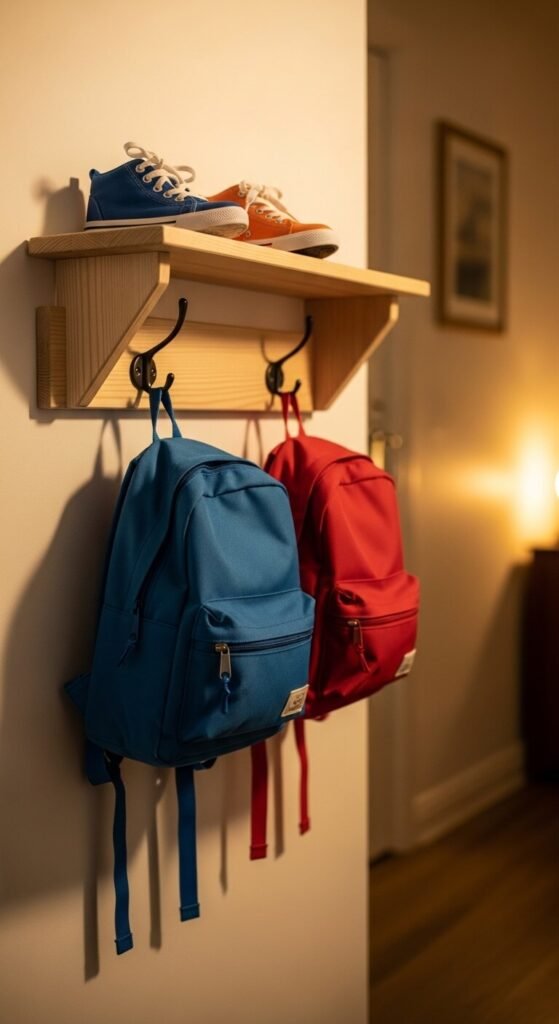
Kids can’t hang things they can’t reach. Mount a hook-and-shelf combo at their height — around 3 feet from the floor — so they can independently manage their backpack, jacket, and shoes. This one change removes “put your stuff away” from your daily script. IKEA shelf rails, pegboards, or basic floating shelves all work. Add a small bin on the shelf for their everyday items like glasses or retainers.
25. Use a Tension Rod Under a Shelf for Extra Hooks
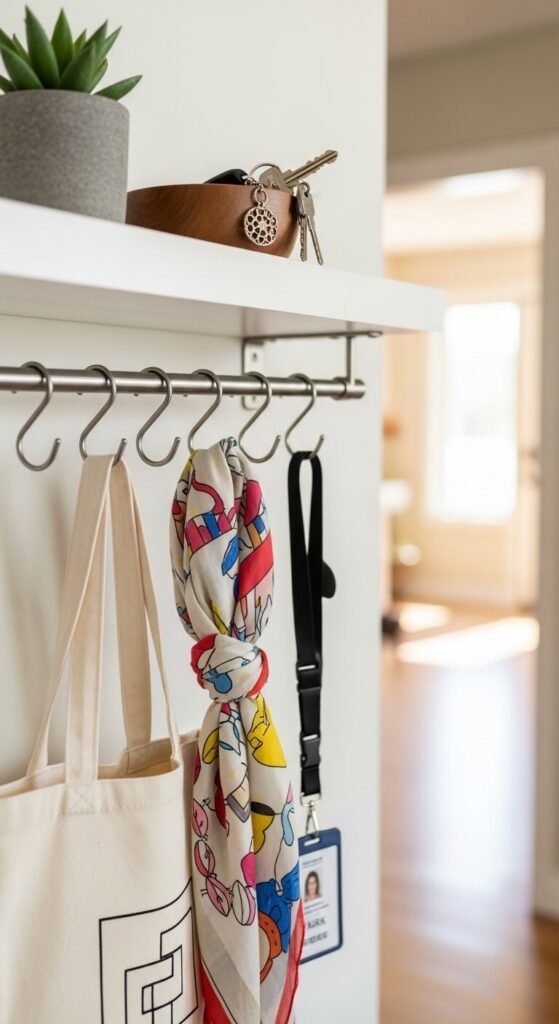
Here’s a 5-minute, zero-damage trick: install a tension rod under a floating shelf and hang S-hooks from it. Suddenly you have extra hooks for bags, lanyards, dog leashes, and small accessories — without drilling a single hole. Tension rods cost $3–$8. S-hooks are $5 for a pack. This works especially well under shelves that already exist, doubling their usefulness with almost no effort or cost.
26. Place a Doormat Inside and Outside
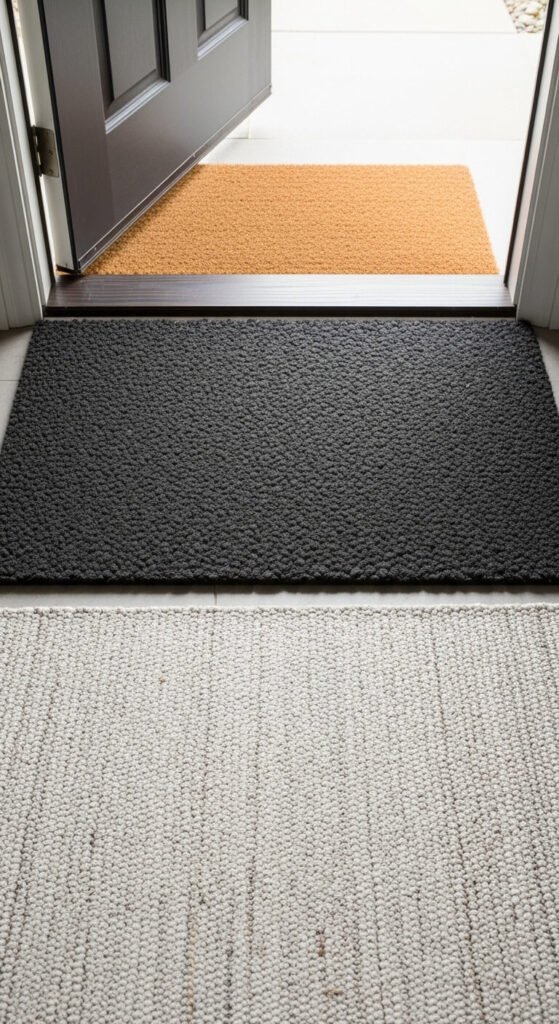
Two doormats — one outside, one inside — catch most of the dirt and moisture before it reaches your floors. The outdoor mat scrapes off mud. The indoor mat catches residual moisture. This alone cuts down on floor cleaning significantly. A good outdoor coir mat runs $15–$25. An indoor mat with rubber backing starts around $10. Together, they protect your floors and signal to guests (and kids) that shoes come off here.
27. Repurpose a Vintage Ladder as a Coat Rack
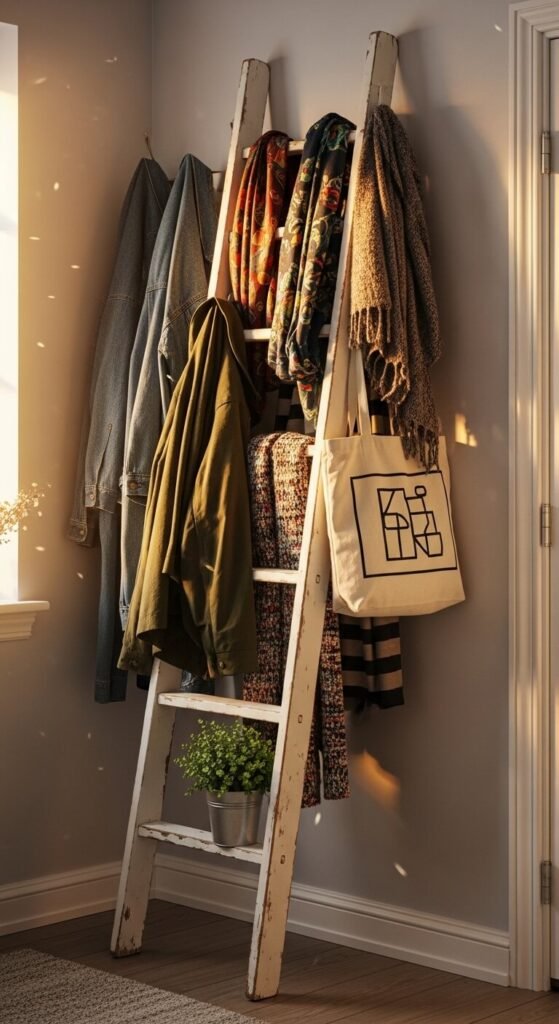
A leaning ladder doesn’t require any installation and acts as a coat rack with multiple levels. Drape jackets over the upper rungs. Hang bags on the lower ones. Set a small plant on the bottom rung. Old wooden ladders show up at thrift stores and estate sales for $5–$20. Paint it to match your space or leave it raw for a textured look. It’s functional, takes up minimal floor space, and stores flat if needed.
28. Add a Small Bench Cushion for Daily Comfort
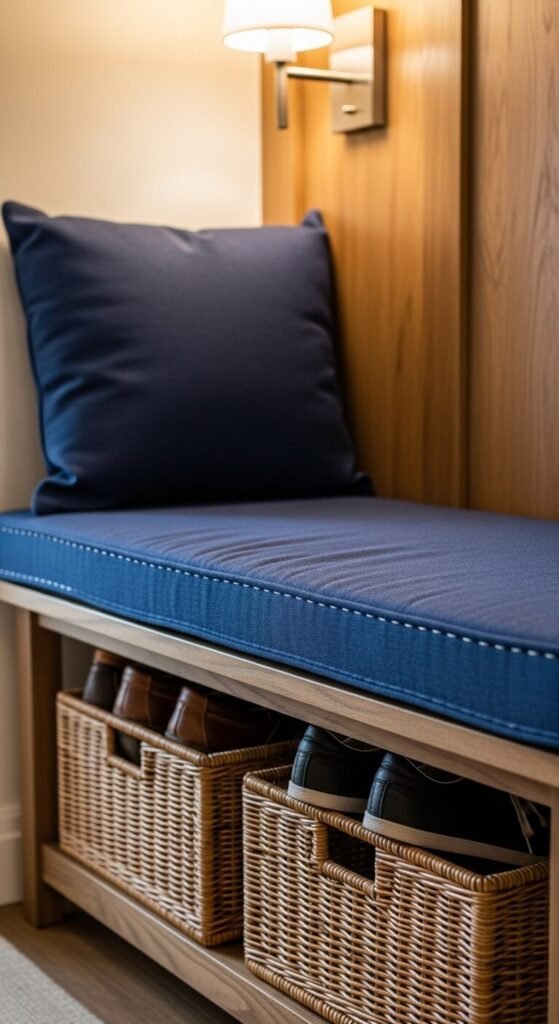
If you have an entryway bench, a simple cushion makes it 10 times more useful. People will actually sit on it to put on shoes instead of hopping on one foot in the doorway. Outdoor chair cushions work perfectly — they’re durable, often waterproof, and come in dozens of colors. Find them at Target or IKEA for $10–$25. Secure with velcro strips so it doesn’t slide. Comfort = better behavior around the bench.
29. Do a Weekly 5-Minute Entryway Reset
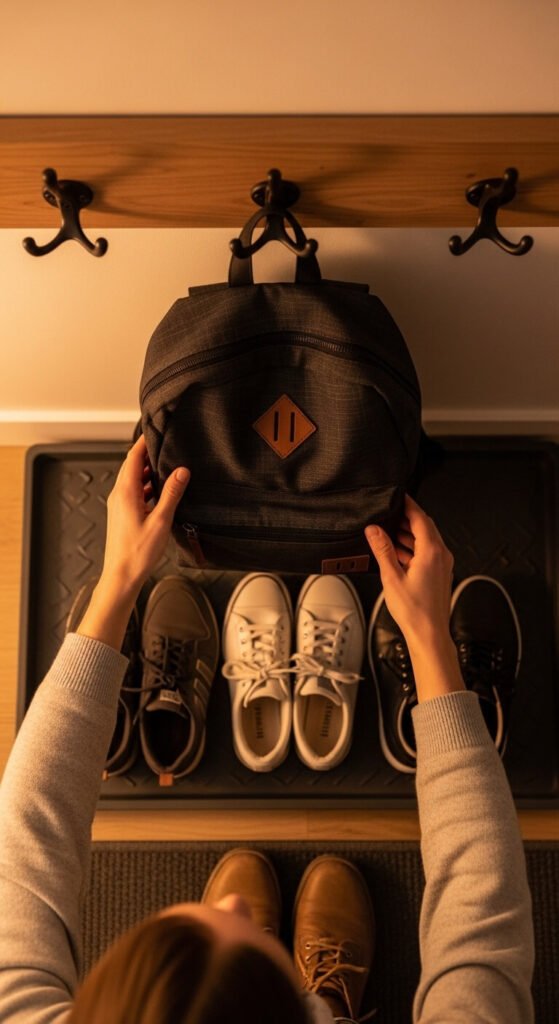
All these systems only work if you maintain them. Schedule a 5-minute entryway reset once a week — Sunday evening works well. Return stray items to their homes. Toss junk mail. Check what needs to go out. Refill any bins that have gotten low on supplies. This one habit prevents the slow creep of clutter that undoes every system you’ve put in place. Five minutes. Once a week. It’s worth it.
Conclusion
A functional entryway doesn’t require a big budget or a full renovation. It requires the right systems in the right spots — hooks at the right height, labeled bins, a clear spot for keys, and a plan for the daily drop-zone chaos. Start with two or three of these hacks this weekend. Once they become habits, add more. Your entryway is the first thing your family sees when they come home and the last thing they interact with on the way out. Making it work for your family makes every day run a little smoother — and that adds up fast.