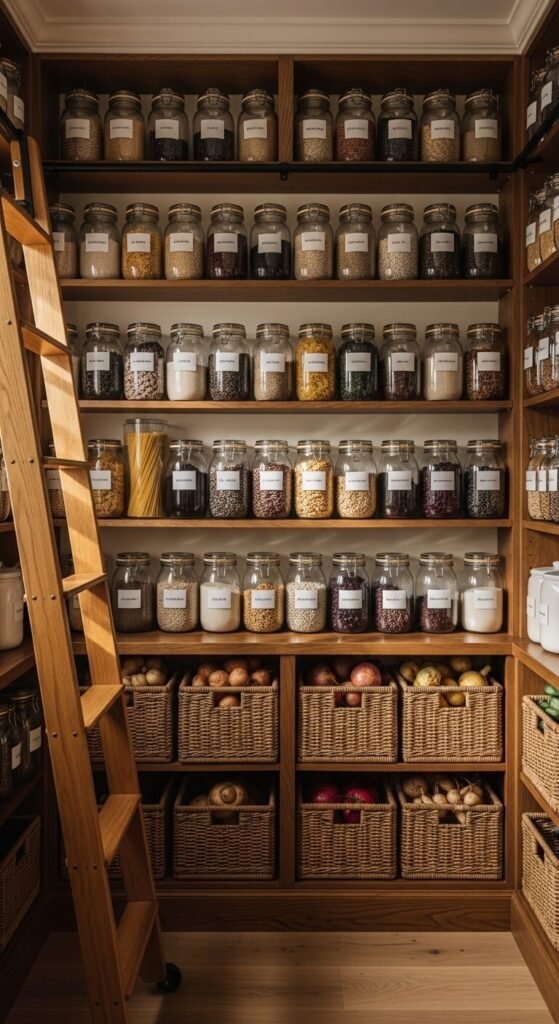
A chaotic pantry makes meal prep feel like a punishment. You open the door, things fall out, and suddenly you’ve lost 20 minutes searching for the lentils you know you bought. The good news? A few simple changes can turn your pantry into a system that actually works for you. Whether you have a walk-in closet or one sad shelf above the microwave, these 28 pantry organization ideas will help you spend less time hunting and more time cooking. No expensive renovations required.
1. Decant Dry Goods Into Clear Containers
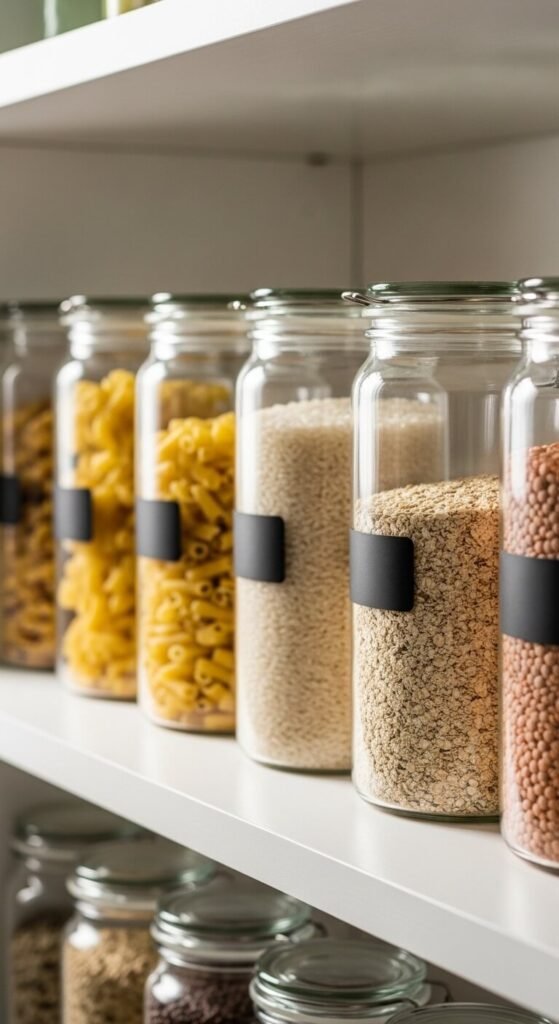
Stop storing things in half-open bags that spill everywhere. Clear containers let you see exactly what you have at a glance. You can grab a set of matching acrylic or glass canisters at dollar stores or thrift shops for almost nothing. Pour in your pasta, oats, rice, and flour. Add a simple label with masking tape and a marker. Everything stays fresher longer, and your shelf looks calm and intentional rather than cluttered and random.
2. Use a Lazy Susan for Deep Shelves
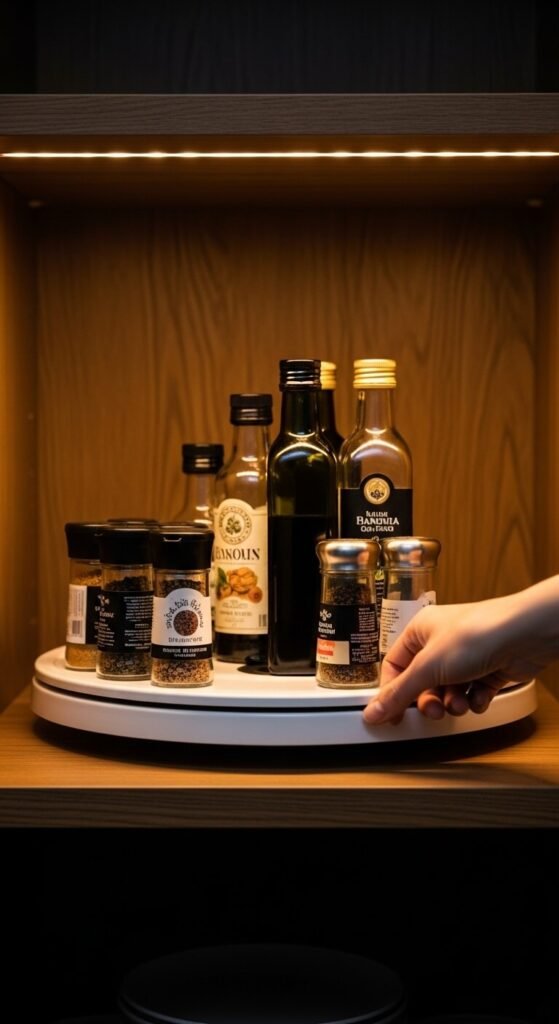
Deep shelves are where things go to die. That hot sauce from 2019? It’s back there somewhere. A lazy Susan turntable fixes this instantly. Spin it to reach anything without digging. They cost around $5–$15 at most home stores. Use one for oils and vinegars, another for canned goods, and a smaller one for spice jars. No more forgotten items hiding at the back of the shelf.
3. Label Everything—Even the Obvious Stuff
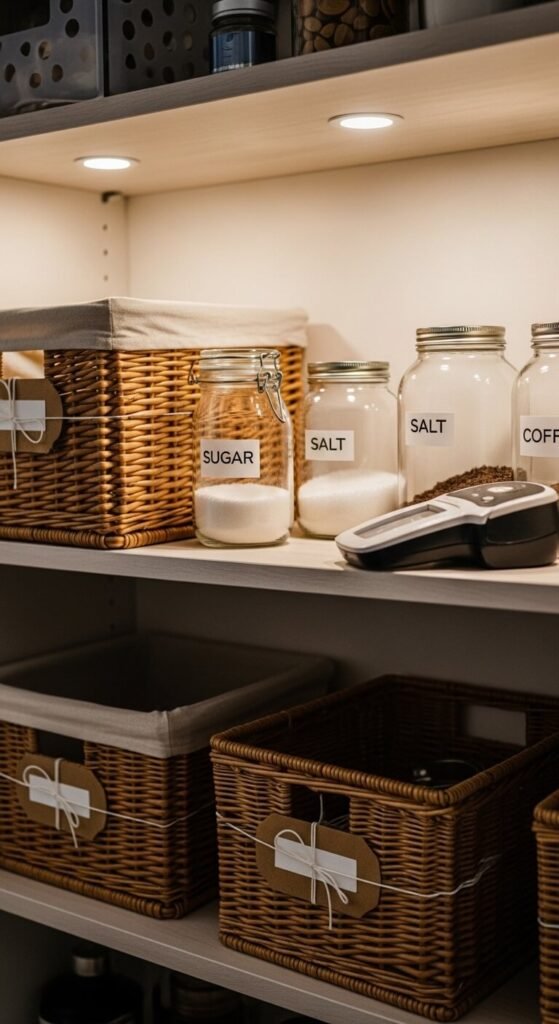
Labels aren’t just pretty—they’re functional. When your family knows where the oats live, they actually put them back. Label makers are affordable (under $20), but masking tape and a Sharpie work just as well. Label the shelf itself, not just the container. That way, even when the container is empty, everyone knows what goes there. It’s a small step that makes a big difference in keeping things tidy long-term.
4. Group Items by Meal Type
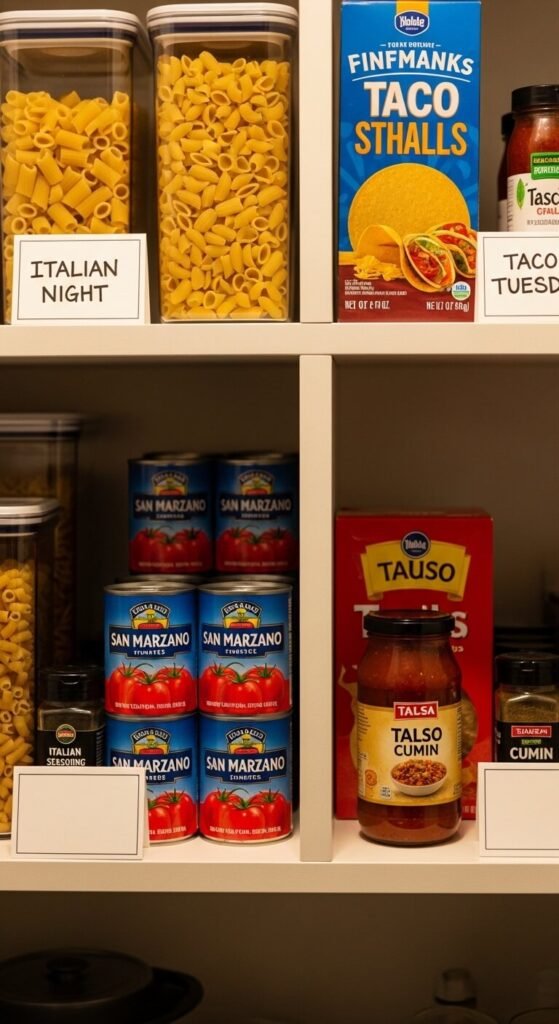
Instead of grouping by food type, try grouping by meal. Put all your pasta night supplies together—pasta, canned tomatoes, olive oil, parmesan. Keep taco supplies in one basket. Stir-fry ingredients in another. When it’s time to cook, you grab one zone instead of hunting across five shelves. This approach is especially helpful for busy weeknights when you need to move fast and think slow.
5. Add a Door-Mounted Organizer
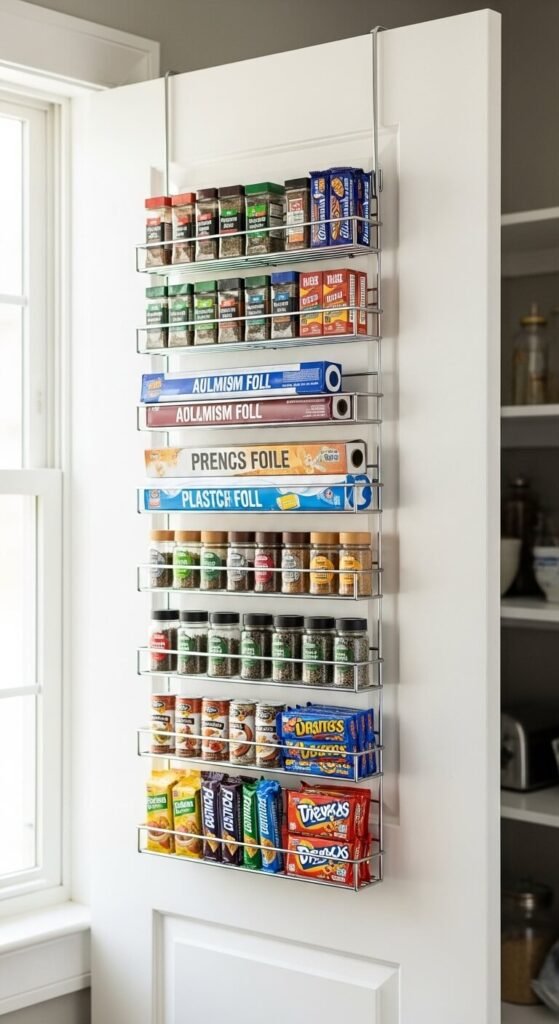
The inside of your pantry door is free real estate. An over-door organizer can hold spice packets, foil, plastic wrap, snack bars, or small jars. Most are under $15 and require zero tools to install. This one move can free up an entire shelf inside the pantry. Look for slim wire racks or pocket organizers designed for doors—they won’t add bulk when you close the door.
6. Store Snacks at Kid Height
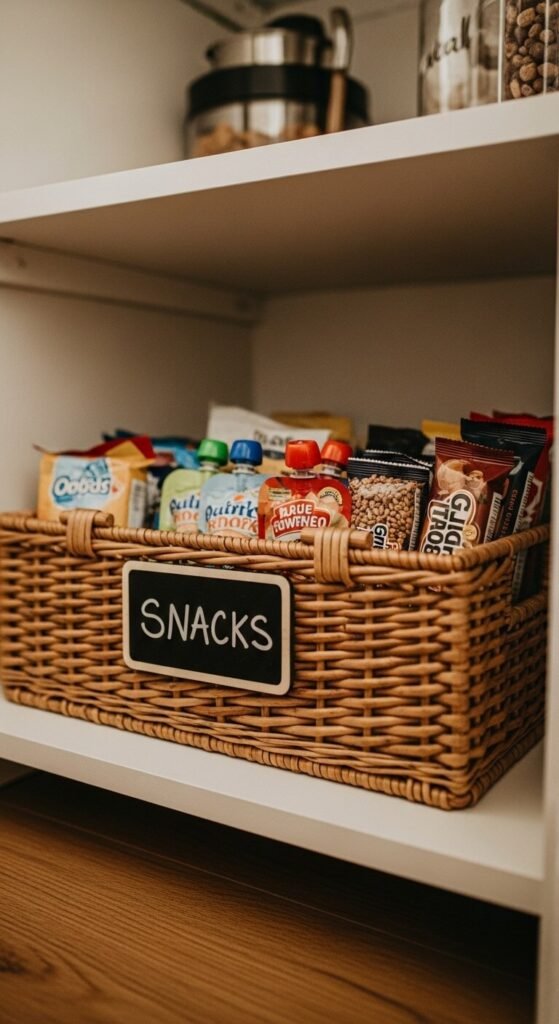
Put approved snacks where kids can actually reach them. A dedicated snack basket at child height means fewer interruptions while you cook and more independence for them. Use a basket or bin that’s easy to grab and put back. Fill it at the start of the week so kids know exactly what’s available. Bonus: it teaches portion awareness without a single lecture.
7. Use Stackable Bins for Canned Goods
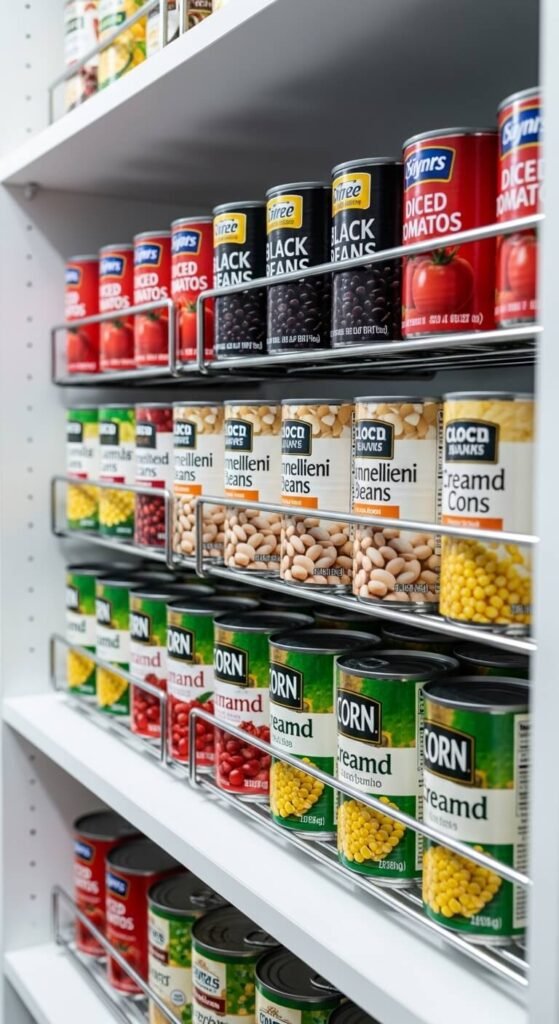
Cans stacked on top of each other are annoying and unstable. Stackable can organizers create a rolling display where the oldest cans move to the front. This is called first-in, first-out—the same method grocery stores use. You can find stackable can racks online for $10–$20. They make a huge difference on deep shelves where cans otherwise pile up in chaotic towers.
8. Designate a “Use First” Bin
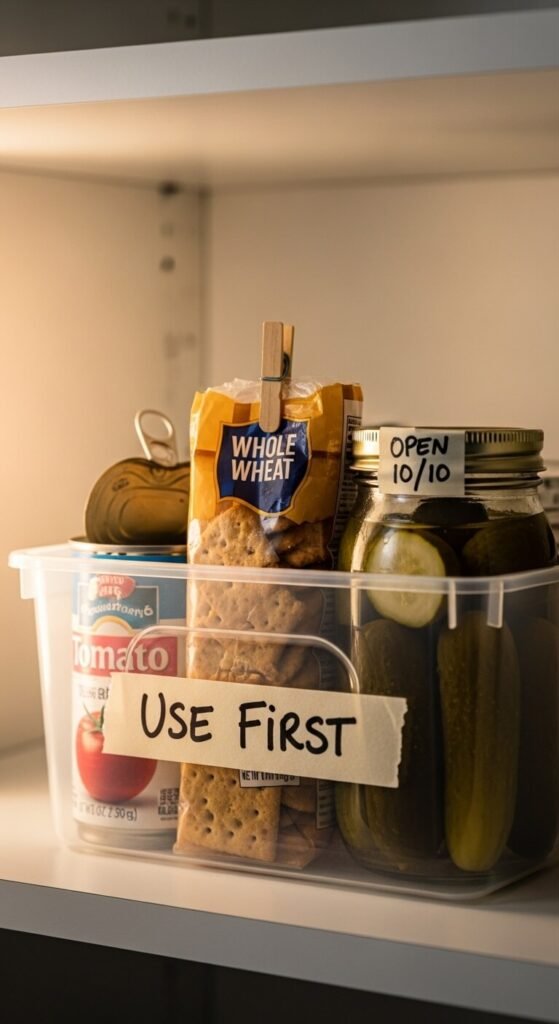
Food waste is expensive. A “Use First” bin is one of the simplest ways to fix it. Any item close to its expiration date or already opened goes straight into this bin. Before you meal plan or shop, check it. Build your meals around what’s there. You’ll waste less food and spend less money. The bin itself can be any container you already own—no new purchase required.
9. Install an Extra Shelf with Shelf Risers
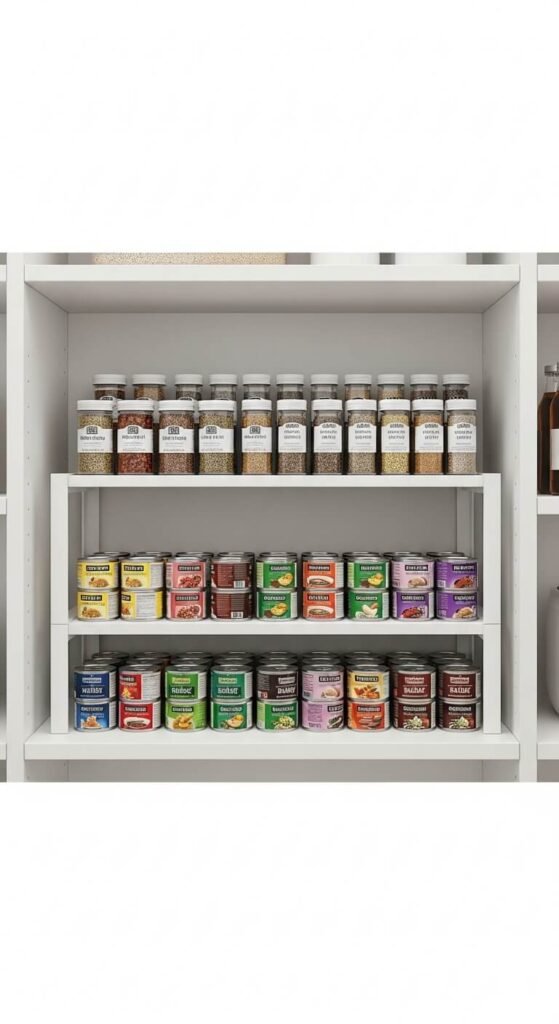
Most pantry shelves are spaced too far apart, wasting vertical space. Shelf risers double your storage capacity without any tools or drilling. Stack one inside your shelf to create a second level for spice jars, small cans, or sauce packets. They cost $5–$15 at most home stores. It’s one of the cheapest upgrades you can make and one of the most effective.
10. Keep a Running Grocery List on the Door
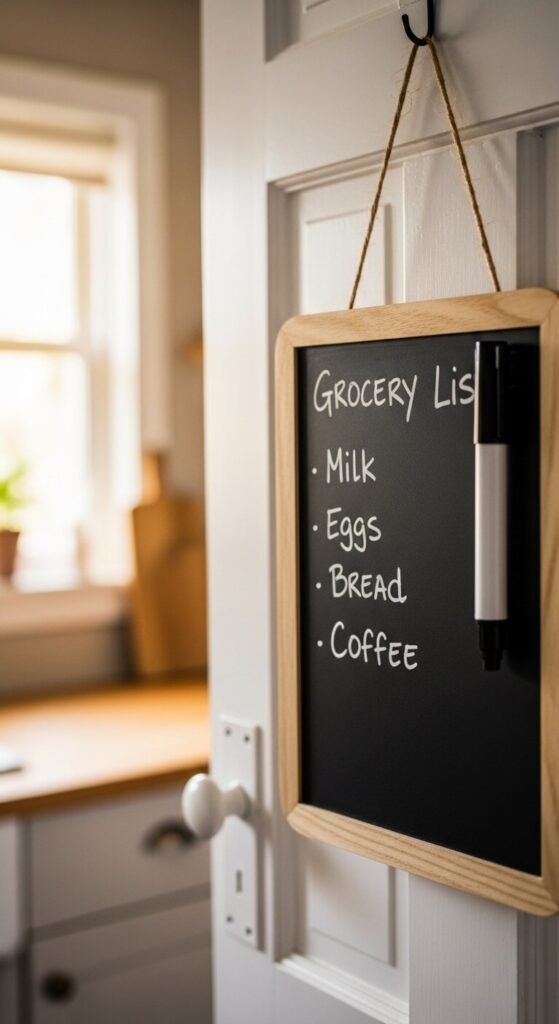
The moment you finish something, write it down. A small whiteboard or chalkboard on the pantry door makes this effortless. Everyone in the household can add to it. You’ll stop buying duplicates and stop forgetting essentials. Magnetic whiteboards are cheap and easy to stick inside the door. Or simply tape a notepad there and replace pages weekly. Simple, old-school, and genuinely effective.
11. Use Magazine Files for Boxed Items
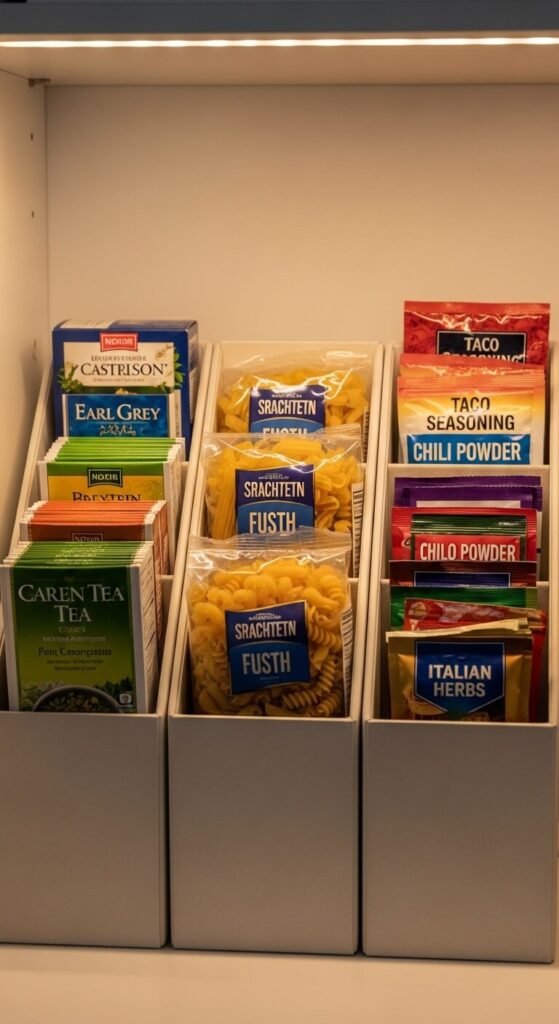
Boxes of pasta, tea bags, and seasoning packets never stand up right. They fall, they spill, and they make shelves look messy. Vertical magazine file holders fix this immediately. Stand boxes upright inside the files like books on a shelf. You can see and reach each item instantly. These are often under $2 each at dollar stores and can be labeled for different categories.
12. Create a Baking Station
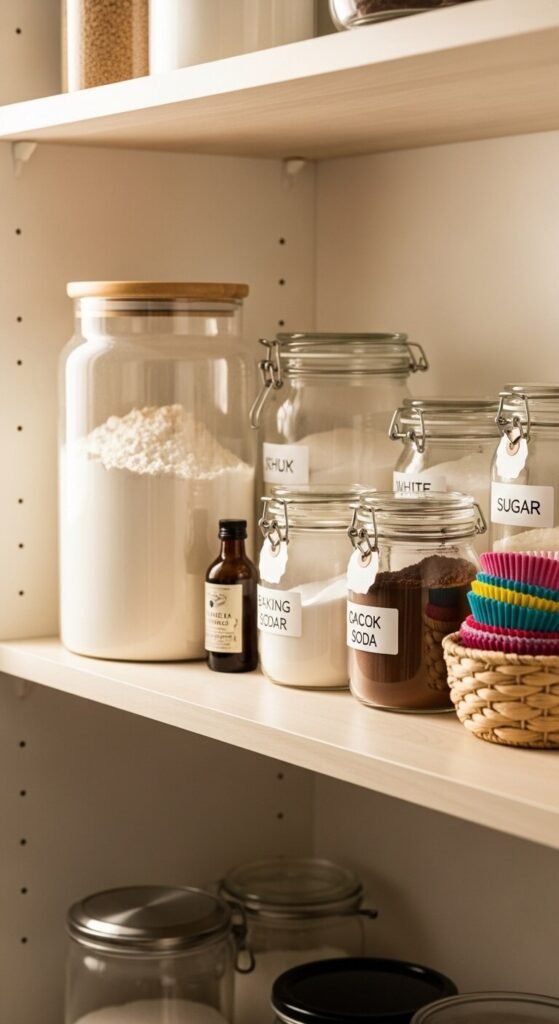
Group all your baking supplies together in one place. Flour, sugar, baking powder, vanilla, chocolate chips—all of it lives in one zone. When you’re ready to bake, you pull from one spot instead of searching three shelves. Use a tray or small bin to corral smaller items like sprinkles and liners. This setup is especially helpful around the holidays when baking frequency spikes.
13. Put Frequently Used Items at Eye Level
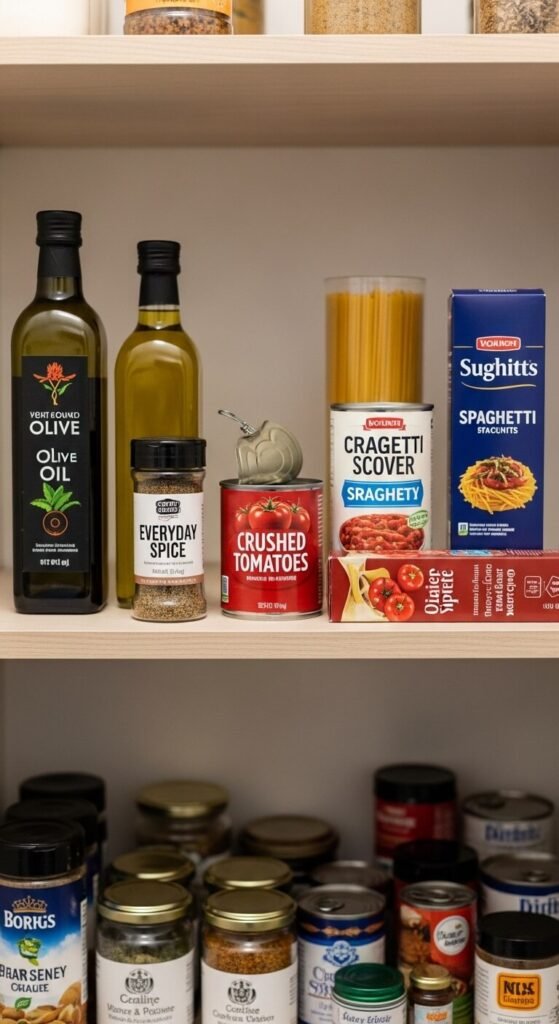
Organize your pantry like a grocery store. Items you use daily belong at eye level, front and center. Things you use less—specialty flours, holiday supplies, bulk backup items—go higher up or lower down. You’ll work faster when the essentials are always within reach. This sounds obvious, but most people don’t do it intentionally. Take 10 minutes to rethink your shelf layout by frequency of use.
14. Use Tension Rods to Create Dividers
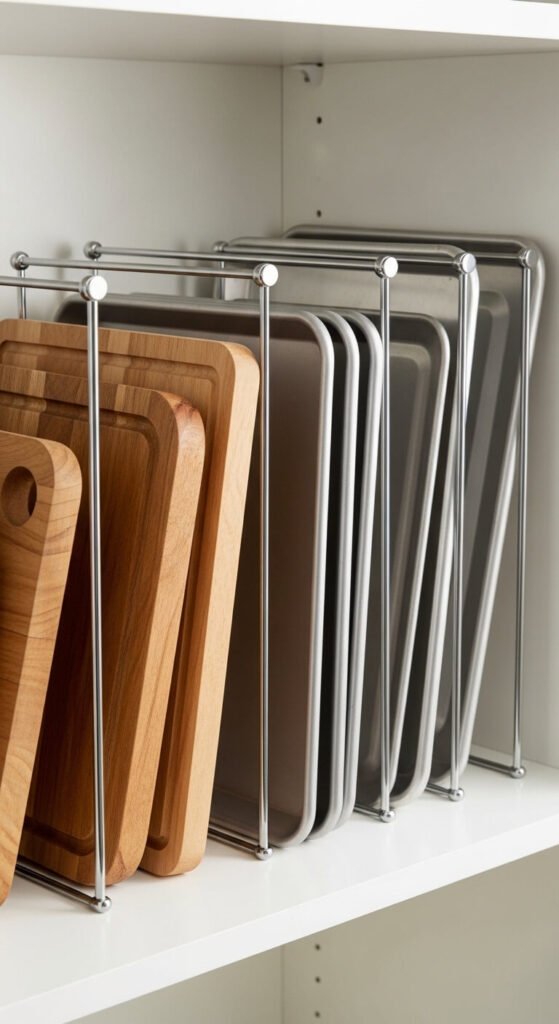
Tension rods aren’t just for curtains. Installed vertically on shelves, they create dividers that keep cutting boards, baking sheets, and pan lids standing upright instead of stacked in a messy pile. You can find tension rods for under $3 each. No tools needed. Adjust and reposition anytime. It’s a flexible, damage-free way to add structure to awkward shelf space.
15. Dedicate a Shelf to Meal Prep Containers
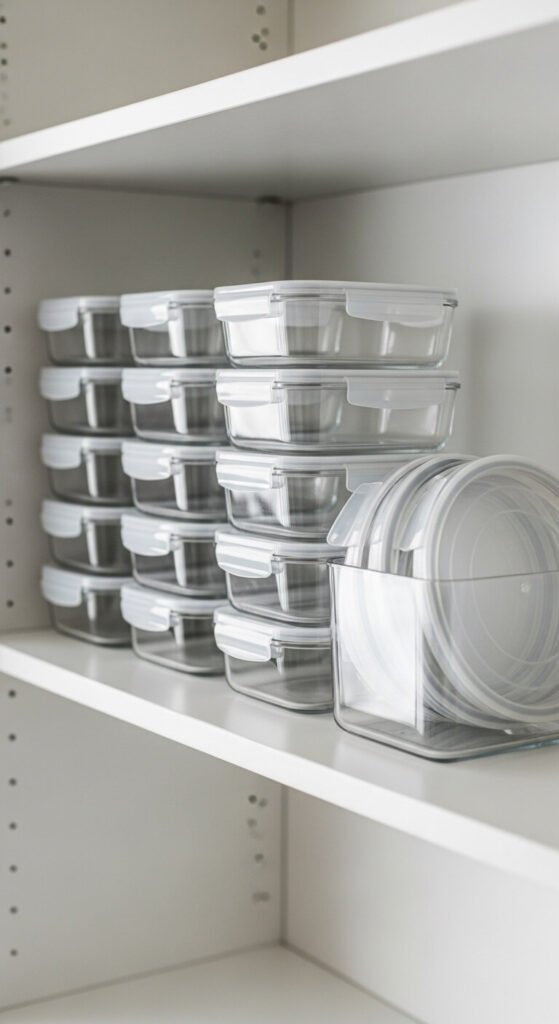
Meal prep containers belong in the pantry, not stuffed under the cabinet. Give them a dedicated shelf and stack lids separately in a small bin or file holder. Match containers to lids once a week and discard anything without a partner. When prep day comes, you reach for your containers without a rummage-fest. This small shift makes the habit of meal prepping feel less frustrating and far more sustainable.
16. Store Oils and Vinegars in One Tray
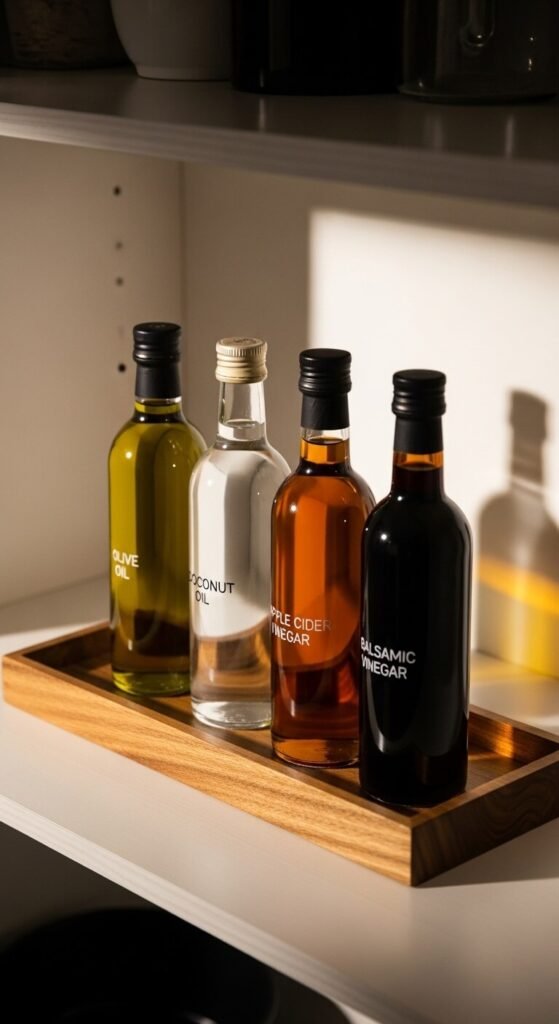
Bottles tip, drip, and take up more shelf space than they should. Corral them onto a small tray or cutting board. This contains drips, keeps everything in one spot, and makes it easy to pull the whole group off the shelf for cleaning. A tray you already own works perfectly. No need to buy something new. Keep only what you regularly use here and store extras elsewhere.
17. Use Clear Shoe Boxes for Small Packets
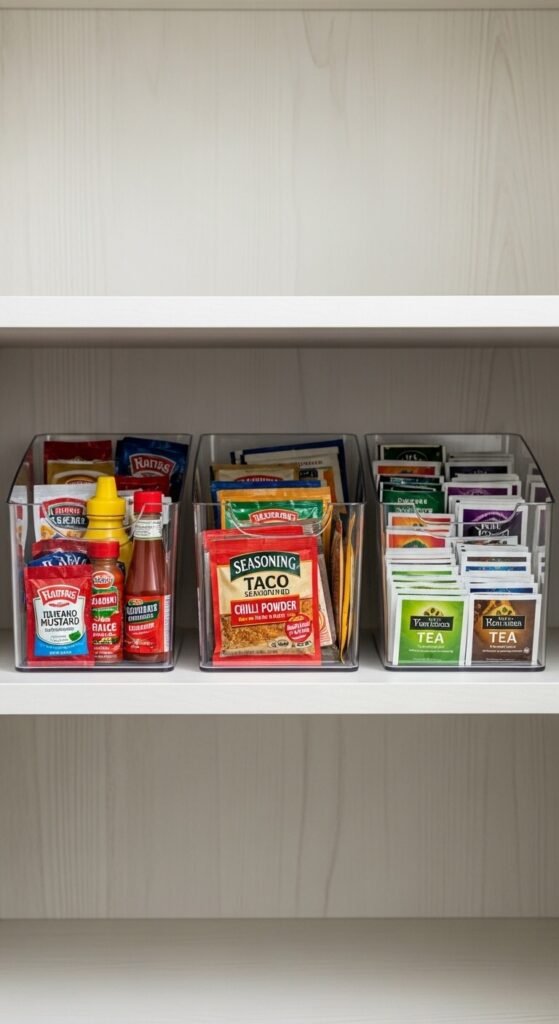
Sauce packets, seasoning envelopes, and tea bags are the hardest pantry items to contain. They slide, they scatter, they disappear. Clear plastic shoe boxes (often $1–$2 each) are perfect for corralling them. Sort by category—Asian sauces in one, taco seasonings in another, sweetener packets in a third. Snap the lid on and stack them. Problem solved, clutter gone.
18. Add a Small Chalkboard Inside the Pantry
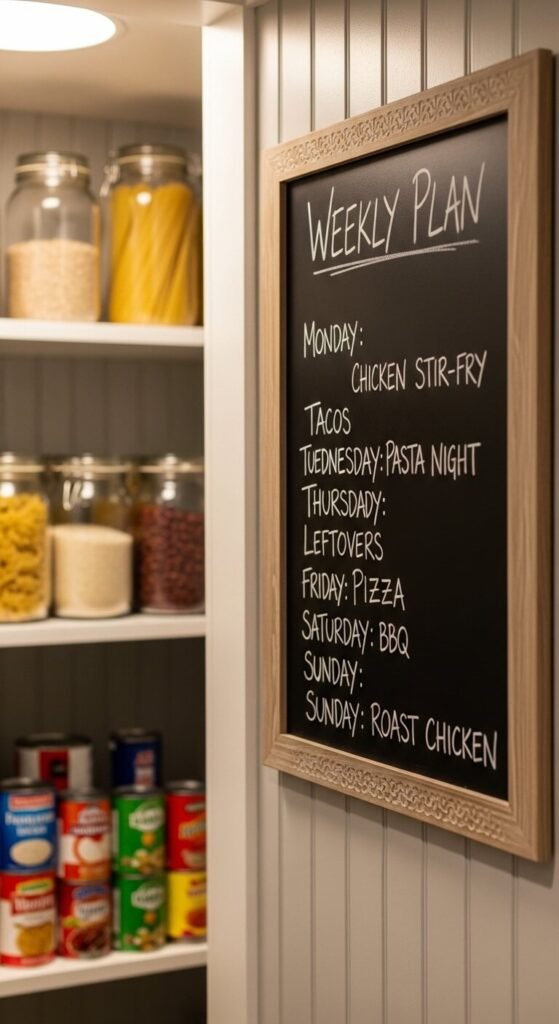
Use a small chalkboard to write your weekly meal plan right inside the pantry. Seeing Tuesday’s dinner is “lentil soup” reminds you to prep ahead and pull the right ingredients. You’ll cook with more intention and waste less. A chalkboard paint square on the wall costs almost nothing if you’re up for a DIY weekend project. Or stick up a small framed board—same result, no painting needed.
19. Hang a Pegboard on an Empty Wall
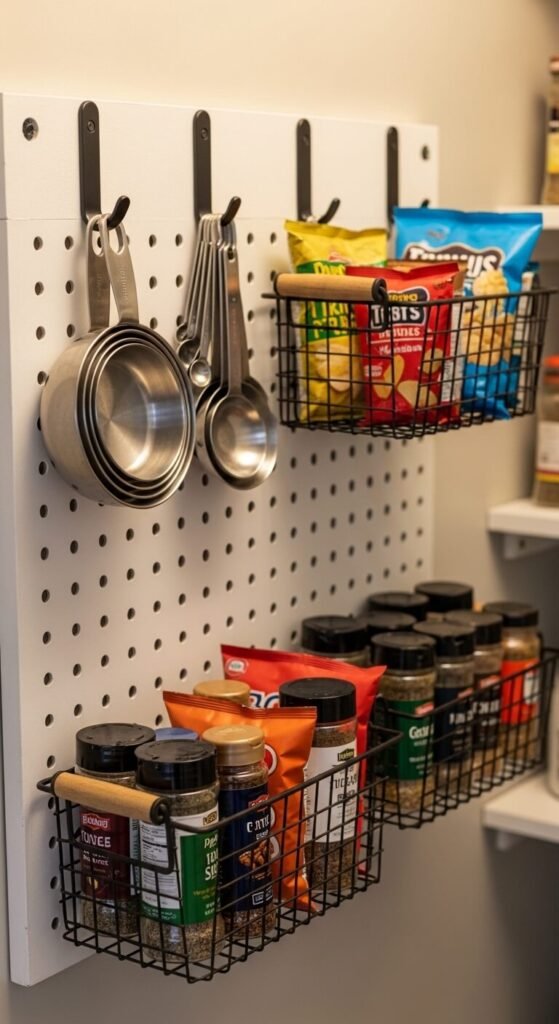
If you have any open wall space inside or near your pantry, a pegboard panel turns it into serious storage. Hang hooks for measuring cups and spoons, add small baskets for snacks, and clip on bins for spice packets. Pegboards are inexpensive, fully customizable, and can be rearranged anytime. Paint it to match your space and it looks intentional, not makeshift.
20. Store Bulk Items in the Garage or a Secondary Shelf
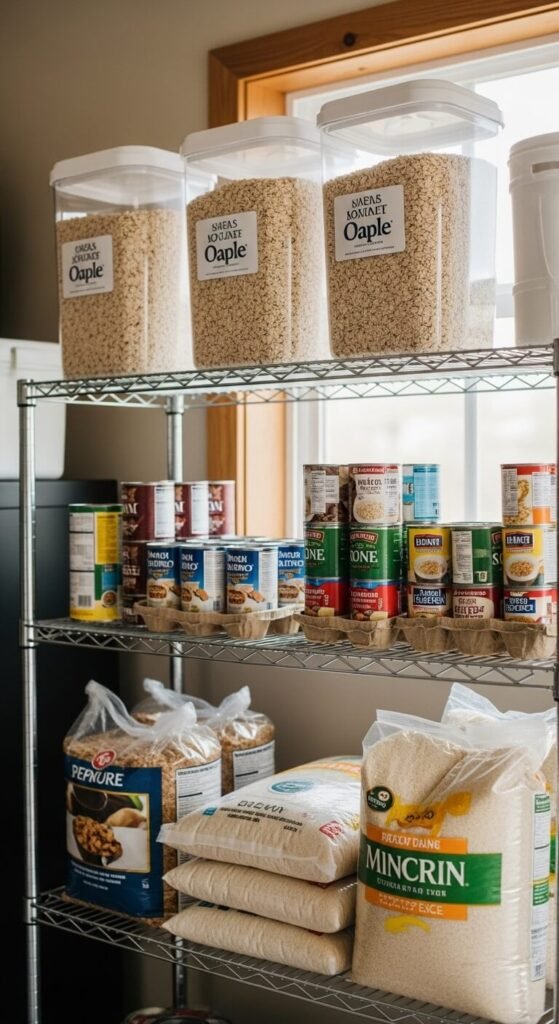
Bulk buying saves money, but it kills pantry organization when everything is in one place. Move backup and bulk items to a secondary location—a garage shelf, a hall closet, or under the stairs. Keep only your current supply in the main pantry. Label your overflow area just like your pantry so you know exactly what needs to be restocked and when.
21. Try a Clip-and-Hang System for Bags
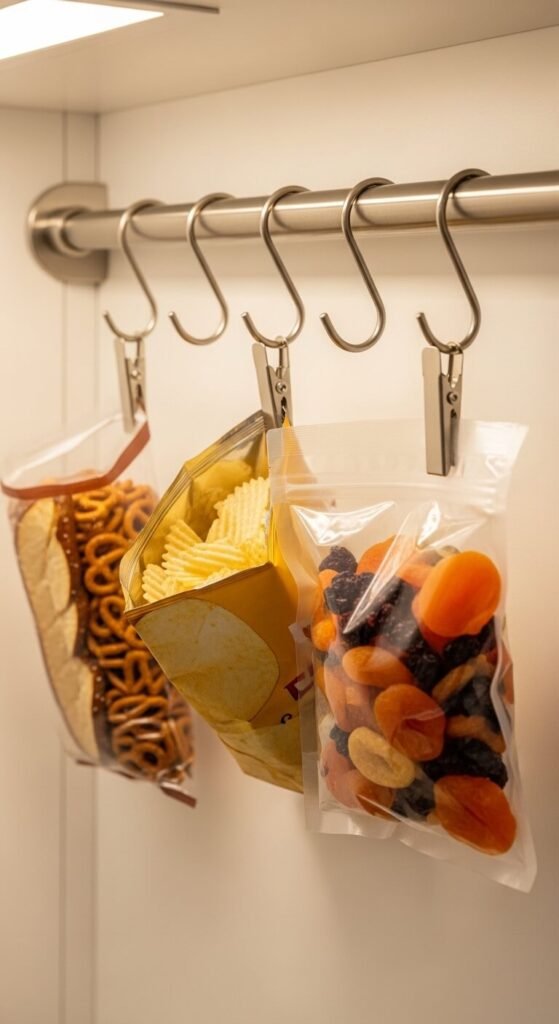
Open bags of chips, pretzels, and dried fruit take up disproportionate shelf space and go stale fast. Binder clips and S-hooks let you hang them off a rail or shelf edge instead. Clip the bag shut, hook it up, and reclaim that shelf space. Install a simple metal rail (like a towel bar) on the wall or inside a cabinet door for a clean, low-cost hanging system.
22. Keep a Protein Station Together
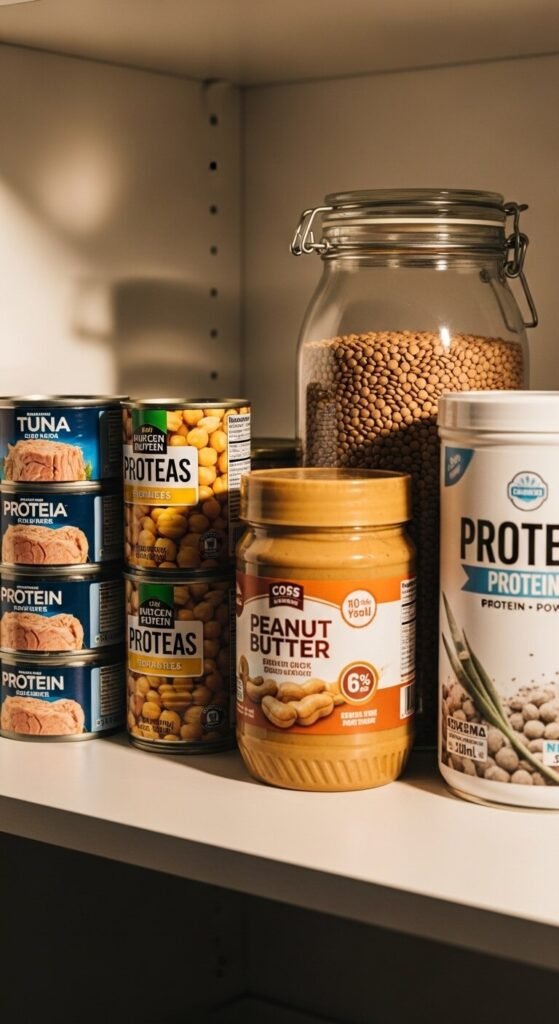
Group all your protein staples in one place. Canned fish, nut butters, dried lentils, beans, canned chickpeas—put them together. When you’re building a quick meal, you go straight to the protein zone and make a choice without scanning the whole pantry. This also helps you spot when you’re running low on a category so you can restock intentionally.
23. Use a Tension Rod Under Shelves for Spray Bottles
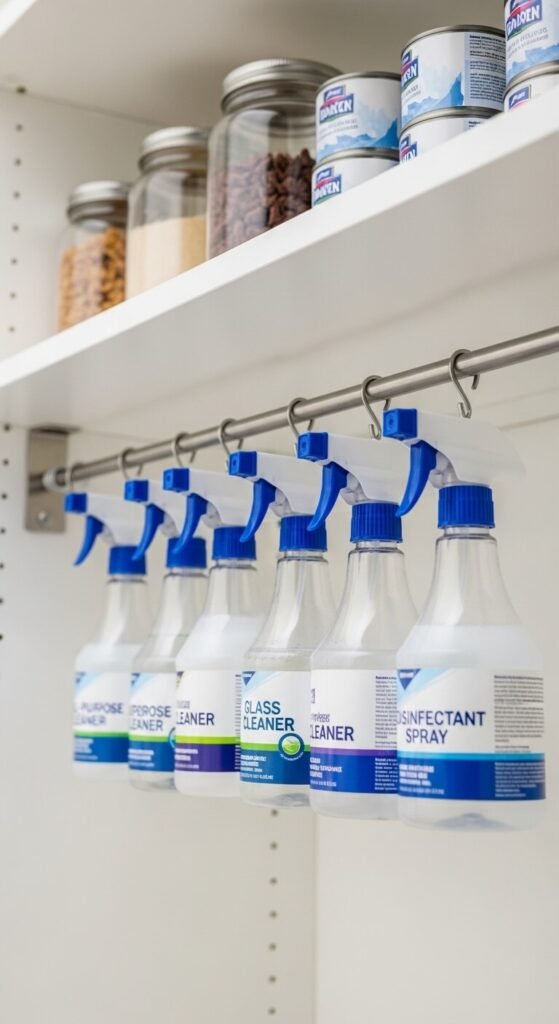
If you store any pantry-adjacent cleaning sprays, hang them under a shelf using a tension rod. Hook the trigger handles over the rod. This keeps bottles off the shelf surface entirely and frees up that square footage for food items. It’s a quick five-minute install that costs almost nothing and looks far more organized than bottles shoved on a shelf corner.
24. Create a “Kids Cook” Shelf
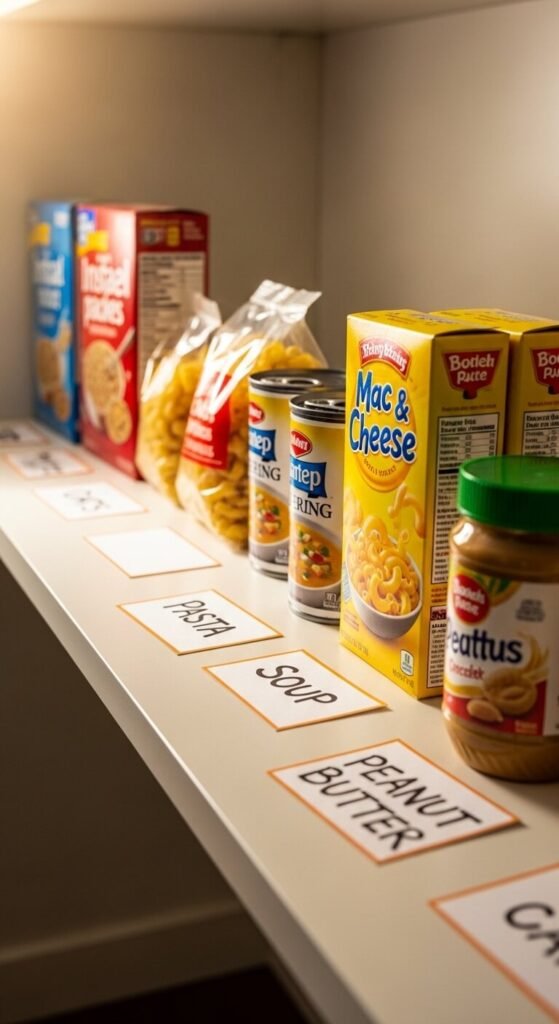
Give older kids their own cooking shelf stocked with things they can prepare independently. Instant oatmeal, mac and cheese, canned soup, pasta—whatever fits their skill level. Label it clearly. This encourages self-sufficiency, reduces your workload, and teaches kitchen confidence. Keep it restocked weekly so they always have options. It also cuts down on “there’s nothing to eat” comments significantly.
25. Line Shelves with Easy-Clean Liners
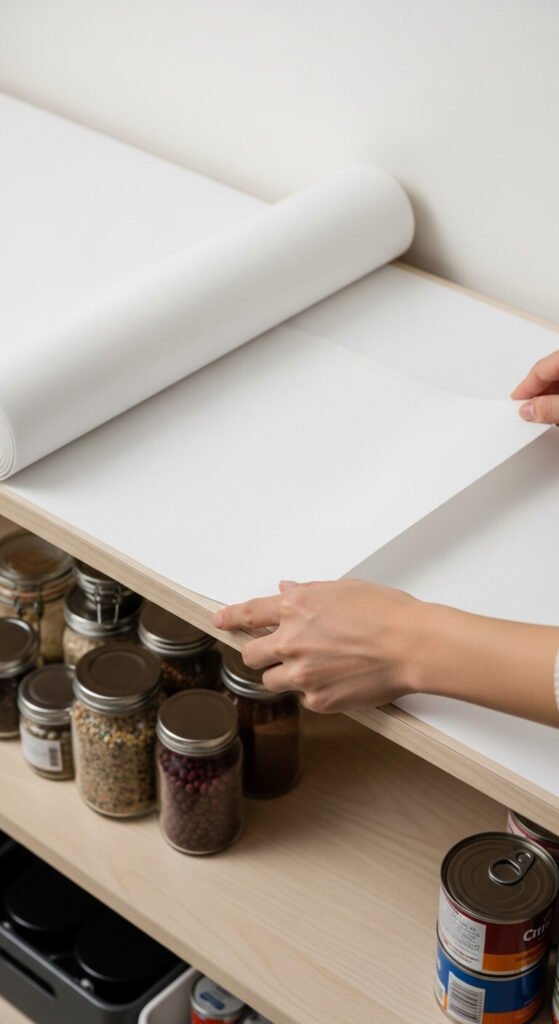
Pantry shelves get dusty and sticky faster than you’d expect. Washable shelf liners protect surfaces and make cleanup a wipe-away job. Look for non-adhesive foam or vinyl liners that don’t leave residue. They’re under $10 for a large roll. Cut to size, lay them down, and replace every year or when they get worn. It’s an easy step that extends the life of your shelves.
26. Store Onions and Garlic in a Ventilated Basket
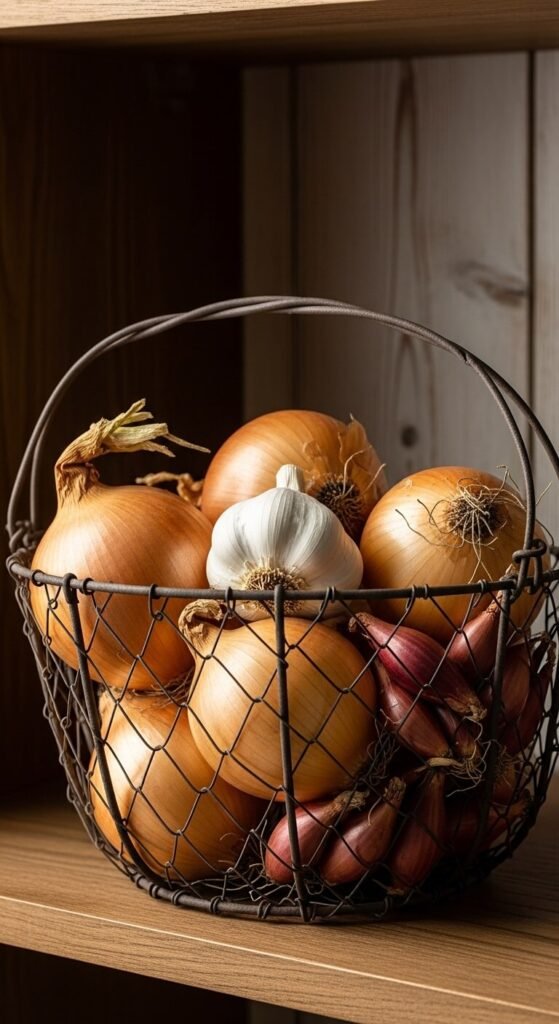
Onions and garlic need air circulation to stay fresh. Don’t store them in bags or closed containers—they’ll rot faster. A ventilated basket (wicker, wire, or mesh) on a low pantry shelf is perfect. Keep them away from potatoes, which emit gases that can cause each other to spoil faster. A small $5 basket lasts for years and saves you from replacing produce every week.
27. Label Shelf Zones, Not Just Containers
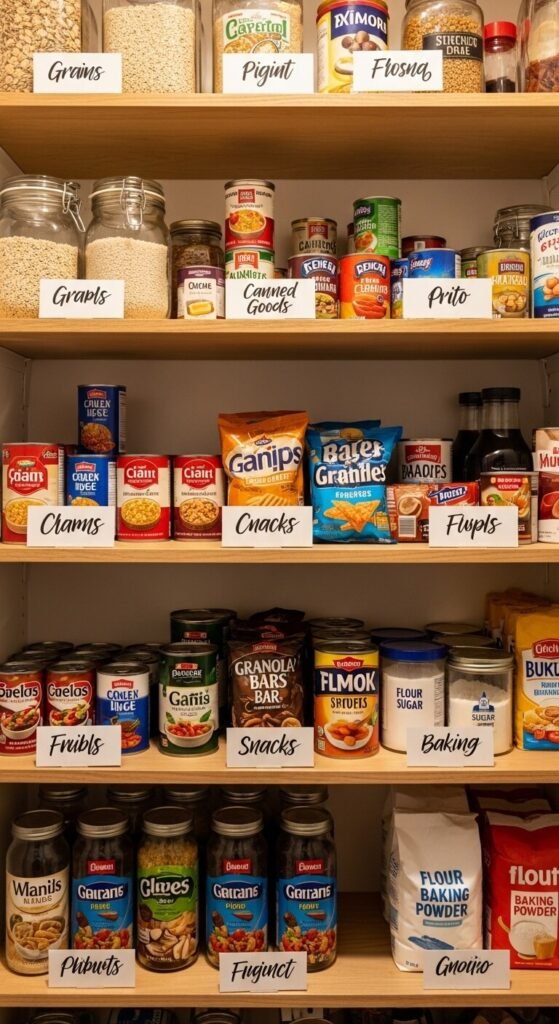
Labels on containers are great. Labels on the shelves themselves are even better. When a shelf has a designated zone marked—Grains, Baking, Canned Goods, Snacks—things go back where they belong even after a chaotic week. Use adhesive label strips, masking tape, or small printed cards slid into a rail. This system works especially well for households with multiple people using the same pantry.
28. Do a 15-Minute Weekly Reset
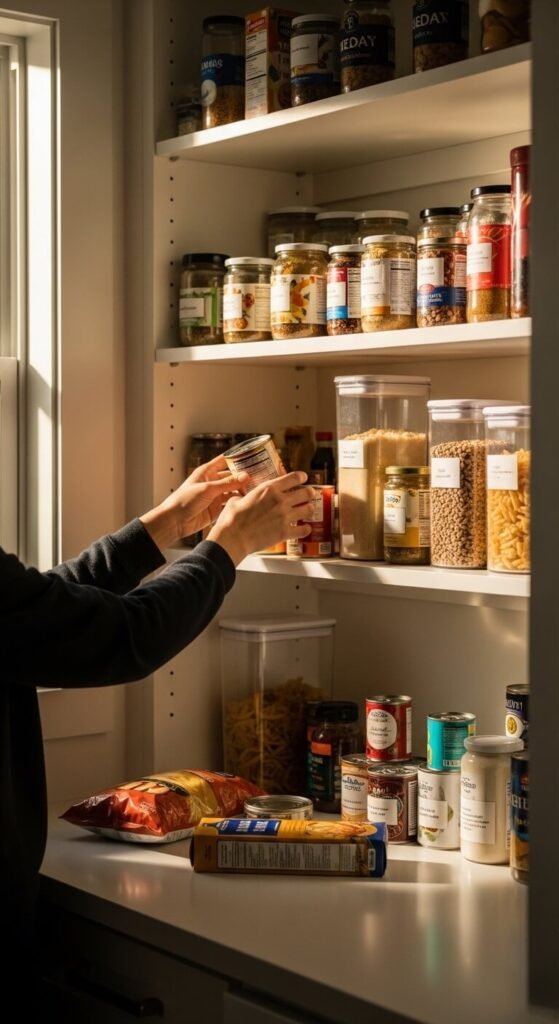
Organization isn’t a one-time event. It’s a weekly habit. Set a 15-minute timer once a week—Sunday evenings work well—and reset the pantry. Return misplaced items, pull anything close to expiration into the “Use First” bin, wipe down a shelf, and update the grocery list. This short ritual keeps your system working without a monthly overhaul. Small, consistent effort beats big, stressful purges every time.
Conclusion
A well-organized pantry doesn’t happen by accident—but it also doesn’t require a renovation budget or a weekend project. The ideas here are practical, affordable, and easy to start today. Pick two or three that make the most sense for your space and your household’s habits. Put them in place this week. Once you feel the difference—meal prep moving faster, less waste, less frustration—you’ll naturally want to keep building on it. Your pantry should work for you, not against you. Start small, stay consistent, and the results will follow.