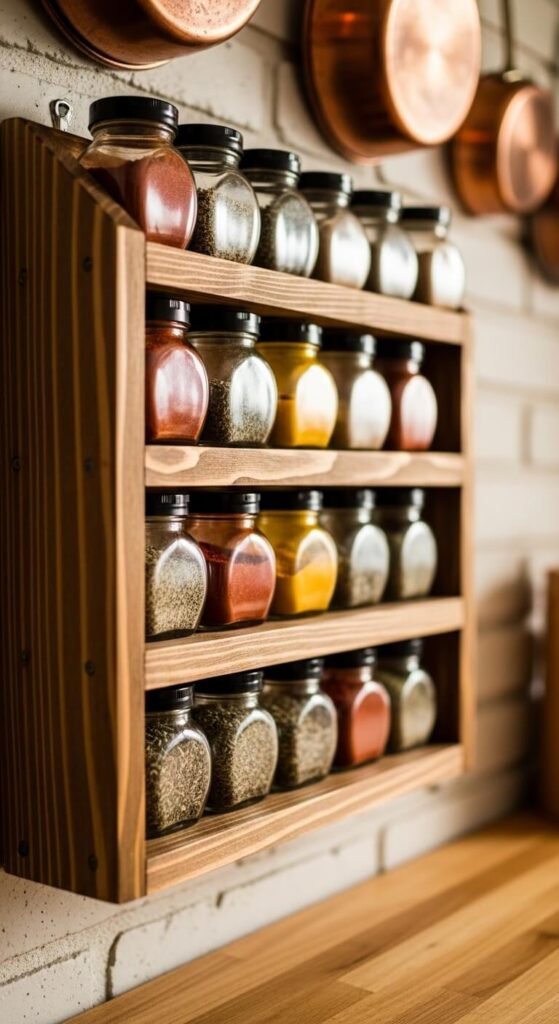
Your kitchen deserves better than a chaotic cabinet stuffed with tumbling spice jars. A well-built spice rack changes everything — it saves time, cuts frustration, and makes cooking feel enjoyable instead of stressful. The good news? You don’t need carpentry skills or a big budget to build one. Most of these projects cost under $30 and take a single afternoon. Whether you rent a small apartment or own a sprawling kitchen, there’s a DIY spice rack idea here that fits your space, your style, and your Saturday schedule.
1. Magnetic Tin Spice Rack on the Fridge
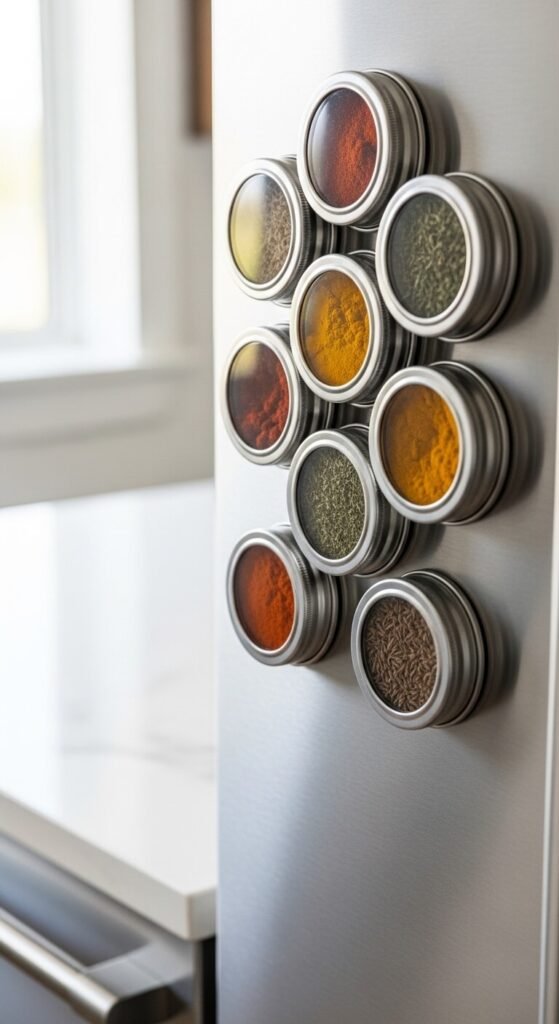
This is one of the easiest builds you’ll ever do. Magnetic tins (around $10–$15 for a set of 24) stick directly to the fridge. Fill each one, label the lids with a chalk marker, and you’re done. The side of most fridges is completely wasted space — this fixes that. It works great in small kitchens where counter and cabinet room is tight. Bonus: the tins are easy to pull off, use, and put back with one hand.
2. Pegboard Spice Wall Organizer
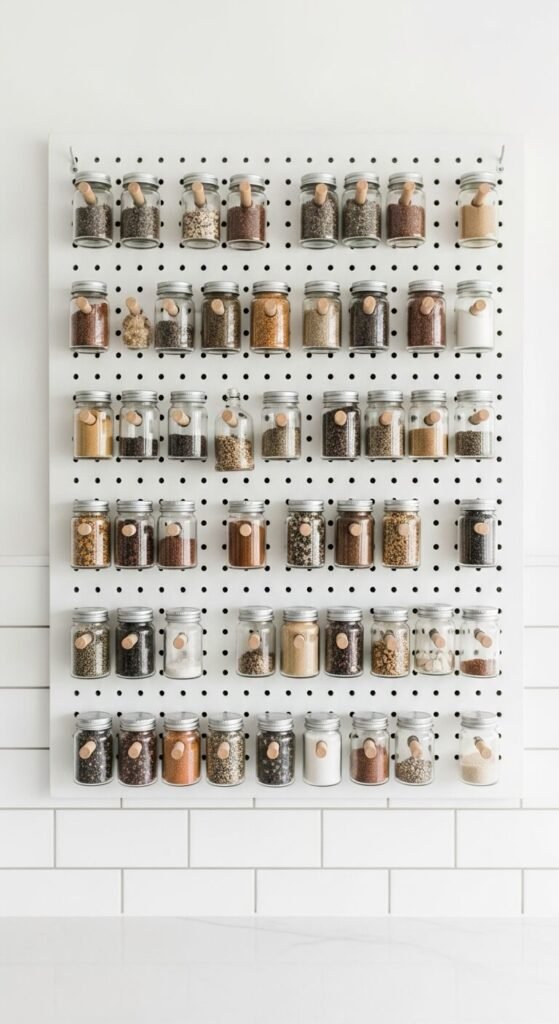
Pegboard is a DIY superstar. A 2×4 sheet costs around $15 at any hardware store. Paint it any color, mount it to the wall, and add small hooks or wire baskets to hold jars. You can rearrange it anytime — no tools needed after the initial install. Pegboard adapters made for spice jars are sold on Amazon for just a few dollars. This setup grows with your spice collection without requiring a single extra hole in the wall.
3. Floating Shelf Spice Display
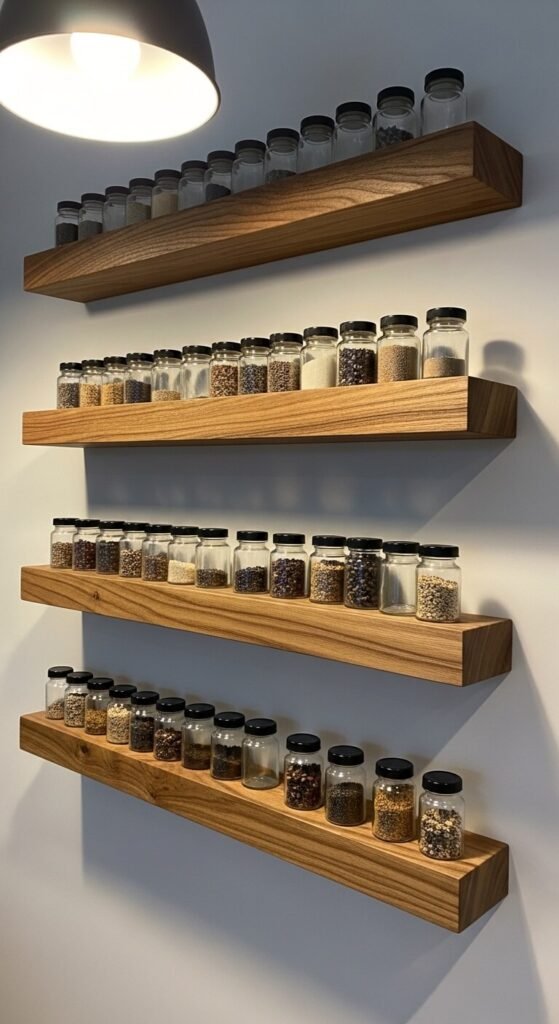
Floating shelves look like they belong in a magazine. They’re also surprisingly simple to install. Pick up pre-made pine shelves at a home improvement store — usually $8–$15 each. Mount two or three rows above your stove or prep area. Keep jars uniform in size for a clean look. Square glass jars with gold lids are a popular and affordable choice. This works especially well if you already have open shelving in your kitchen.
4. Repurposed Wooden Pallet Rack
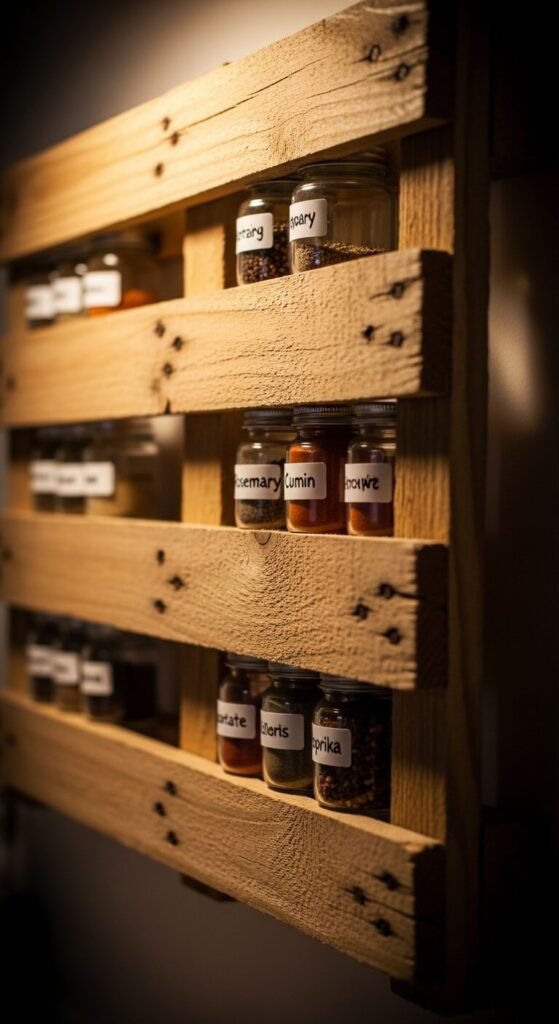
Free pallets are everywhere — check Facebook Marketplace, Craigslist, or behind local stores. Sand one down, seal it with a food-safe wood finish, and mount it flat on the wall. The natural slats between boards act as ready-made shelves for small jars. This project costs almost nothing if you source the pallet for free. Add a coat of paint or stain to match your kitchen. It’s a great weekend project that looks like it cost $200.
5. Over-the-Door Spice Organizer
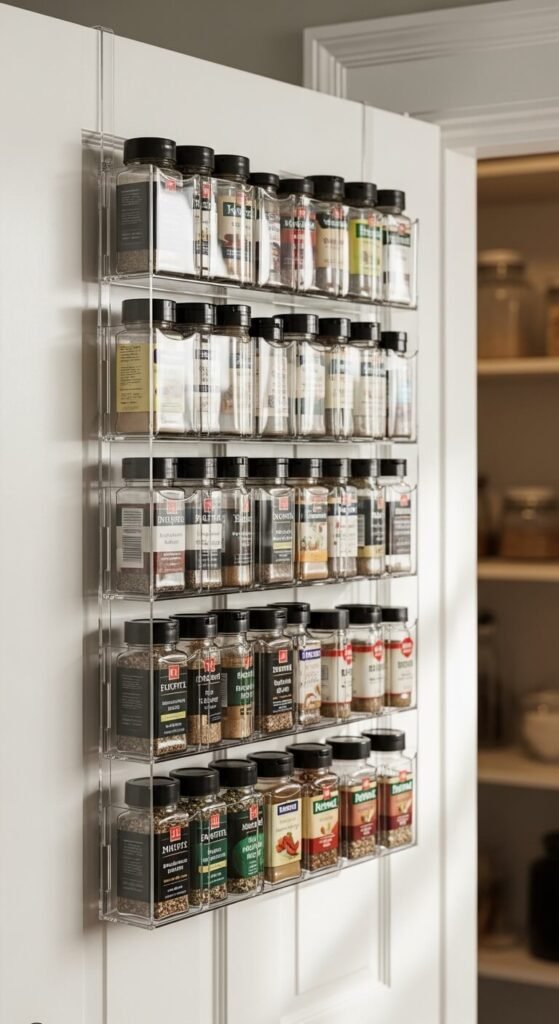
The inside of cabinet and pantry doors is prime real estate. An over-the-door organizer with clear pockets or wire shelves costs $10–$20 and requires zero tools to install. It hooks right over the door edge. You can fit 20–30 jars with no wall damage — perfect for renters. Clear pockets make it easy to spot what you need at a glance. This is a fast, functional fix that takes about five minutes to set up.
6. Tension Rod Spice Shelf Under Cabinets
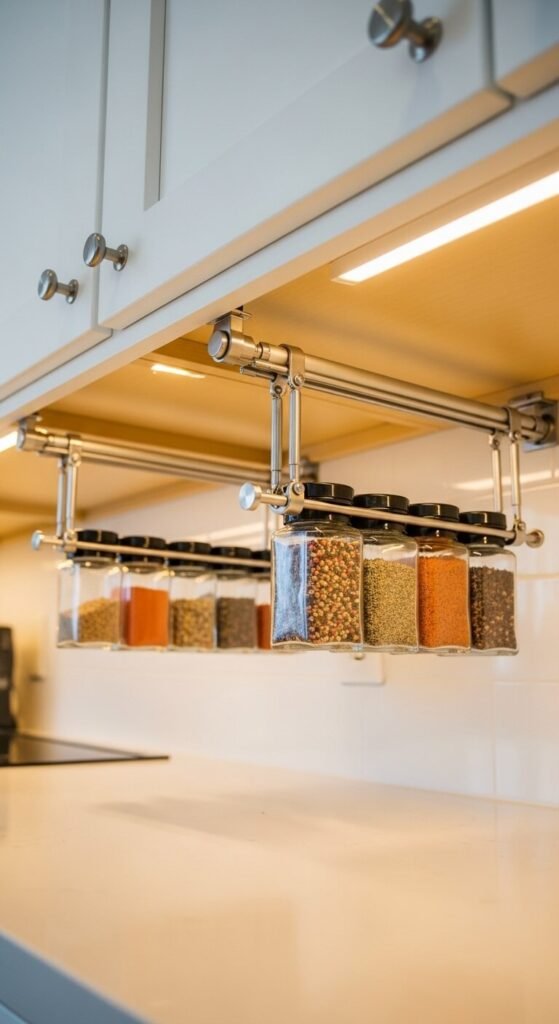
Here’s a clever trick most people don’t know. Tension rods placed side by side under upper cabinets create an instant horizontal spice shelf. Place two rods parallel, about two inches apart, and slide small spice bottles between them so they rest label-side down. You can see every label without pulling anything out. Tension rods cost $3–$5 each at dollar stores. This uses completely dead space and takes two minutes to install.
7. Tiered Lazy Susan Spice Turntable
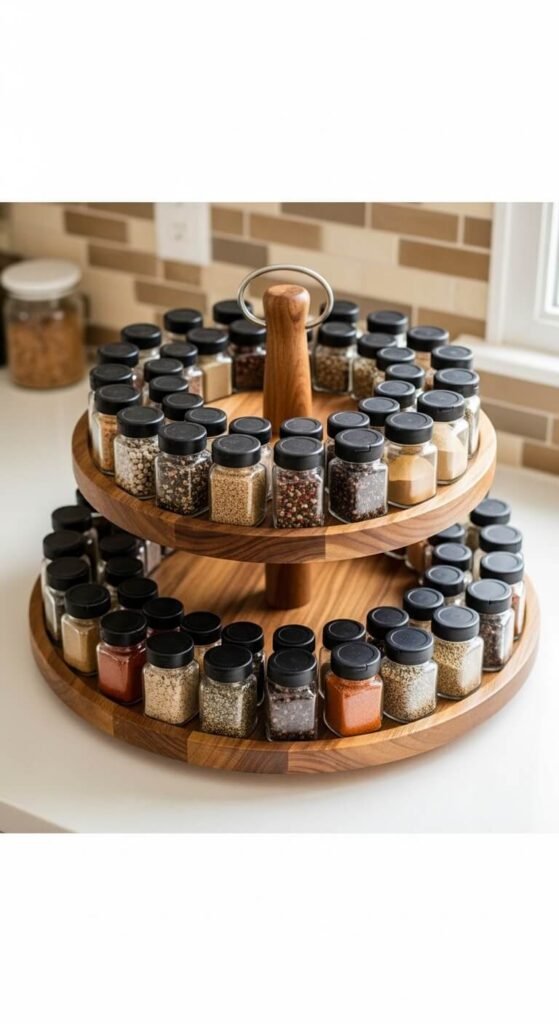
A lazy Susan transforms a corner cabinet or countertop into a fully functional spice station. The spinning base means you never have to move jars to find what’s in the back. Two-tiered versions hold 30+ jars easily. You can buy one for $15–$25, or build your own with two plywood circles and a cheap turntable mechanism from a hardware store. Sand, stain, and done. This is one of the most practical setups for everyday cooks.
8. Mason Jar Wall-Mounted Spice Rack
[Image Prompt: Four small mason jars mounted on a rustic wooden board screwed to a farmhouse kitchen wall, each jar holding colorful dried spices, photographed in warm afternoon window light, visible wood screws and pipe clamps holding jars in place, shallow depth of field, DSLR editorial quality.]
Mason jars and metal pipe clamps make an iconic farmhouse-style rack. Attach pipe clamps to a stained wood board, screw jars into the clamps, and mount the whole thing on the wall. Each jar unscrews for easy refilling. Total cost is usually $20–$30 for a board that holds 6–10 jars. This style pairs well with shiplap walls or subway tile backsplashes. It’s one of the most pinned spice rack designs online — for good reason.
9. Chalkboard-Painted Tin Can Rack
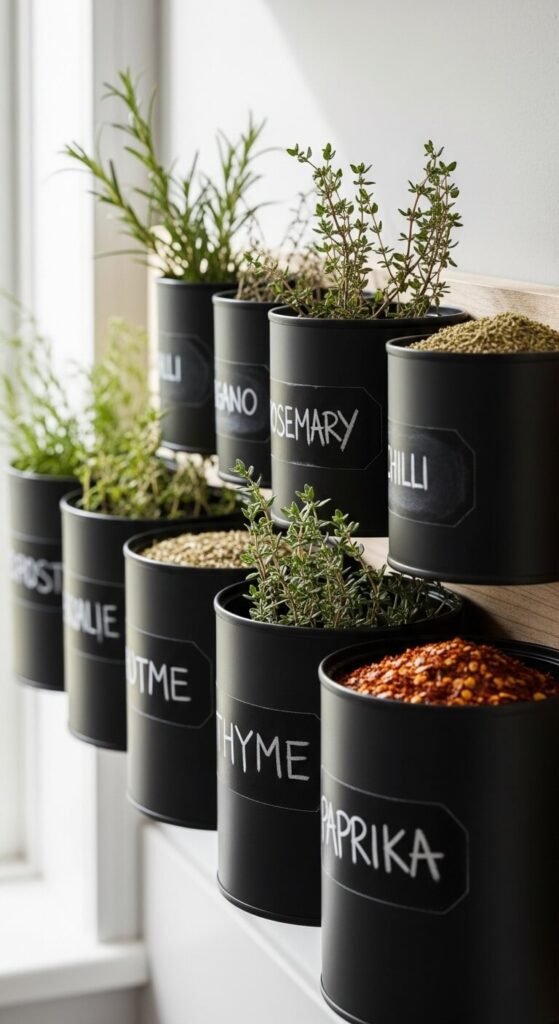
Save your tin cans instead of recycling them. Clean them, spray them with chalkboard paint, write the spice name with chalk, and mount them on a piece of wood with screws through the back. This project costs practically nothing if you already have cans. It also looks intentional and stylish — not like a budget hack. Update labels anytime the contents change. Great for ground spices, dried herbs, and even salt and pepper.
10. Copper Pipe Pull-Out Spice Shelf
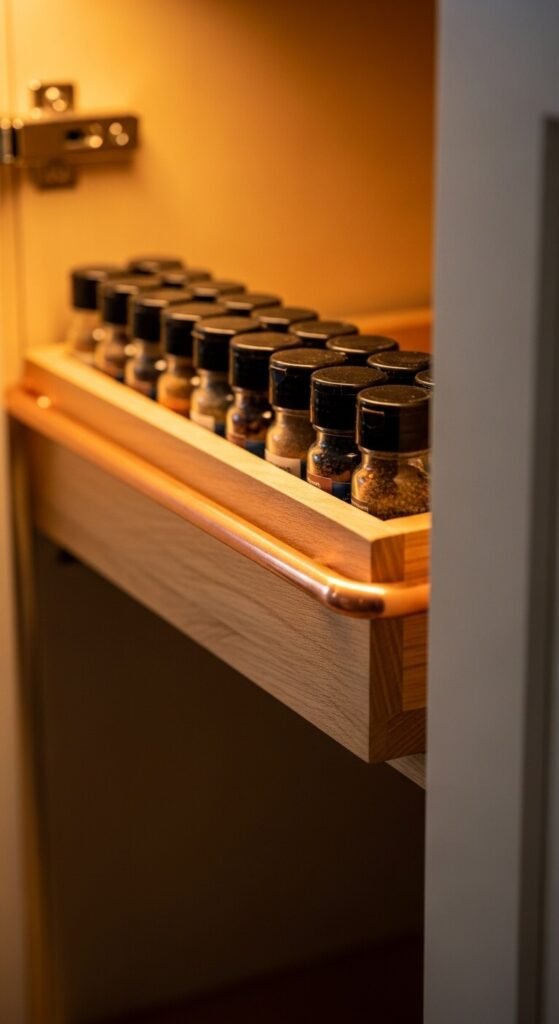
A narrow pull-out shelf hidden between cabinets is one of the slickest storage solutions in a small kitchen. Build a simple wooden slide from 1×4 pine boards and add a copper pipe along the front edge as a rail to keep bottles from falling. You can buy premade pull-out inserts online for $25–$40, or build your own for less. This type of rack is invisible when closed, maximizes narrow gaps, and keeps everything within reach.
11. Hanging Test Tube Spice Rack
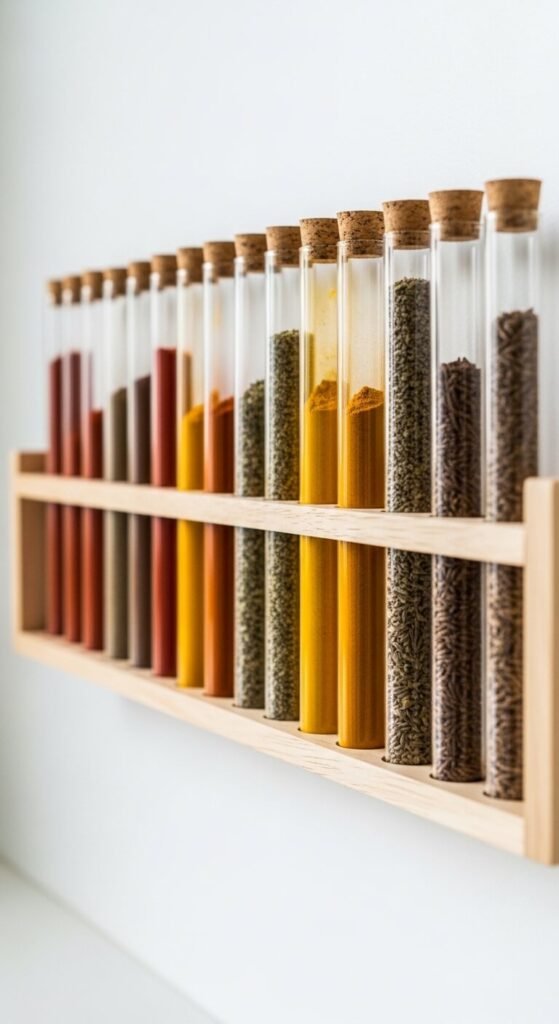
This one always gets compliments. A test tube spice rack uses glass tubes with cork stoppers to display spices in a modern, almost scientific way. Kits are available online for $20–$35, or you can buy tubes and build a wood holder yourself. They’re great for small quantities of specialty spices you don’t use daily. The transparent glass shows off colors beautifully — turmeric gold, paprika red, and poppy seed black look stunning in a row.
12. Drawer Insert Spice Organizer
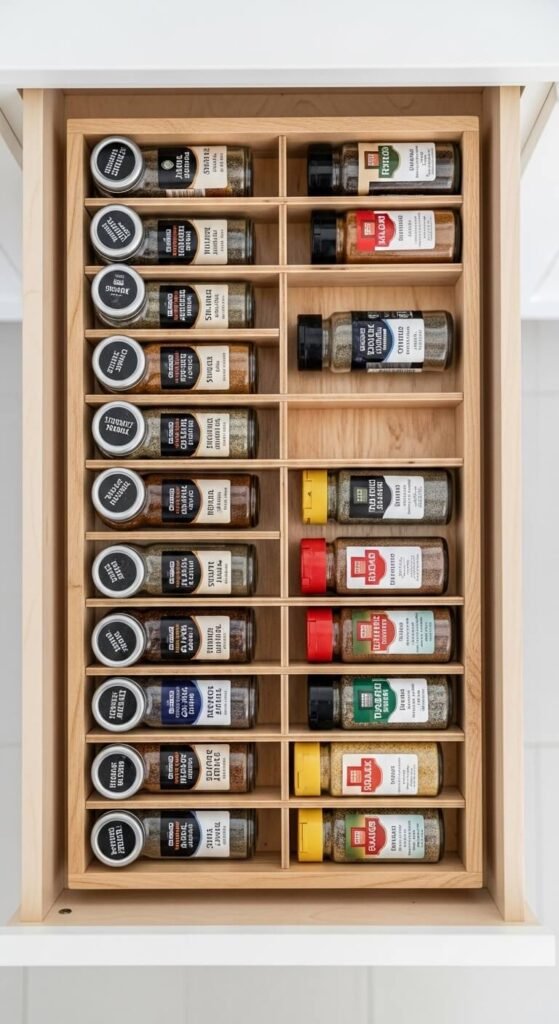
Laying spices flat in a drawer sounds simple — because it is. A drawer insert holds jars on their sides with labels facing up, so you can read everything at once. You can buy bamboo inserts for $15–$20, or cut your own from thin plywood. This method works incredibly well for people who prefer a clean, hidden storage look. No wall holes, no countertop clutter. Just open the drawer and find exactly what you need.
13. Industrial Pipe and Wood Shelf Rack
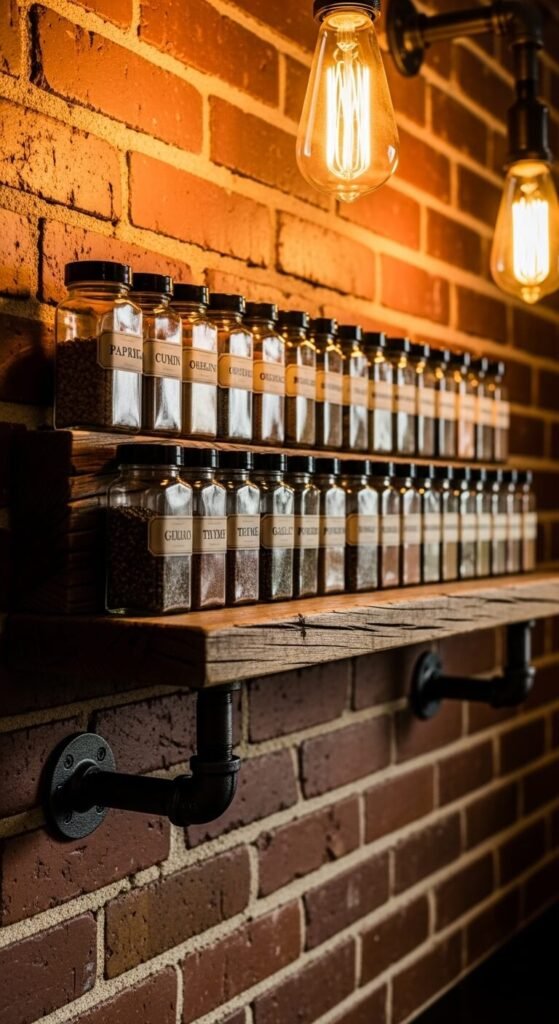
The combination of black iron pipe fittings and reclaimed wood creates a rack that looks like it belongs in a restaurant kitchen. Use pipe flanges as wall-mounted brackets and lay a wood plank across them. This style is sturdy enough to hold heavy bottles and looks intentional and high-end. Hardware store pipe fittings cost $4–$8 each. Add a $10 pine board, stain it dark, and you’ve got a shelf that costs under $30 and looks like $150.
14. Wooden Crate Stacked Spice Tower
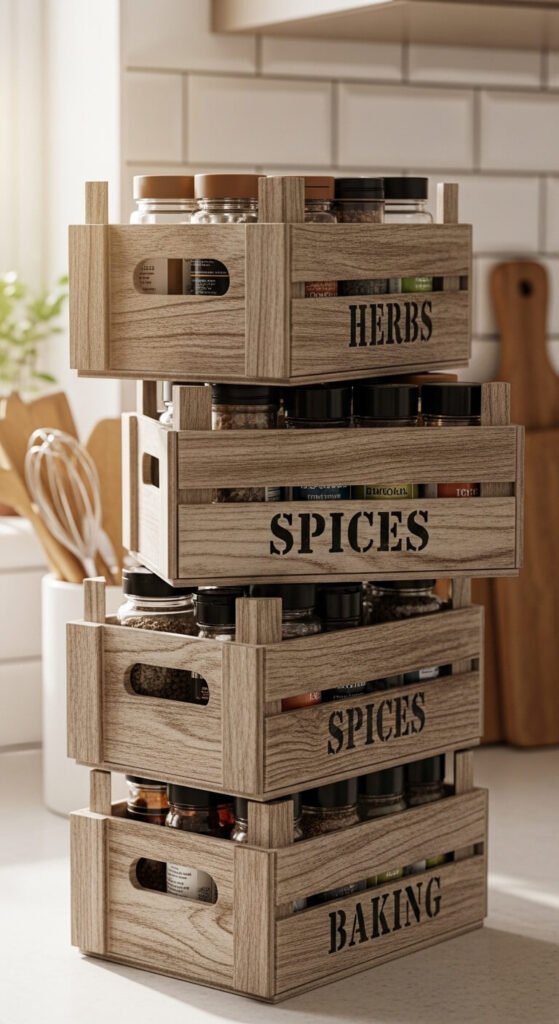
Small wooden crates from a craft store ($3–$6 each) stack into a charming spice tower when arranged in a zigzag pattern. You can stagger them for a staircase effect or stack them straight. Sand the wood, stain or paint, and secure with wood glue or small brackets. This works beautifully on a counter or inside a pantry. The look is cozy and rustic, and the whole project takes about an hour.
15. Knife Block–Style Vertical Spice Holder
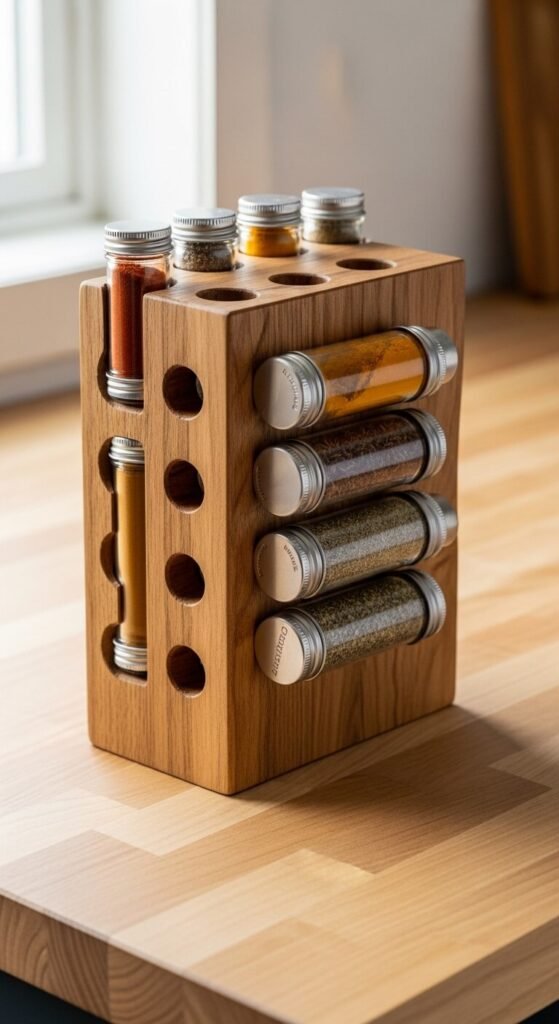
Drill evenly spaced holes into a thick block of hardwood and drop small spice jars right in, label-side up. It’s essentially a knife block concept adapted for spices. Sand it smooth, apply food-safe oil, and place it on the counter. This project requires a drill and a bit that matches your jar diameter. Cost: $10–$20 depending on wood choice. The result is a solid, elegant rack that doesn’t need a single wall mount.
16. Repurposed Ladder Spice Shelf
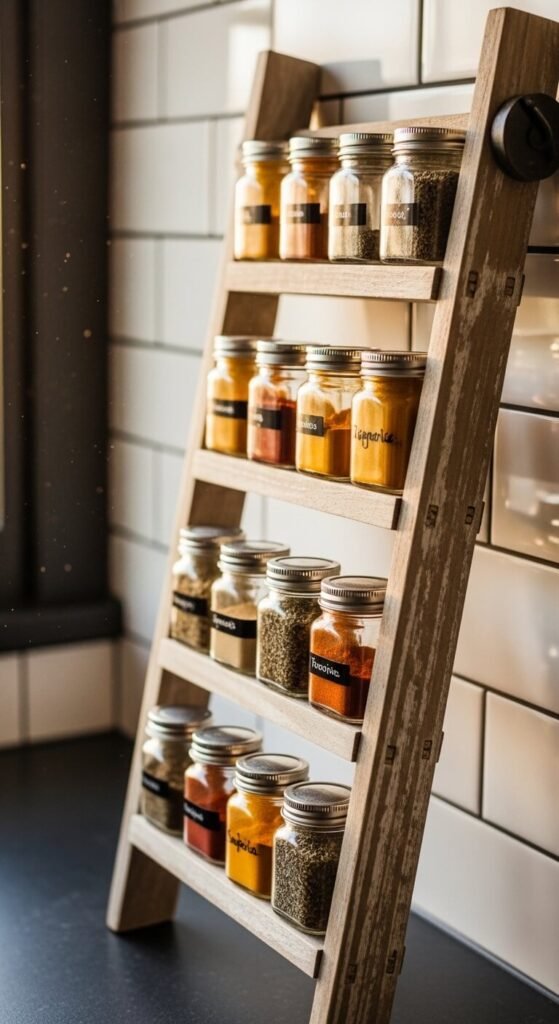
A small decorative ladder leaned against the wall becomes an instant spice display. Balance jars across each rung, or cut small boards to lay across the rungs as flat shelves. Old wooden ladders can be found at thrift stores for a few dollars, or build a simple A-frame ladder from 1×2 boards. Paint it white for a clean look or leave raw wood for warmth. This is a zero-installation project that looks completely intentional.
17. Spice Drawer in a Kitchen Island
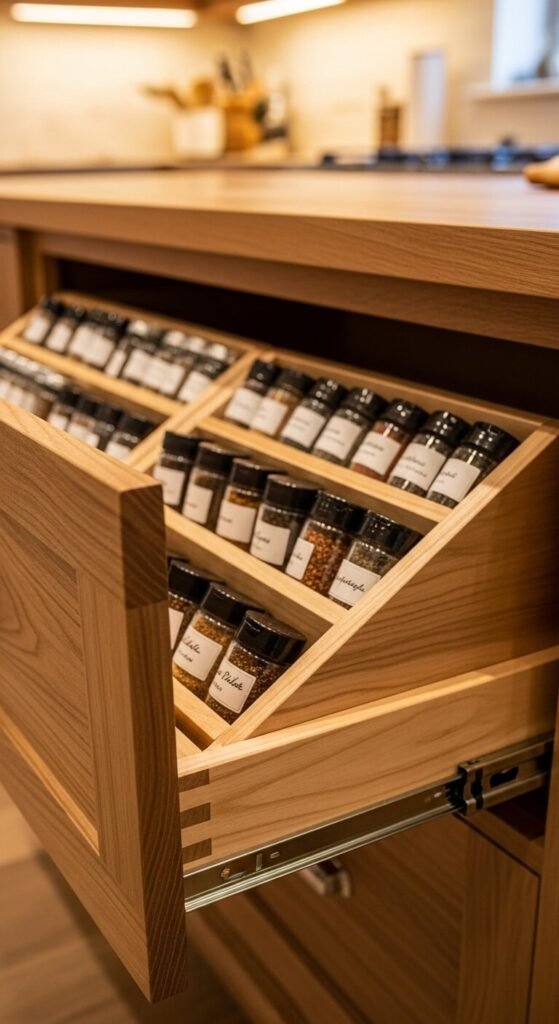
If you’re building or updating a kitchen island, add a dedicated spice drawer with an angled insert. Angled inserts hold jars at a tilt so labels face up, making it easy to grab exactly what you want. Pre-made angled inserts are available online for $20–$40. Or cut your own from thin plywood. This is the most permanent and polished solution on this list — best suited for those who want a built-in feel with no visual clutter whatsoever.
18. Tension Rod Vertical Dividers in Cabinet
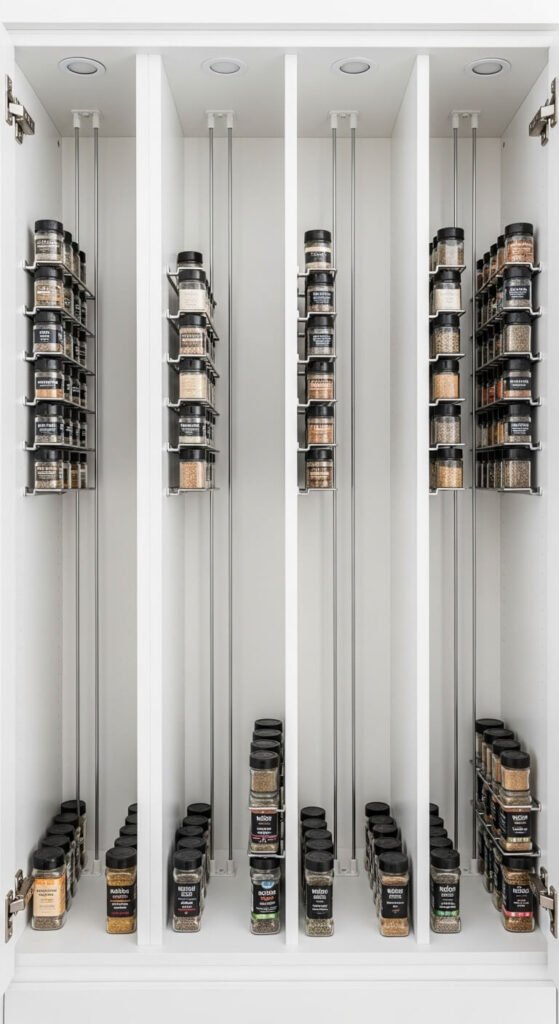
Instead of pulling tension rods horizontally, stand them vertically inside a cabinet to create dividers. This sections off your cabinet into organized slots where groups of spice jars stand upright. No drilling, no damage, no tools. Cost: $3–$6 in tension rods. It works especially well for tall cabinets where standard shallow shelves waste depth. You can rearrange the dividers anytime your collection grows or changes.
19. Herb Garden and Spice Rack Combo Window Box
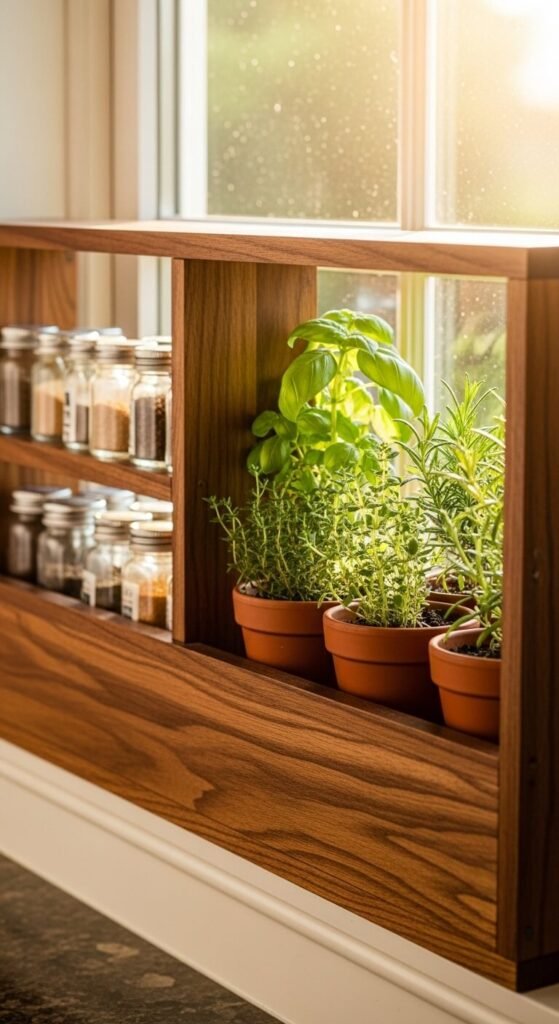
Combine fresh herbs and dried spices in one window box mount. Build or buy a narrow wooden planter box, mount it at window height, and divide it in half — one side for potted herb plants, the other for a row of small spice jars. The natural light keeps herbs growing while keeping spices close at hand. This is a functional display that also acts as living kitchen décor. Cost: $20–$35 with basic woodworking.
20. Spice Rack Built into Cabinet Door Interior
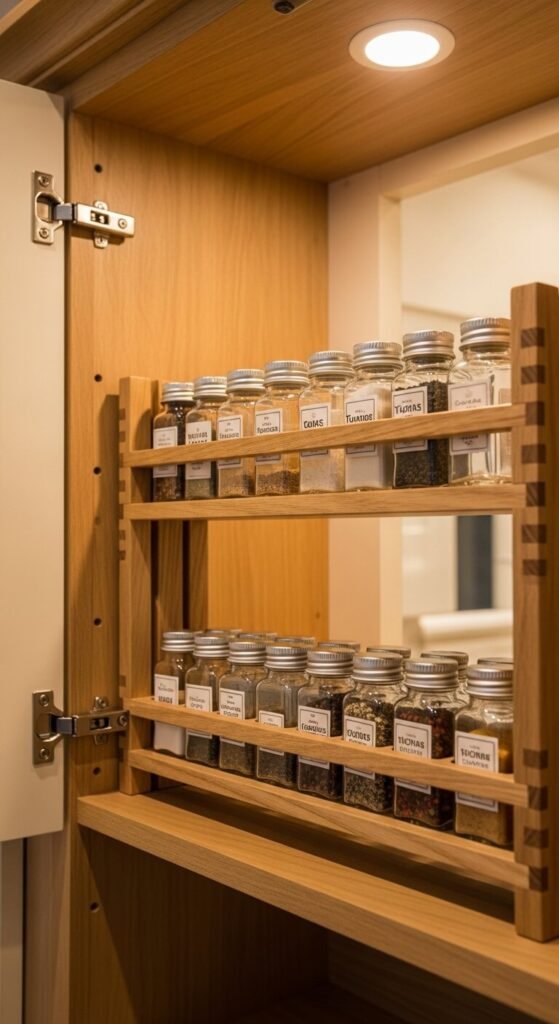
Building a rack directly into the inside of a cabinet door makes brilliant use of wasted space. Cut 1×2 pine strips and create two shallow rails that hold bottles at a slight angle. Attach the rack to the door with screws. When the cabinet is closed, everything is hidden. When it’s open, your spices are right there — no reaching, no moving other items. Materials cost $10–$15. This is the most space-efficient option for small kitchens.
21. Vintage Suitcase Spice Station
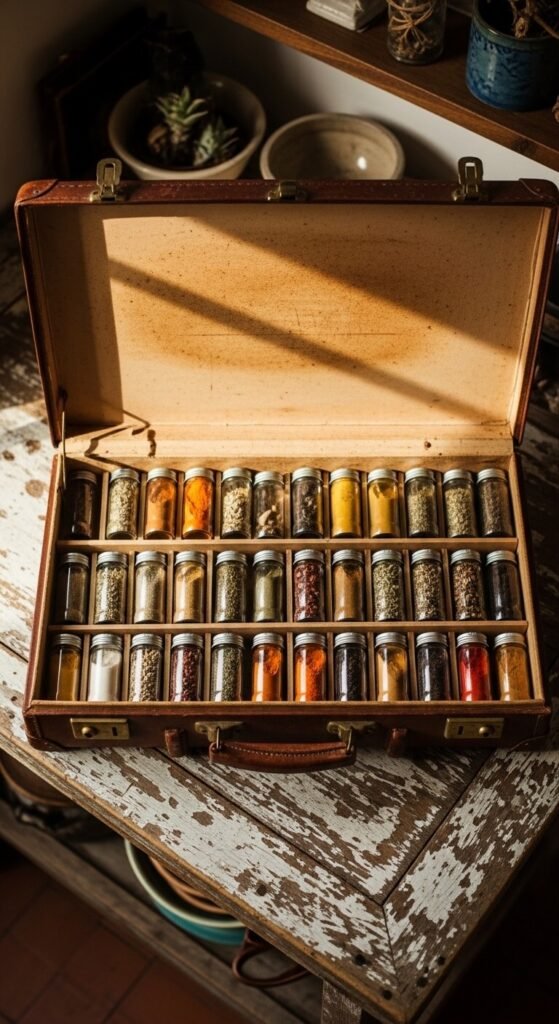
A flat vintage suitcase opened on a counter becomes a surprisingly functional spice station. Add small wooden dividers inside to keep jars from rolling. The lid pops up like a display case. Old suitcases are easy to find at thrift stores for $5–$15. Line the interior with adhesive craft paper or cork sheet to protect the bottom. This conversation-starting piece is a great option for eclectic or maximalist kitchens that embrace character over uniformity.
22. Chalkboard Backing Spice Shelf
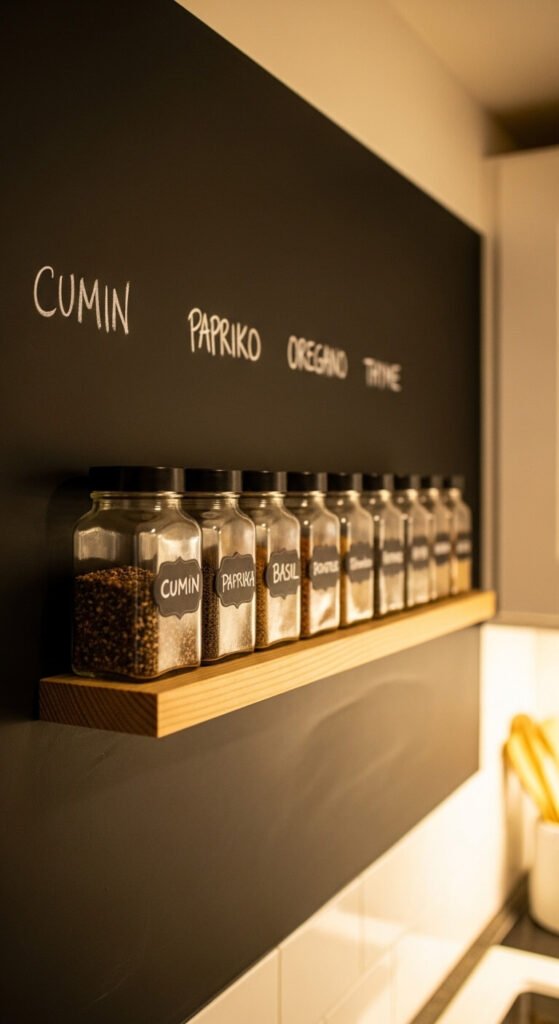
Mount a simple floating shelf and paint the wall section directly behind it with chalkboard paint. Now you have a built-in label board. Write spice names directly on the wall behind each jar. Wipe and rewrite whenever you swap spices out. Chalkboard paint costs $10–$15 a can and covers a large area. The result looks curated and intentional — like something from a cooking show kitchen — without requiring any real design skill.
23. Tiered Cake Stand Spice Display
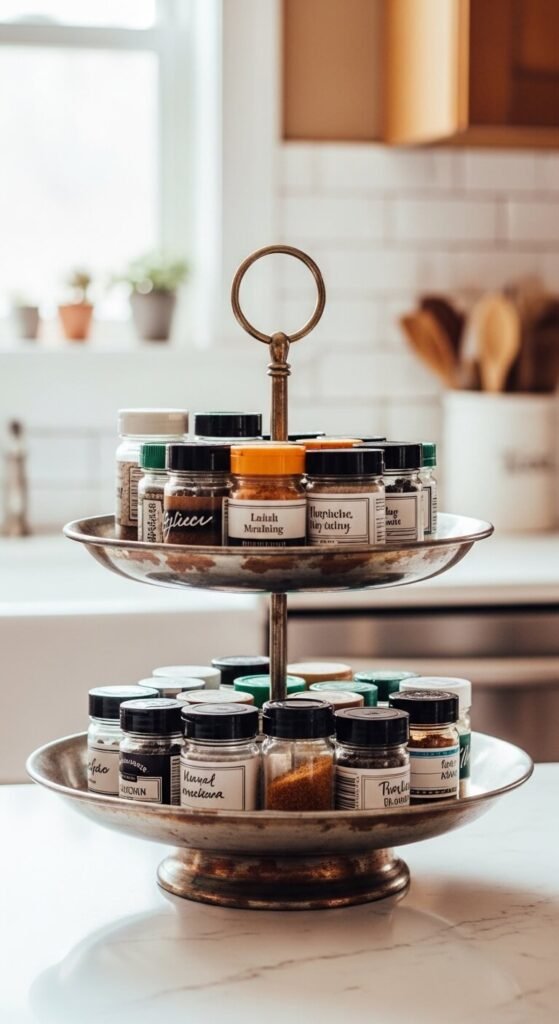
A tiered cake stand makes a beautiful and functional countertop spice display. Three tiers give you plenty of room for 15–20 jars while taking up minimal footprint. Thrift stores and dollar stores often carry these for $3–$10. No modification required — just set your jars on each level. The elevated tiers also make it easy to see labels on lower rows without moving anything. This is the easiest setup on the entire list.
24. PVC Pipe Honeycomb Spice Rack
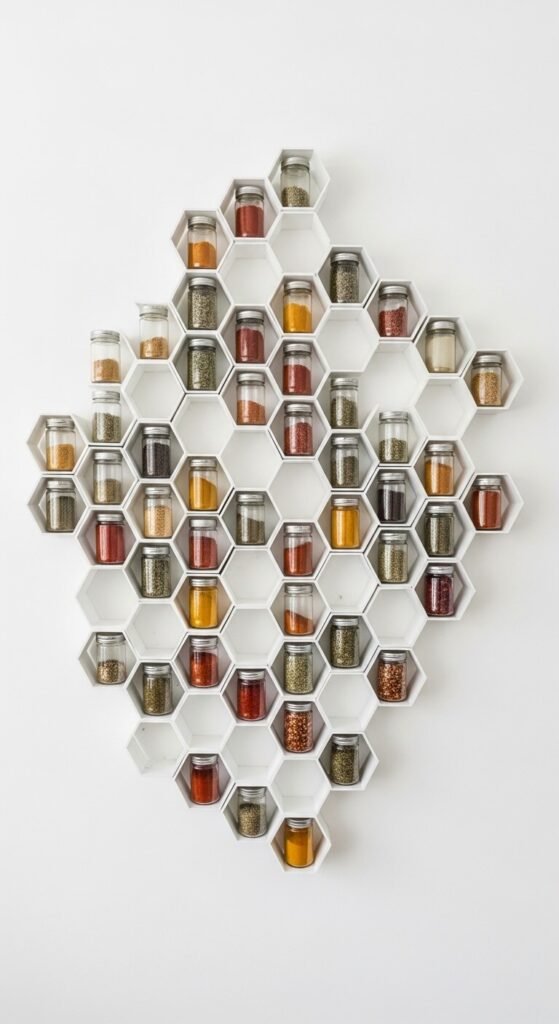
Cut PVC pipes into short sections, glue them in a honeycomb pattern, paint them, and mount to the wall. Each tube holds one spice jar perfectly. This modular design lets you add more tubes as your collection grows. PVC pipe is extremely affordable — a 10-foot section costs $3–$5 and yields many tubes. Paint them all white, black, or gold depending on your kitchen style. The geometric look is modern and eye-catching.
25. Barn Door Slider Spice Cabinet
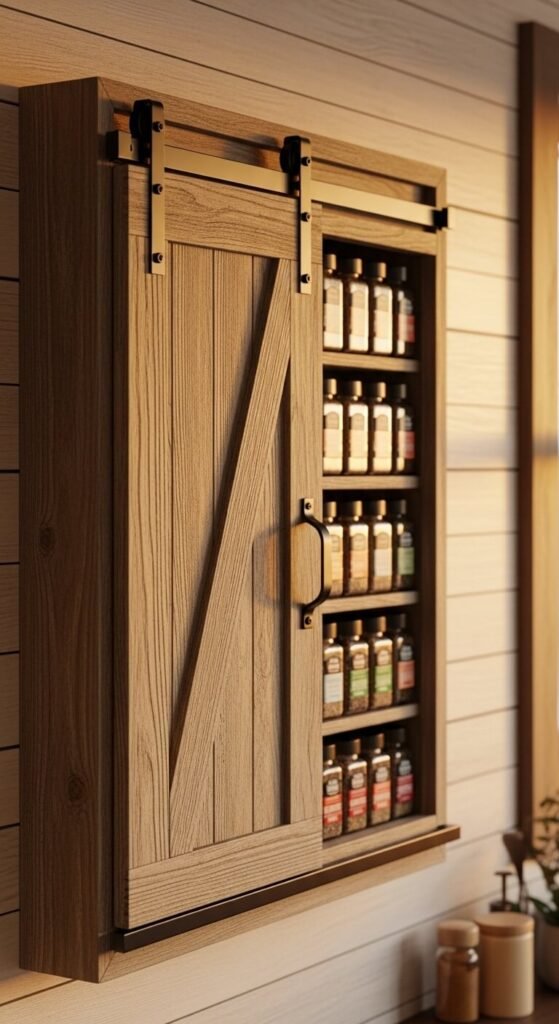
A mini barn door spice cabinet hides your collection behind a sliding panel. Build a simple box frame from 1×6 pine boards, add interior shelves, and attach a sliding mini barn door using cheap barn door hardware ($15–$25). When closed, it looks like wall art. When open, it reveals a fully organized spice station. Total cost: $30–$50. This project takes a weekend but results in something that looks completely custom and handcrafted.
26. Shower Caddy Repurposed as Spice Rack
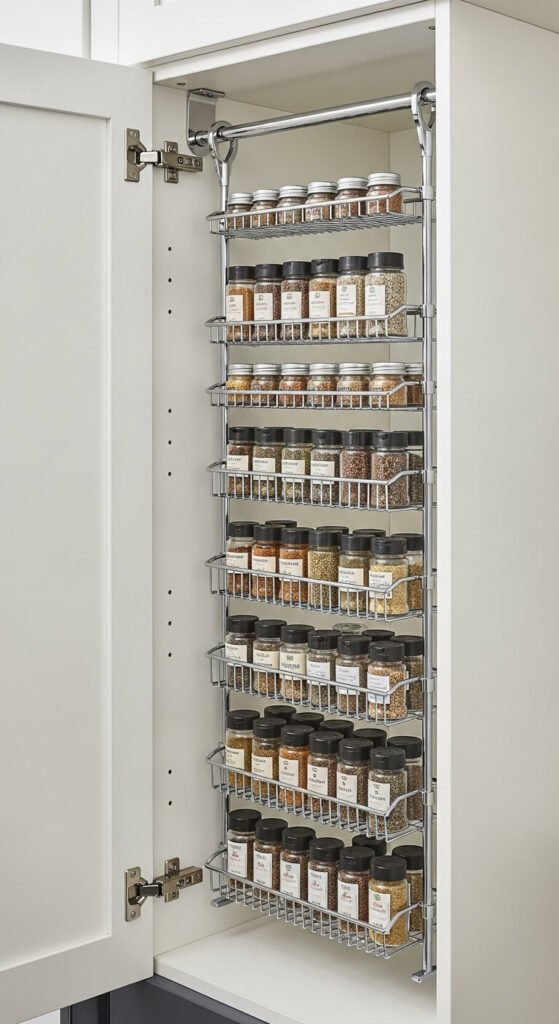
A tension-rod shower caddy fits perfectly inside a narrow pantry or cabinet. The wire shelves hold jars at an angle, the caddy requires zero tools or hardware, and the whole thing costs $15–$25 at any home goods store. This hack is especially useful in rental kitchens where you can’t drill. Install in seconds, remove in seconds. It turns a single vertical cabinet into a multi-tiered spice center with no effort at all.
27. Farmhouse Shutters Spice Rack
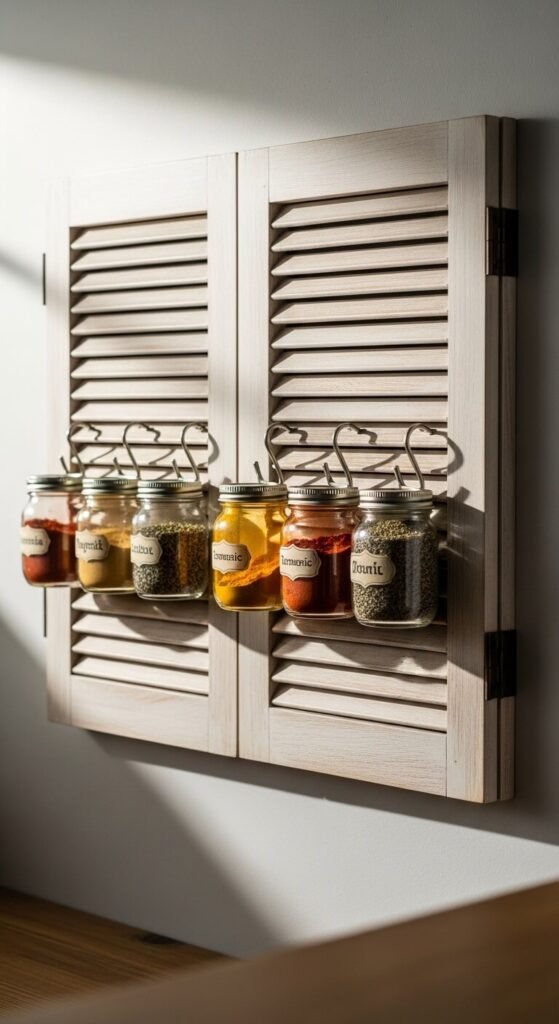
Old window shutters make a surprisingly practical spice rack. Mount them flat on the wall and hang small jars from the louvers using S-hooks. The angled slats hold hooks in place without any drilling into the shutter itself. Vintage shutters are everywhere at thrift stores and yard sales — often $5–$15 for a pair. Paint them white, sage green, or leave them distressed for character. This is a highly decorative solution that doubles as wall art.
28. Under-Stair Hidden Spice Pantry
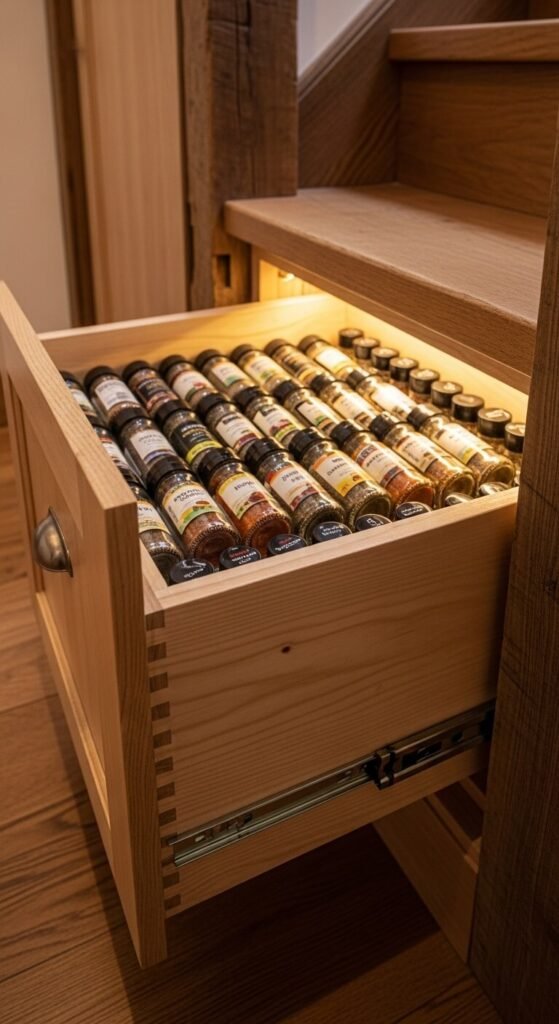
If your kitchen sits near a staircase, the wall beside it is hiding usable depth. Build a series of shallow pull-out drawers into that wall cavity to create a hidden spice pantry. Each drawer can be 4–6 inches deep — perfect for a single row of jars. This is a more advanced build that requires basic carpentry and a weekend. But the result is extraordinary: completely invisible storage that makes the most of space most homes completely ignore.
Conclusion
Building your own spice rack doesn’t require a big budget, professional tools, or advanced skills. Most of these projects cost $10–$50 and take just a few hours. The real payoff is a kitchen that works better every single day — less time digging through cabinets, more time actually cooking. Pick one project that fits your space, grab the materials, and build it this weekend. Small changes in kitchen organization create a ripple effect that makes cooking faster, easier, and genuinely more enjoyable.