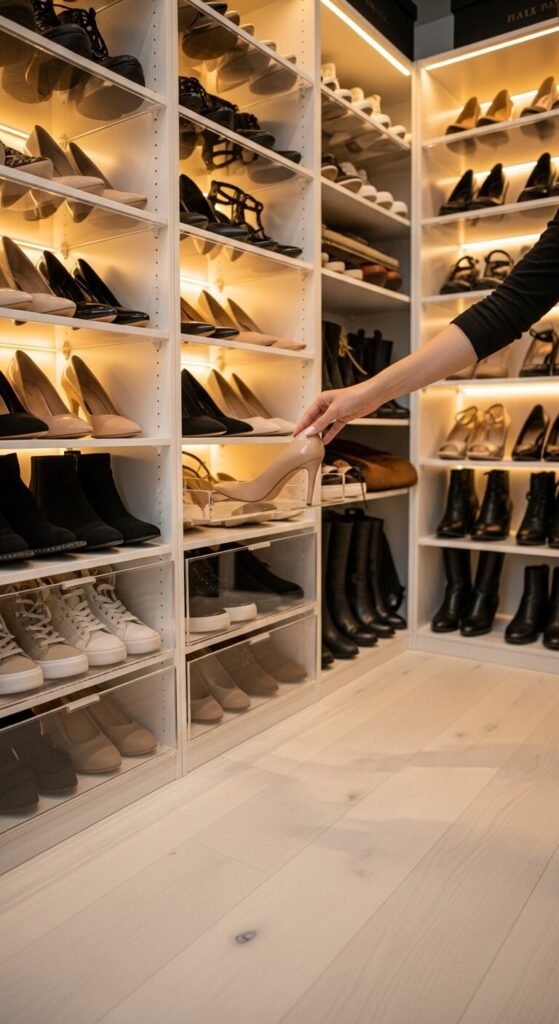
Your shoe collection deserves better than a pile by the front door. Whether you own five pairs or fifty, the right storage system keeps your shoes protected, accessible, and looking their best for years. Disorganized shoes get scuffed, misshapen, and lost under beds. The good news? You don’t need a massive closet or a big budget to fix that. From simple over-door racks to custom built-ins, there’s a solution that fits your space, your style, and your wallet. These 27 ideas will help you find it fast.
1. Clear Stackable Shoe Boxes
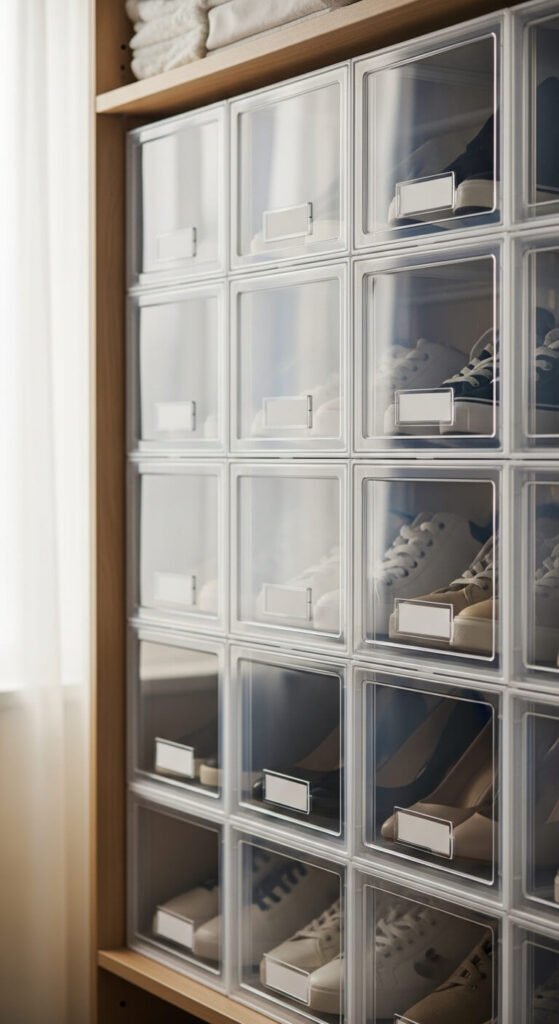
Clear stackable boxes are one of the smartest buys you can make. You can see every pair at a glance without digging through a pile. They protect shoes from dust and crushing. Most cost $2–$5 each at discount stores. Buy a matching set so they stack cleanly. Label the front with a photo or handwritten tag. These work especially well for sneakers and heels you want to keep in perfect shape.
2. Over-the-Door Shoe Organizer
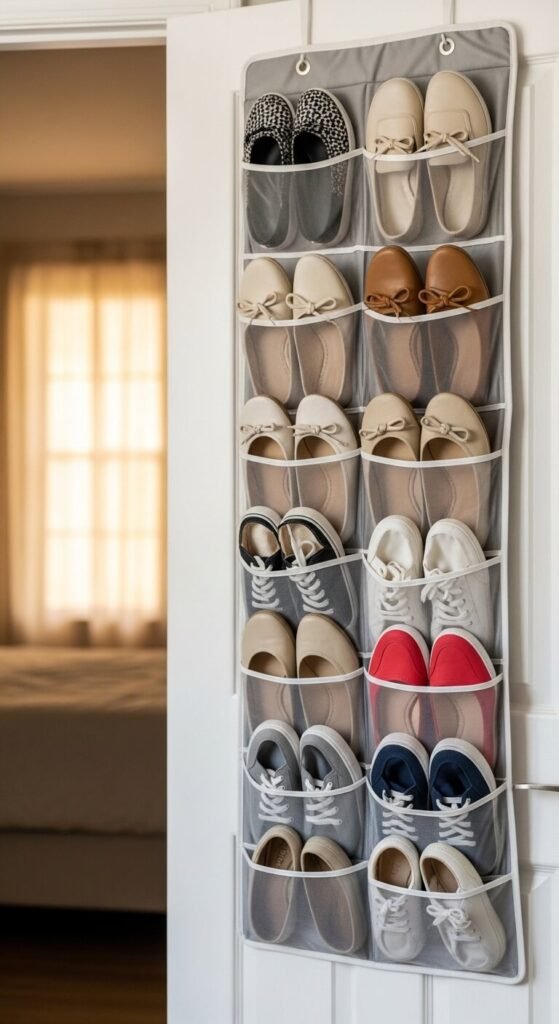
This is the fastest, cheapest fix for a small space. A basic over-door organizer holds 12–24 pairs and costs under $15. Hang it on the back of your closet or bedroom door. It frees up floor space instantly. Works best for flat shoes, sandals, and kids’ sneakers. Look for one with deep pockets so shoes don’t fall out. Some versions have clear pockets — great for seeing everything quickly.
3. Floating Wall Shelves
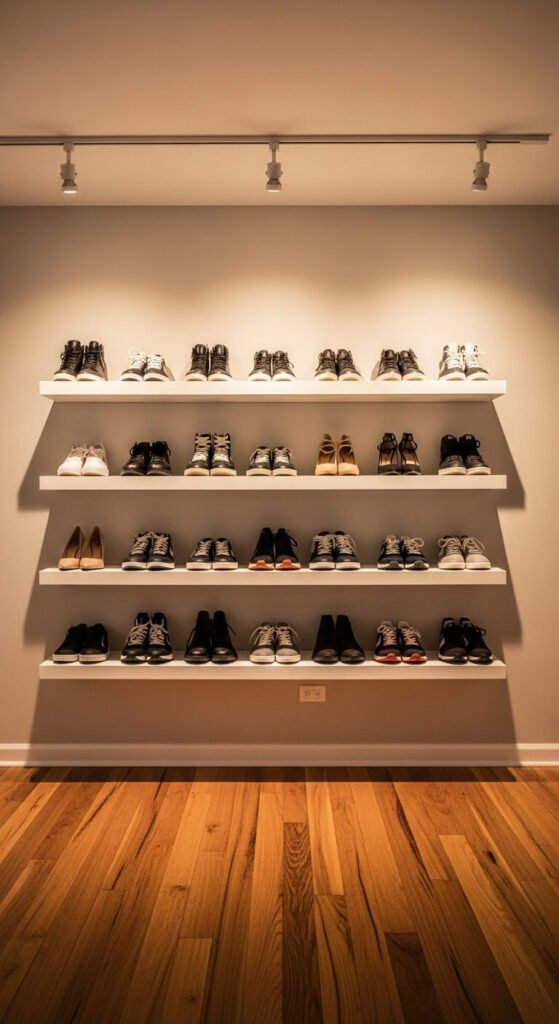
Floating shelves turn your shoe collection into wall art. IKEA Lack shelves cost around $10 each and hold several pairs per shelf. Mount them in a grid pattern for a high-end boutique look. Space shelves about 8–10 inches apart so shoes fit without crowding. This works best in bedrooms or entryways. Keep your nicest pairs here where they’re easy to grab and always on display.
4. Repurposed Wine Rack
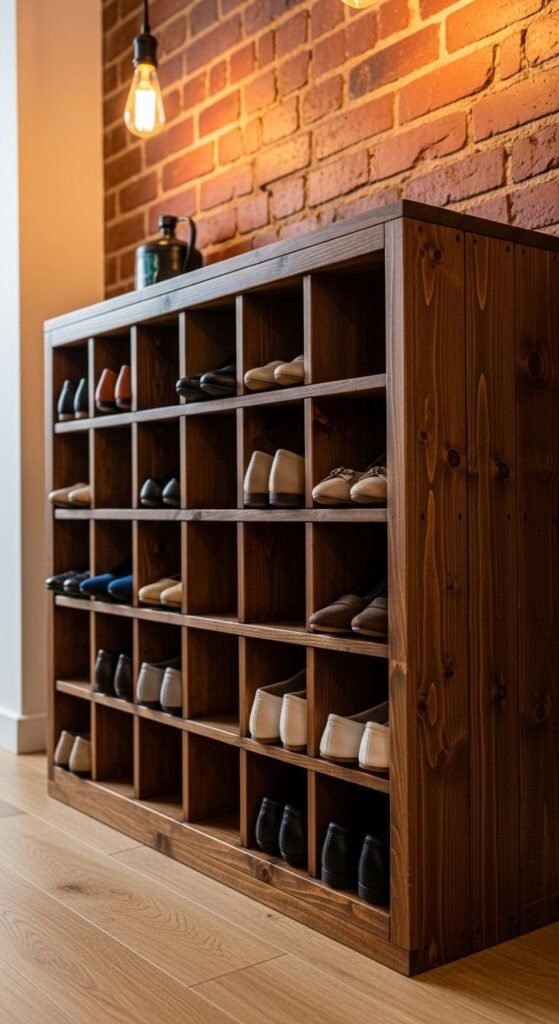
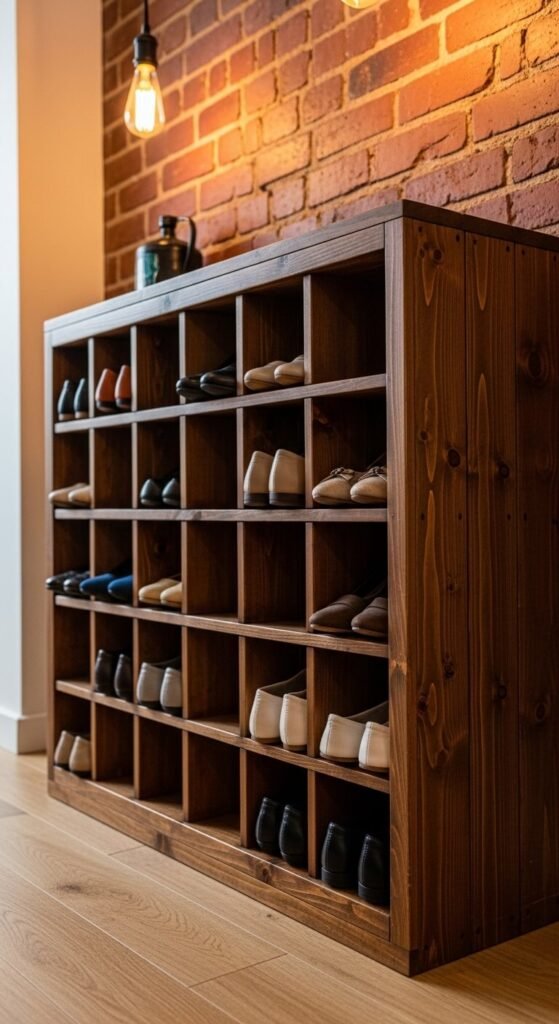
A wine rack is secretly a perfect shoe holder. Each slot cradles a pair of rolled-up flats or heels at an angle. Thrift stores and Facebook Marketplace often have them for under $20. A 12-bottle rack holds six pairs easily. It looks intentional and stylish in an entryway or closet. This is one of the easiest DIY repurposes that requires zero tools.
5. Under-Bed Shoe Storage
The space under your bed is prime real estate. Flat under-bed organizers slide in and out easily and keep shoes dust-free with a zip-up lid. Most hold 6–12 pairs depending on size. Use them for off-season shoes or pairs you wear less often. Bed risers can give you extra clearance if needed. Label the outside so you know what’s inside without pulling everything out.
6. Wooden Shoe Bench with Storage
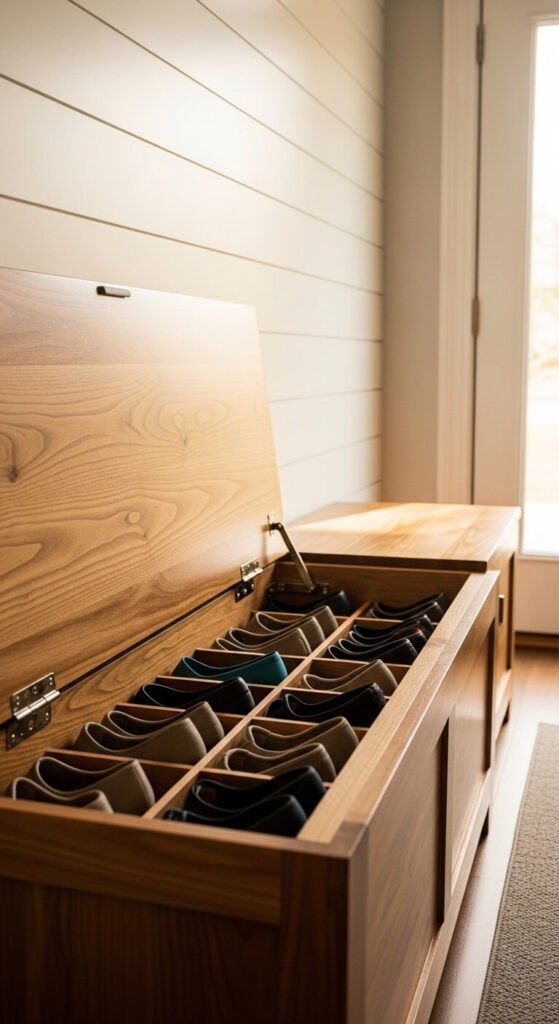
A storage bench does double duty — somewhere to sit while putting on shoes, and somewhere to store them too. You can find basic versions at Target or IKEA for $60–$100. The hinged lid opens to a compartment that holds six or more pairs. Place it at the front door to catch everyday shoes before they spread across the house. It keeps the entryway clean without feeling like a chore.
7. Tension Rod Shoe Rack
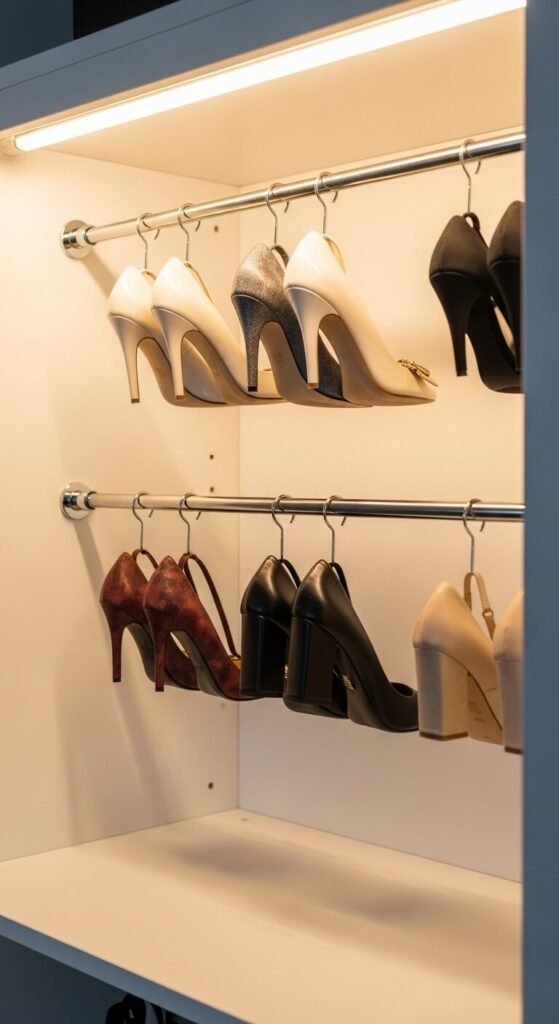
This is one of the most satisfying DIY hacks out there. Place two tension rods parallel in your closet low to the ground, about 6 inches apart. Hang heels directly over the rods so they dangle without touching the floor. Each rod costs about $5 at any hardware store. This uses dead closet space effectively and keeps heels from getting crushed. No drilling, no tools, no damage.
8. Pegboard Shoe Wall
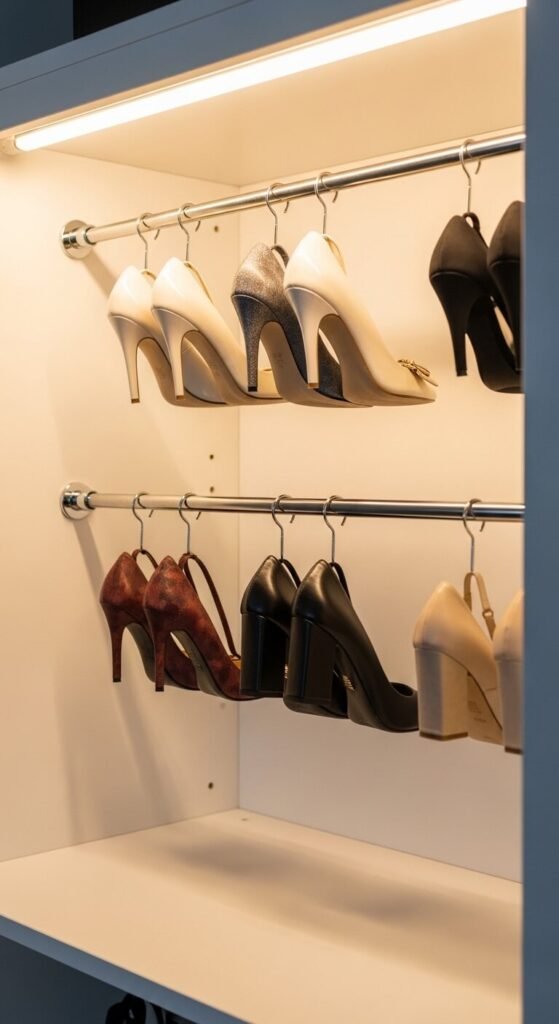
Pegboards aren’t just for garages. Mount one in your closet or bedroom and customize it with hooks to hold shoes, bags, and accessories. A 2×4 foot pegboard costs around $15–$20. Add wooden dowels for sneakers, S-hooks for sandals, and small shelves for boxes. The layout is completely adjustable. This is a great weekend DIY project that looks expensive when done right.
9. Lazy Susan Shoe Carousel
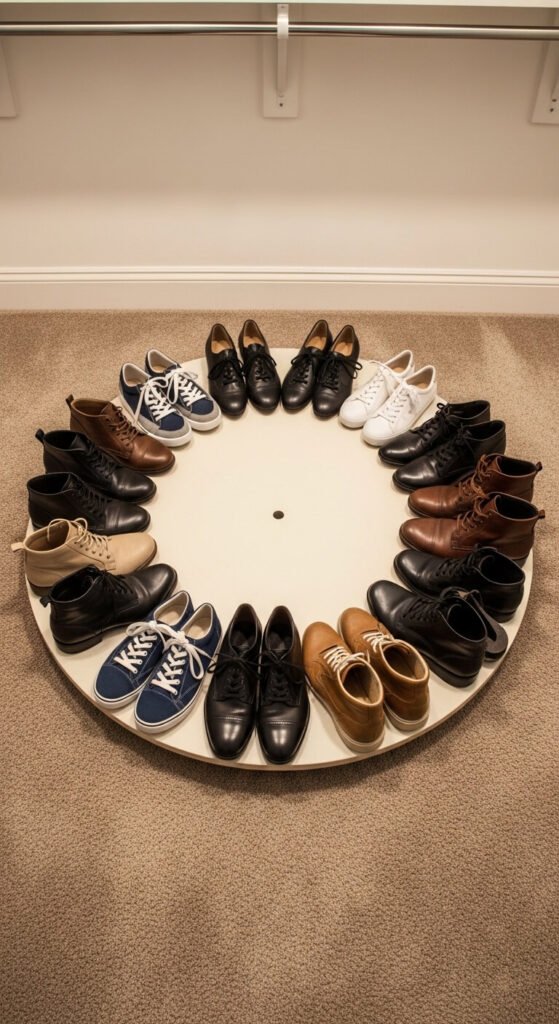
A lazy Susan turntable for shoes sounds unusual — but it works brilliantly in a corner closet. Spin it to find the pair you want without moving anything else. Large turntables hold 8–12 pairs depending on size. You can buy one for under $25 or repurpose a kitchen version. Best for frequently worn shoes. It keeps floor space tidy and makes mornings faster.
10. Shoe Cabinet with Flip-Down Doors
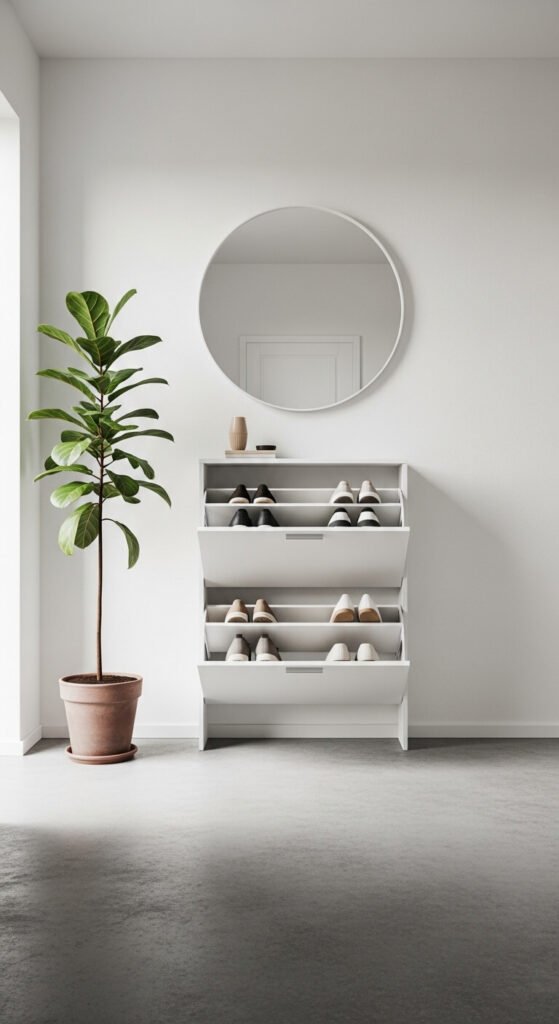
These slim cabinets are perfect when you want storage that doesn’t look like storage. The flip-down doors angle out so you can grab a shoe easily, then push it back up. They fit tight spaces — some are as narrow as 12 inches wide. IKEA’s Ställ and similar options hold around 6–8 pairs per column. A great front door option that keeps things tidy and discreet.
11. Crate Stacking System
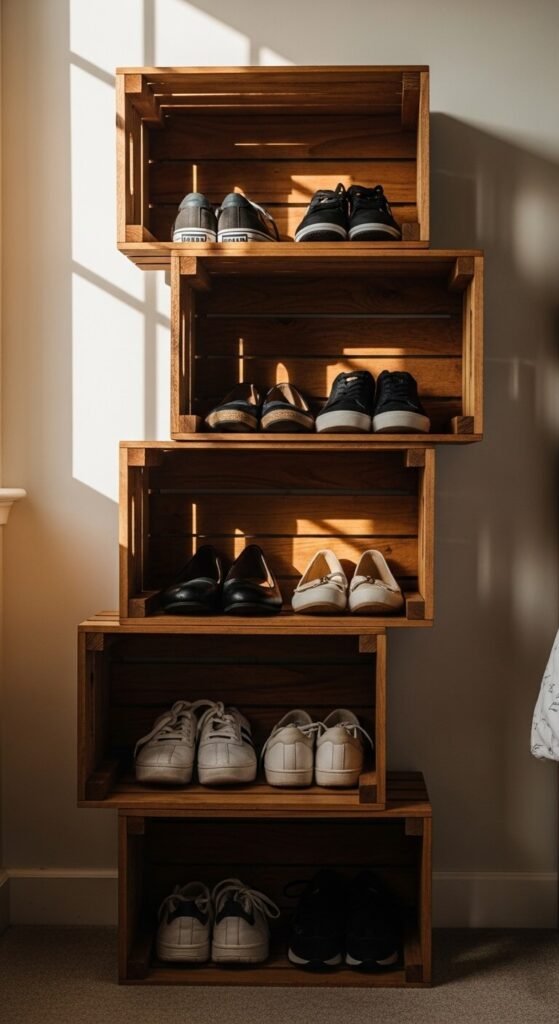
Wooden or milk crates stacked in a staggered pattern create an instant modular shoe rack. Hobby Lobby and craft stores often sell them for $10–$15 each. Lay them on their side and stagger them so they interlock. Screw or zip-tie them together for stability. Sand and stain them for a polished look. Each crate holds two to four pairs depending on size. Easy to expand whenever your collection grows.
12. Acrylic Display Risers Inside a Cabinet
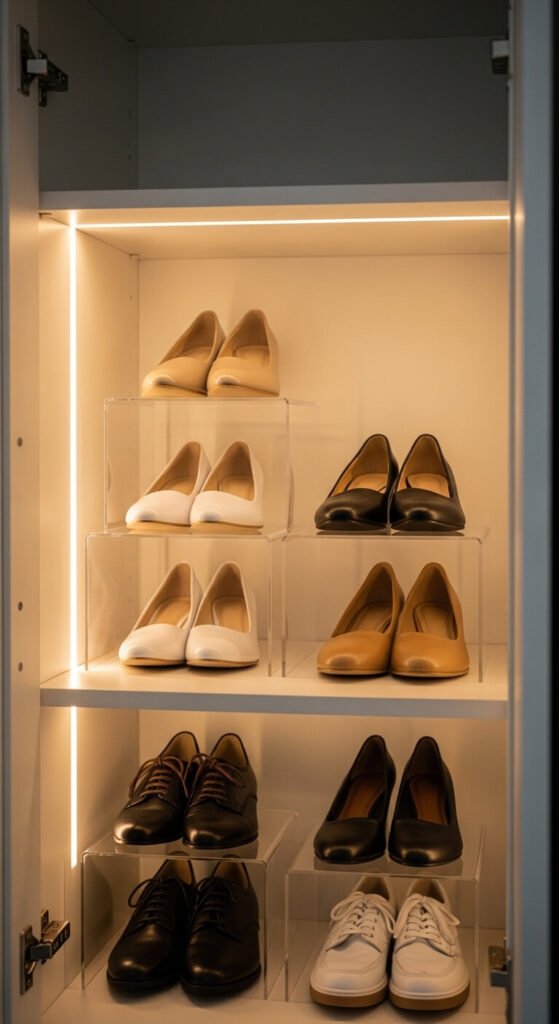
Tiered risers inside your existing shelves double your capacity. Without risers, the back row of shoes is always getting lost. Acrylic risers lift the back row up so both rows are visible at once. A two-tier set costs around $15–$25. They’re great for flats and low sneakers. This simple add-on transforms a standard shelf without any tools or installation.
13. PVC Pipe Shoe Organizer
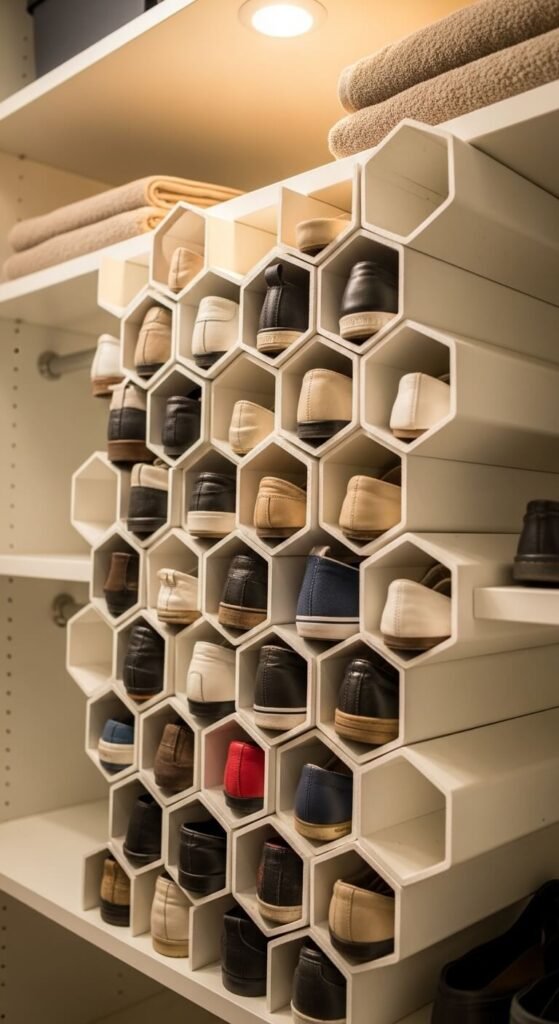
Cut PVC pipes into 6-inch sections and stack them into a honeycomb grid. Each opening holds one shoe facing outward. It’s oddly satisfying to assemble and costs very little — a 10-foot pipe runs $5–$8. Sand the ends smooth and paint them if you want a cleaner look. Glue the pipes together with PVC cement. This stores more shoes per square foot than most off-the-shelf racks.
14. Hanging Fabric Shoe Pockets
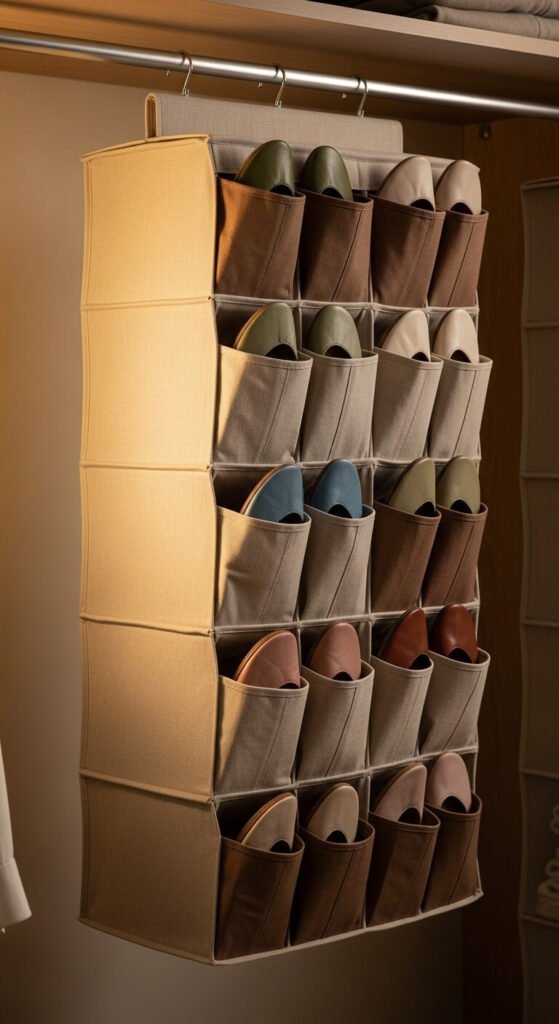
These hanging organizers attach directly to your closet rod. They drop down below your clothes and use vertical space that typically goes wasted. Each pocket holds one or two pairs of flat shoes or sandals. Fabric versions are softer on shoes than plastic. Most cost $15–$30. Look for one with reinforced pockets so the bottoms don’t sag under weight. A simple addition with an immediate payoff.
15. Repurposed Ladder as Shoe Display
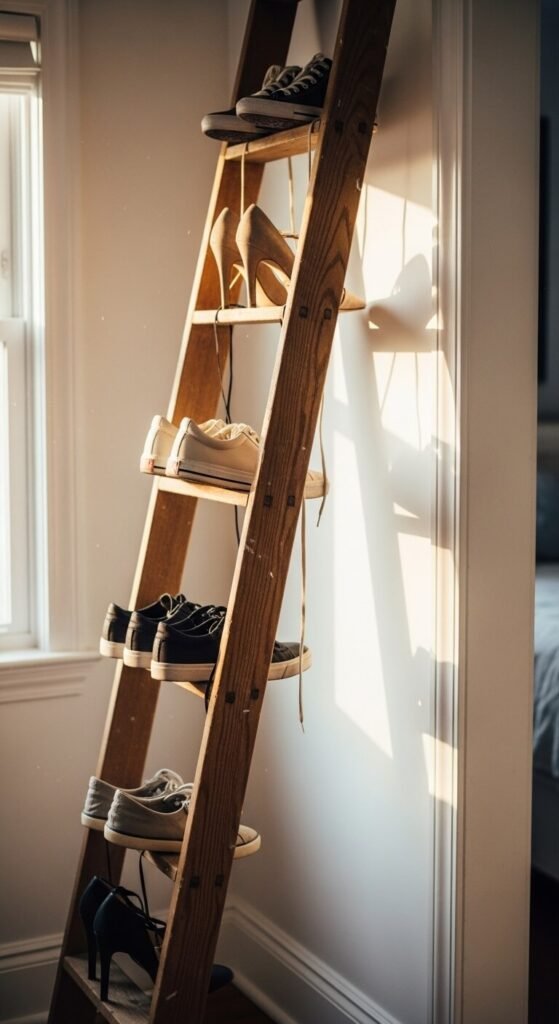
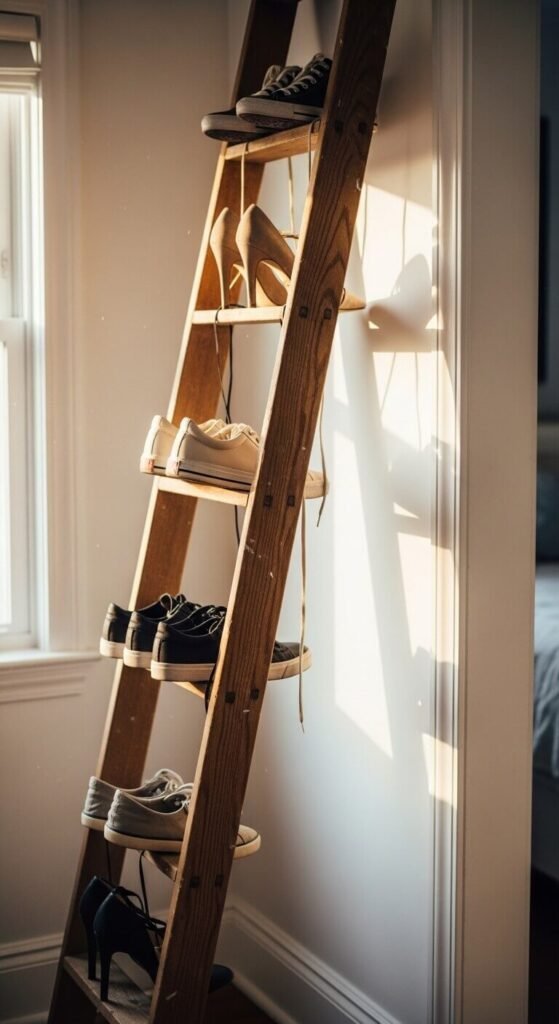
A leaning wooden ladder turned sideways makes a charming and practical shoe display. Drape pairs over each rung or lay flat shoes flat on them. Old ladders from flea markets and thrift stores cost $10–$30. Sand it down and paint it to match your room. It works especially well with heels and boots. Leans against the wall with no mounting required. Holds six to ten pairs depending on rung spacing.
16. Built-In Closet Tower with Shoe Cubbies
A built-in cubby tower looks custom but doesn’t have to cost thousands. IKEA’s Kallax unit is a popular base — each square hole holds one pair of shoes with room to spare. A 4×4 unit holds 16 pairs and costs around $150. Add a door to enclose it or leave it open for a display effect. Paint it to match your closet walls for a seamless built-in look.
17. Bench with Basket Cubbies
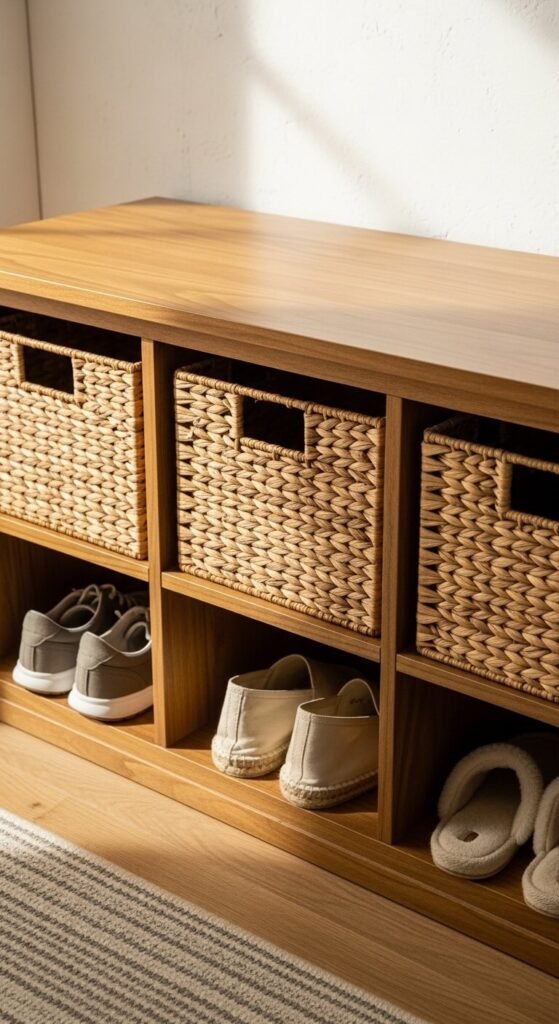
A bench with basket cubbies below is a practical entry hall staple. Each basket corrals one household member’s daily shoes. Assign one basket per person so shoes never pile up randomly. Baskets slide out easily for cleaning. A basic version from Target or HomeGoods runs $80–$150. You can also DIY one by adding baskets to a thrifted bench using zip ties and wooden dowels.
18. Angled Shoe Shelves in Closet
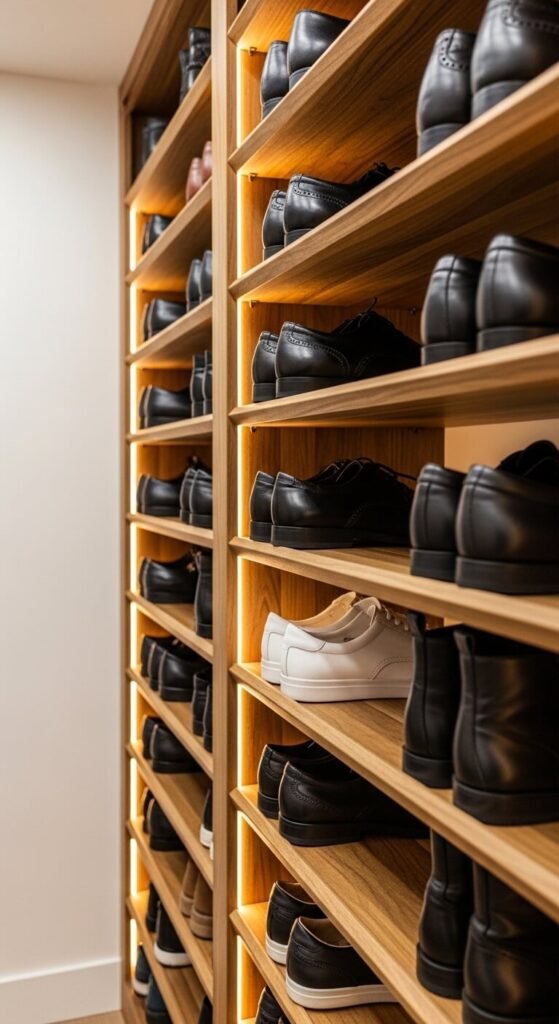
Standard flat shelves waste space because shoes sit horizontally and take up the full depth. Angled shelves tilt forward slightly so heels rest at the back and toes drop down — using half the vertical space. You can build angled shelves with basic wood and a miter saw for about $40–$60 in materials. Or look for angled shelf kits online. This one change can double the shoe capacity of any closet.
19. Shoe Drawers with Pull-Out Trays
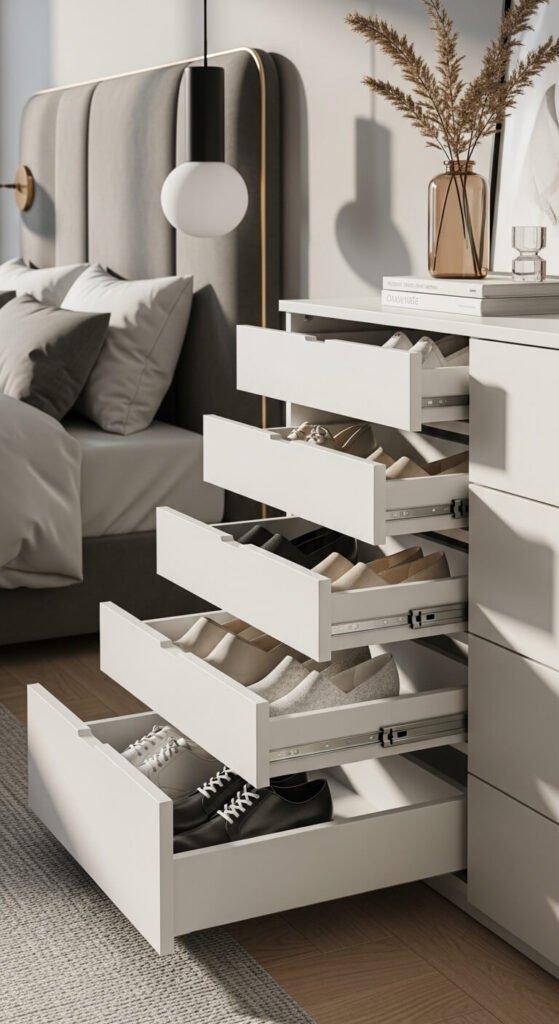
Shallow drawers lined with shoe trays keep pairs flat, protected, and easy to scan. Custom shoe drawers from closet companies are pricey, but you can DIY with inexpensive drawer slides and plywood for $50–$80. Angled inserts inside each drawer let you see the shoes clearly. Line the bottoms with felt to prevent scuffing. Great for sneakers and flats you want to protect from light and dust.
20. Boot Shaper and Dedicated Boot Rack
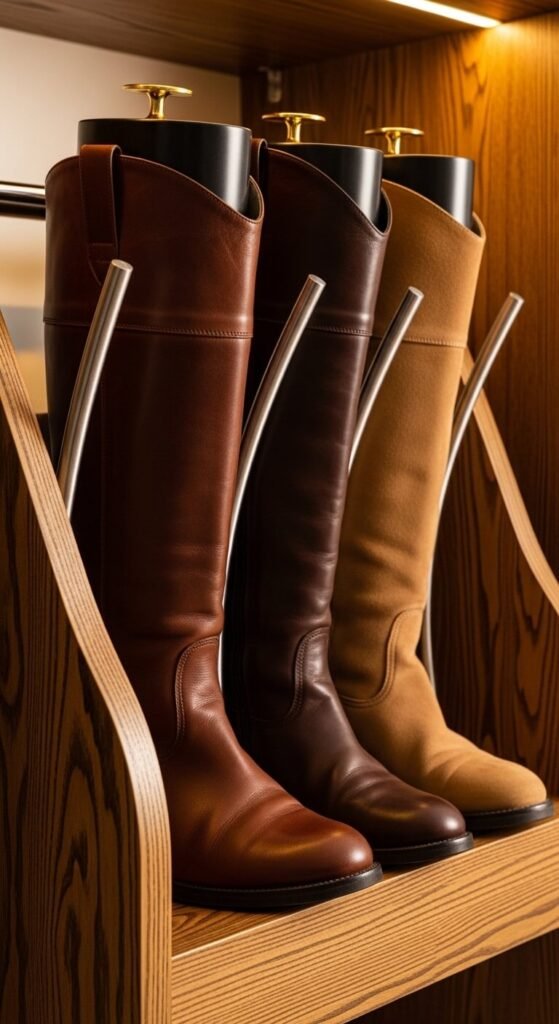
Boots that slouch at the ankle get permanent creases that ruin their shape. Boot shapers keep tall boots standing upright so they hold their form between wears. Combine them with a low boot rack that keeps pairs off the floor. Pool noodles cut to size are a free DIY boot shaper that works just as well as the $20 ones. A dedicated boot rack prevents crowding and keeps pairs identifiable at a glance.
21. Shoe Hooks on a Rail System
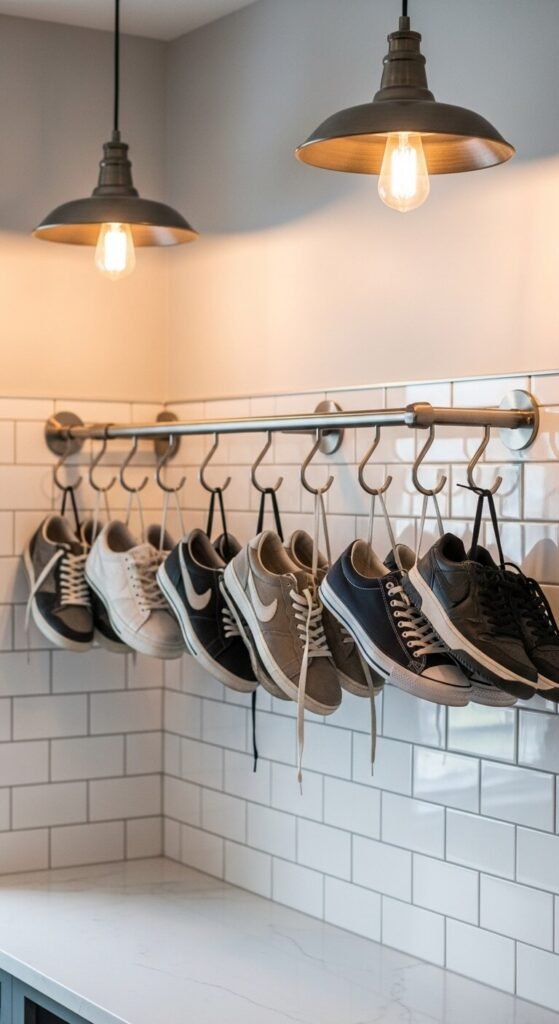
Hang sneakers and casual shoes by their laces on S-hooks attached to a wall rail. IKEA’s Skådis or any pegboard rail system works well here. Each hook holds one pair. It looks playful and intentional, especially in a mudroom or kid’s room. Hooks cost cents each and rails run $10–$30. Works for any shoe with a lace or strap. Quick to grab, quick to return.
22. Repurposed Bookshelf as Shoe Rack
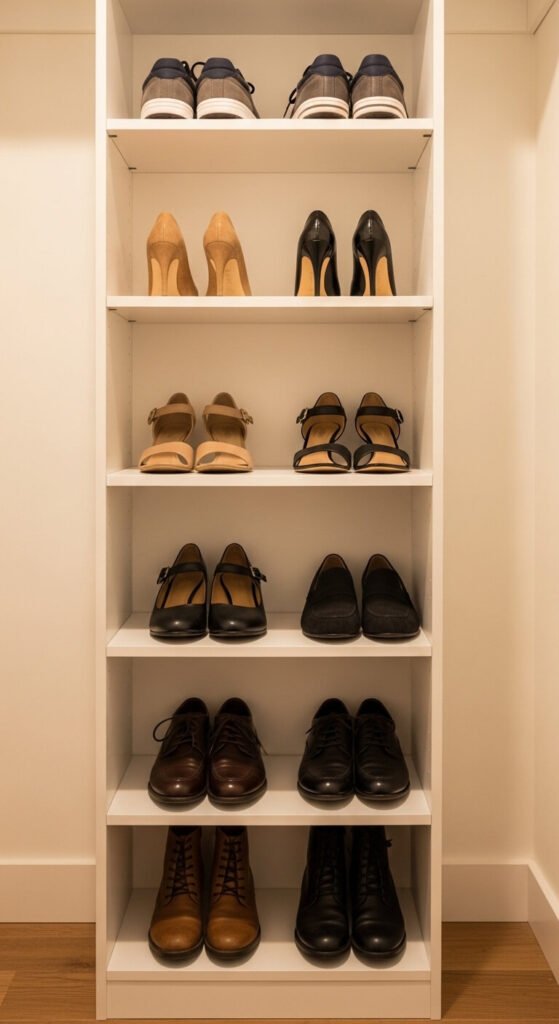
A narrow bookshelf from any thrift store or discount retailer becomes a functional shoe rack with zero modification. Each shelf holds two to four pairs depending on shoe size. Look for shelves spaced 6–8 inches apart. A five-shelf unit holds 15–20 pairs easily. Sand and repaint it to match your room. Thrift store bookshelves often cost $10–$30. This is one of the most budget-friendly fixes available.
23. Clear Shoe Pockets on Closet Wall
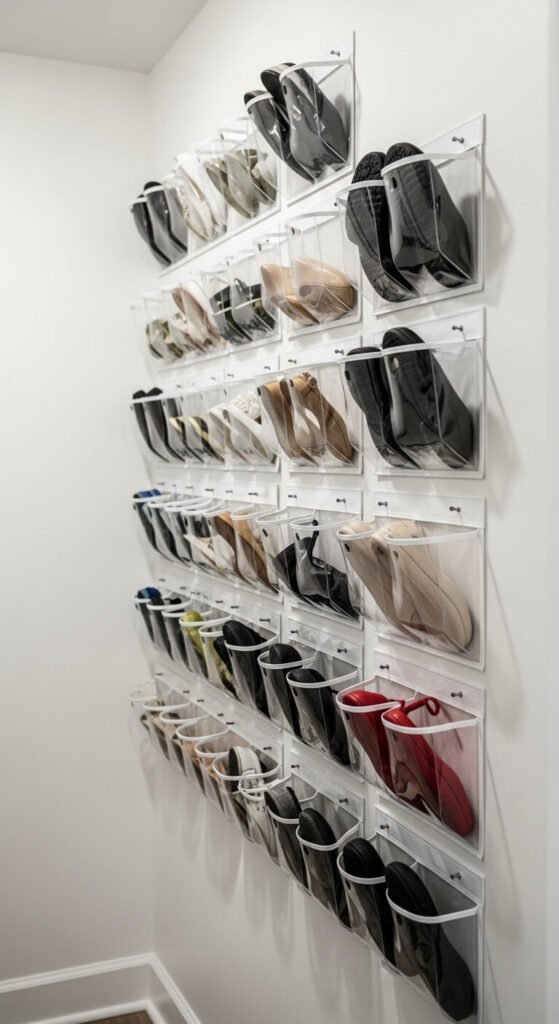
These flat, clear pockets mount directly to the wall and display one shoe per pocket. They take up almost no depth — ideal for tight closets. Pairs of pockets mount side by side. You can see the shoe without touching it. Great for small collections of flats, sandals, or kids’ shoes. A pack of 10–20 pockets runs $15–$25 online. They install with small nails or command strips and remove without damage.
24. Modular Cube Organizers with Shoe Bins
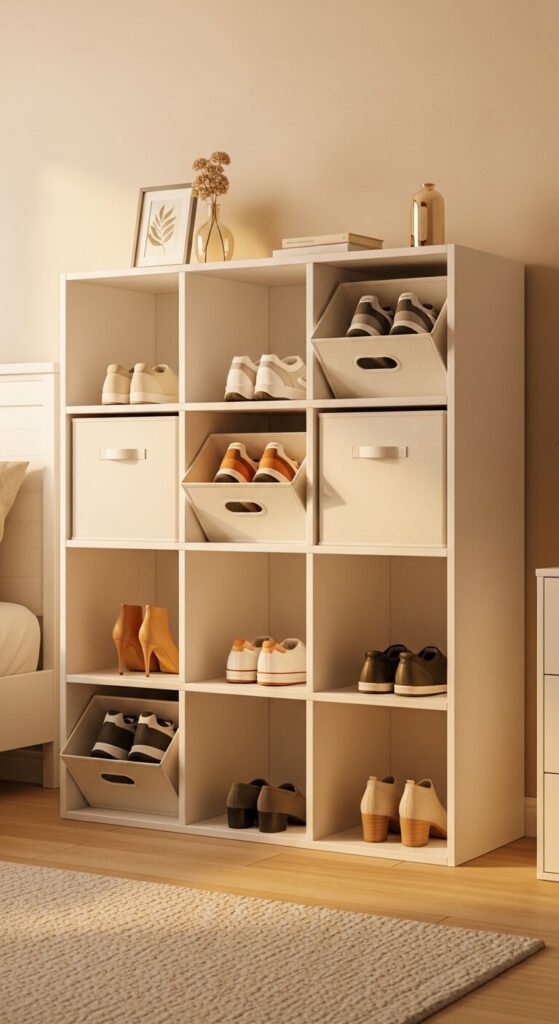
Modular cubes give you full control over your storage layout. Use half the cubes open for display and half with bins for hidden storage. This is great when some shoes need to be accessible and others stored away. Units are easy to rearrange as your collection changes. IKEA Kallax or similar options from Target are the most popular. Stack them vertically to maximize wall height, or spread them wide for a low credenza look.
25. Dedicated Sneaker Display Shelves
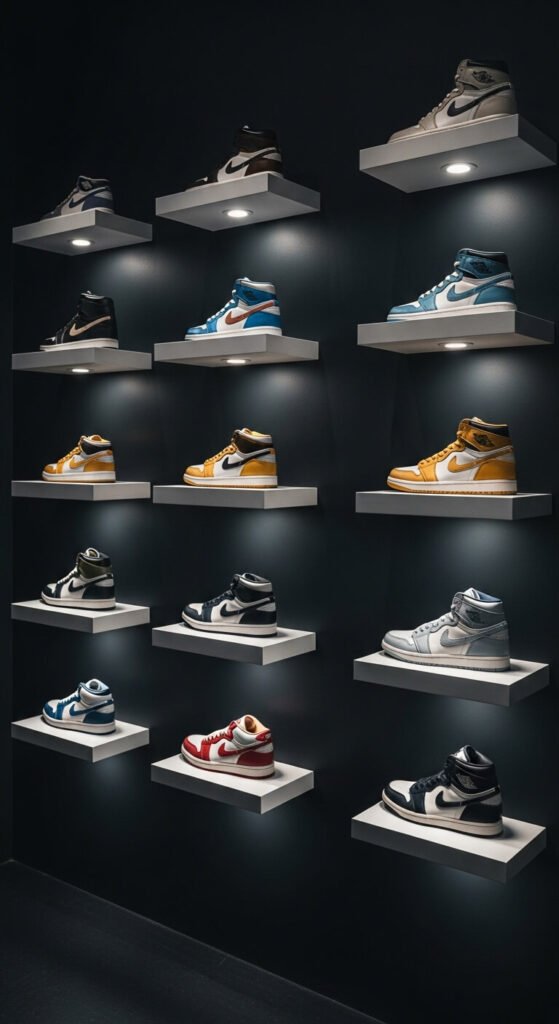
If sneakers are your thing, treat them like the art they are. Install lit floating shelves and space each pair deliberately. LED strip lights underneath shelves cost $10–$20 per strip and make the display dramatic. Rotate pairs seasonally and use silica gel packets inside each sneaker to manage moisture. A dedicated display also protects valuable pairs from being tossed around in a pile where sole edges get scratched and uppers get crushed.
26. Suitcase Shoe Storage Under Bed
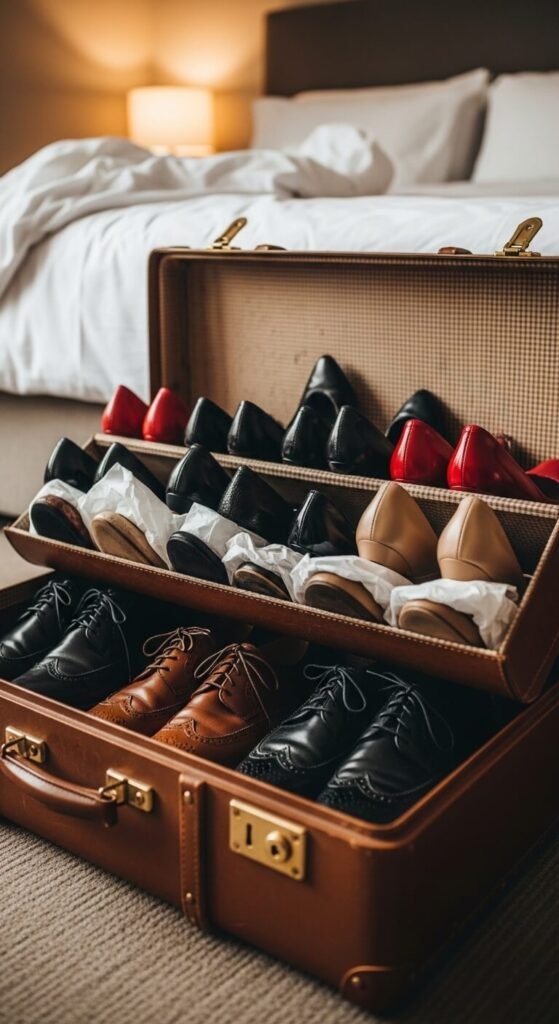
An old hard-shell suitcase becomes clever hidden storage when slid under the bed. Line the interior with a cloth and pack shoes in pairs, stacked or side by side. The hard shell protects shoes from pressure and keeps them dust-free. Vintage suitcases from thrift stores cost $10–$30 and add character to a bedroom. Label the outside with a luggage tag describing what’s inside. Great for off-season or formal shoes rarely needed.
27. Entryway Shoe Tray with Vertical Wall Storage Combo
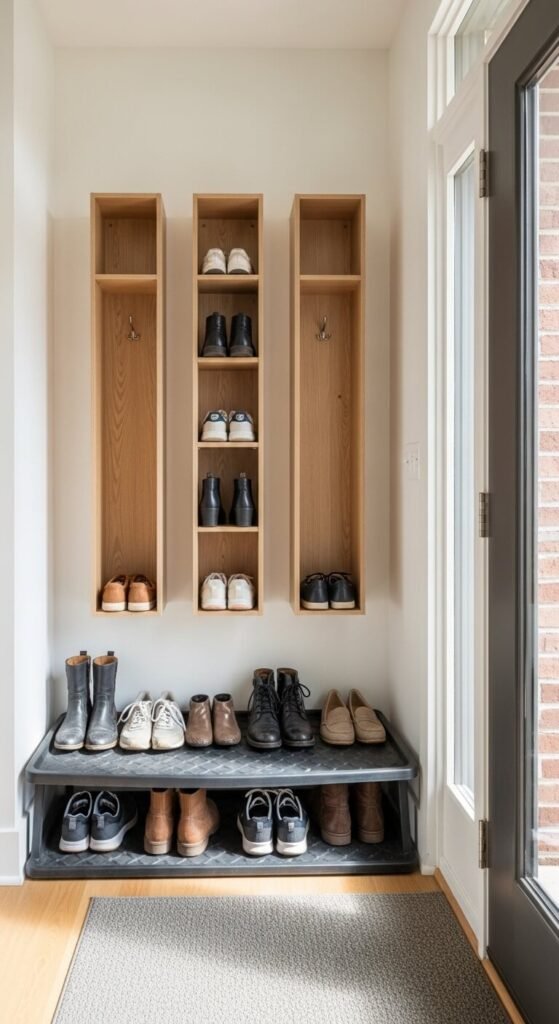
Pair a floor tray with wall storage above it for a complete entryway system. The tray catches wet or muddy shoes coming in the door. The wall cubbies above hold dry, everyday pairs within easy reach. Rubber boot trays cost $10–$20. Add a few floating shelves or cubbies above for $40–$80. Together, this combo manages the full rotation of shoes a household goes through daily. It’s one of the most practical things you can do for an organized home.
Conclusion
Shoe storage doesn’t have to be expensive or complicated. The best system is the one you’ll actually use every day. Start with what bothers you most — whether that’s shoes piling up at the door, crushed heels in the closet, or boots that won’t stay upright. Pick one or two ideas from this list, try them out, and build from there. Small changes add up fast. A clear box here, a floating shelf there, and suddenly your entire collection is protected, organized, and easy to find every morning.