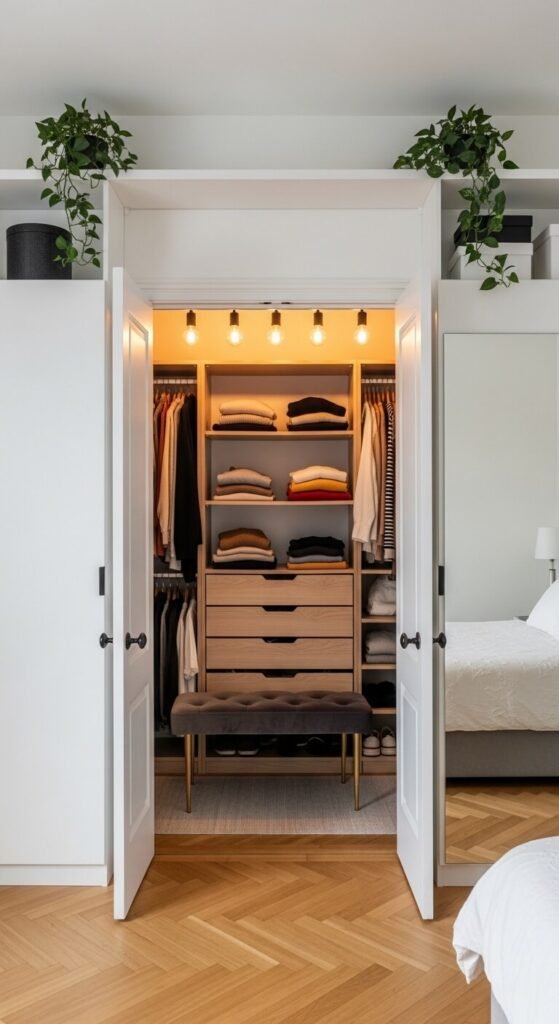
Your bedroom closet does more than hold clothes — it sets the tone for your whole morning. A cluttered, dark closet can make getting dressed feel like a chore. But with a few smart changes, even the smallest closet can feel like a boutique dressing room. You don’t need a big budget or a contractor. Most of these ideas cost under $50 and take just a weekend. Whether you’re working with a walk-in or a tiny reach-in, there’s something here for every space and every style.
1. Start With a Full Closet Cleanout
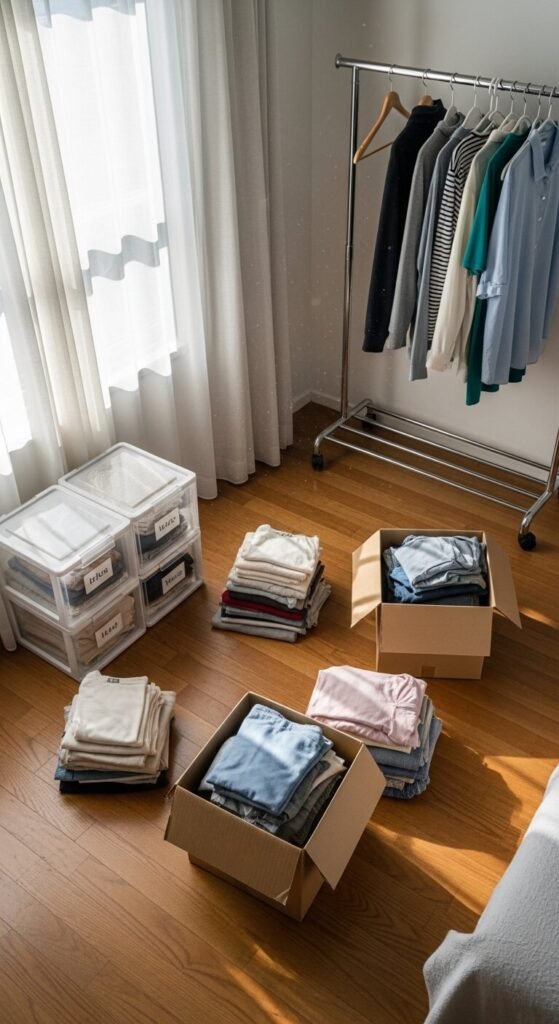
Before buying anything, pull everything out. Every single item. This is the step most people skip — and then wonder why their makeover didn’t stick. Lay clothes on the bed and sort into three groups: keep, donate, and toss. Be honest. If you haven’t worn it in a year, let it go. A clean slate makes every other tip on this list work better. You’ll also discover exactly what storage you actually need.
2. Add a Second Hanging Rod
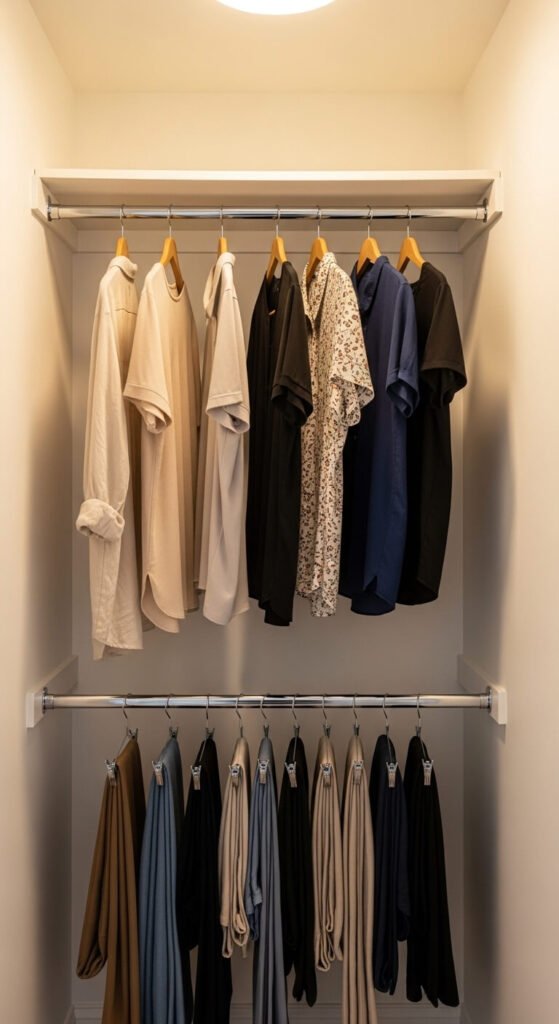
Most closets only use half their vertical space. A second hanging rod doubles your capacity instantly. For short items like shirts, blazers, and folded pants, this trick is a game-changer. Tension rods cost around $10–$15 at any home goods store. No drilling required. Just extend, lock in place, and hang. For longer items like dresses or coats, keep one full-length section. Pair the rest with a double rod setup and watch your space open up.
3. Use the Back of the Door
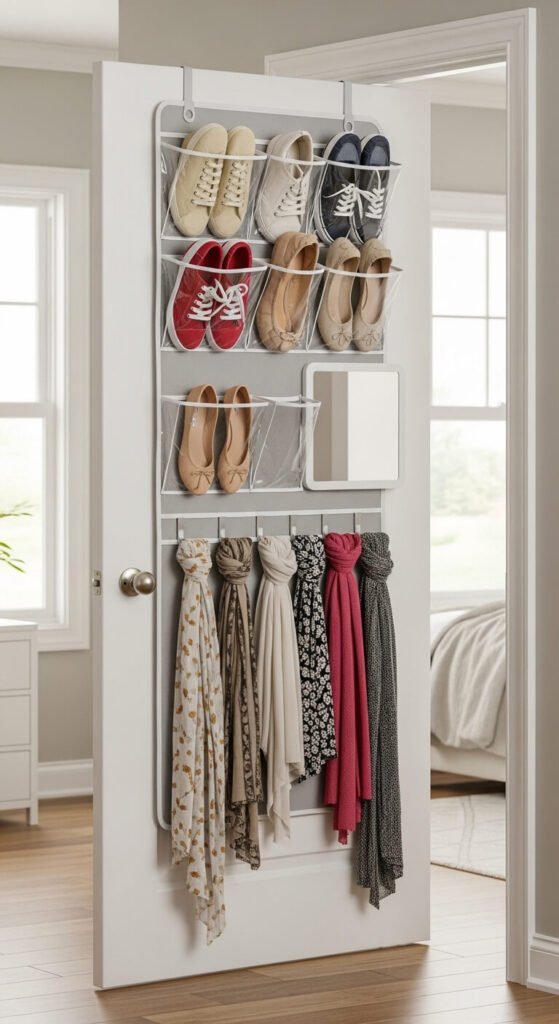
The back of your closet door is free real estate. Over-door organizers come in shoe pockets, hook strips, and full-panel racks. A basic over-door shoe organizer ($15–$25) can hold shoes, accessories, belts, or even cleaning supplies. For a cleaner look, mount a few adhesive hooks in a row. This one swap can free up an entire shelf inside the closet. It works on hollow-core doors and solid wood doors alike.
4. Install Open Shelving With Brackets
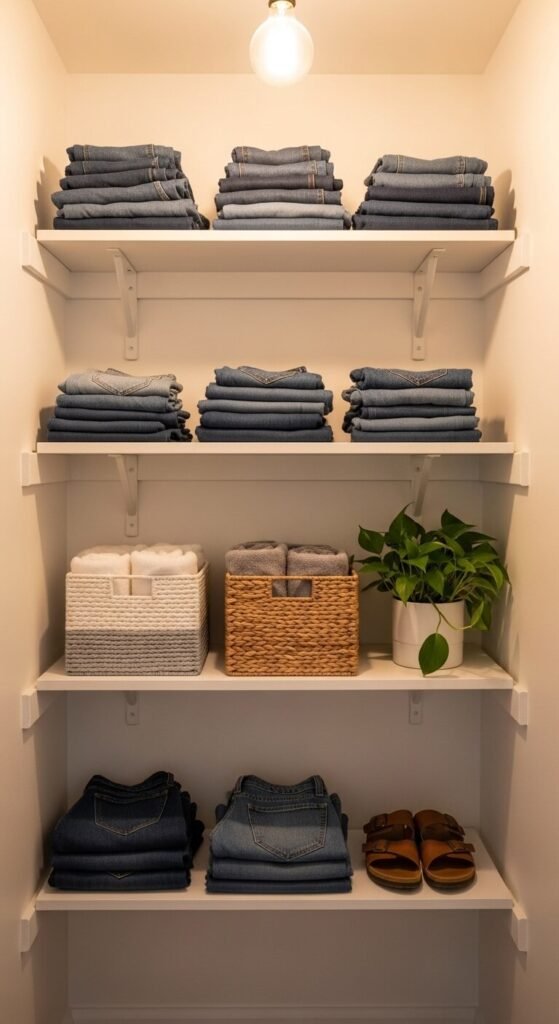
Open shelving is affordable and easy to install. A basic shelf kit from a hardware store runs $20–$40. You can cut boards to fit any width. Floating shelves look clean and let you see everything at a glance. Use them for folded sweaters, bags, shoes, or decorative bins. Space shelves about 12–14 inches apart for folded items. Add a lip or baskets to keep things from sliding off. Paint the shelves white or match your wall for a seamless, built-in look.
5. Swap Wire Shelves for Wood or Laminate
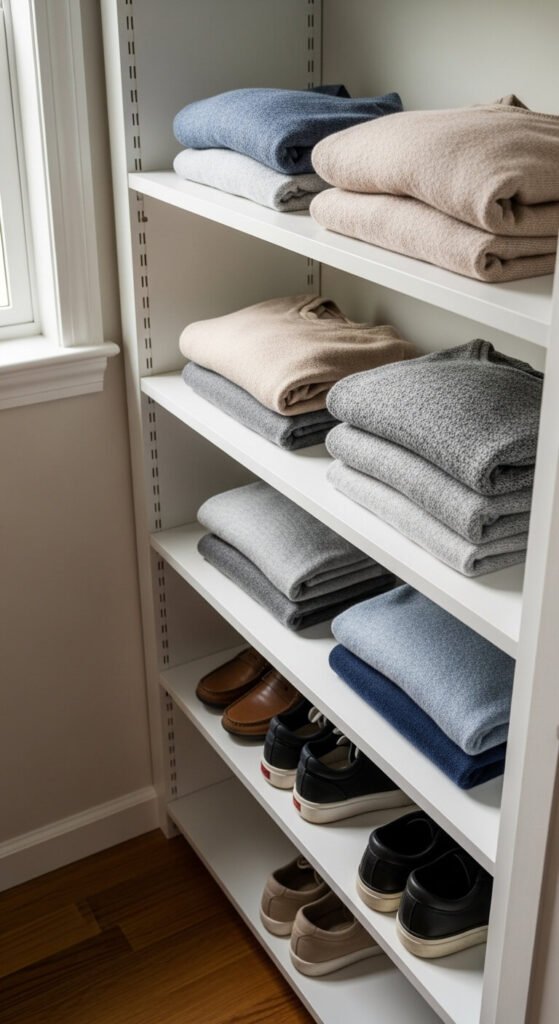
Wire shelves are practical but dated. Replacing them with wood or laminate boards takes a few hours and makes a huge visual difference. Cut laminate boards to size at your local hardware store — they’ll usually do it for free. Sand the edges, prime, and paint, or leave the wood natural. The swap costs roughly $30–$60 depending on your closet size. The result looks polished and makes folded clothes stay neater since there are no gaps to fall through.
6. Use Matching Velvet Hangers Throughout
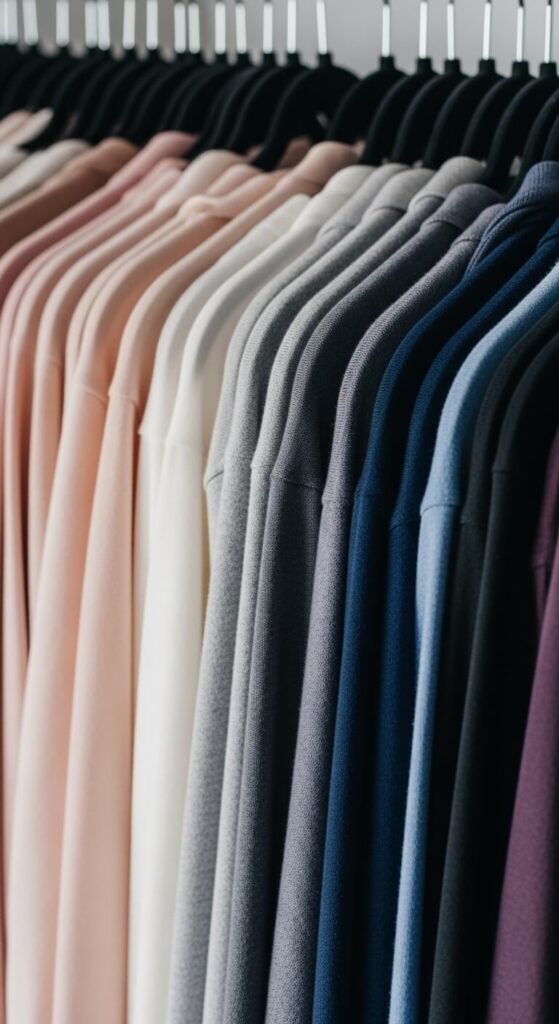
Mismatched plastic and wire hangers make even a tidy closet look chaotic. Switching to slim velvet hangers is one of the easiest, most affordable upgrades you can make. A 50-pack costs around $10–$15. They’re non-slip, take up less space, and make your closet look instantly more put-together. Go for one color — black, gray, or rose gold all look sharp. The visual consistency alone makes the space feel intentional and styled.
7. Sort Clothing by Color
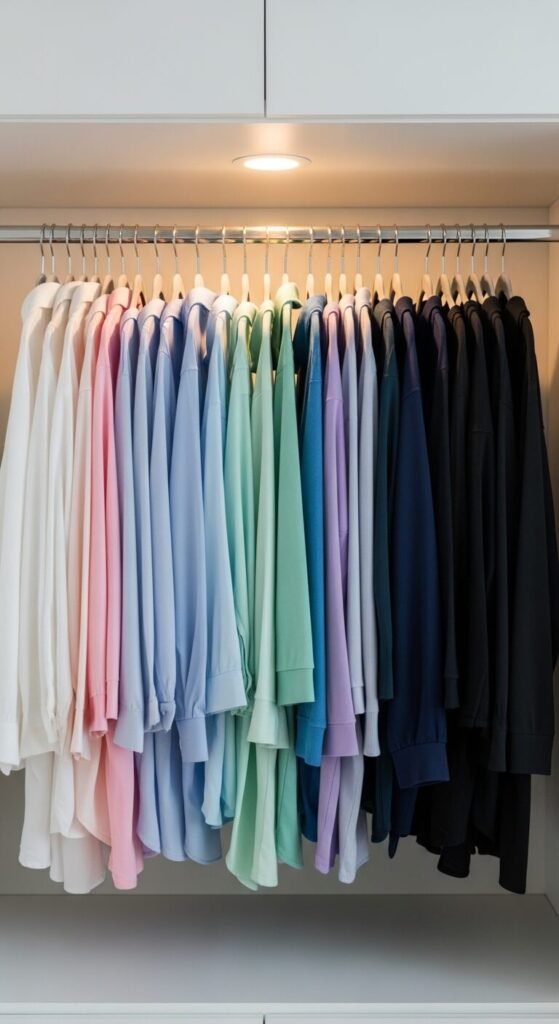
Color-coding your wardrobe is not just for aesthetics — it makes getting dressed faster. Start with white and light neutrals, move through pastels, then warm tones, then dark neutrals, and end with black. No labels needed. Your brain maps the pattern and you find what you need in seconds. This works for tops, bottoms, and even shoes. It takes about 20 minutes to set up and zero dollars. It’s one of those changes you’ll wonder why you didn’t do sooner.
8. Add Labeled Bins or Baskets
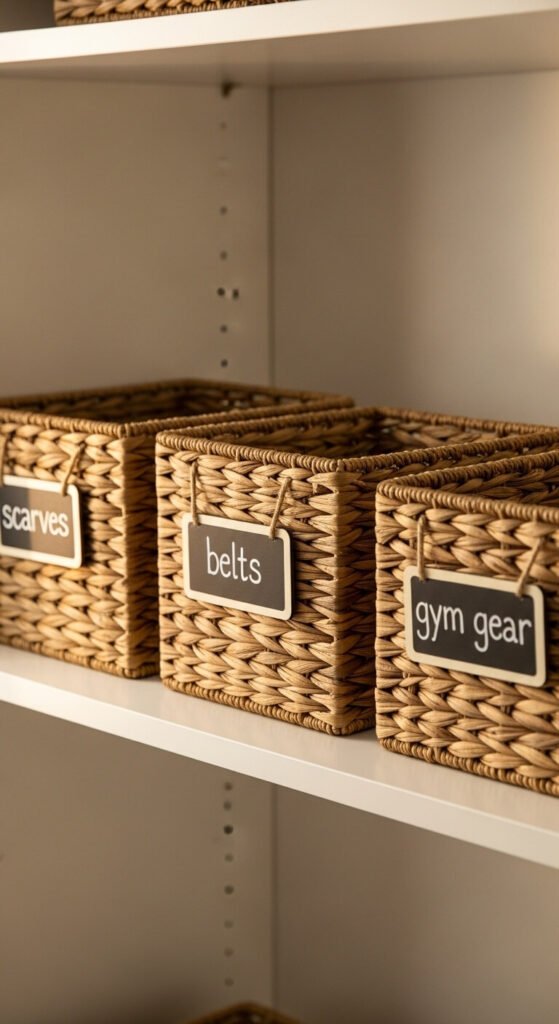
Open baskets are stylish and functional. Use them for anything that doesn’t hang — gym clothes, accessories, seasonal scarves, or extra bedding. Woven seagrass baskets from discount stores cost $5–$15 each. Add chalkboard labels or simple tags with string for a clean, organized look. Matching baskets in the same material or color make even budget shelving look intentional. Stack two on each shelf to maximize vertical space without adding new furniture.
9. Mount a Small Mirror Inside the Closet
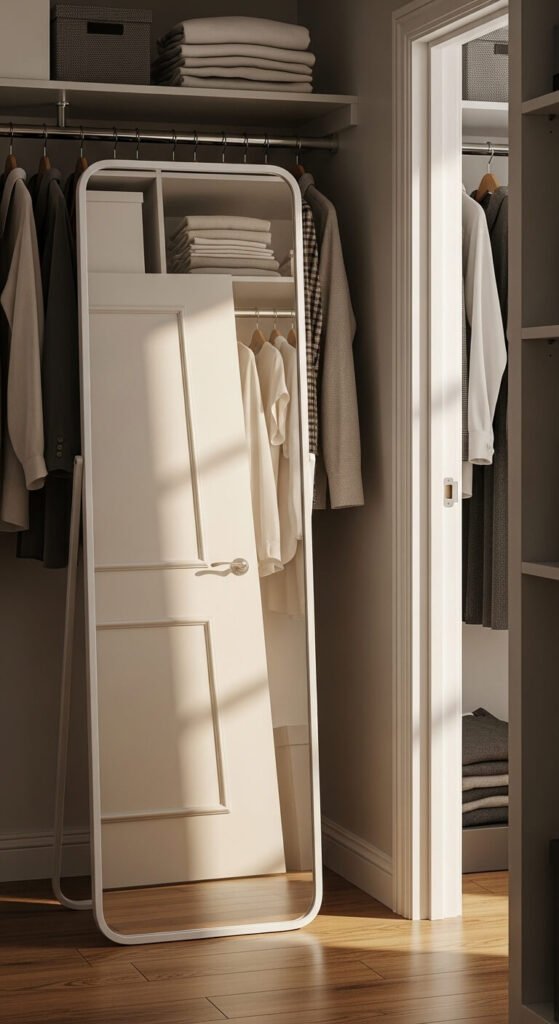
Adding a mirror inside your closet turns it into a real dressing space. Even a small full-length mirror mounted to the wall or propped in a corner does the job. Peel-and-stick mirrors start at around $20 and require no hardware. A mirror also reflects light, making small closets feel bigger. For a budget option, lean a full-length mirror from a dollar store against the wall. It’s functional, affordable, and makes the space feel like your own personal fitting room.
10. Use Shelf Dividers for Folded Stacks
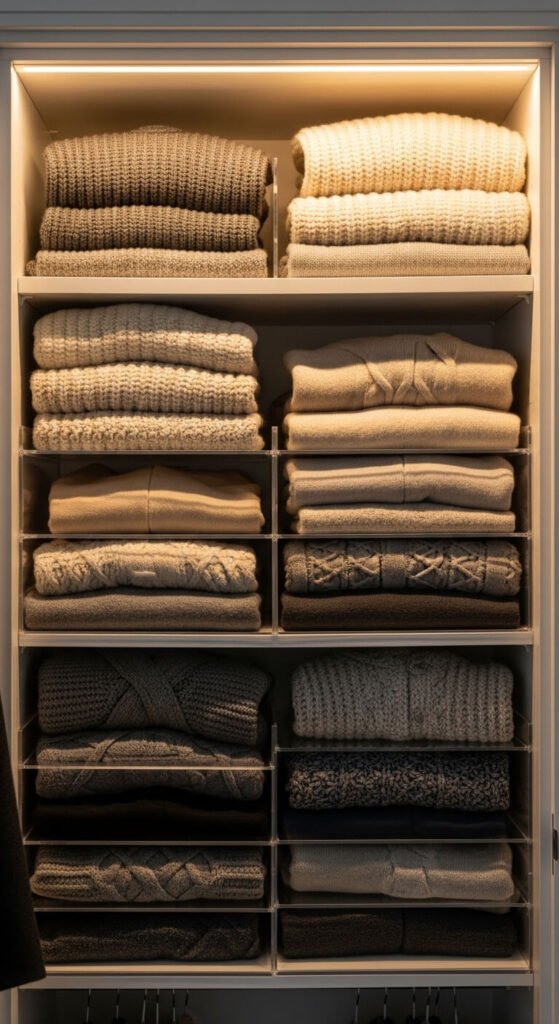
Folded stacks always seem to topple over. Shelf dividers fix that. Acrylic or metal dividers clip onto shelves and keep each stack in its own lane. A set of six costs around $10–$15. They work on wood, laminate, or wire shelves. Use them for sweaters, jeans, or even clutch bags stored upright. It’s one of those micro-upgrades that makes your whole closet feel more controlled — and keeps your folding effort from going to waste the moment you pull one item.
11. Create a Shoe Display on Angled Shelves
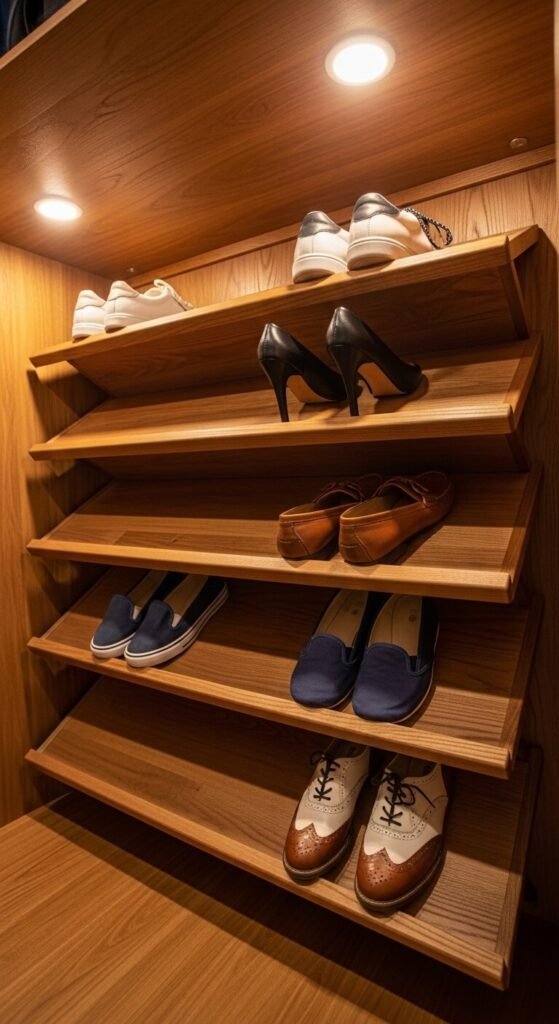
Shoes stored in a heap are hard to find and easy to damage. Angled shoe shelves display them like a boutique and use vertical space efficiently. DIY versions can be made from basic lumber and cut at a 15-degree angle. A wall-mounted set for six pairs costs around $25–$40 in materials. You can also buy slanted shoe racks for under $30 at most home stores. Place them low on the closet wall or along the floor for easy access and a genuinely impressive visual effect.
12. Paint the Interior a Bold Color
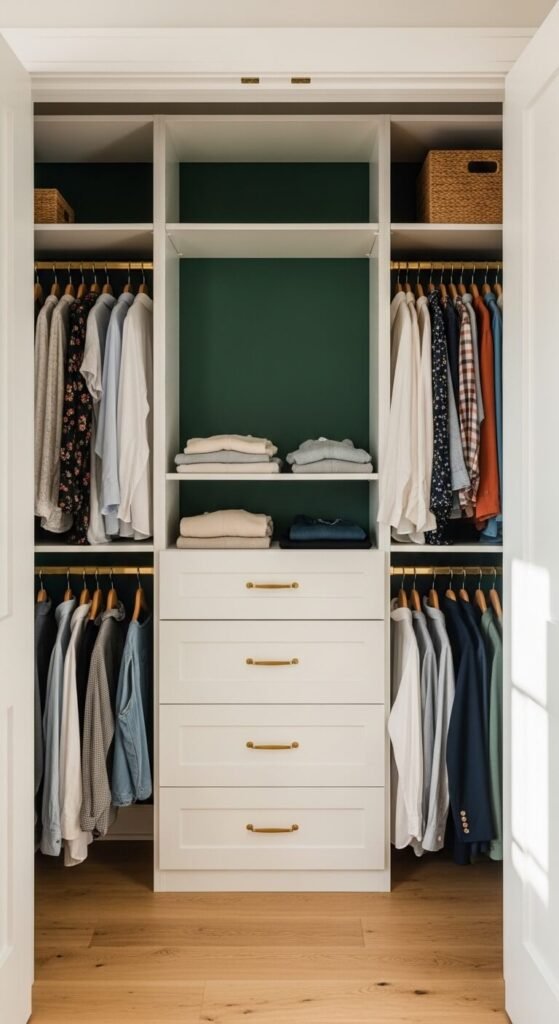
The inside of your closet is the perfect place to take a design risk. Paint the back wall a deep jewel tone — navy, forest green, dusty rose — and it suddenly feels like a considered space rather than a utility cabinet. One quart of paint costs under $15 and covers most closet interiors. Use a semi-gloss finish for easy cleaning. No wallpaper budget needed. Tape the shelving and rod brackets, roll on two coats, and let dry overnight. The contrast with your clothes makes everything pop.
13. Add LED Strip Lighting
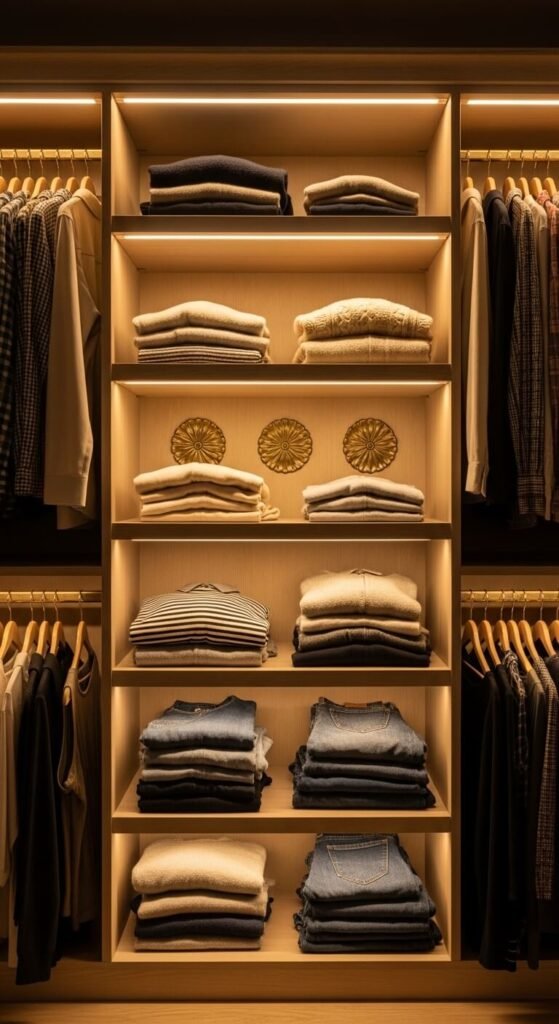
A dark closet makes everything harder to find. LED strip lights under shelves or along the rod change everything. Adhesive LED strips cost $10–$20 for a full kit and plug into any USB outlet or wall adapter. They’re easy to cut to length, require no wiring, and run cool so they’re safe around fabrics. Warm white (2700K–3000K) gives the most flattering light and makes colors easier to read. Some strips are motion-activated — great for small closets where you don’t want to hunt for a switch.
14. Hang a Jewelry Organizer on the Wall
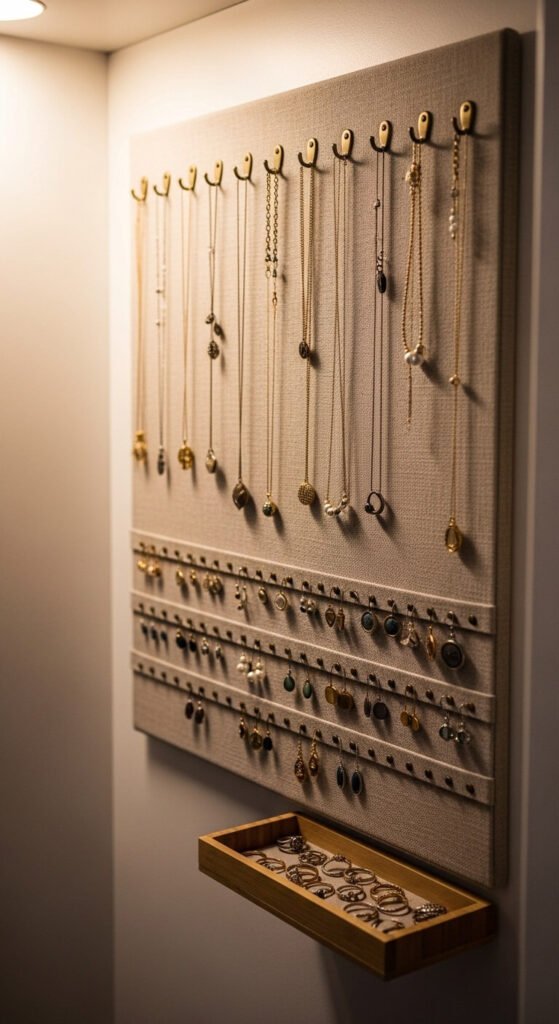
Jewelry stored in a drawer becomes a tangled mess. A wall-mounted jewelry organizer keeps everything visible and untangled. You can buy a pre-made version for $15–$30 or make one with a wood frame, linen fabric, and small cup hooks. Mount it at eye level on the wall inside or beside your closet. Necklaces hang without knotting, earrings stay paired, and you can see every piece at once. This saves time in the morning and prevents losing small items at the bottom of a box.
15. Use Clear Shoe Boxes With Labels
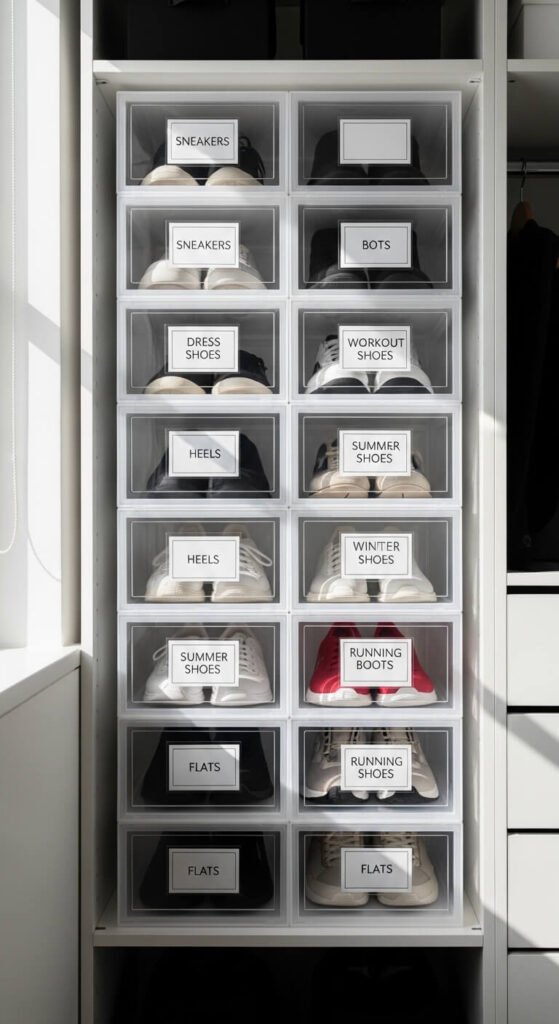
Stacked shoe boxes make finding the right pair a guessing game. Clear plastic shoe boxes solve that instantly. You can see what’s inside without opening anything. A set of 12 costs around $15–$25. Add a small printed or handwritten label on the front for even faster access. Stack them by heel height, style, or color. For a uniform look, use the same brand and size box throughout. The clear walls also double as a display — your shoes become part of the decor.
16. Dedicate a Drawer or Bin to “Outfit Pieces”
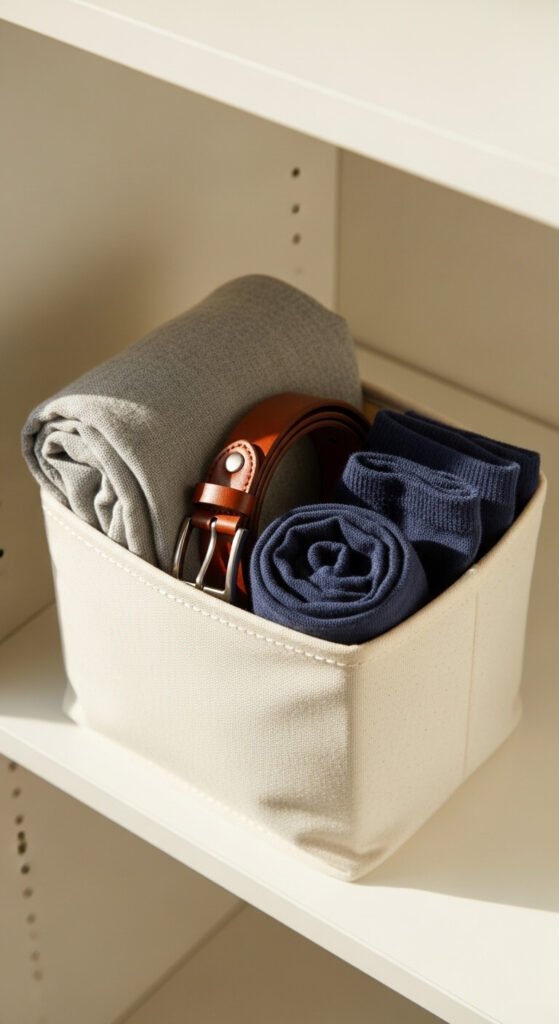
Keep a dedicated spot for pre-planned outfit components — the scarf that goes with your blazer, the belt that matches those trousers. A small fabric bin or basket works perfectly. When you buy or wear something that has a natural pairing, store those pieces together or note it with a tag. This one habit cuts your morning decision time in half. No reorganizing required. Just grab the bin when you’re putting together a look and the work is already done.
17. Repurpose a Bookshelf as Closet Storage
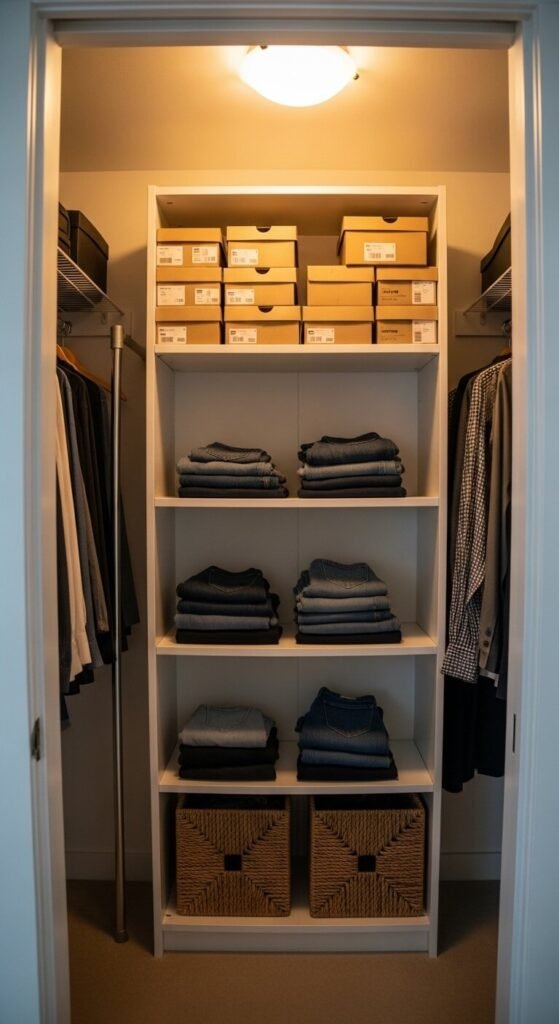
You don’t need custom built-ins to get organized storage. A freestanding bookshelf works just as well — and costs a fraction of the price. A basic five-shelf unit runs $30–$80 at most furniture stores. Place it along the back wall of a walk-in or use it beside a wardrobe. Shelves work for folded clothes, bags, shoe boxes, and baskets. Paint it to match the wall for a more built-in look. This is one of the most cost-effective ways to add storage without any installation.
18. Add a Small Bench or Stool
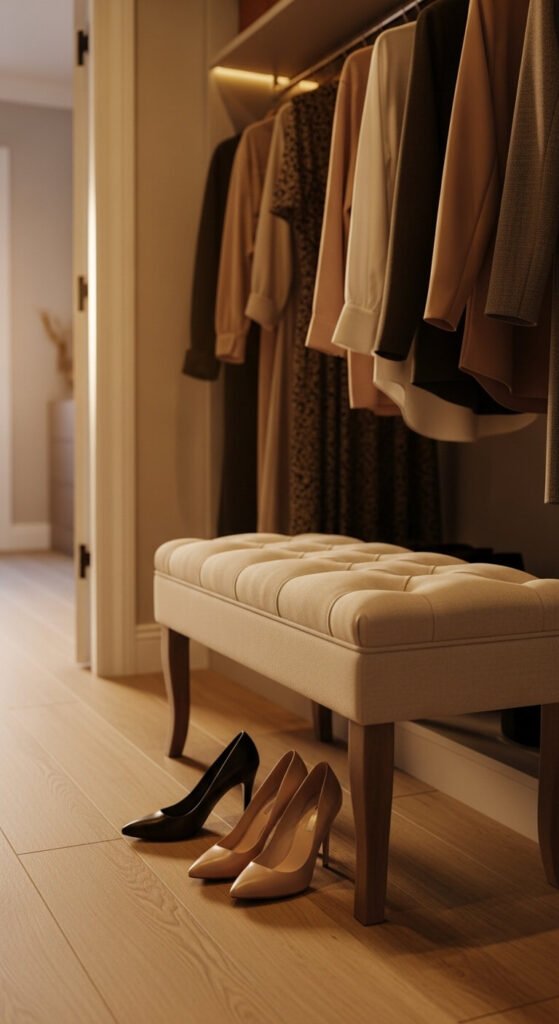
Sitting down to put on shoes is a small luxury that makes a big difference. A small bench or stool at the entrance of your closet pulls everything together. It also works as extra storage if you choose one with a lift-top lid or open base. Budget options start at $30–$50. A piano bench, a small ottoman, or even a wooden step stool all work in a pinch. Style it with a folded throw or a pair of statement shoes and it becomes part of the design.
19. Create a Capsule Wardrobe Section
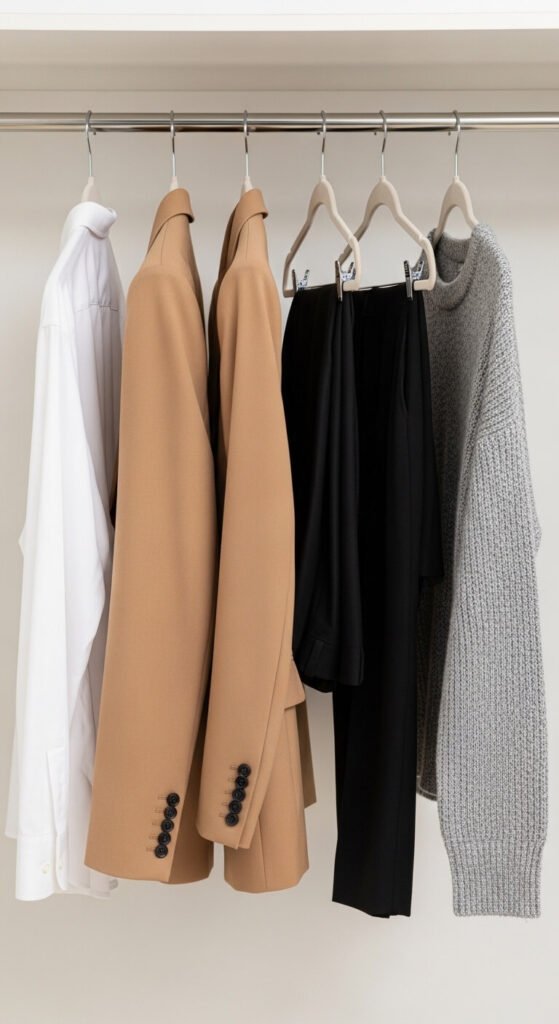
Set aside a small section of your closet rod for your most-worn, go-to pieces. These are the items you reach for every week — your uniform. Keep them together, front and center. This makes weekday mornings almost automatic. The rest of the closet can be organized however you like, but this front section stays curated and simple. It doesn’t require buying anything — just editing your current wardrobe and being intentional about placement.
20. Hang Scarves and Belts on Shower Rings
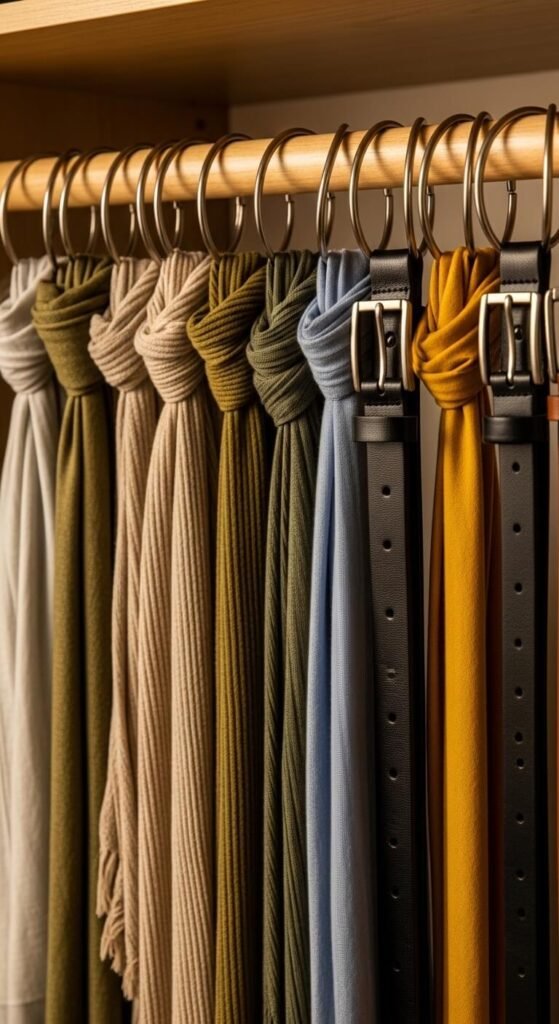
Shower curtain rings are one of the best-kept secrets in closet organization. Slide them onto your existing hanging rod and loop scarves, belts, or ties through each one. A pack of 12 rings costs around $3–$5. They take up almost no space and keep accessories visible and easy to grab. Group by type or color. You can also use a single hanger with multiple rings layered onto it to create a compact accessory station that hangs in the space of one shirt.
21. Apply Peel-and-Stick Wallpaper to the Back Wall
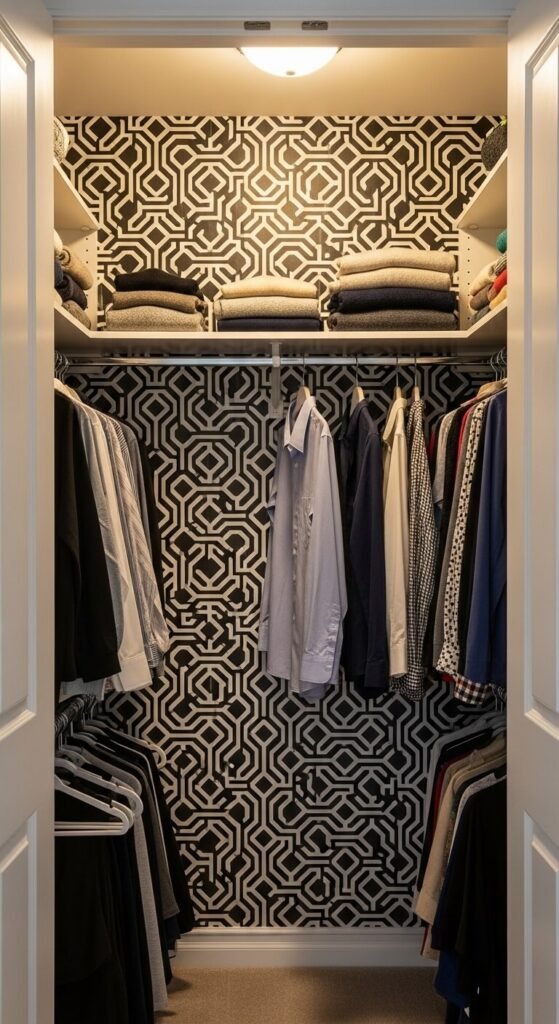
Peel-and-stick wallpaper turns a plain closet wall into something worth opening the doors for. It’s removable, renter-friendly, and costs $15–$40 per roll. A bold pattern — stripes, geometric shapes, floral, or a solid textured option — adds personality without paint. Measure carefully, cut to size, and smooth out bubbles with a credit card. Apply it to the back wall only for a bold accent effect. It photographs beautifully and makes even basic shelving look like a styled space.
22. Use Tension Rods Vertically for Purses and Clutches
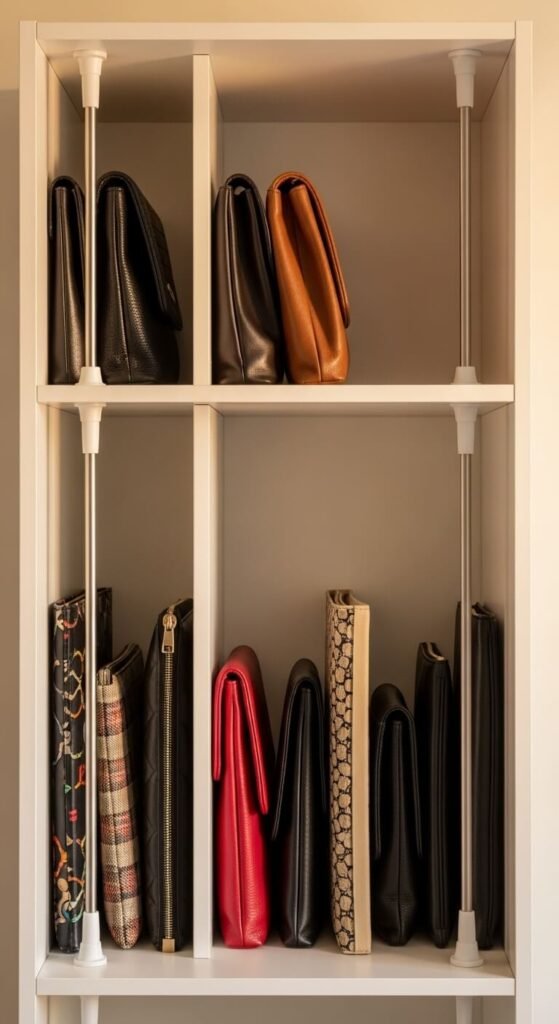
Handbags and clutches are notoriously hard to store. They fall over, get squished, and lose their shape. Two vertical tension rods placed side by side on a shelf act like bookends — bags stand upright between them like books on a shelf. Tension rods cost $5–$10 each. Place them in any cubby or open shelf. This works for clutches, small handbags, and even folded tote bags. No hooks, no special hardware. Just a clever repurposing of a simple tool most people already own.
23. Label Everything — Seriously
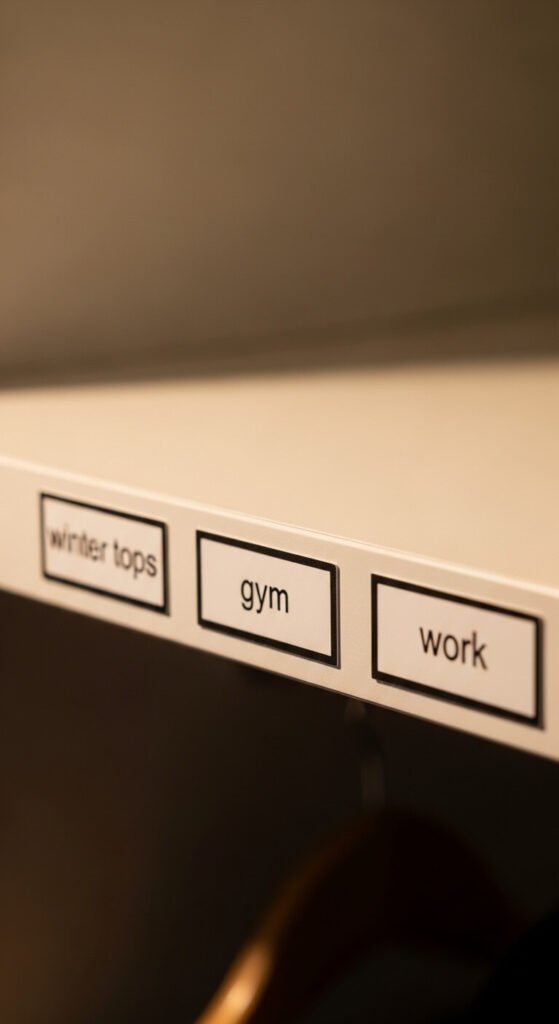
Labels remove decision fatigue. When every shelf and bin has a clear label, you always know where things live — and so does everyone else in the household. Use a label maker ($15–$25), printed sticker sheets, or handwritten tags tied with twine for a warmer look. Keep categories simple: “everyday tops,” “formal,” “gym,” “seasonal.” The more specific your labels, the less time you’ll spend looking for things. It takes 30 minutes to label a full closet and the payoff lasts indefinitely.
24. Add a Hook Rail Inside or Beside the Closet
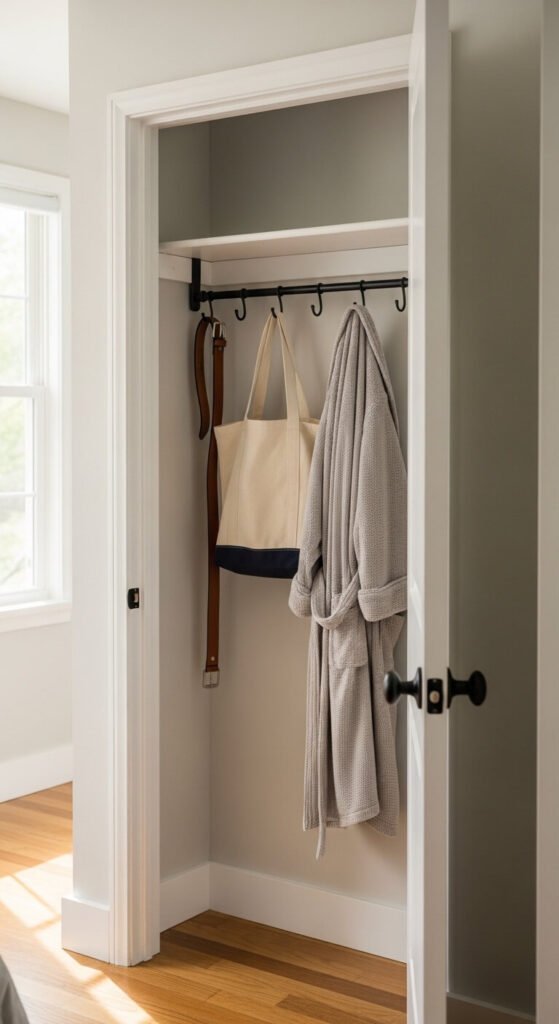
A hook rail is one of the most flexible storage tools you can add. Mount one on the wall inside your closet or right beside the doors. Use it for robes, gym bags, the outfit you’re planning to wear tomorrow, or the blazer you wore once and aren’t ready to put away. Six-hook rails cost $15–$30. Installation takes under 10 minutes with a drill. For renters, heavy-duty adhesive rails from 3M hold up to 7–10 lbs and leave no damage when removed.
25. Do a Seasonal Swap Every Six Months
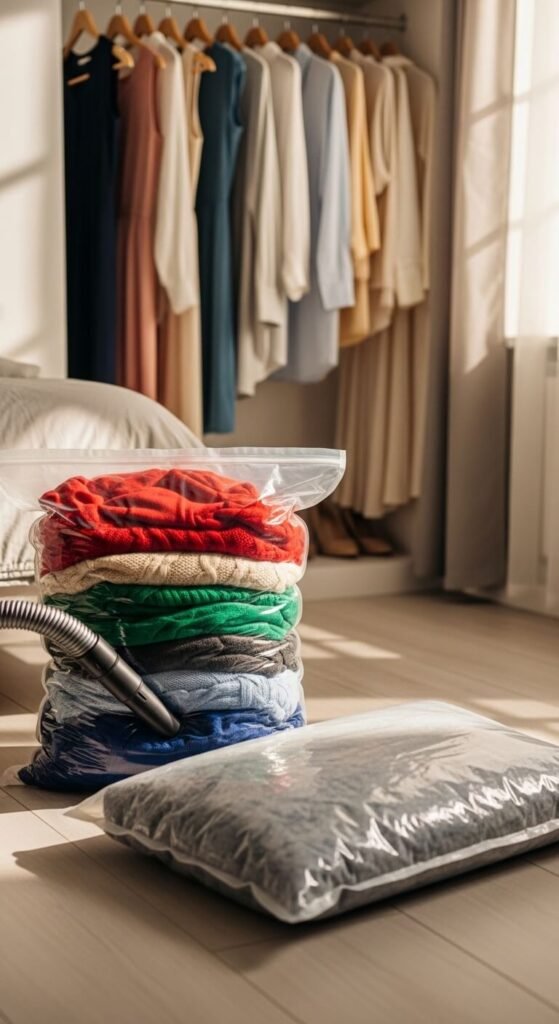
No matter how well you organize a closet, it gets crowded when every season competes for space. A seasonal wardrobe swap every six months keeps your active closet lean. Pack off-season clothes into vacuum storage bags (a 6-pack costs around $15–$20) and store them under the bed or on a high shelf. Pull them out when the weather changes. This frees up a significant amount of hanging and folding space and keeps you cycling through what you actually wear right now.
Conclusion
A bedroom closet makeover doesn’t require a remodel or a big budget — just a clear plan and a few smart moves. Start with the cleanout, add a second rod, swap your hangers, and build from there. Even picking two or three ideas from this list will make a real difference in how your space looks and how you feel using it every morning. The best closet isn’t the biggest one — it’s the one that actually works for your life. Pick a place to start today and go from there.