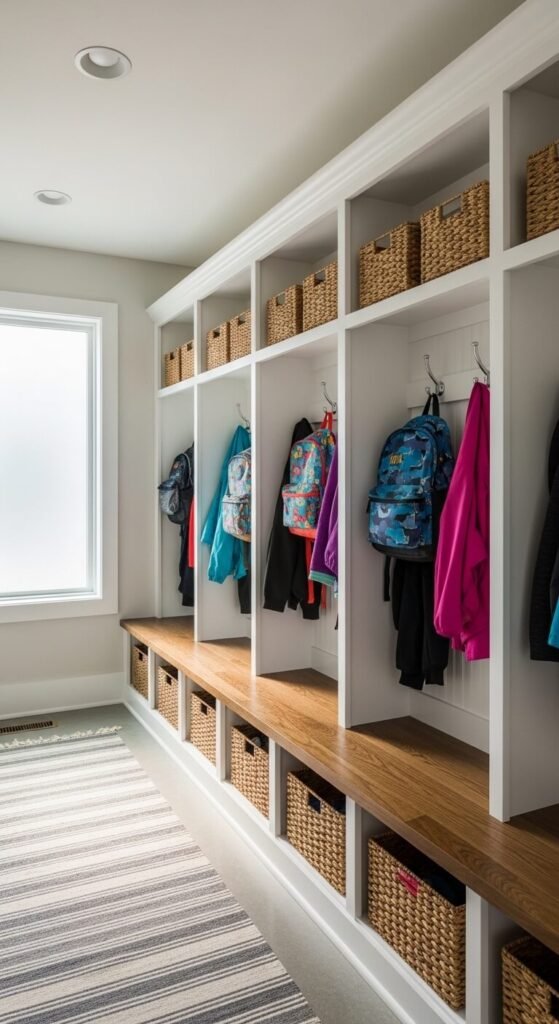
Walking through the front door should feel like a relief — not a battle with boots, bags, and forgotten umbrellas. A well-thought-out mudroom does one job: it stops the chaos before it spreads to the rest of your home. Whether you have a dedicated room, a narrow hallway, or just a corner near the garage door, the right storage setup makes a real difference. These 23 ideas cover everything from budget DIY fixes to simple upgrades that work in any home, any size, any budget.
1. Install a Row of Double Hooks
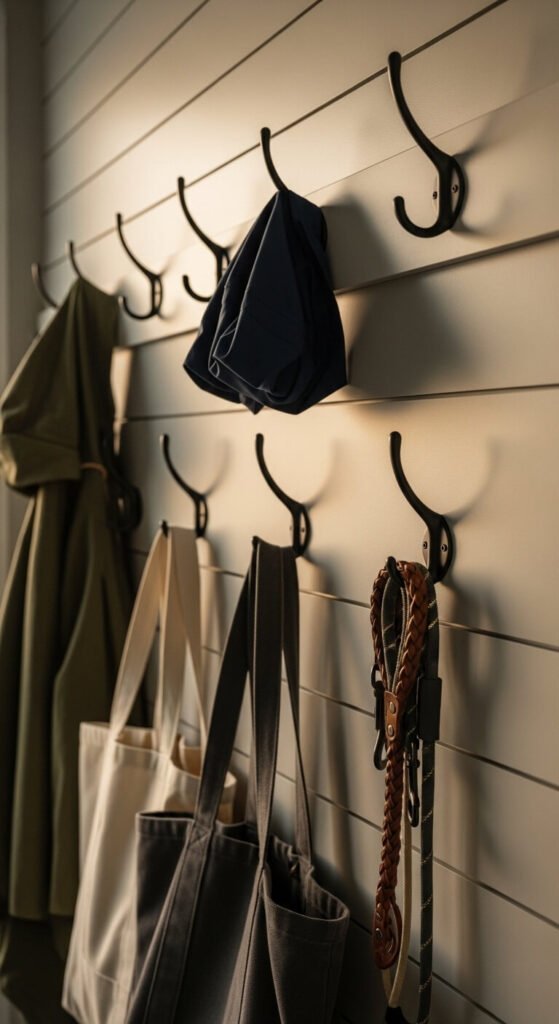
Double hooks do twice the work of single ones. Mount a row at adult height and a second row lower down for kids. This one change alone can double your hanging capacity overnight. Use over-door hooks if you can’t drill into walls. A pack of Command double hooks costs under $15 and installs in minutes. For a more permanent setup, pick up a wooden hook rail at any hardware store and paint it to match your wall.
2. Add a Built-In Bench with Shoe Storage Below
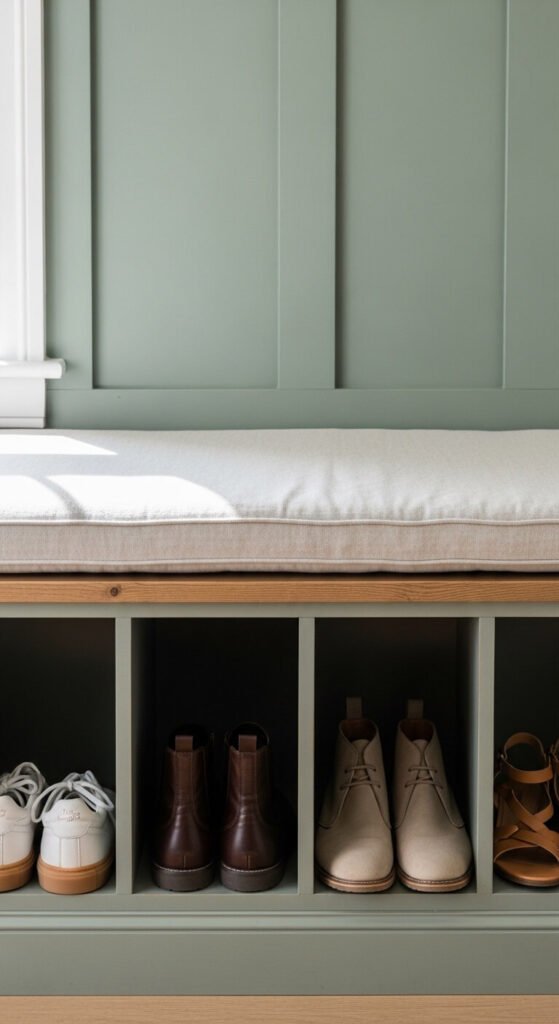
A bench with open cubbies underneath solves two problems at once. You get a place to sit while putting on shoes and a home for footwear right where it’s needed. DIY version: Pick up two IKEA KALLAX shelf units, set them side by side, and add a plank of wood across the top with a foam cushion. Total cost: under $100. It looks intentional and works hard every single day.
3. Use Labeled Baskets for Each Family Member
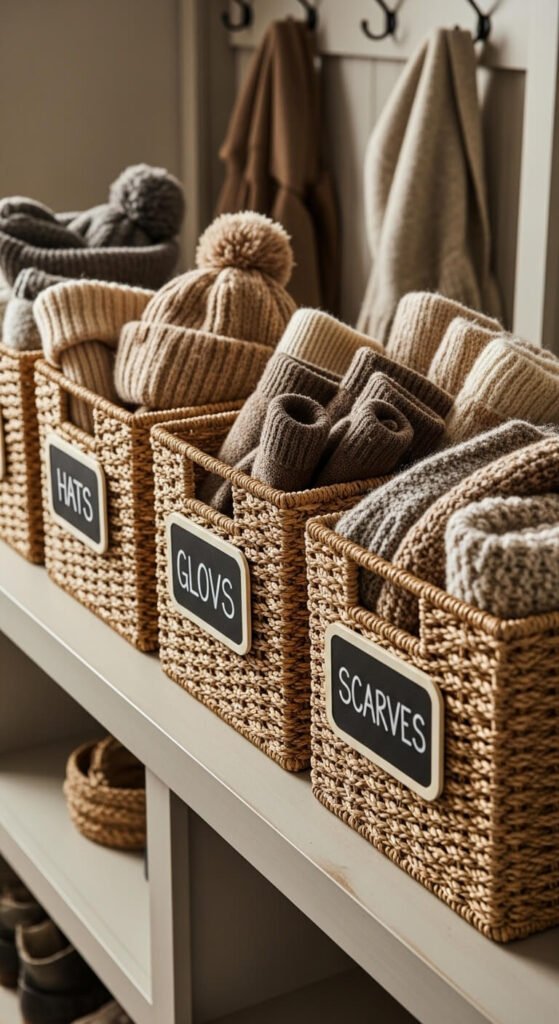
One basket per person. That’s the rule. Label each basket with a name and suddenly everyone knows exactly where their stuff goes — and where to find it. Woven seagrass baskets are affordable ($8–$15 each at most discount stores) and look clean on any shelf. Use chalk tags or a label maker for a polished finish. This works especially well for hats, gloves, scarves, and small items that tend to pile up.
4. Mount a Pegboard for Flexible Storage
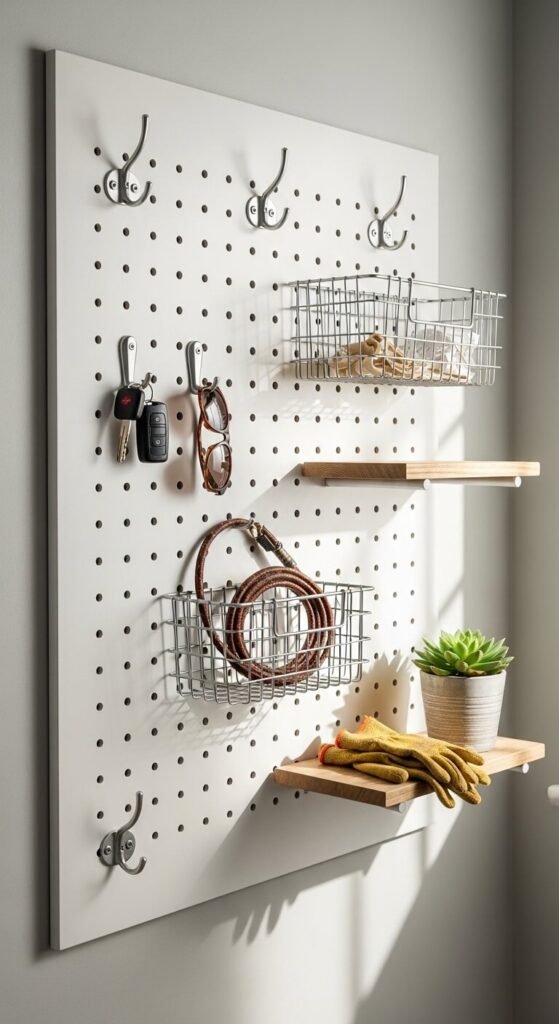
Pegboards are one of the most adaptable storage tools you can buy. A 2×4 ft panel runs about $15 at a hardware store. Paint it any color, hang it at any height, and rearrange the hooks and baskets anytime your storage needs change. Great for keys, sunglasses, dog leashes, and small tools. Add a small shelf attachment for a plant or a catch-all tray. It’s practical, affordable, and endlessly adjustable.
5. Create a Charging Station for Devices
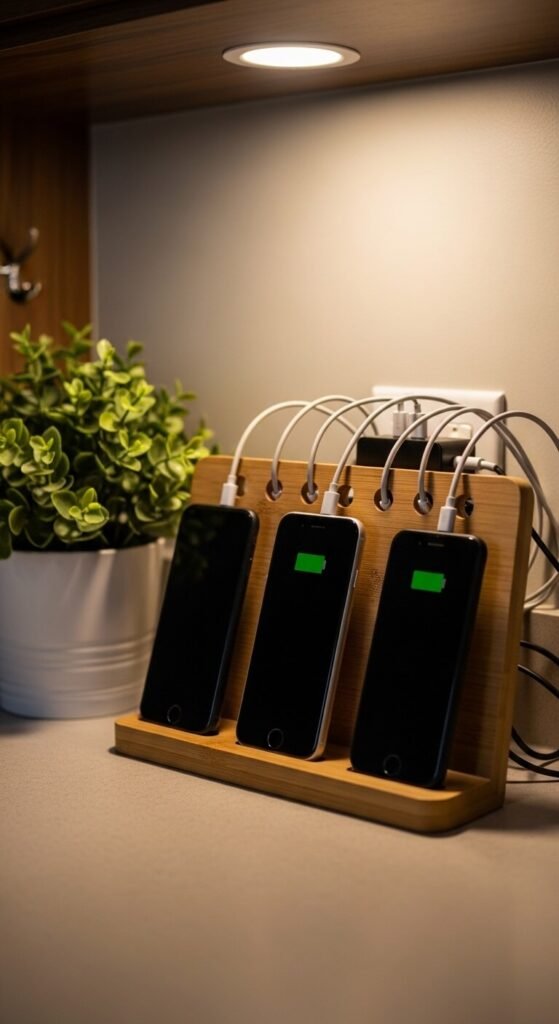
Phones, tablets, earbuds — they all end up in the mudroom whether you plan it or not. Set up a dedicated charging spot so devices don’t wander to the couch, the kitchen counter, or worse, get lost. A small wooden charging organizer costs $20–$30 on Amazon. Or drill cable holes in a small box from a craft store and make your own for under $10. Mount a power strip to the wall behind it and keep cords out of sight.
6. Hang a Corkboard or Chalkboard Wall
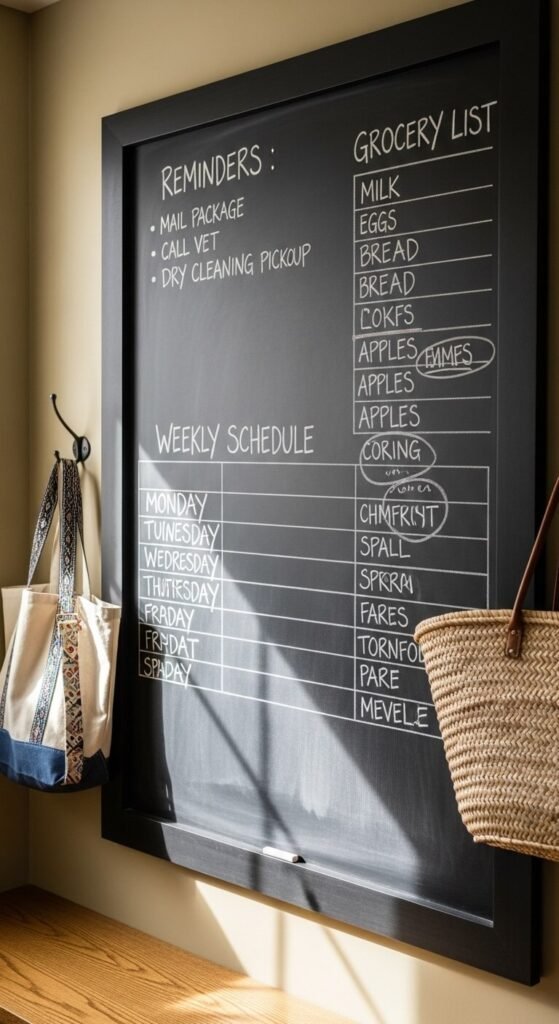
A chalkboard or corkboard in the mudroom works as a family command center. Write reminders, post permission slips, or track after-school schedules right where everyone passes through twice a day. A framed chalkboard panel can be found for under $25. Corkboards with frames look polished and cost even less. This keeps important papers off the counter and in a spot where no one can claim they didn’t see them.
7. Add a Narrow Shoe Rack Behind the Door
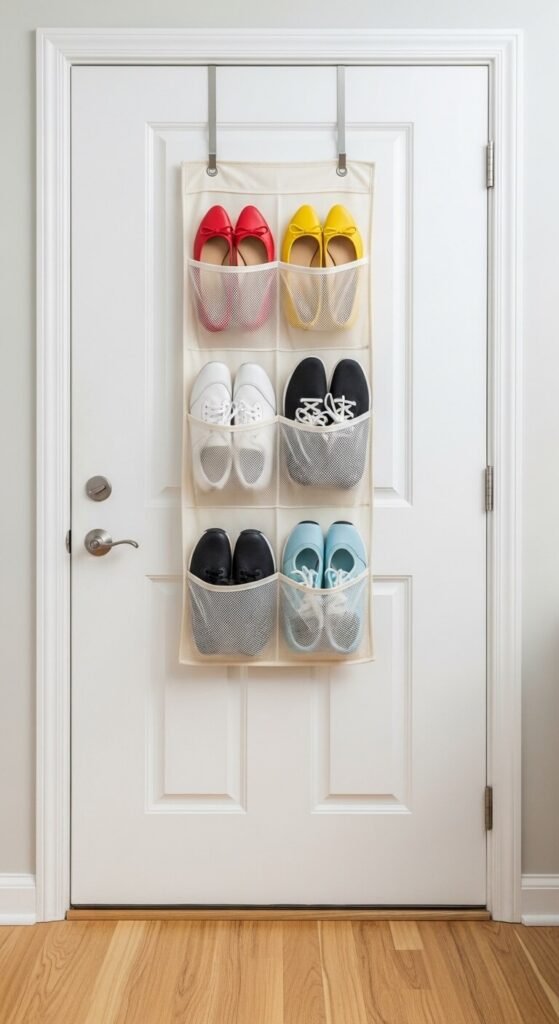
The back of the door is wasted space in most homes. An over-door shoe organizer with pockets can hold six to ten pairs of shoes without taking up a single inch of floor space. This is one of the best $15–$20 investments you can make. It also works for storing sports gear, cleaning supplies, or kids’ accessories in the pockets. Works on any standard hollow-core door with no tools needed.
8. Build a Simple Locker System with Curtains
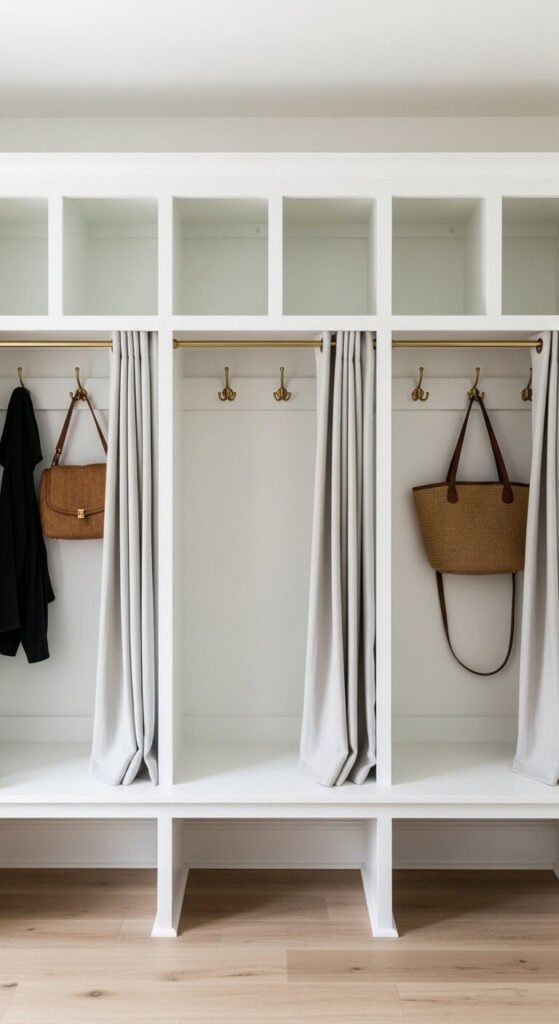
Open lockers give each family member their own zone. Add a curtain on a tension rod inside each one to hide the mess when company comes. You can build basic locker boxes from plywood for under $50 each if you’re handy. Or repurpose tall IKEA wardrobes. The curtain is the key — it makes the whole setup look intentional rather than cluttered, even on the messiest mornings.
9. Use a Coat Rack with a Built-In Shelf
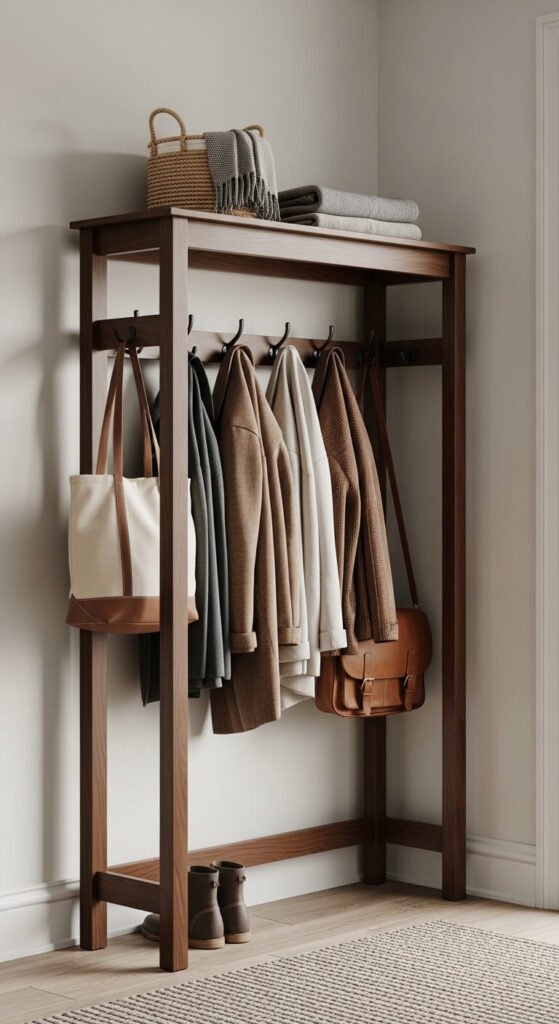
A freestanding coat rack with a top shelf handles coats on the hooks and overflow items — helmets, hats, seasonal bags — on the shelf above. No installation required. This is a great option for renters or anyone who doesn’t want to drill into walls. Solid wood versions run $60–$120 online. Look for one with a bottom bar to double as a boot or umbrella holder at the base.
10. Line the Floor with a Boot Tray
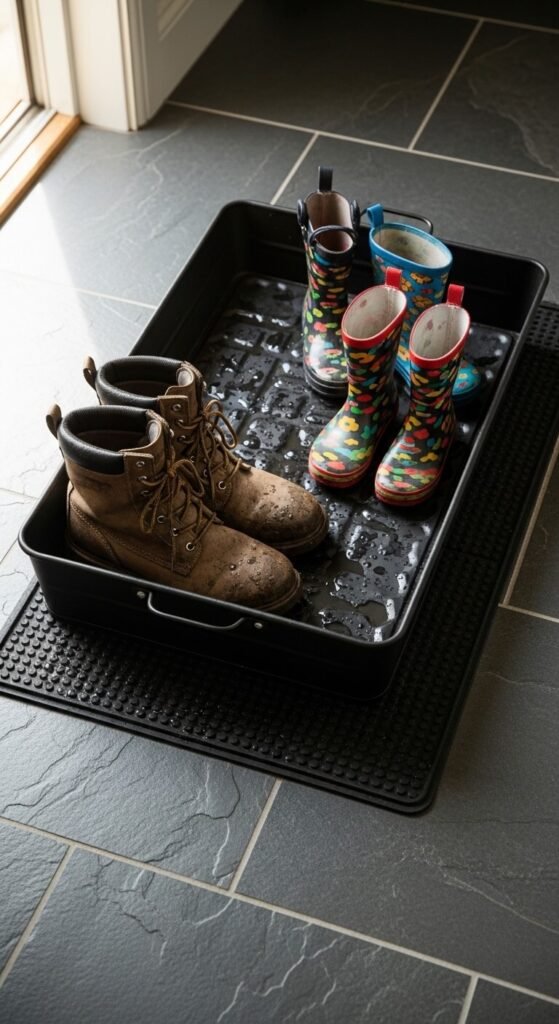
A boot tray does one simple job: it keeps mud and water contained. Place it right inside the door and you immediately cut down on floor cleaning by half. Metal boot trays cost $20–$30 and last for years. Add a layer of pebbles or a rubber grid insert to lift boots above the water line. This small habit — boots on the tray, every time — makes a visible difference within a week.
11. Repurpose an Old Dresser as a Mudroom Station
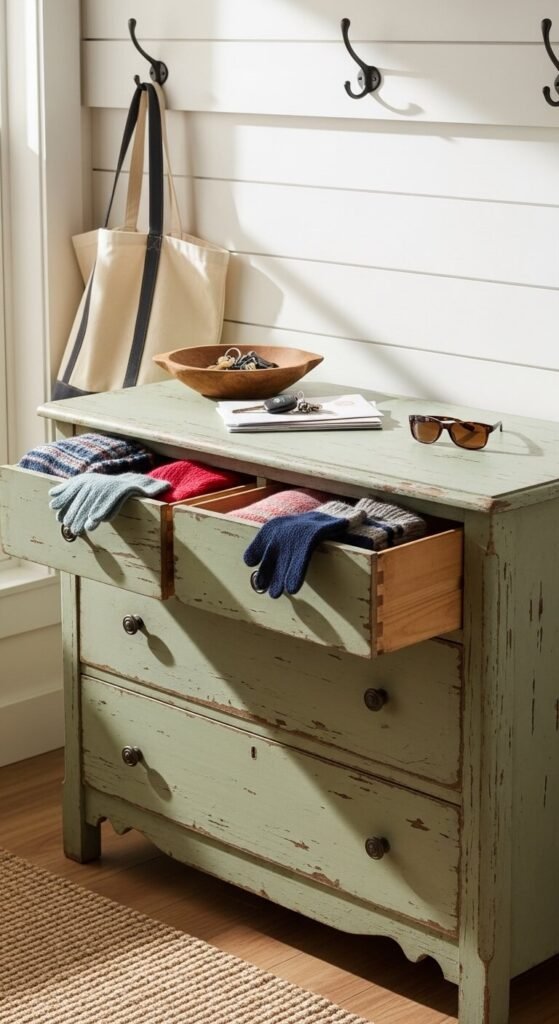
An old dresser from a thrift store or garage sale makes a surprisingly functional mudroom station. The top becomes a drop zone for keys, mail, and everyday carry items. The drawers store seasonal accessories — gloves, beanies, sunscreen. Add hooks to the sides with L-brackets and you’ve got a full storage hub for $30–$50. Sand it, paint it, and it looks completely custom.
12. Install Wall-Mounted Metal Bins
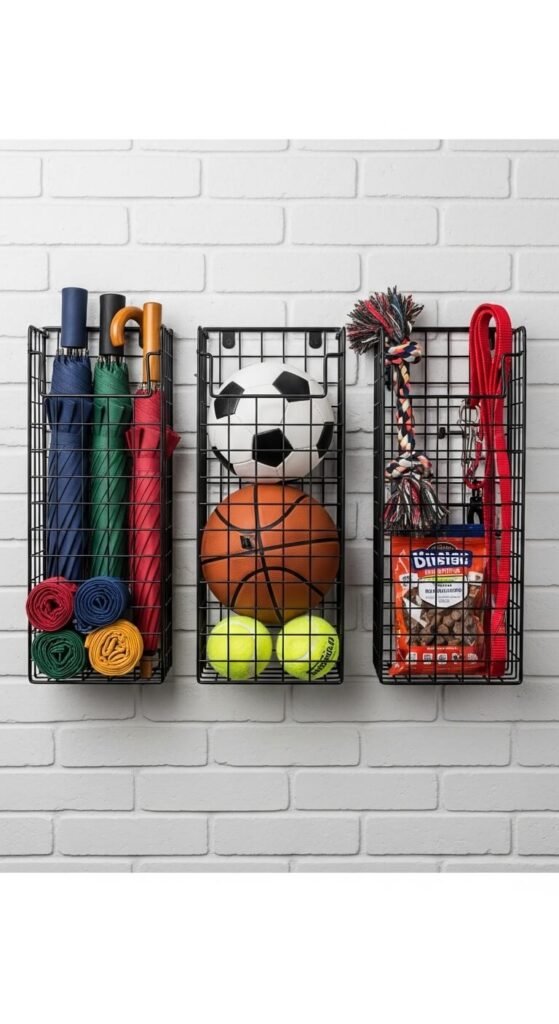
Wall-mounted wire bins keep bulky, awkward items off the floor without needing a cabinet. Think umbrellas, sports balls, helmets, or dog toys. Mount them at varying heights to create an organized grid that looks intentional. Metal bins are sold individually or in sets at most home stores for $10–$20 each. They hold up to humidity, dirt, and daily use better than fabric bins and wipe clean in seconds.
13. Use a Tension Rod Under a Bench for Boot Storage

This trick costs less than $5 and most people have never thought of it. Install a tension rod under your bench or shelf and hang boots upside down from their cuffs. They dry faster, hold their shape, and take up zero floor space. A single tension rod holds four to six pairs easily. No drilling, no hardware — just slide the rod in place and load it up.
14. Add a Mirror to Make the Space Feel Larger
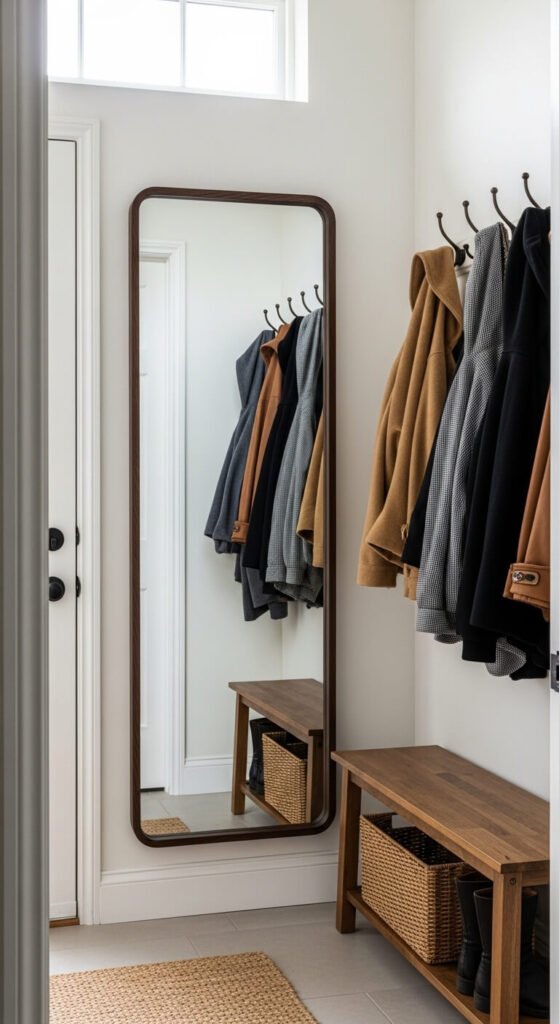
A mirror in the mudroom isn’t just for last-minute outfit checks. It makes a small space feel twice as big. A leaning floor mirror works well in tight entryways because it doesn’t need wall mounting. Look for one at a thrift store or discount retailer for $20–$50. Position it opposite a window if possible to bounce natural light around the space. It also helps kids and adults make sure they’re ready before heading out.
15. Create a Mail and Paper Sorting Station
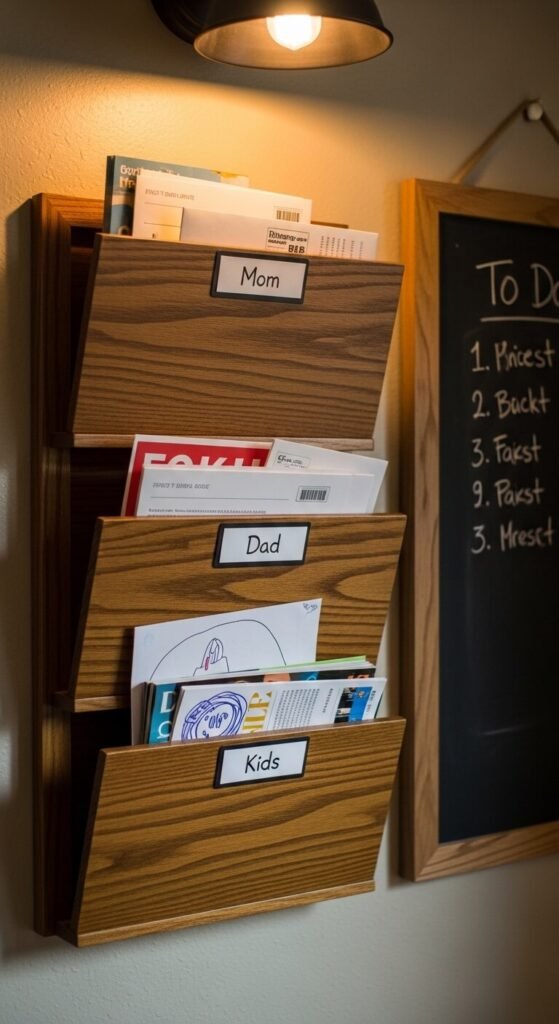
Paper clutter is a silent disaster in most entryways. A wall-mounted letter sorter with labeled slots gives every piece of mail a home the second it walks through the door. Wooden wall sorters cost $15–$30 at most craft or home stores. Three slots — bills, personal mail, to-do items — is usually enough for most households. Mount it near the door and make sorting a 30-second habit every day.
16. Hang Sports Equipment on Heavy-Duty Hooks
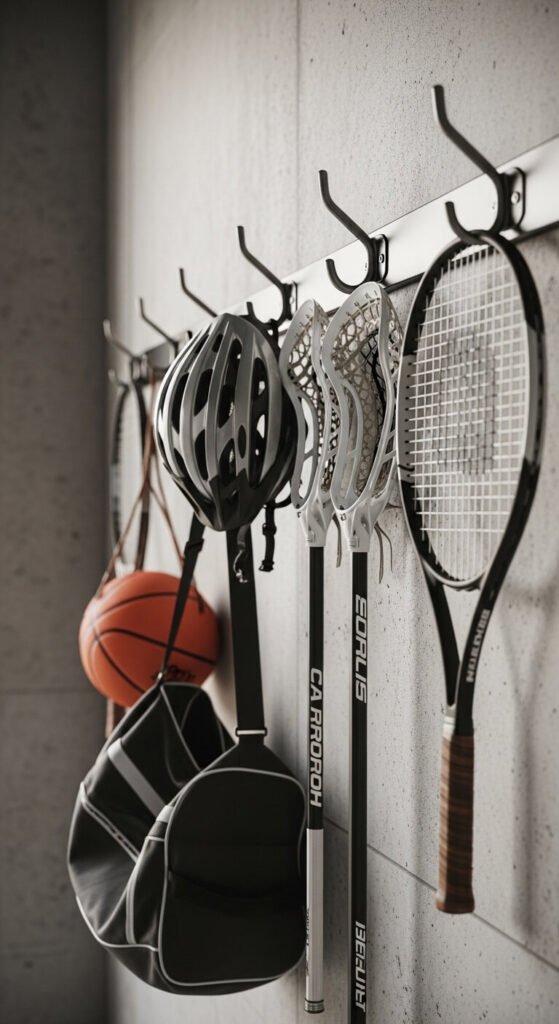
Sports gear is bulky and awkward to store in a standard closet. Heavy-duty wall hooks rated for 25–50 lbs solve this problem fast. Mount them on a plywood backer board screwed into studs for maximum strength. Hooks for bikes, helmets, rackets, and bags keep the garage floor clear and gear easy to grab on the way out. Look for adjustable hooks that can hold different shapes and sizes without special hardware.
17. Use a Slim Rolling Cart for Extra Overflow
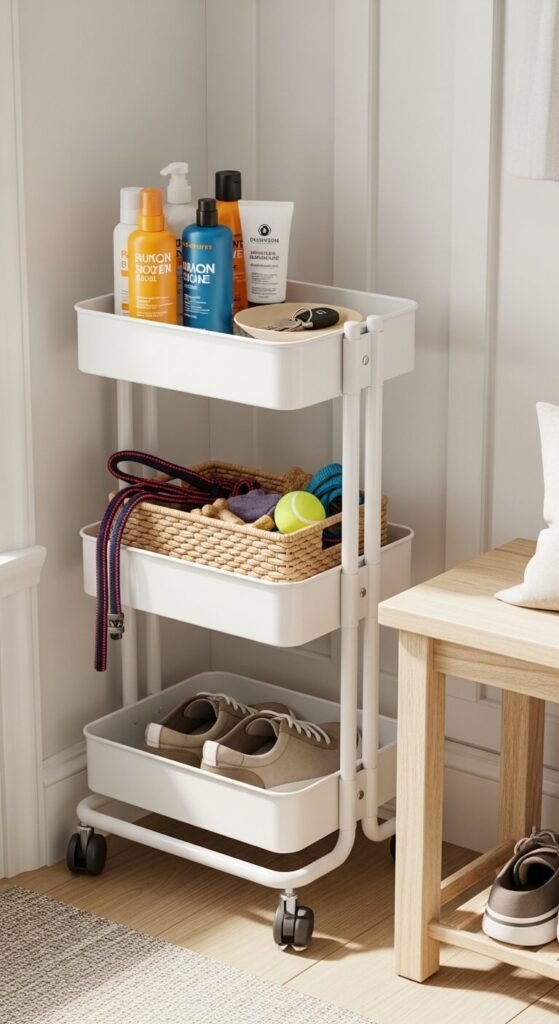
A slim rolling cart — like the IKEA RÅSKOG or similar — costs about $20 and fits into spaces as narrow as 14 inches. Roll it into a corner when not in use or wheel it to where you need it. Use it for overflow items that don’t have a permanent home: sunscreen, bug spray, extra leashes, car chargers. The open wire or metal design keeps it from looking cluttered even when it’s full.
18. Frame Out a Closet with Open Shelving
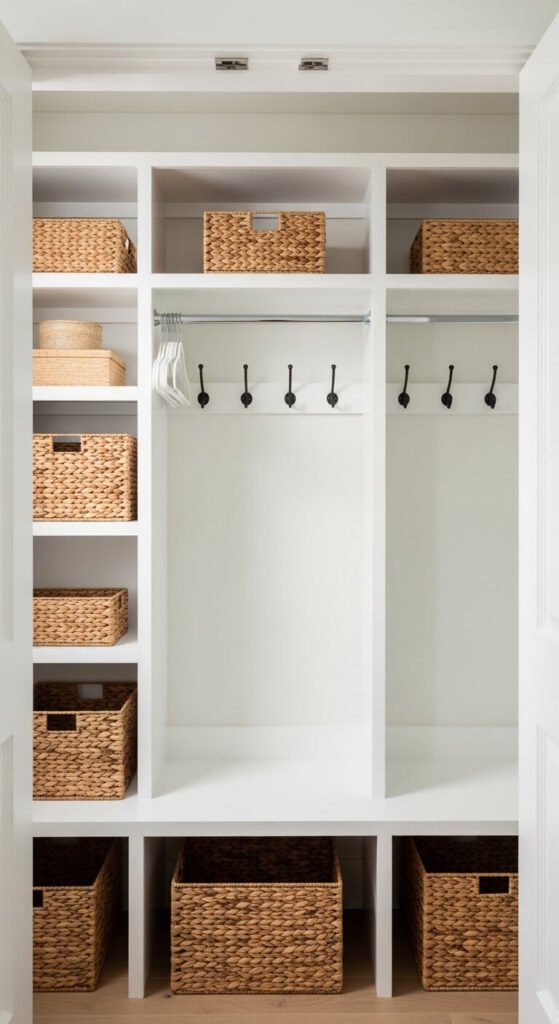
If your mudroom has a closet, consider removing the doors. Open shelving inside a closet frame feels more accessible and makes it easier to stay organized because you can see everything at a glance. Add a mix of shelves, a hanging rod, and a few baskets. Paint the interior a different color than the walls to make it feel like a designed nook rather than an afterthought. This upgrade costs almost nothing if you already own the closet.
19. Label Everything with a Label Maker
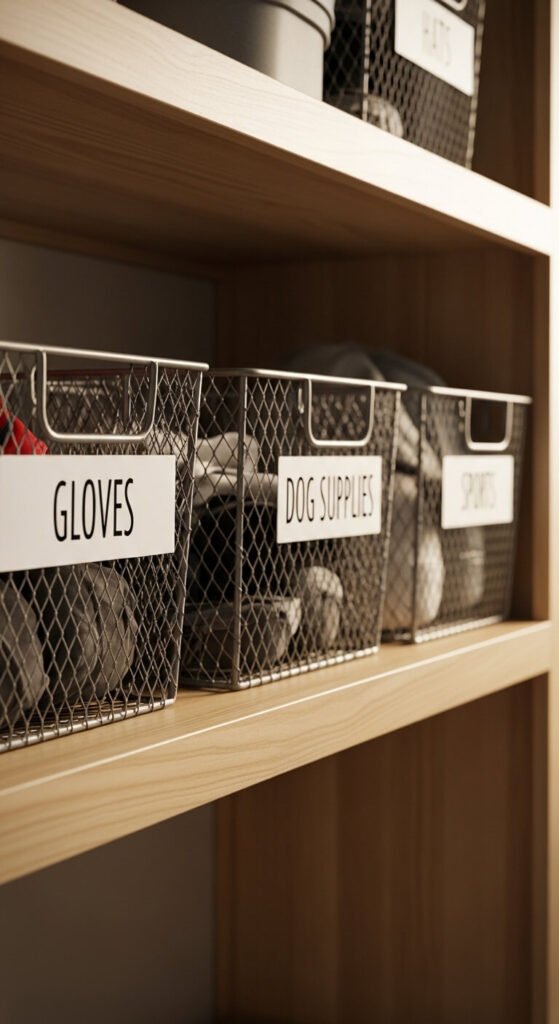
Labels sound basic. But they work. When every bin and basket is clearly labeled, everyone in the household knows where things go — and where to find them. A label maker costs $20–$30 and pays for itself in fewer “where’s my…” moments. Use consistent fonts and sizes for a clean, organized look. Apply labels to baskets, bins, hooks, and even wall-mounted zones so there’s no guesswork.
20. Build a DIY Shiplap Accent Wall
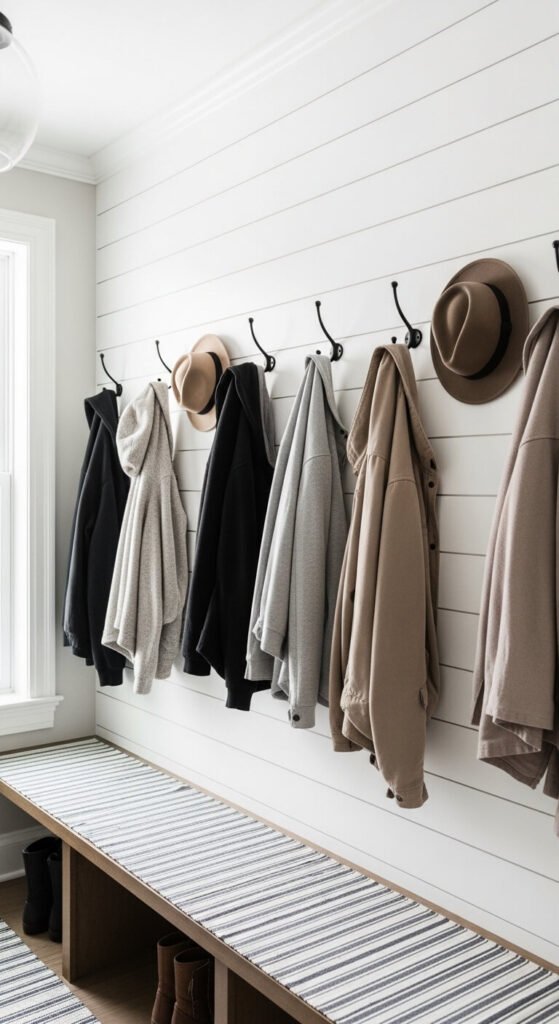
Shiplap in a mudroom serves a practical purpose beyond aesthetics. Boards give you a solid surface to mount hooks anywhere without hunting for studs each time you rearrange. Use 1×4 pine boards, space them with a coin as a gap guide, and paint them white. The total material cost for a standard mudroom wall is under $80. The result looks like a custom renovation but is achievable in a weekend.
21. Add Under-Stair Storage if You Have Access
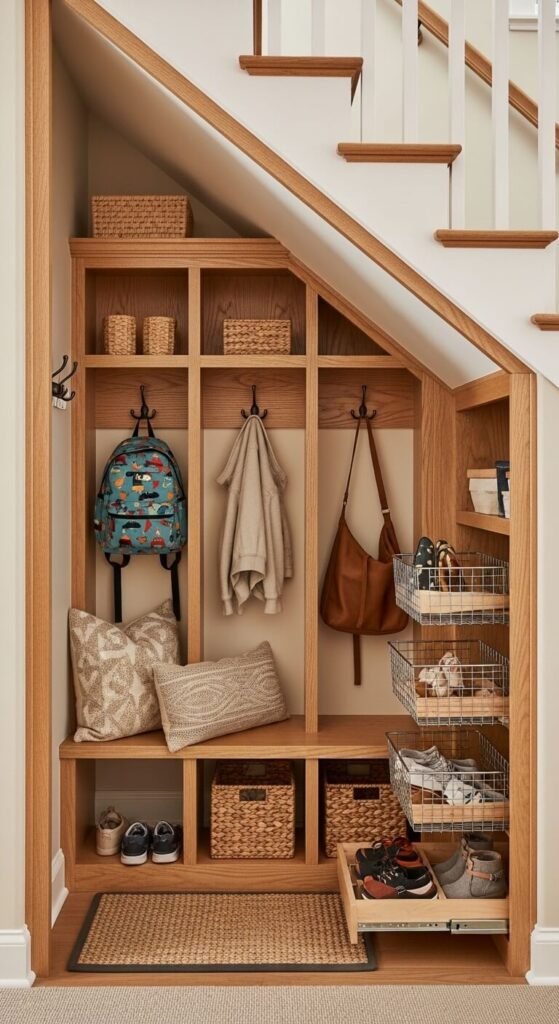
If your mudroom or entryway is near a staircase, that triangular space underneath is storage gold. Even a partial build-out adds significant capacity. Start with basic cubbies built from plywood and a simple coat hook rail along the back wall. Add a small bench at the entrance of the nook. The angled ceiling forces some creativity but the result is one of the most satisfying uses of dead space in any home.
22. Hang a Catch-All Key Hook Near the Door
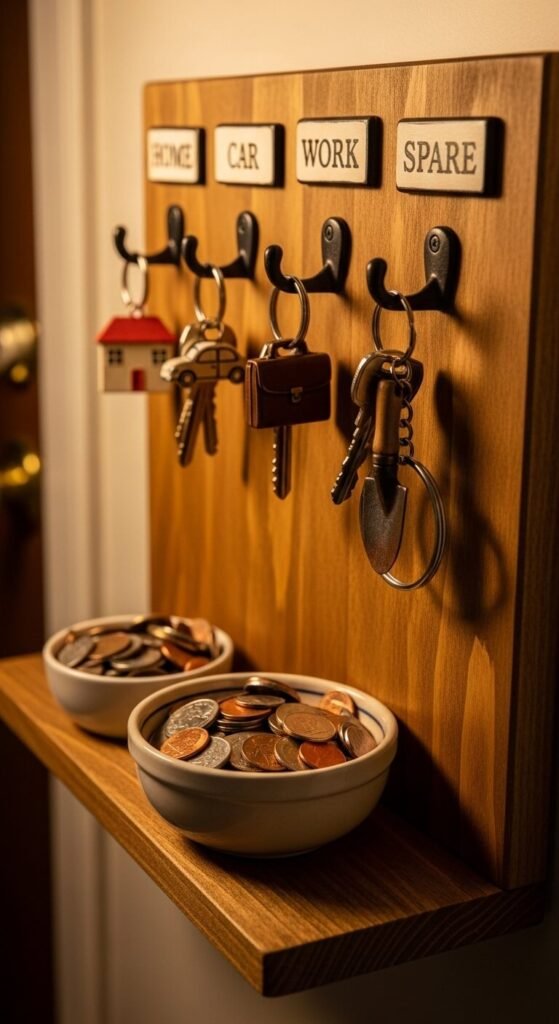
Keys are the #1 lost item in most households. A dedicated key hook within arm’s reach of the door ends the daily scramble. Mount a small hook board at eye level, right beside the door handle, and make it the first thing you reach for coming in and the last thing you grab going out. Wooden key boards with four to six hooks cost $10–$20 and take five minutes to install.
23. Use Vertical Space with Tall Cabinet Units
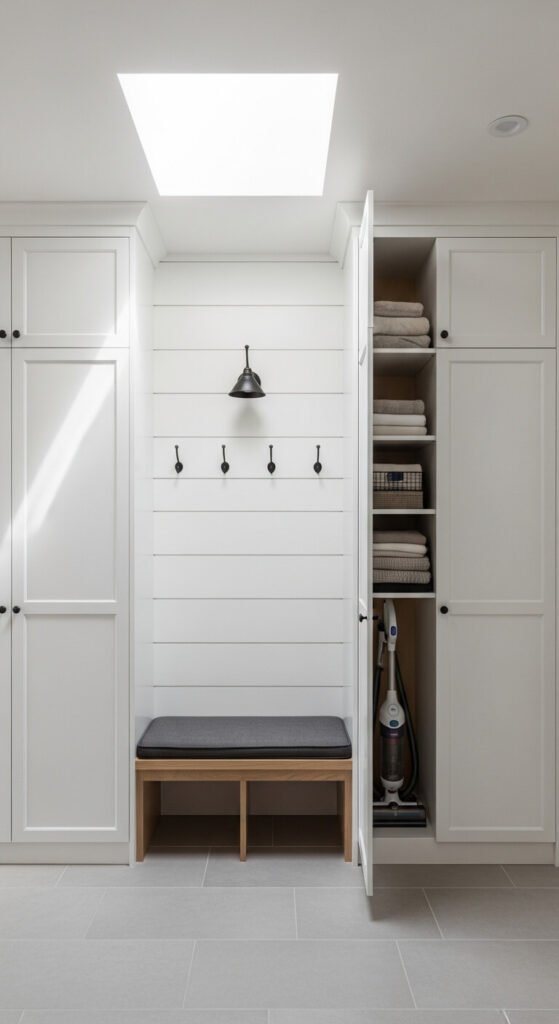
Floor-to-ceiling cabinet units make full use of vertical space that most mudrooms completely ignore. The upper sections hold seasonal or rarely used items — camping gear, holiday accessories, sports equipment for off-season. Lower sections store everyday items. Tall cabinet units from IKEA’s PAX system can be configured exactly to your space for $150–$300 per unit. Add handles and matching paint and they look fully built-in at a fraction of the cost.
Conclusion
A well-organized mudroom doesn’t require a big renovation budget or a professional designer. As these ideas show, the right mix of hooks, baskets, benches, and labels can turn any entry point — from a dedicated room to a three-foot hallway — into a system that actually works. Start with one or two changes that address your biggest pain points right now. Add the rest over time. The goal is simple: clutter stops at the door, and everything inside your home stays calmer because of it.